
 by
by Our Top Pick for Kids & Teens
The Saatva Youth Mattress is designed for growing bodies — with dual-sided firmness for different ages, organic cotton cover, and verified spinal support.
Getting children to sleep is not a single problem with a single solution. The strategies that work for a 6-month-old are irrelevant for a 9-year-old, and the approach that solves bedtime battles for a preschooler may make things worse for a teenager. What follows are 12 evidence-based strategies organized by developmental stage.
For Infants (4-12 Months)
1. Establish a short, consistent pre-sleep routine
Infants learn sleep associations through repetition. A 15-20 minute sequence — bath, feed, dim lights, song, put down — performed in the same order every night begins conditioning the nervous system to expect sleep. The routine itself matters less than its consistency. Starting this routine before the infant becomes overtired (eyes rubbing, turning away from stimulation) significantly improves outcomes.
2. Put down drowsy-but-awake
Infants who fall asleep while being held develop a sleep association with being held. When they naturally rouse between sleep cycles, they find themselves in the crib rather than the arms — a confusing mismatch that triggers waking. Putting infants down while drowsy but still aware helps them learn to complete the transition to sleep independently.
3. Darken the room completely
Infants' melatonin systems are responsive to light from early months. Blackout curtains in the nursery — not just darkened shades, but genuine light-blocking — can reduce early morning wake-ups and improve daytime nap length significantly.
- Kids Sleep Schedule by Age
- Common Children Sleep Problems
- Toddler Sleep Regression Guide
- Room Sharing Sleep Tips
For Toddlers (1-3 Years)
4. Use a visual bedtime routine chart
Toddlers respond to predictability and resist transitions. A simple chart with pictures (bath icon, pajamas icon, book icon, lights-out icon) reduces bedtime resistance by giving the child a concrete map of what comes next. The chart also shifts authority from the parent to "the chart" — a small but effective reframe.
5. Offer limited choices within the routine
Toddlers in the autonomy-seeking phase resist having things done to them. Offering two acceptable choices — "Do you want the dinosaur pajamas or the striped ones?" — satisfies the developmental need for control while keeping bedtime on track. The choice must be real but bounded.
6. Address curtain calls with a ticket system
Many toddlers request water, another hug, or another story after bedtime. The ticket system: give the child one physical token (poker chip, wooden disc) that they can spend on one additional request. Once spent, no more exit requests. This approach reduces endless curtain calls while giving the child a legitimate avenue for needs.
For Preschoolers (3-5 Years)
7. Use a visual clock to teach sleep time
Preschoolers cannot read clocks, but they understand color cues. Clocks like the OK-to-Wake clock turn yellow or green when it is acceptable to leave the room. This removes the burden of the child deciding when morning is — the clock decides, and children generally respect this external authority.
8. Manage stimulation in the hour before bed
Screen content — even calming children's shows — increases arousal and delays melatonin onset. The hour before bed should involve low-stimulation activities: bath, books, quiet play. Eliminating screens in this window is one of the highest-impact interventions available for preschool sleep latency.
For School-Age Children (6-12 Years)
9. Address anxiety before it escalates at bedtime
School-age children often surface worries at bedtime because the quiet of the bedroom allows rumination. A worry journal — a notebook where concerns are written down with a brief plan — helps externalize anxiety. Some families use a worry box where written concerns are placed before bed, symbolically containing them until the next day.
10. Set and enforce consistent electronics cutoffs
Phones, tablets, and gaming systems in bedrooms are the primary driver of chronic sleep deprivation in school-age children. The device does not need to be banned — it can charge in the kitchen or living room. This is non-negotiable from a sleep health perspective.
For Teenagers
11. Avoid confrontational enforcement
Teenagers whose sleep is managed through conflict associate bedtime with negative emotions that increase arousal. Explaining the neuroscience of the teenage circadian shift — validating that their body genuinely cannot fall asleep early — and collaborating on solutions produces better outcomes than enforcement.
12. Invest in the sleep environment
A teenager who has a mattress that creates discomfort, a room that is too warm, or a pillow that does not support their neck will have genuinely poor sleep regardless of timing. Sleep quality improvements from environmental upgrades can be motivating for teenagers who care about athletic performance, mood, and cognitive function.
Our Top Pick for Kids & Teens
The Saatva Youth Mattress is designed for growing bodies — with dual-sided firmness for different ages, organic cotton cover, and verified spinal support.
Frequently Asked Questions
What is the most effective bedtime routine for young children?
A consistent 20-30 minute sequence starting at the same time each night is more effective than any specific activities. Bath, pajamas, one book, song, and lights-out in the same order every night conditions the nervous system to expect sleep. Consistency over weeks builds the strongest sleep associations.
Why does my child fight bedtime every night?
Bedtime resistance typically has one of three causes: overtiredness (missed sleep window), undertiredness (bedtime is too early for biological readiness), or anxiety (bedroom triggers rumination). Identifying which applies guides the solution. Most toddler bedtime battles respond to earlier bedtime — not later — as overtiredness increases cortisol and makes falling asleep harder.
Should I let my child cry it out?
Graduated extinction (Ferber method) and other sleep training approaches are effective for infants 6 months and older and are not associated with harm in the research literature. However, they are one tool among many, not a universal prescription. Parental comfort with the approach matters significantly for consistency.
What should a child's bedroom temperature be for sleep?
Between 65-68 degrees F (18-20 degrees C) is optimal for children's sleep. Children and infants are more susceptible than adults to temperature-related sleep disruption. Rooms that are too warm delay sleep onset and increase night waking.
Does reading before bed help children sleep?
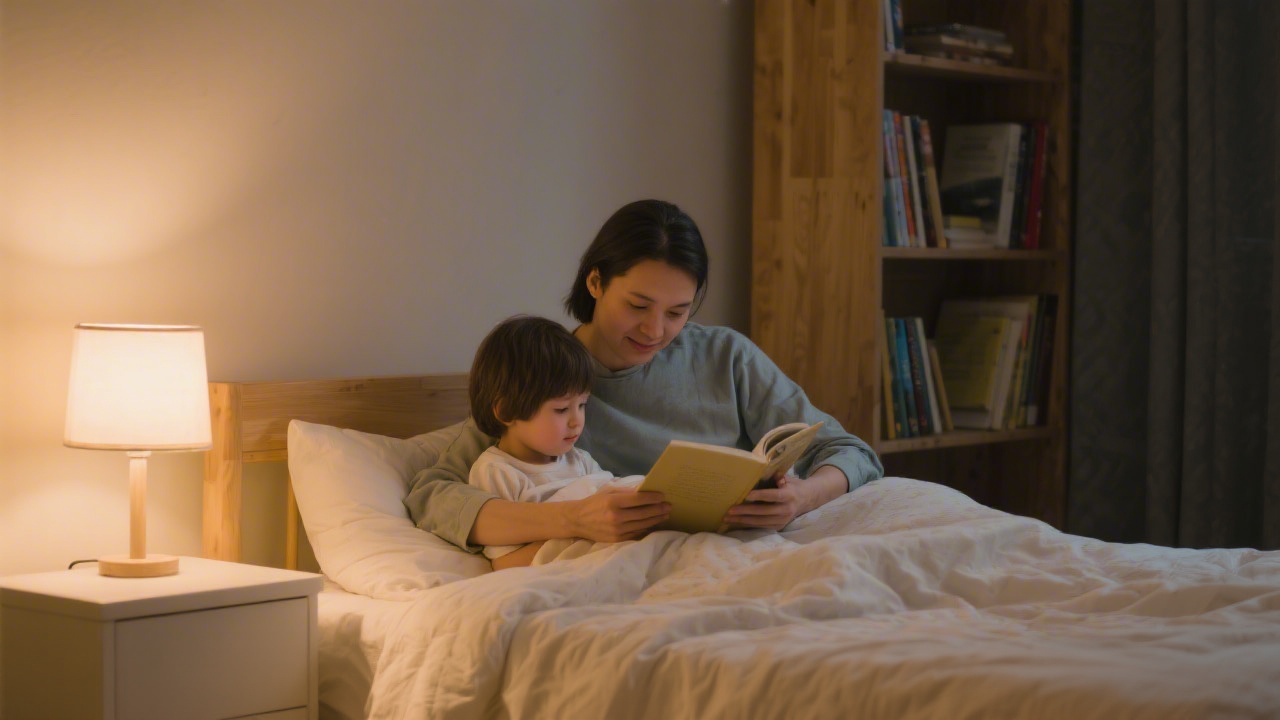
Yes. Reading physical books (not screens) before bed is associated with faster sleep onset, longer sleep duration, and stronger parent-child bonding. The calm, interactive nature of reading winds down the nervous system, and books do not emit blue light. This is one of the most consistent findings across pediatric sleep research.