
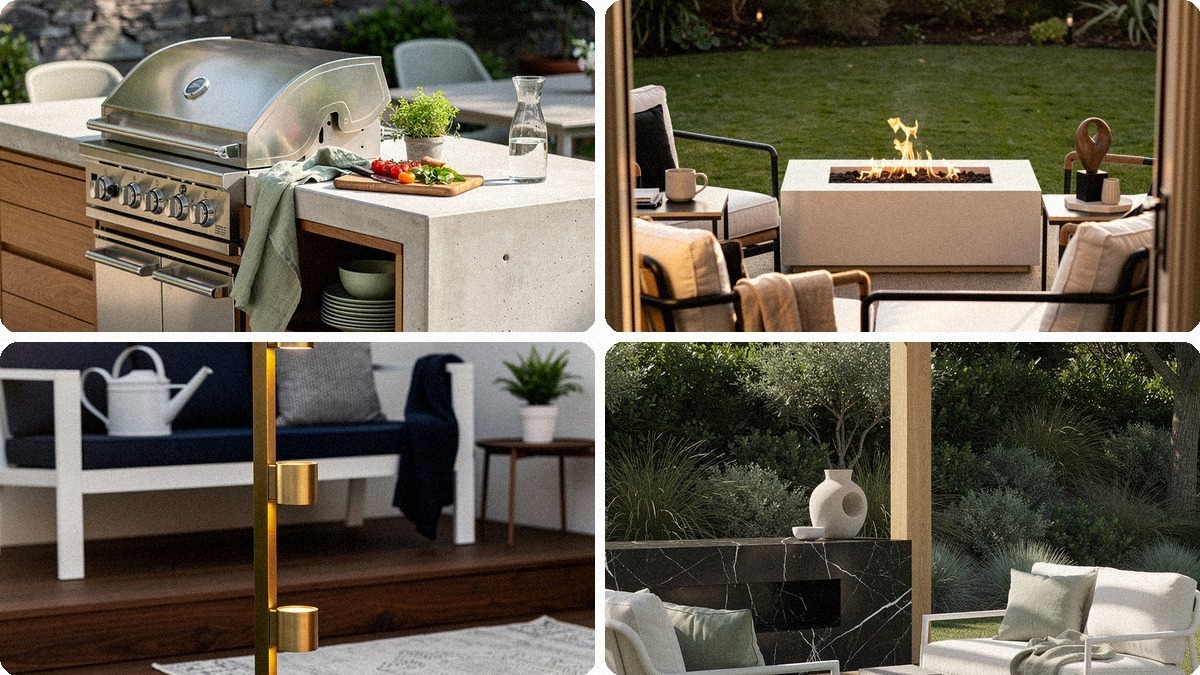
 by
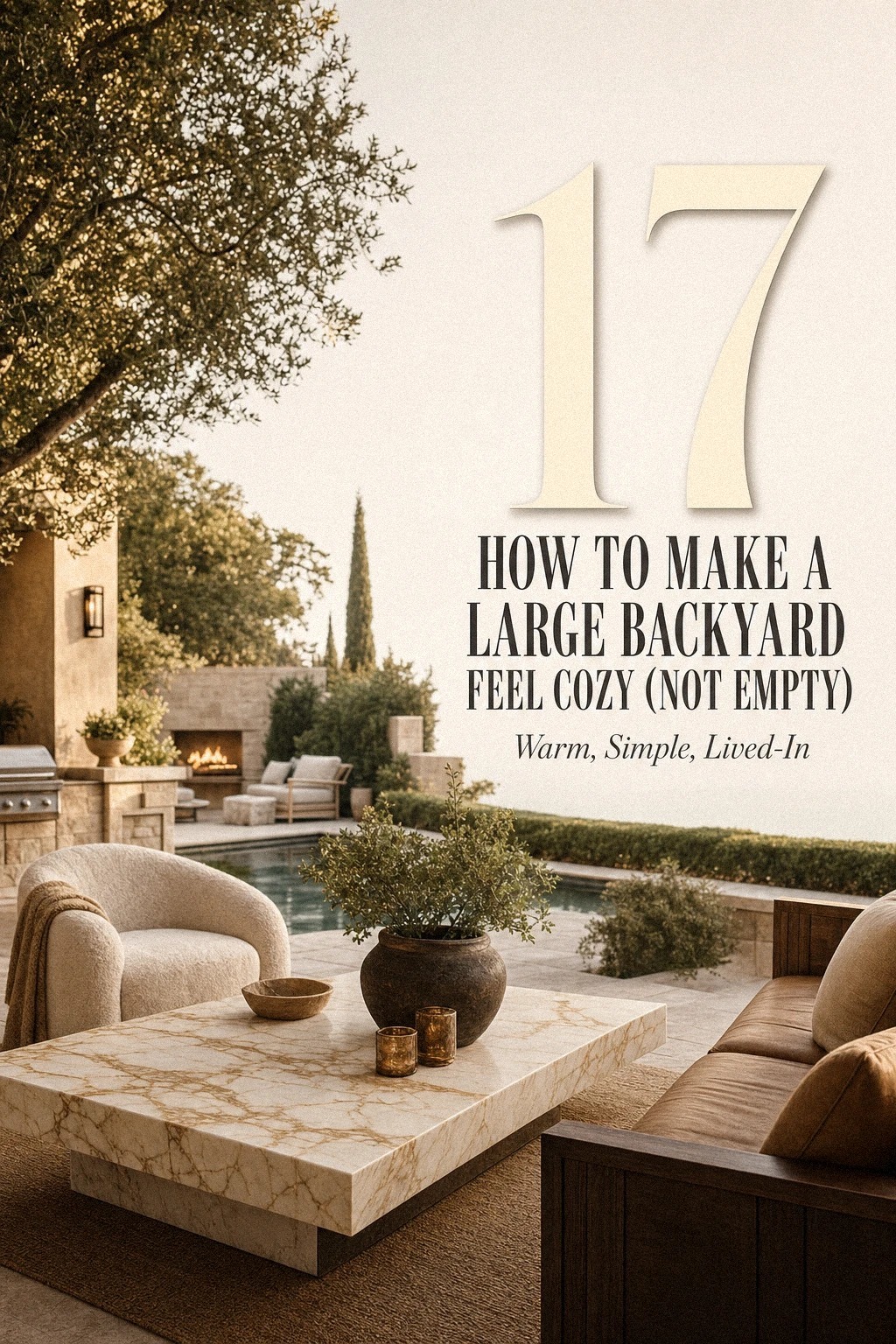
by A big backyard is a gift until you stand in the middle of it and realize it feels like a parking lot with grass. I've been there. The first house I owned had a quarter-acre plot that looked great on the listing and felt like a stadium once we moved in. Furniture floated. Conversations echoed. And every time I walked out back, I felt like I was trespassing on my own property. Here's what I learned: you don't fill a large yard with more stuff. You shrink the perceived space so it wraps around you.
- Start with a single anchor zone
- Build a three-height light stack
- Layer outdoor textiles like you mean it
- Plant for enclosure, not decoration
- Hang a real mirror (yes, outside)
- Add a fire element at sitting height
- Mix materials with intention
- Frame the yard with a partial pergola
- Use sound to shrink the edges
- Paint or stain what you can't replace
- Create a destination at the far end
- Add a cooking zone that draws people out
- String lights overhead like a canopy
- Use a daybed as your outdoor sofa
- Build a living wall for vertical enclosure
- Add a hammock between two trees
- Use gravel as a design material, not a default
1Start with a single anchor zone
Pick one corner, not the whole yard. I chose the spot nearest the kitchen door because that's where people actually exit.
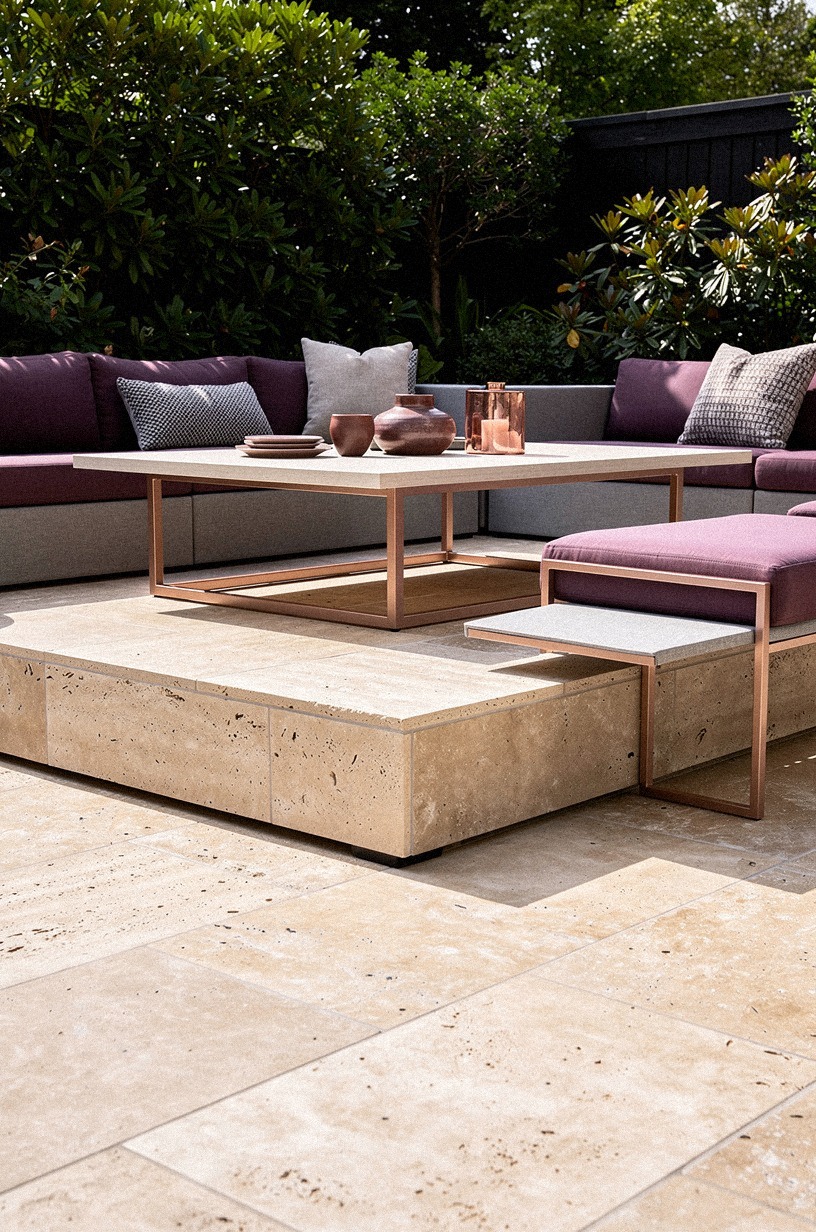
A 9×12 polypropylene rug from Target's Threshold line went down first, defining the patio area without any construction. Then a teak Adirondack set (mine's from Article, the Sven line in tan) arranged so the front legs sit on the rug and the back legs rest on the warm travertine.
That overlap is what makes it feel intentional, not staged.
The mistake I see everywhere is scattering furniture across the lawn like you're furnishing a park. Don't. One tight grouping reads as a room.
Two loose groupings read as leftovers. If you're working with a truly massive plot, my acreage backyard ideas break down how to zone without building walls.
2Build a three-height light stack
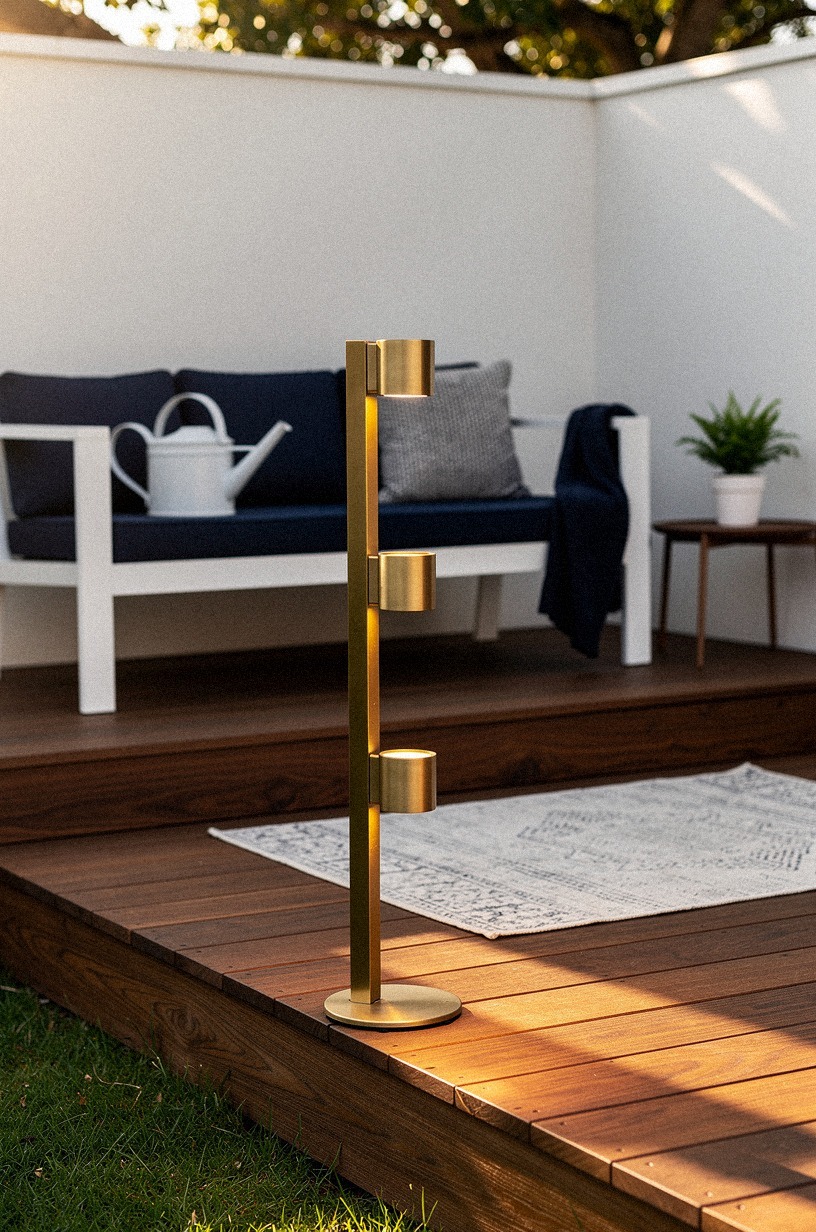
Overhead string lights are the baseline. But overhead alone leaves the ground plane dark and the conversation feels exposed. You need three heights to compress the space vertically.
Start with LED string lights at 8-10 feet (the $45 Twinkly sets from Wayfair work fine). Add solar path lights at 18 inches to mark the edge of your anchor zone.
Finish with tabletop candles or battery lanterns at sitting height.
The magic happens at the transition between them. When your eye travels from ground to table to canopy, the yard stops feeling infinite and starts feeling layered.
I use unscented beeswax pillars in glass hurricanes because they throw a warmer glow than LED and they flicker, which matters more than you'd think. A static light says "patio." A flickering one says "evening."
3Layer outdoor textiles like you mean it
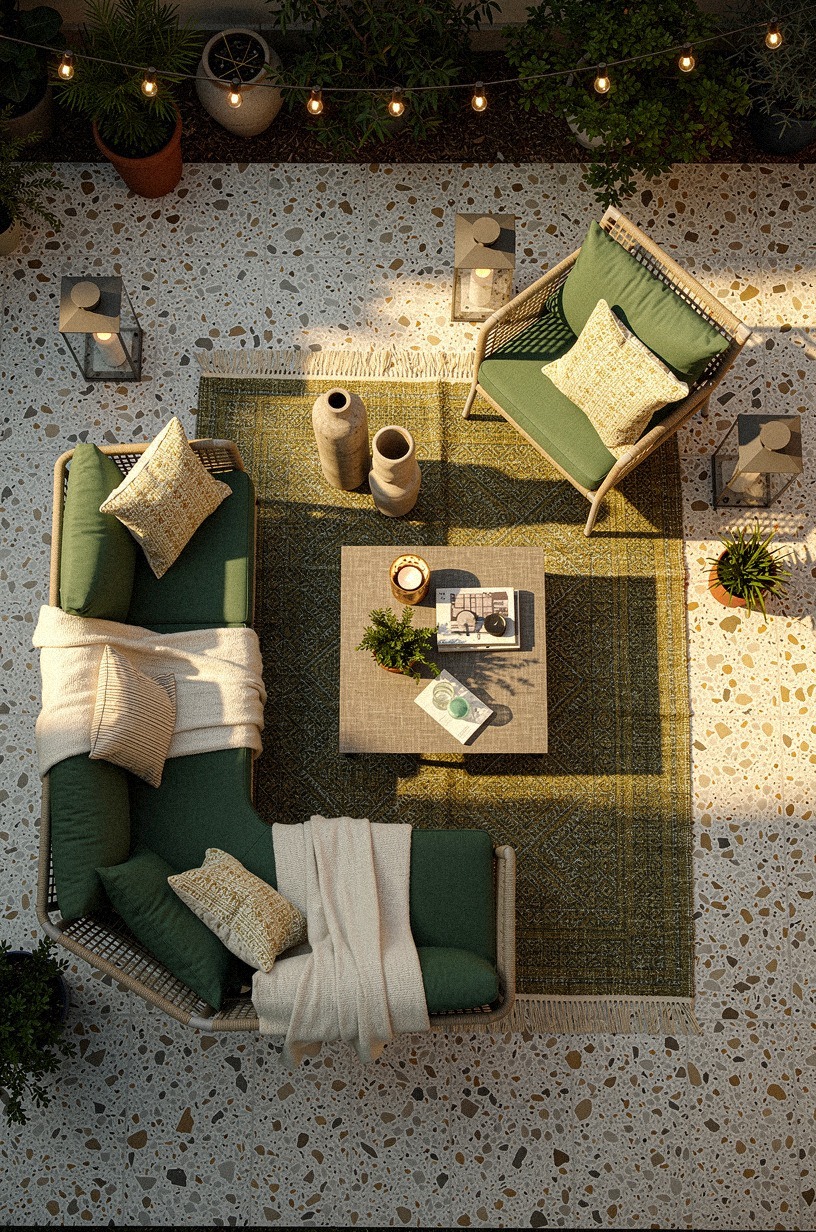
Most outdoor seating looks like an afterthought because there's only one texture. You need three minimum: a chunky weave, a smooth surface, and something with sheen. My setup runs Sunbrella canvas in Canvas Basil (smooth), a knit cotton throw from IKEA GURLI (chunky), and a faux-mohair lumbar pillow (sheen) I found at HomeGoods.
The key is treating outdoor cushions with the same rules as indoor ones. Mix sizes: 20-inch squares for the seats, 12×20 rectangles for the backs, one odd 16-inch round for asymmetry.
And don't match the colors. Stay in the same rich family, emerald, gold, cream, but let them vary.
Matching outdoor sets are the fastest way to make a yard look like a hotel pool deck. And honestly? Nobody feels cozy at a hotel pool deck.
4Plant for enclosure, not decoration
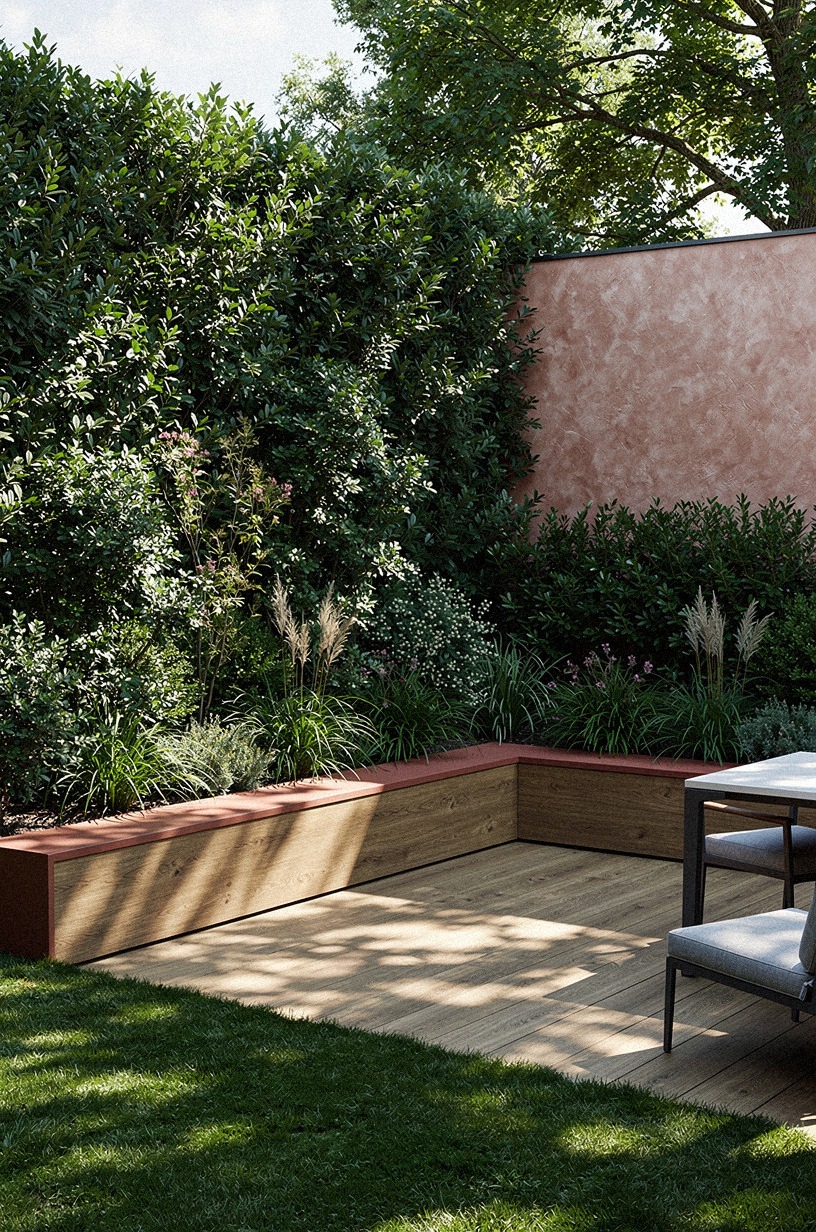
This is where most people get it backward. They buy plants for color and end up with a yard that looks like a nursery exploded.
What you want is enclosure: the feeling that something is wrapping the space. I use a mix of tall grasses (Miscanthus, 4-6 feet) at the perimeter and lower evergreens (boxwood or Japanese holly, 2-3 feet) closer in.
The move is depth, not height. Three layers of green at different distances reads as a wall. One row of tall trees reads as a fence.
I planted a staggered border along the back property line: grasses at the edge, then holly, then a low creeping thyme ground cover that softens the transition to lawn. It took two seasons to fill in, but now the yard feels held instead of open. If you want plant ideas that actually work for boundaries, my privacy planting guide has the combinations I keep coming back to.
5Hang a real mirror (yes, outside)
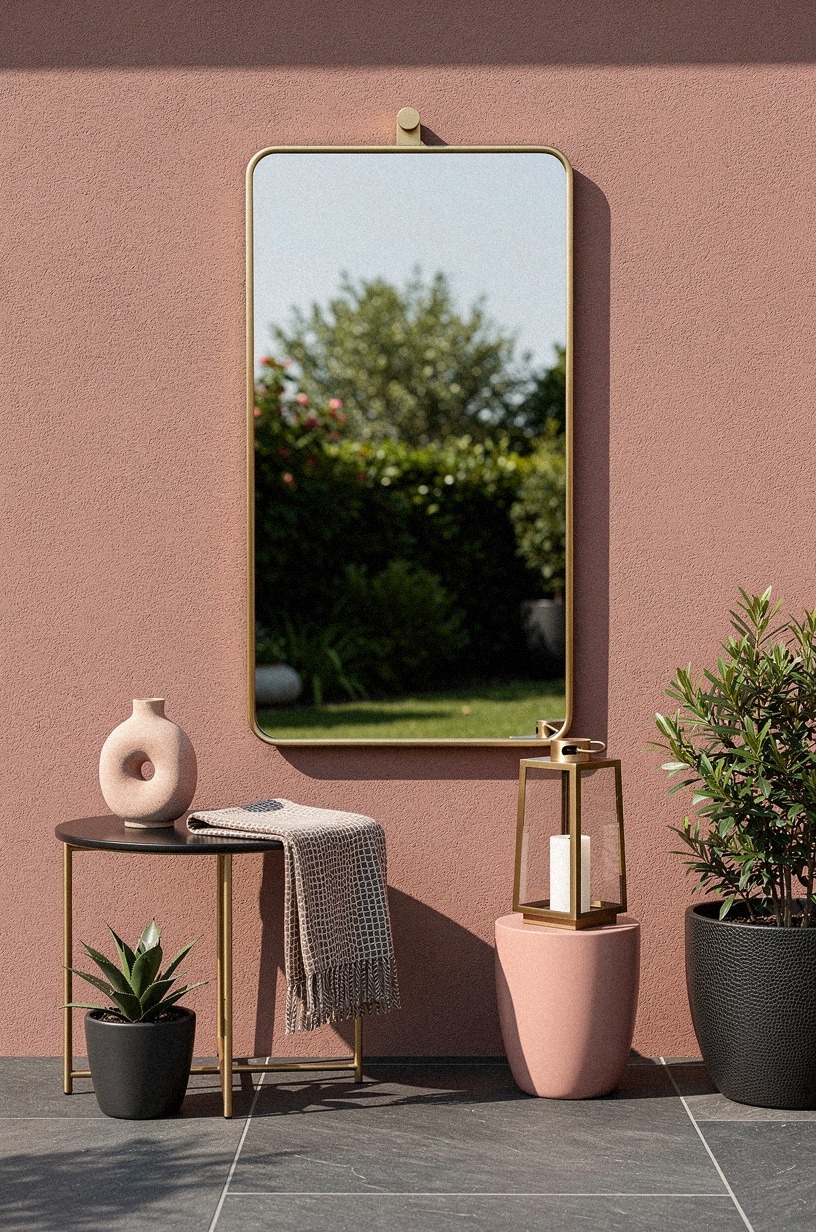
I know it sounds strange. But a brass-framed mirror hung on a fence or the exterior wall of your house doubles the visual depth of your anchor zone and bounces light into the seating area. I found mine at a flea market for $40, but CB2's Peri mirror in aged brass works if you want to buy new.
Seal the back with exterior-grade polyurethane and hang it where it catches either morning or late-afternoon light.
The reflection does two things: it makes the seating area feel larger than it is, and it creates a focal point that pulls your attention inward. Without a focal point, your eye keeps traveling to the property line.
With one, the yard feels designed. Just don't hang it where it reflects the neighbor's garage.
That's a rookie move I made once and fixed within a week.
6Add a fire element at sitting height
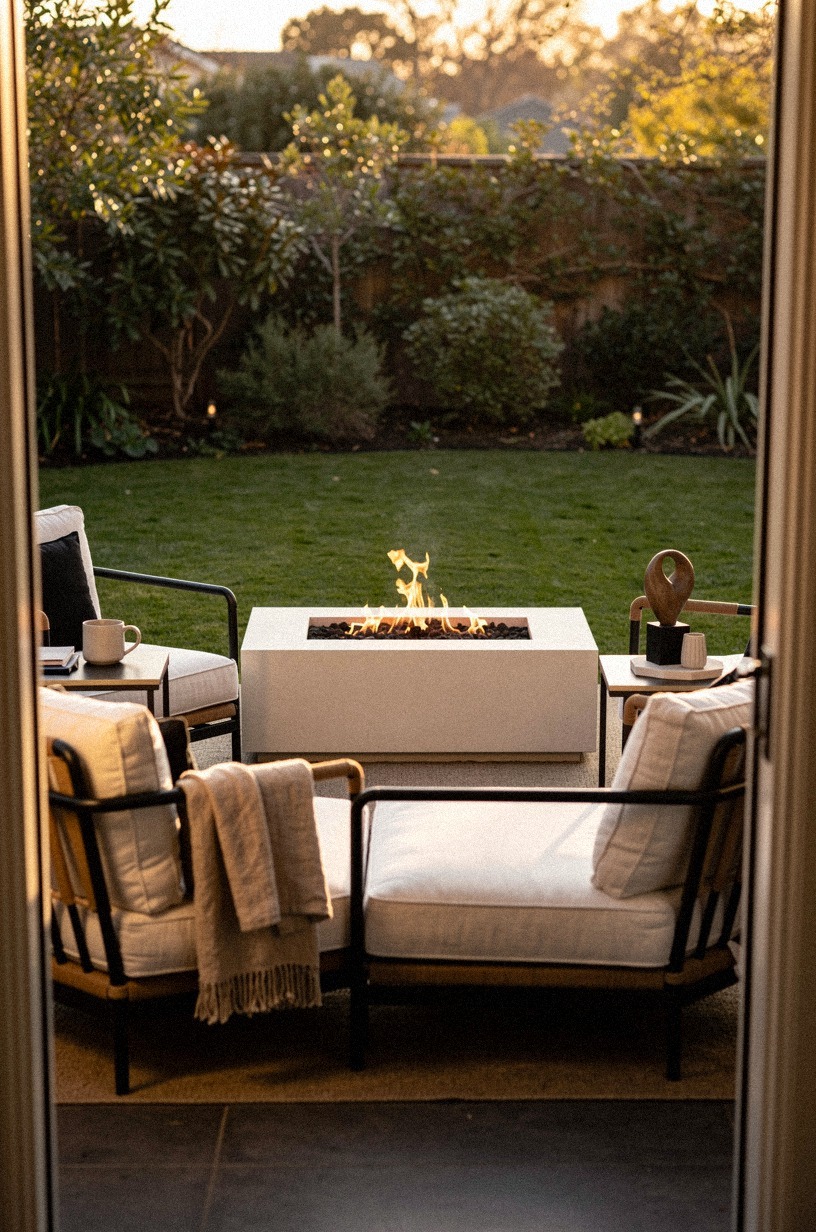
A fire pit on the ground is fine for roasting marshmallows. For coziness, you want flame at eye level when you're seated.
I built a rectangular gas fire table at 24 inches high using a Napoleon rectangle kit ($800 at Wayfair) and surrounded it with the same Adirondack chairs from my anchor zone. The height matters because it puts the glow in your line of sight instead of your feet.
If you're budget-conscious, a chiminea in cast iron ($150-250 at Home Depot) does the same job with wood. The clay ones look better but crack in freeze-thaw climates.
I learned that the hard way in Ohio. Cast iron is heavier to move and uglier out of the box, but it lasts. And the patina it develops after one season is better than any paint job.
7Mix materials with intention
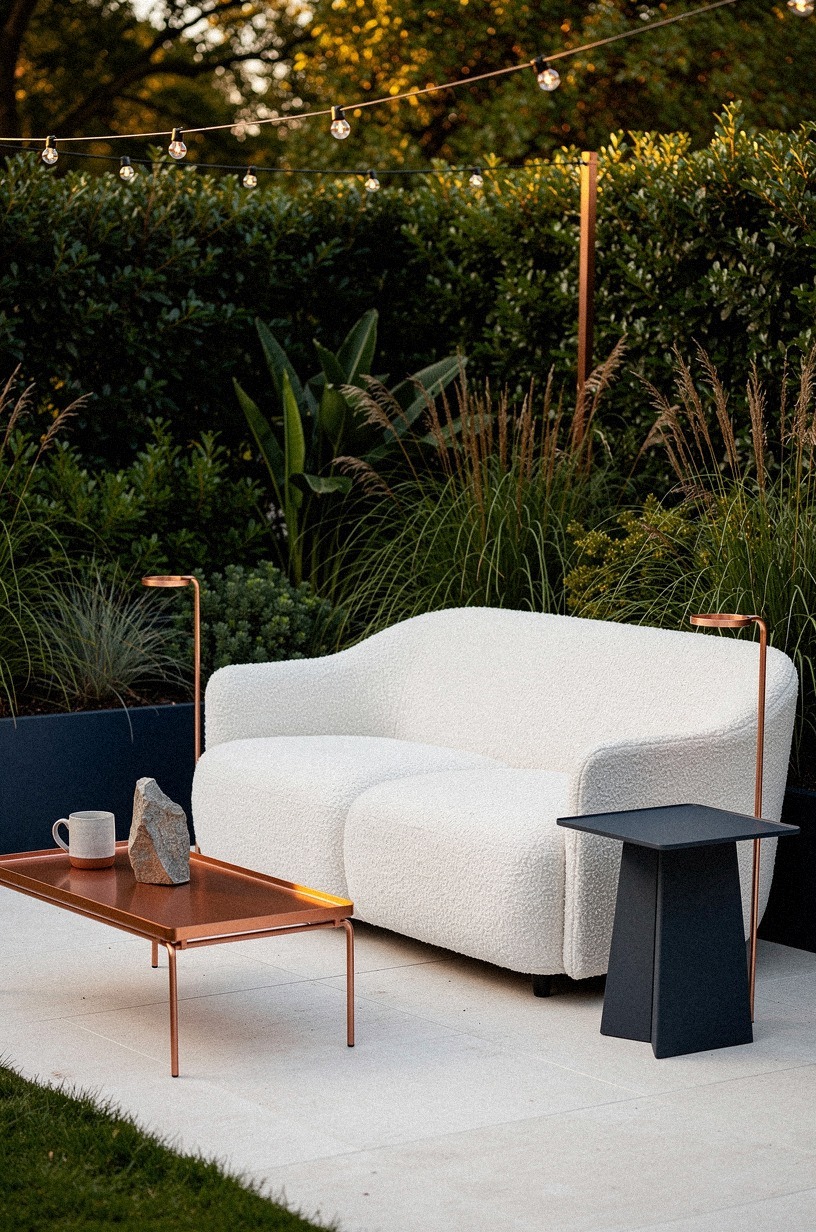
A yard that feels empty often looks too uniform. All wood, all metal, all stone, each reads as flat.
What you want is friction between textures. My anchor zone combines honed bluestone (the patio), weathered white oak (the furniture), powder-coated steel (a side table from West Elm), and woven seagrass (a basket for throws).
Four materials, none matching, all talking to each other.
The rule I follow: every material needs a reason. Stone because it's permanent and grounded.
Wood because it warms up as it ages. Metal because it holds a clean line against the softness of plants.
Woven because it catches light differently at different times of day. If you can't name why a material is there, swap it out. I had a concrete planter in the mix for a month before I admitted it was just heavy and gray.
Replaced it with a copper-glazed ceramic from a local pottery and the whole corner relaxed.
8Frame the yard with a partial pergola
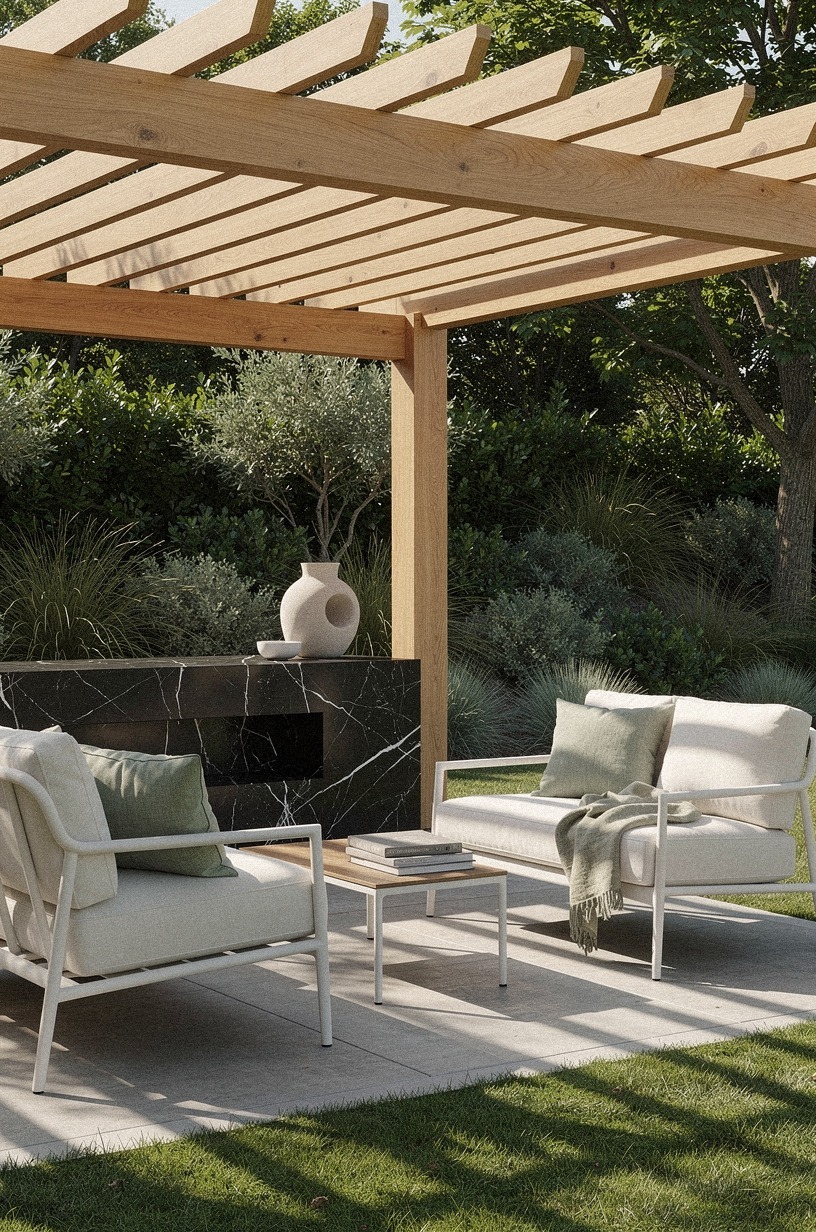
A full pergola over the entire patio is expensive and often too dark. What works better in a large yard is a partial pergola: one corner of the anchor zone, maybe 8×8 feet, with a slatted roof that blocks 40% of the sun. I built mine from cedar 4×4s and 1×2 slats spaced 4 inches apart.
Total cost: about $600 in lumber plus a weekend.
The partial coverage does something psychological. It creates a ceiling for one part of the yard, which makes the rest feel like a garden rather than a void.
I hung a wisteria vine on the front beam, and by the second summer it was dense enough to drop petals on the table in June. That's the detail that makes people ask where you bought it.
You didn't. You built it.
And that matters.
9Use sound to shrink the edges
The biggest giveaway of an empty yard is the echo. Sound travels across open grass and bounces off fences, making the space feel hollow.
I added a small water feature, a cast-stone bowl fountain from Wayfair, 18 inches across, $120, at the far end of the anchor zone. The running water creates a white-noise boundary that masks traffic and gives the ear a place to rest.
Wind chimes work too, but sparingly. One set of bronze tubes in a tree near the seating area is enough. More than that and you're running a percussion section. I also planted bamboo in a contained bed along one fence line.
It rustles in any breeze and creates a living sound wall. Warning: use clumping bamboo, not running.
The running kind will eat your yard and your neighbor's. I made that mistake at a rental in 2019 and I'm still apologizing.
For more on outdoor sound design, my garden acoustics guide covers water features and wind breaks that actually work.
10Paint or stain what you can't replace
Not everything in a backyard ages well. Fences gray.
Decks fade. Sheds look like sheds.
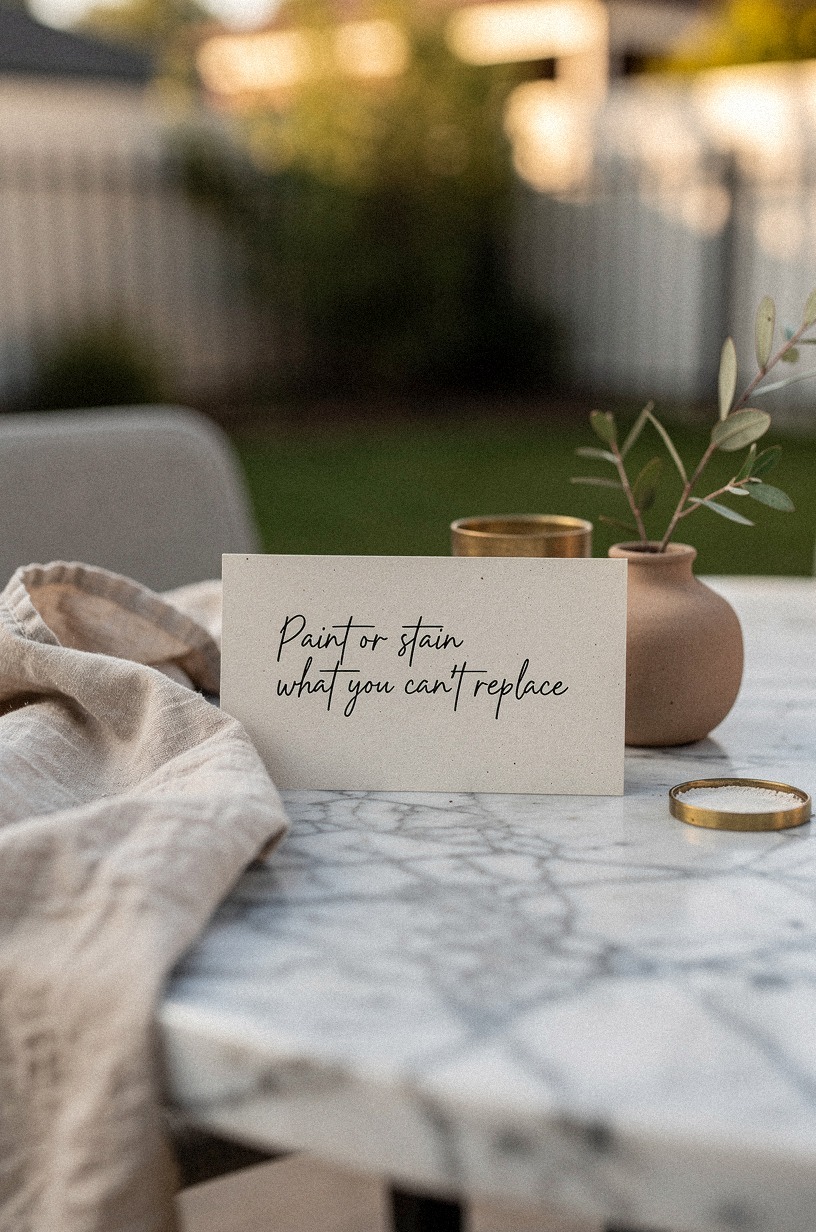
The cheapest transformation I've done was staining a weathered fence with Benjamin Moore Arborcoat in a warm clay stain, a soft, earthy tone that made the wood look intentional instead of neglected. One Saturday, $80 in stain, and the entire back boundary felt like a design choice.
For concrete or brick, Sherwin-Williams Emerald Exterior in a warm linen like Accessible Beige softens the industrial feel. I painted a poured-concrete retaining wall that ran along one side of the yard, and the color shift made it read as a deliberate plinth instead of a foundation mistake.
Paint is the most underrated outdoor tool. It doesn't change the structure.
It changes how your eye weighs it.
11Create a destination at the far end
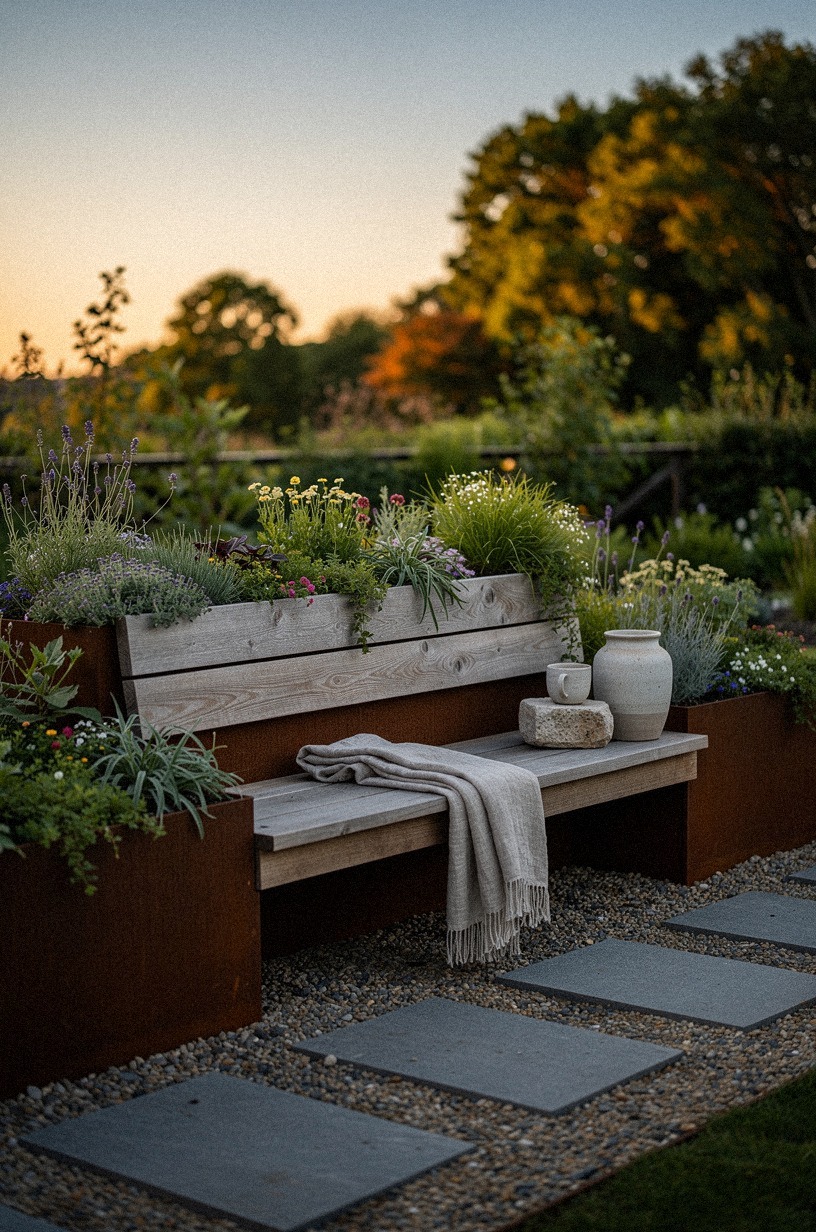
If your yard is large enough that the back fence feels like a horizon, you need a reason to walk there.
12Add a cooking zone that draws people out
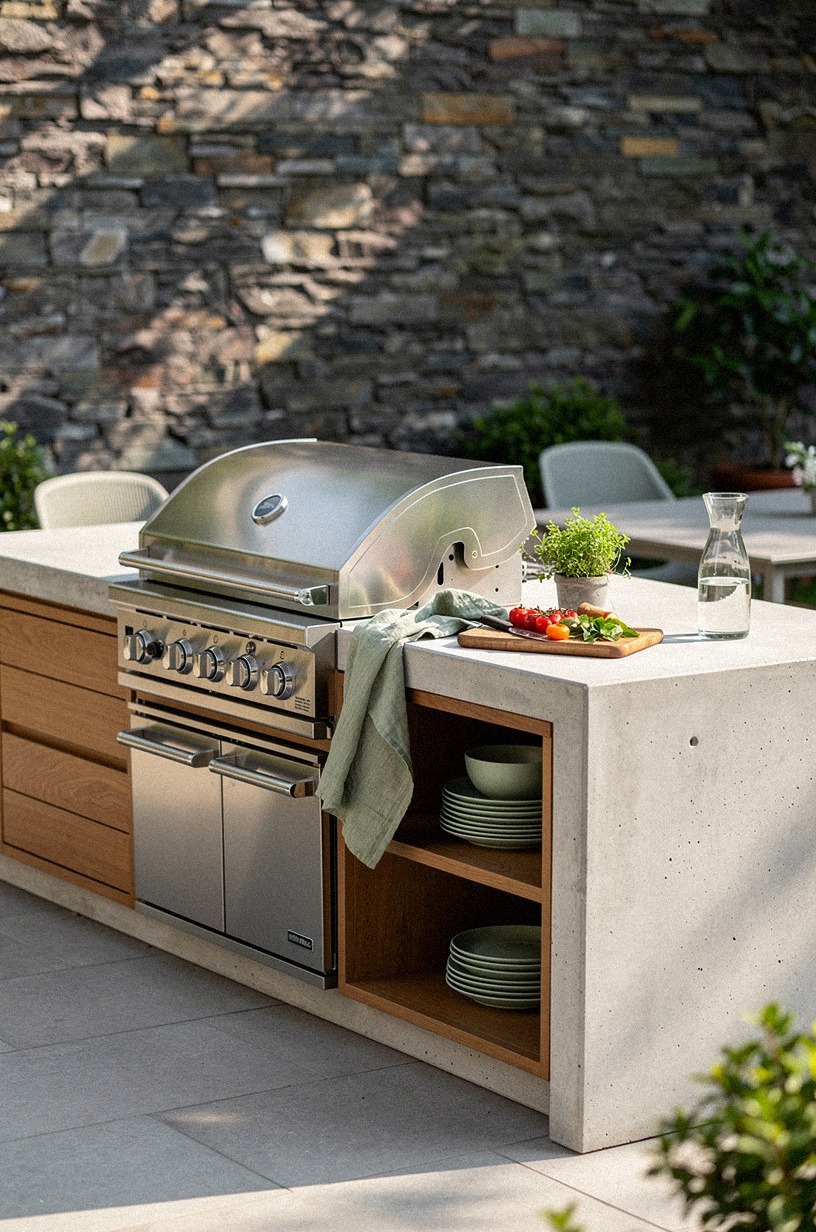
Nothing pulls people into a yard like the smell of food cooking. I added a Kamado Joe Classic II in a corner near the anchor zone, not because I'm a grill obsessive but because it gives people a reason to gather.
The ceramic body holds heat like a furnace and the dome shape looks sculptural even when it's cold. At $1,200 it's an investment, but a Weber Kettle at $200 does the same social job if you're budget-minded.
The placement matters more than the grill. Put it where the cook can face the seating area, not the fence.
Nobody wants to talk to your back while you're flipping burgers. I built a Calacatta marble prep shelf on casters so it rolls against the grill when needed and tucks against the fence when not.
That mobility is what keeps the yard from feeling cluttered. And the marble stays cool under your hand even in July, which matters more than you'd think.
13String lights overhead like a canopy
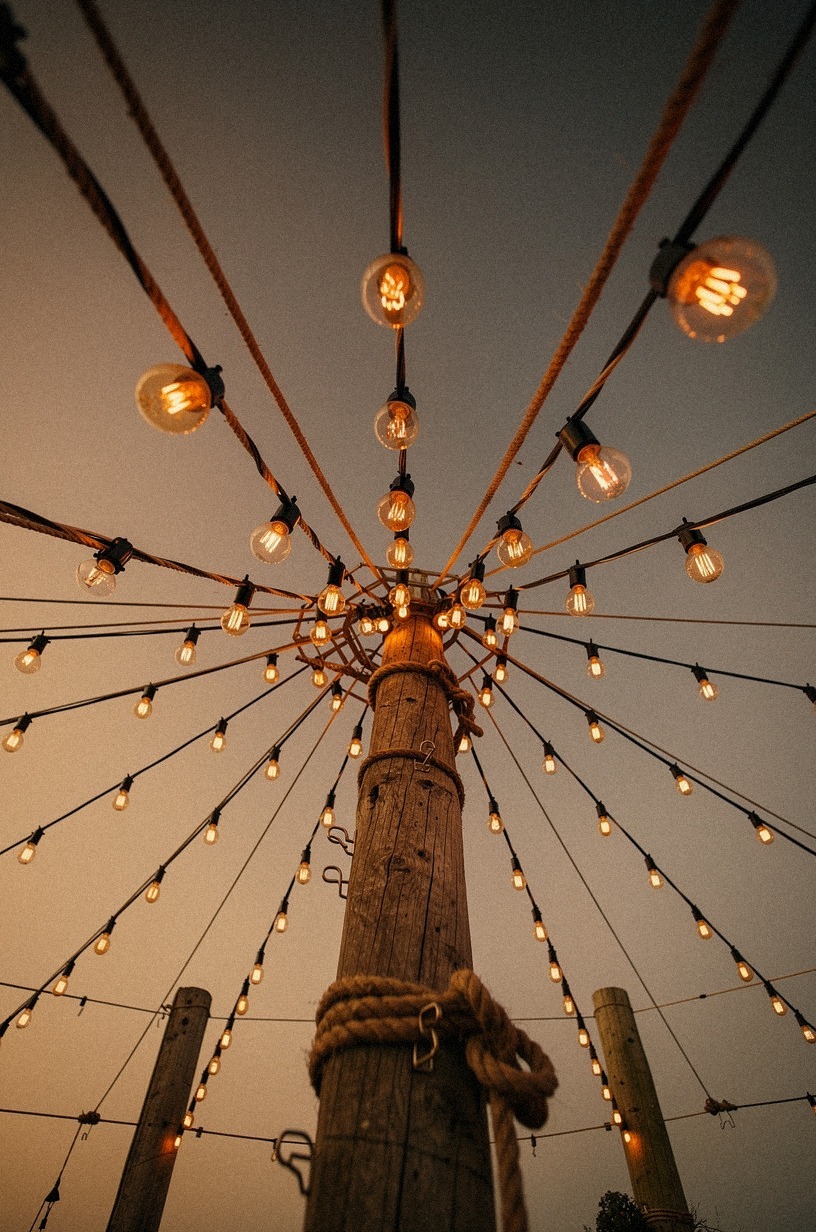
String lights alone won't fix an empty yard, but they're the single fastest upgrade you can make.
14Use a daybed as your outdoor sofa
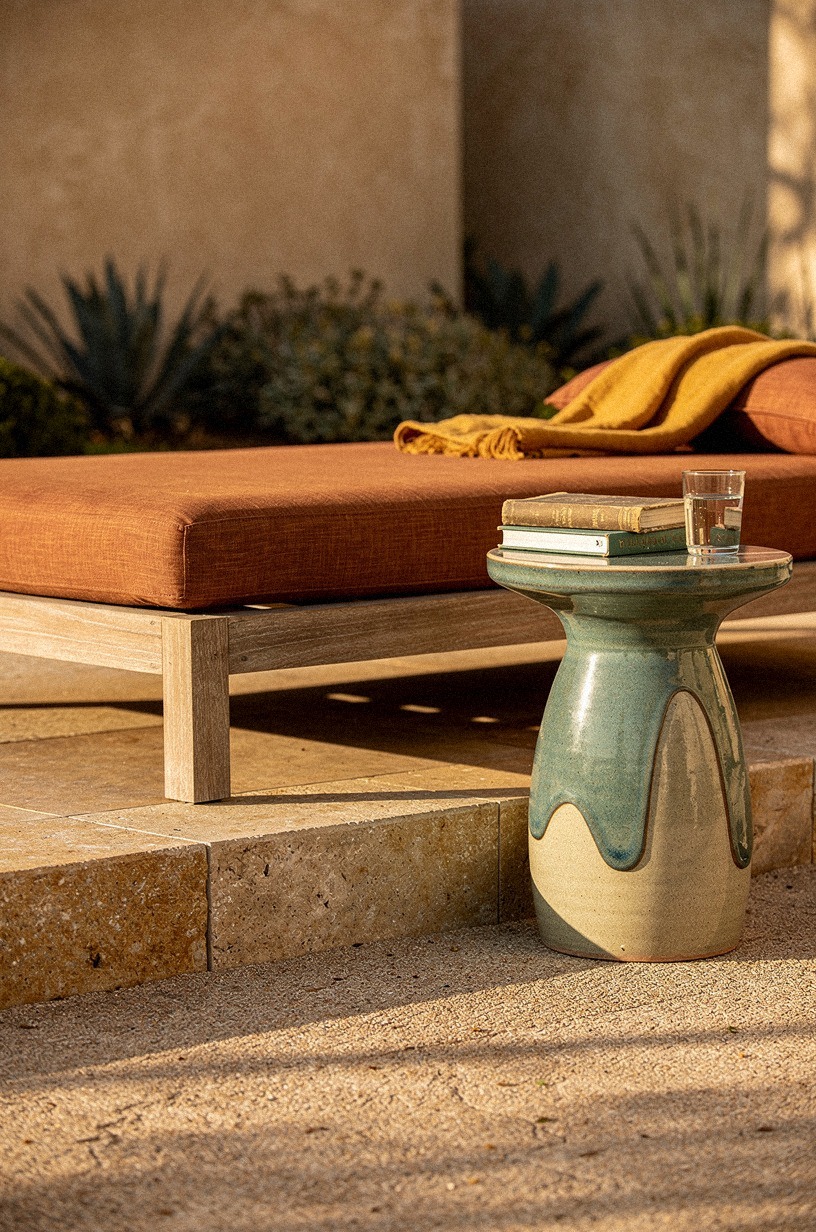
Outdoor sofas are almost always too deep and too low. A daybed solves both problems.
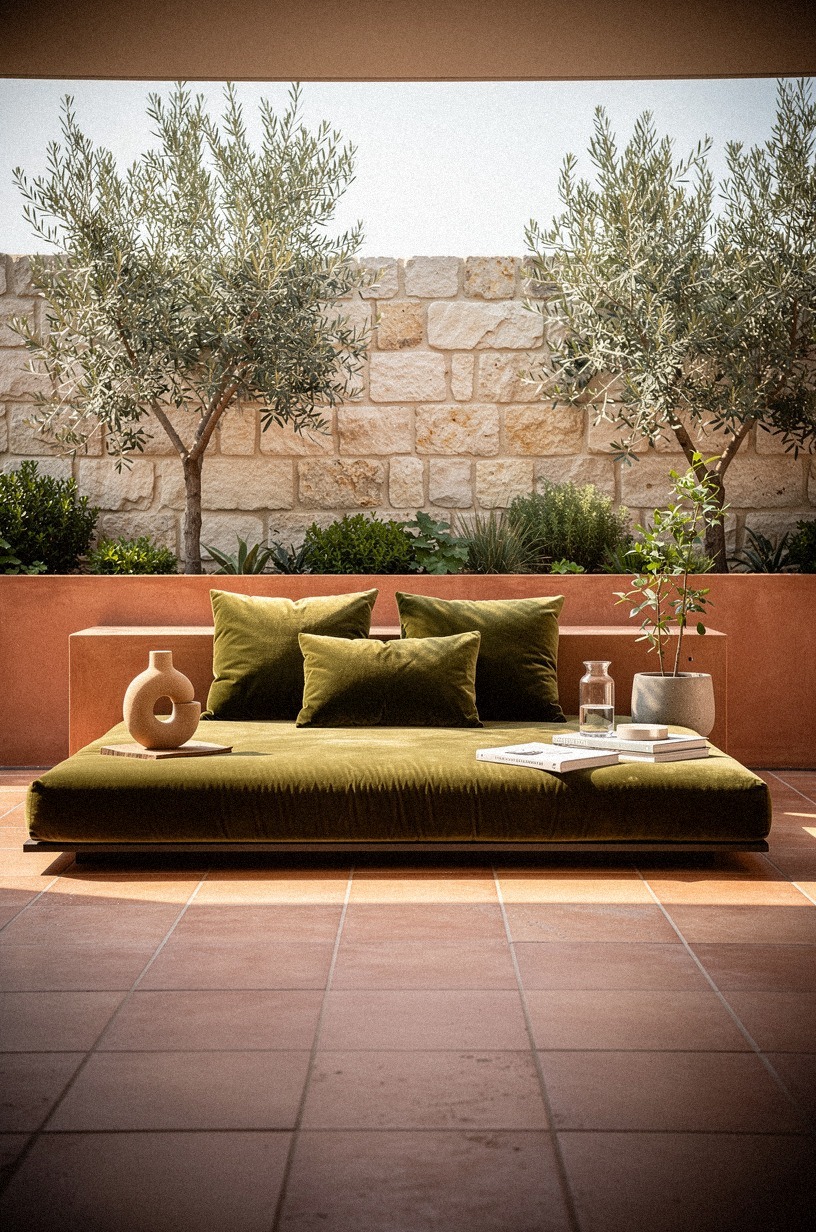
I found a white oak daybed with a slatted base at a estate sale, added a 5-inch Sunbrella mattress in Canvas Rust, and suddenly the anchor zone had a piece that felt like furniture, not patio equipment. The height is perfect for lounging with a book or napping, and the slatted base lets air through so the mattress doesn't mold.
The styling is what makes it feel intentional. I draped a Belgian flax linen throw in natural over one arm, added two 16-inch velvet pillows in rust, and kept a wicker basket with extra blankets underneath.
The mix reads as collected, not purchased. And the daybed is wide enough that two people can sit without touching, which matters more than you'd think for comfortable conversation.
If you're hunting for outdoor furniture that doesn't look like it came from a big-box store, my outdoor furniture guide has the brands that hold up.
15Build a living wall for vertical enclosure
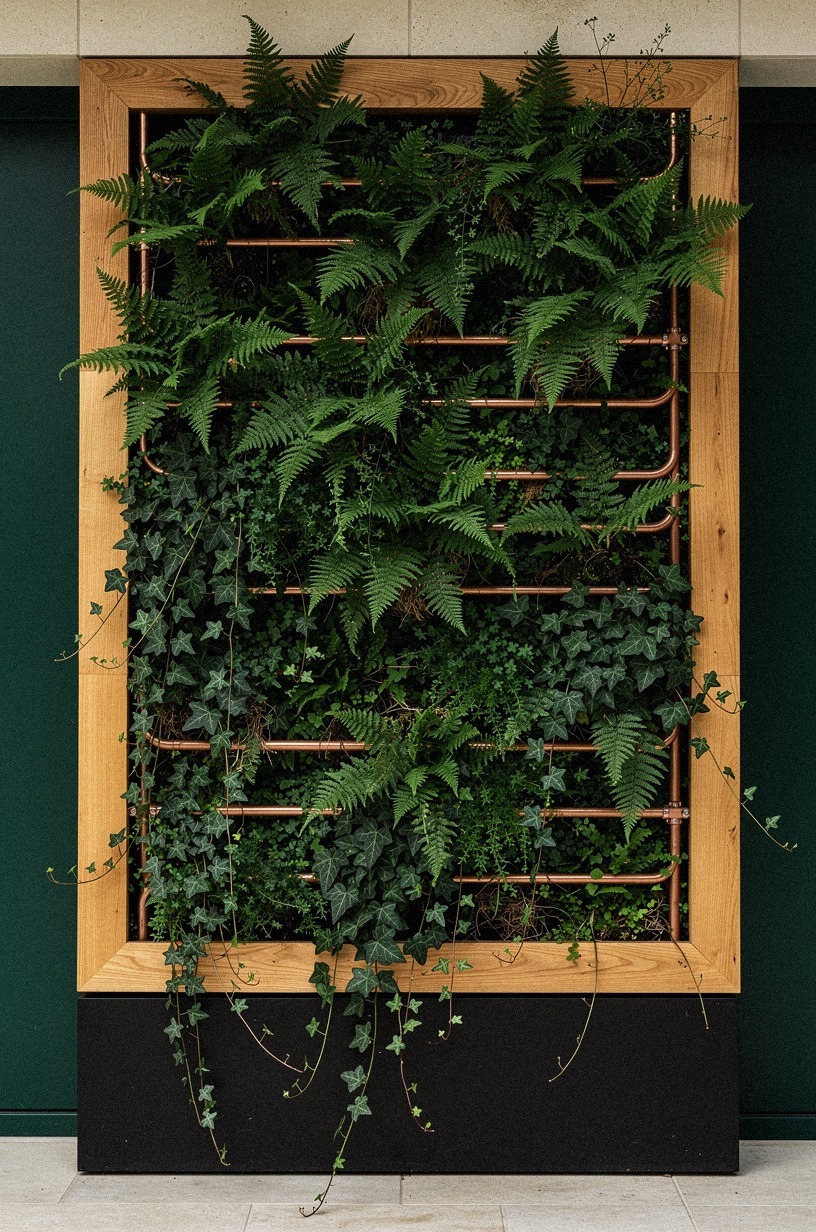
When the yard is wide, you need height without blocking light.
16Add a hammock between two trees
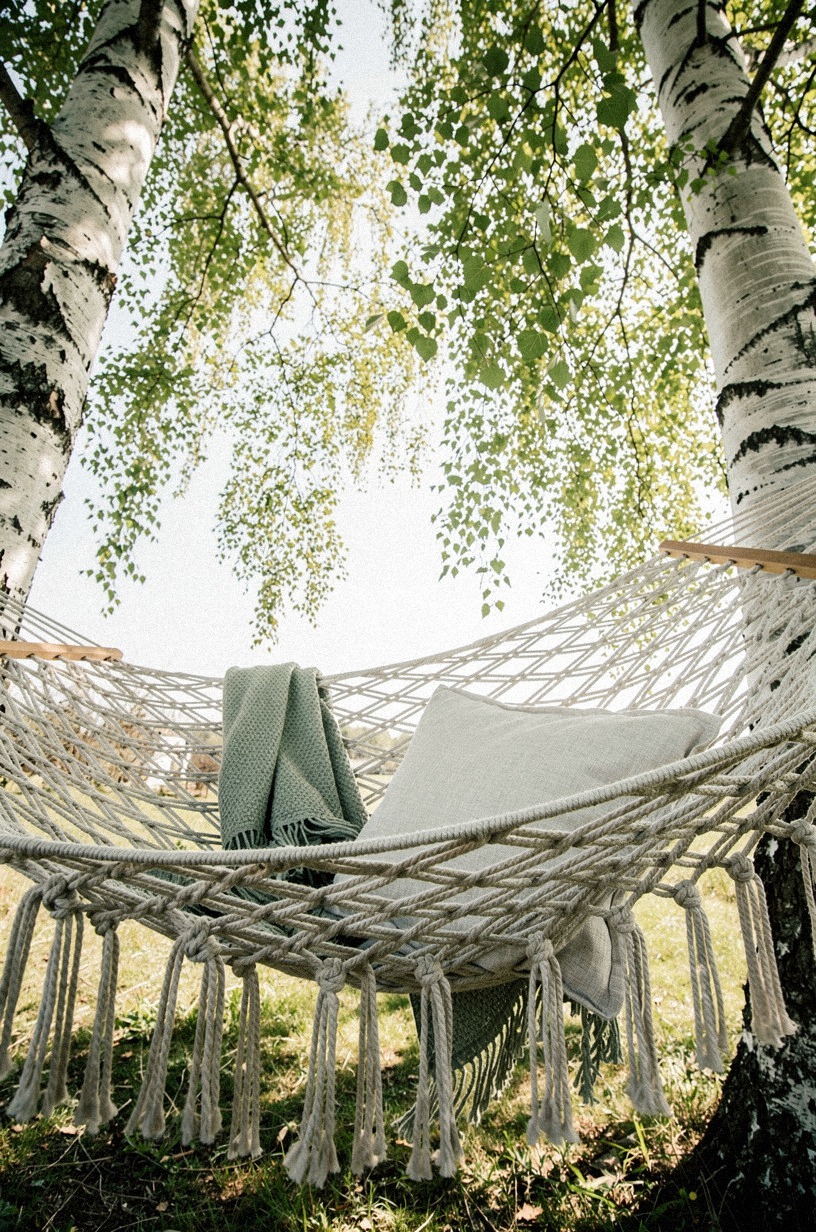
A hammock is the ultimate cozy signal. It says "this yard is for resting, not just entertaining." I hung a Brazilian cotton hammock with a spreader bar between two oak trees at the far end of the property.
The spreader bar keeps it flat and wide, so it's comfortable for reading or napping without the cocoon squeeze of a traditional hammock. The cotton is soft but it needs to come inside when it rains.
The placement is strategic. It's not in the anchor zone, it's a separate destination.
You walk to it. That journey makes the yard feel bigger and more interesting.
I added a small walnut stool beside it for a drink and a book, and a solar lantern in the tree above for evening reading. The whole setup cost about $120. And it's the most photographed spot in the yard, which tells you everything about what people actually want from a backyard.
17Use gravel as a design material, not a default
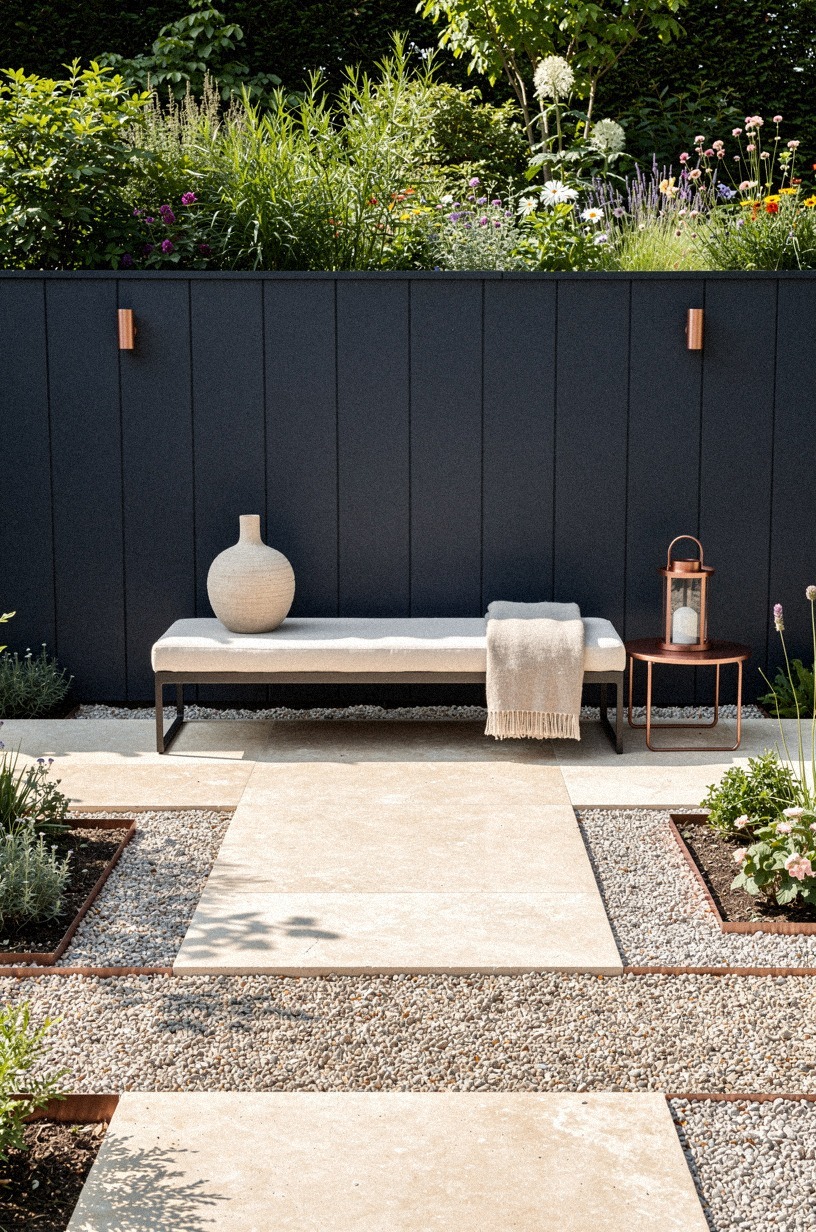
Gravel gets a bad reputation because people use it as a cheap filler.
What This Actually Costs
I get asked the budget question every time I share the yard. Here's the honest breakdown, based on what I spent and what I've quoted for friends.
And here's the material reality if you're buying piece by piece:
My own setup landed in the mid-tier, about $3,200 over two years. The pergola was the biggest single expense at $600.
The mirror was $40 at a flea market. The plants were $200 spread across three seasons.
The point isn't to spend a lot. It's to spend deliberately, one zone at a time, so each purchase builds on the last instead of floating in space.
Why the "Outdoor Room" Idea Keeps Failing (And How to Fix It)
You've heard the phrase "outdoor room" a thousand times. Magazines love it.
Designers use it in every pitch. And yet most backyards still feel like lawns with furniture on them. Here's why: the advice usually skips the step that makes a room a room.
An indoor room works because it has boundaries you can't cross. Walls. Doors. The edge of a rug.
Your brain reads these as limits, and limits create intimacy. Outdoors, the boundaries are invisible. The property line is 50 feet away and your eye knows it.
So the move isn't to pretend you're indoors. It's to create artificial limits that your eye accepts as real.
The three tools that actually work are height, overlap, and repetition. Height: the light stack and the pergola create a ceiling plane.
Overlap: the rug under the furniture legs creates a boundary you can see. Repetition: using the same chair at the far end of the yard and near the house creates a visual rhyme that pulls the space together.
Without all three, you have furniture in a field. With them, you have a room that happens to have grass instead of carpet.
I've designed enough backyards now to know the difference between a yard that photographs well and one that feels good at 7 p.m. on a Tuesday. The photo yards have one perfect angle and dead space everywhere else. The feel-good yards have multiple spots where you'd actually want to sit, and each one is complete enough to hold you there.
That's the standard. Not Pinterest-perfect.
Tuesday-evening comfortable.
The other mistake I see is treating the yard as a single project instead of a sequence. People save up, buy everything at once, and wonder why it looks like a catalog.
The yards I love most were built over time: a chair one summer, lights the next, a tree that took three years to mature. The patience shows. The layering shows.
And you learn what you actually use instead of what you thought you'd use. I bought a full dining set in year one.
We eat out there maybe four times a year. The Adirondack nook gets used four times a week. If I'd planned everything upfront, I'd have backward priorities and a table full of pollen.
What People Always Want to Know
What is the best way to make a large backyard feel cozy on a small budget?
Start with paint and plants. A dark fence stain and three layers of greenery at the perimeter will transform the feel for under $200.
Then add a rug and one good seating piece. The IKEA GURLI throw and a secondhand teak chair from Facebook Marketplace get you most of the way there without touching the mid-tier budget.
I've seen yards that look designed for $400 and yards that look empty for $4,000. The difference is focus, not cash. If you want more budget backyard ideas, my small backyard guide has the $200 starter plan I recommend first.
Where can I buy outdoor pieces that don't look cheap?
Article and West Elm both carry outdoor lines with real material honesty, teak, powder-coated steel, Sunbrella. Target Threshold is the best budget option for rugs and textiles that hold up.
Wayfair has the widest range but requires filtering: sort by material and skip anything with "resin wicker" in the title. For one-of-a-kind finds, Facebook Marketplace and estate sales beat every retailer. My mirror and two of my chairs came from estate sales, and they're the pieces people ask about first.
How much does a backyard cozy makeover cost?
A meaningful transformation starts around $200 for paint, lights, and plants. A full anchor zone with quality furniture and a pergola lands between $1,500 and $6,000.
Outdoor kitchens and hardscaping push it to $10,000+. The cheapest upgrade I've done was $45 in string lights that changed how the whole yard felt after dark.
Start there. Darkness is free to fix and expensive to ignore.
Can I do this if I rent?
Yes, but skip the pergola and the fence stain. Focus on portable anchors: a polypropylene rug, battery lanterns, potted grasses in lightweight containers, and peel-and-stick solar lights that clip to railing or fence without drilling.
Everything in my anchor zone except the pergola could move in a single truck load. If your landlord allows minor holes, tension-mounted string light poles work without permanent mounts.
Just patch the holes when you leave. For more renter-friendly outdoor ideas, my rental backyard guide has the full portable setup.
Is a large backyard makeover worth it if I only use it in summer?
Worth it, but design for the season you actually use. If you're a three-season household, invest in the fire element and layered textiles.
If you're strictly summer, put the money into shade and plants. The Napoleon fire table I mentioned extends our usable season from May through October in Ohio.
Without it, we'd lose September and most of October. That's two extra months of use for an $800 investment.
The math works if you actually sit out there.
What's the most common mistake people make?
Buying everything at once from the same store. Matching sets kill personality. The best yards look collected, not purchased.
My rule: never buy two major pieces from the same retailer in the same year. It forces you to hunt, compare, and end up with textures that actually differ. The second most common mistake is placing furniture in the middle of the lawn. Anchor to a hard surface or a rug.
Floating furniture reads as temporary. Grounded furniture reads as home.
How do I choose between a fire pit and a fire table?
A fire pit is social and primal. Everyone gathers around it, the flame is low, and the conversation flows.
A fire table is civilized and warm. The flame is at eye level, the heat radiates across the seating area, and you can still put a drink down.
I chose the table because I wanted warmth, not theater. If you have kids who roast marshmallows, get the pit. If you want to extend your season, get the table.
Both are valid, but they serve different evenings.
Where I'd Start First
If I had to pick one step, I'd start with the anchor zone. You can't layer warmth on top of a scattered yard, everything else you buy will fight the space instead of building on it.
Get one corner right first. The rug, the chairs, the lights. Then let the rest grow outward from there. I've redone three backyards now, and the ones that worked all started small and expanded.
The one that failed was the one where I tried to solve the whole acre at once. Pin the anchor zone idea for later. Everything else lands after that.