
 by
by I've styled a lot of living rooms, and the cozy ones never happen by accident. The reading nook is usually the last thing people think about, and it's the first thing they really use once it's there. Most of us don't have a spare bay window or a built-in alcove, so we assume a real nook is out of reach. It's not. The short answer: a proper reading corner runs about $300 to $1,200 if you're styling around what you already own, and the payoff is immediate. You don't need more space. You need better boundaries.
- Float a slim bench into the window bay for a sunlit perch
- Angle a floor lamp with a warm bulb right behind the chair
- Drape a chunky knit throw over the armrest, not the seat
- Tuck a rolling cart beside the chair for a mini library stack
- Layer a sheepskin rug underfoot to soften the floor zone
- Mount a floating shelf above the nook for a single trailing plant
- Choose a chair with a high wingback to cradle the reader
- Paint the alcove wall a shade darker than the main room
- Stack vintage trunks as a side table with hidden blanket storage
- Hang a brass swing-arm sconce to free the side table surface
- Curate a small basket of unread books as a visual prompt
- Add a narrow ledge behind the seat for a mug and reading glasses
- Use a folding screen to carve the nook from open floor space
- Swap overhead lighting for a dimmable pendant low over the zone
- Line the back of the niche with vertical tongue-and-groove paneling
1Float a slim bench into the window bay for a sunlit perch
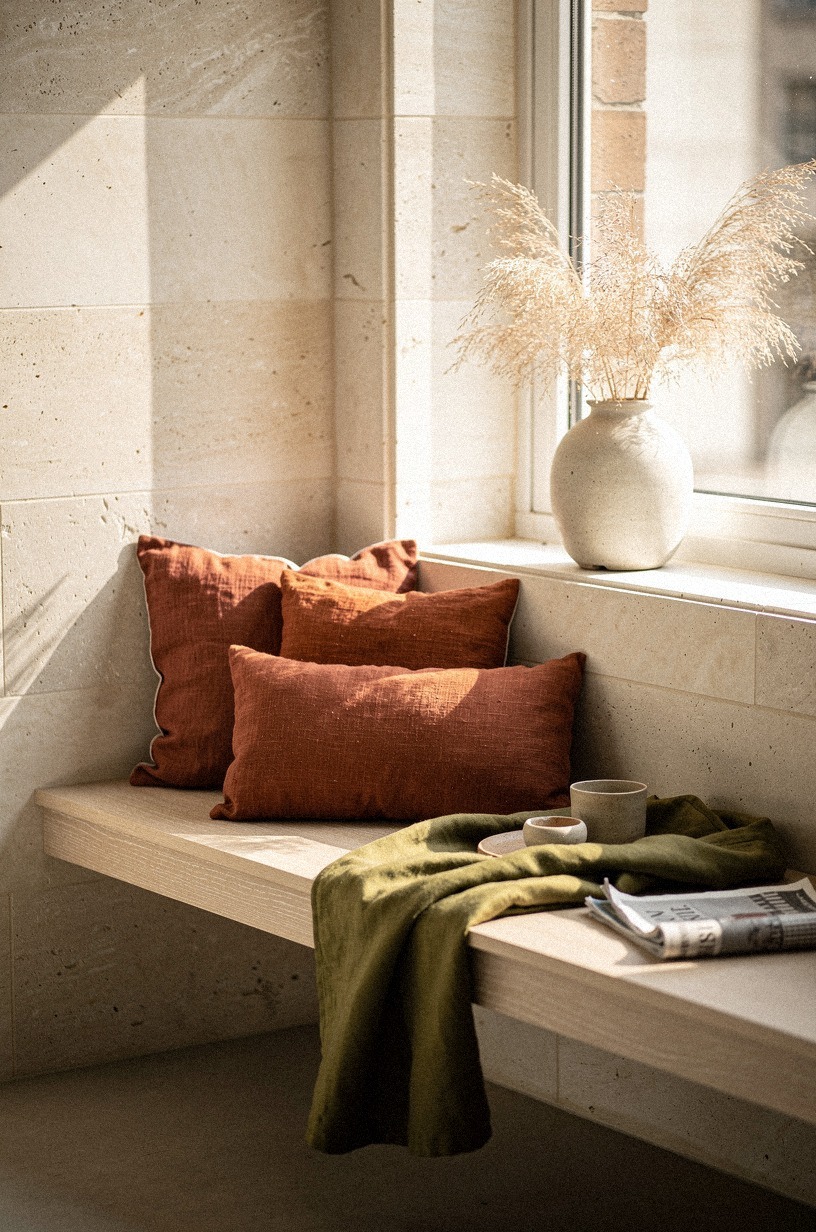
A window bench doesn't have to be built-in to feel permanent. A slim cerused white oak bench floated into the bay gives you a perch that catches morning light without blocking the view. The move is keeping the proportions tight: a seat depth around 18 inches keeps it from eating the walkway, and a height of 18 to 20 inches lets you drop in without climbing.
I've seen people shove a full dining bench under a window and wonder why the room feels cramped. Don't.
The floating look comes from legs set back, or better, a wall-mounted frame that clears the floor entirely. Layer the seat with terracotta linen cushions and an olive wool throw arranged casually, not staged.
The pale stone walls in the space catch the light and bounce it back into the room, which is half the warmth right there. If you're working with a smaller window, the same logic applies: slim bench, light cushion, one throw.
You'll use it more than the sofa.
2Angle a floor lamp with a warm bulb right behind the chair
Overhead light is the enemy of reading. It flattens everything and makes your eyes work harder than they need to.
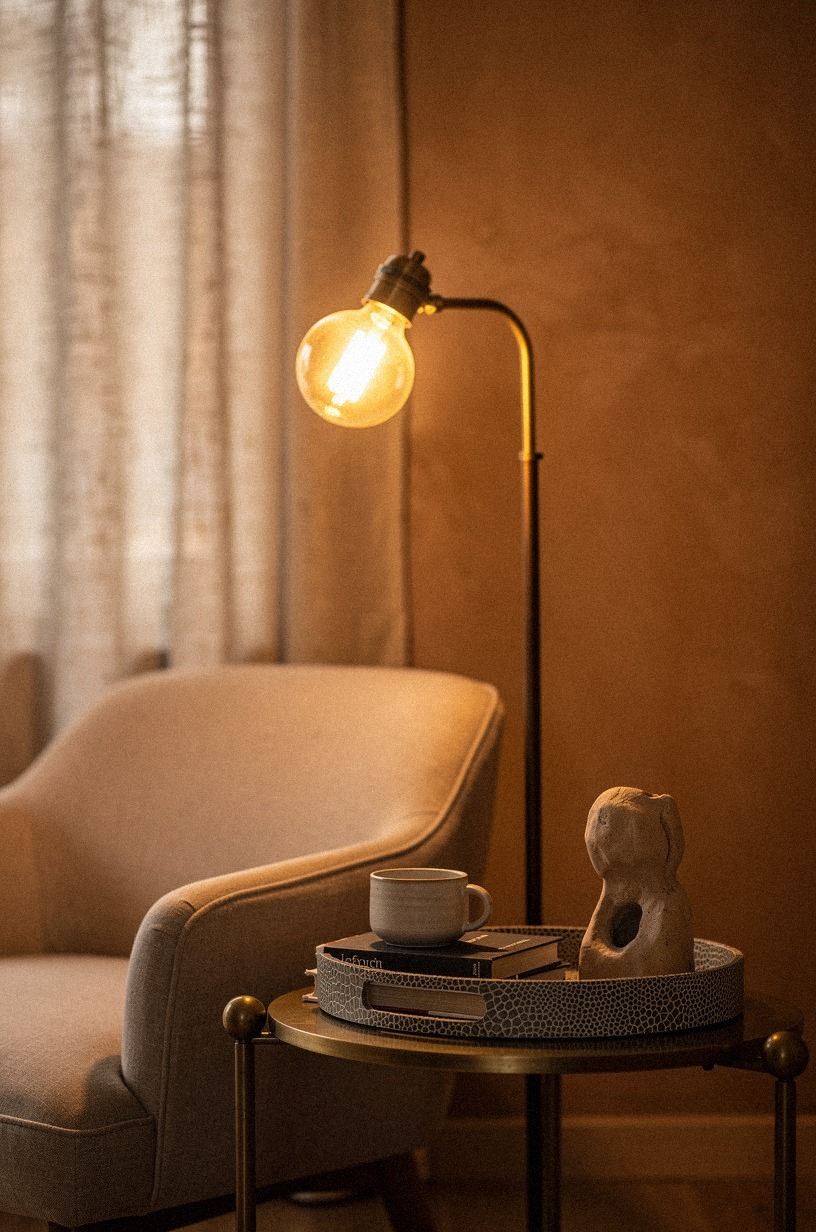
A floor lamp angled behind the chair, slightly above shoulder height, throws a pool of light that stays on the page without spilling into the rest of the room. The bulb matters more than the fixture.
Warm, dimmable, nothing over 2700K. The aged brass base and arm on the lamp add weight without clutter, and the clay-toned walls with linen drapes filter the daylight so the transition to evening light feels natural.
I've tried the clip-on reading lights. They're fine for travel, but at home you want something with presence.
The lamp should feel like part of the furniture plan, not an afterthought. If you're wiring up the whole room, check out our warm lighting guide for bulb temps and placement rules. The soft side-glow is what makes a room feel like an evening, not an office.
3Drape a chunky knit throw over the armrest, not the seat
This is a small move with an outsized payoff. The seat stays clear for sitting.
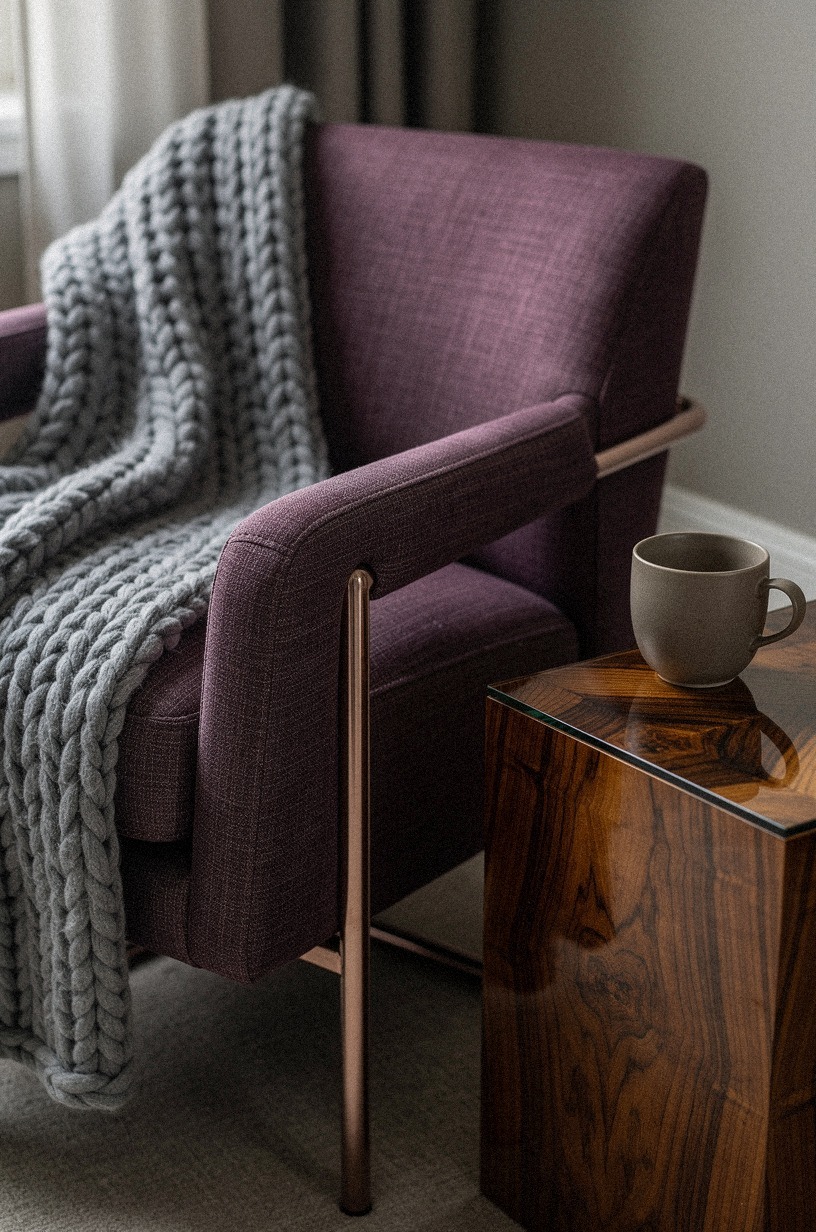
The throw lives on the armrest, ready, visible, inviting. A chunky merino knit in cream or oatmeal works on almost any palette, and the texture reads "cozy" before you even touch it.
The plum and grey upholstery on the chair gives you a warm base, and the rose gold hardware on the side table glints just enough to keep the corner from feeling too soft. The book-matched walnut surface on the table adds grain and depth without competing. I've made the mistake of folding the throw across the seat back. It looks tidy for about five minutes, then it slides, then it looks messy.
The armrest is the right home. One fold, one drape, done.
The throw becomes part of the chair's silhouette rather than a separate object fighting for space.
4Tuck a rolling cart beside the chair for a mini library stack
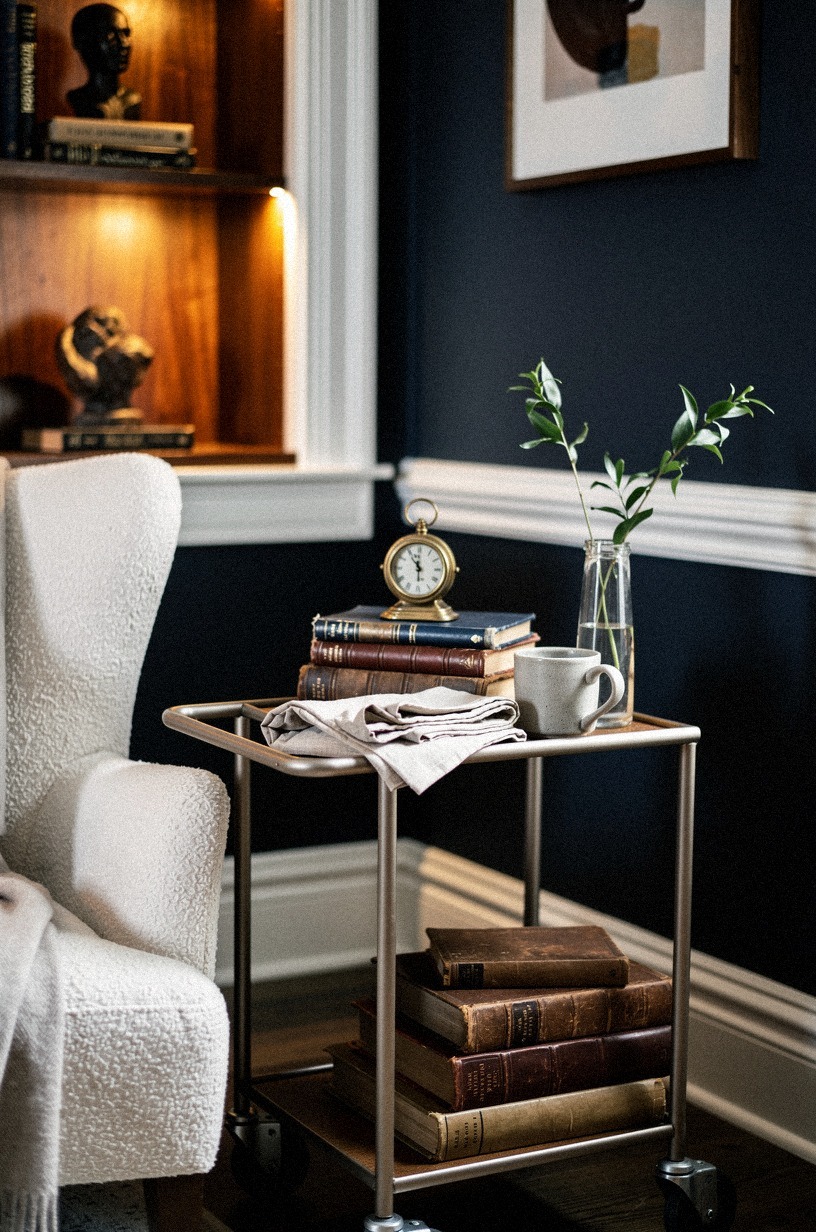
A dedicated bookshelf is great if you have the wall.
5Layer a sheepskin rug underfoot to soften the floor zone
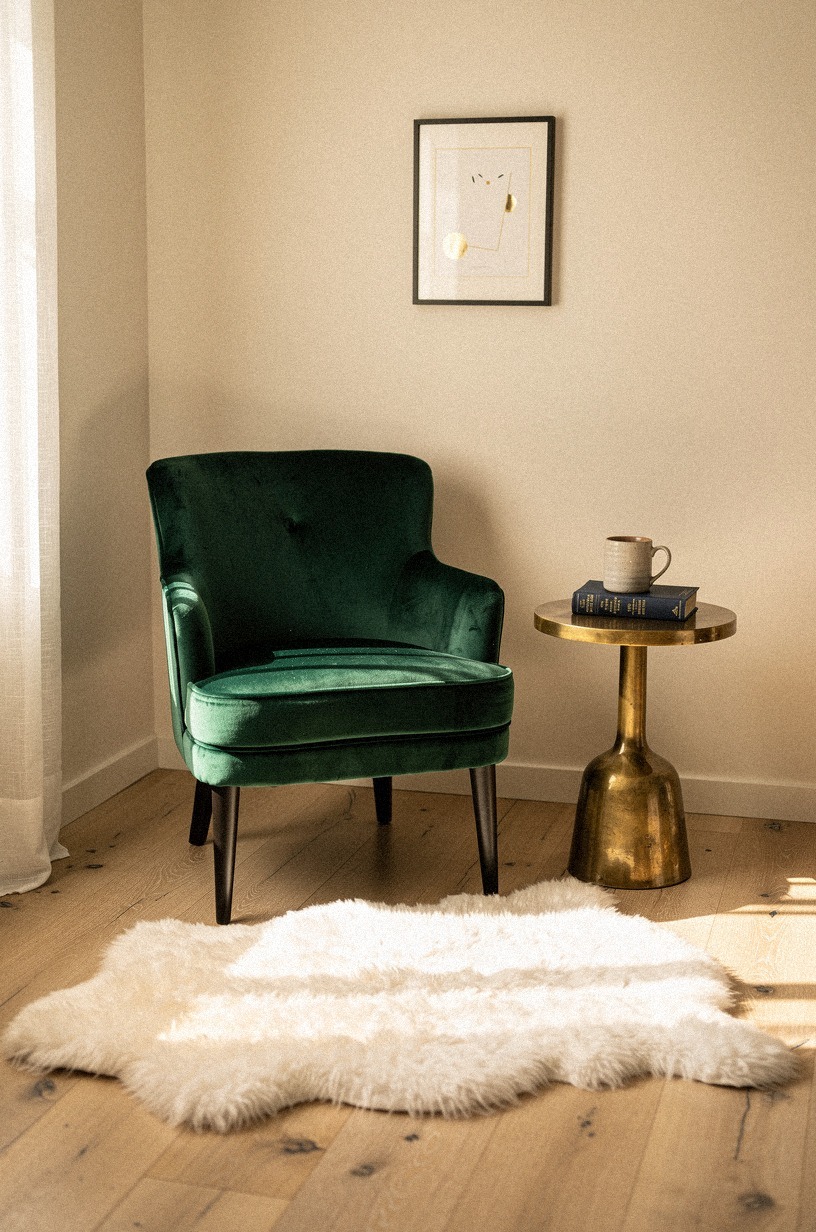
The floor beneath a reading nook is usually an afterthought. It shouldn't be.
A sheepskin rug layered over wide-plank flooring creates a zone that feels intentional the moment you step into it. The emerald velvet chair and cream walls give you a palette that the sheepskin bridges: warm against cool, soft against hard. The unlacquered brass side table developing warm patina adds a third temperature to the mix. Gold accents on the lamp base catch the light and keep the corner from feeling too muted.
I've layered sheepskin over jute, over oak, over tile. It works on almost everything because the texture is so distinct from typical flooring.
The key is size: at least 2 by 3 feet so your feet land on it naturally when you sit down. Anything smaller reads as a bath mat and breaks the spell entirely! If you want to get the texture right, our cozy bedroom sleep guide breaks down how to layer rugs for maximum warmth.
6Mount a floating shelf above the nook for a single trailing plant
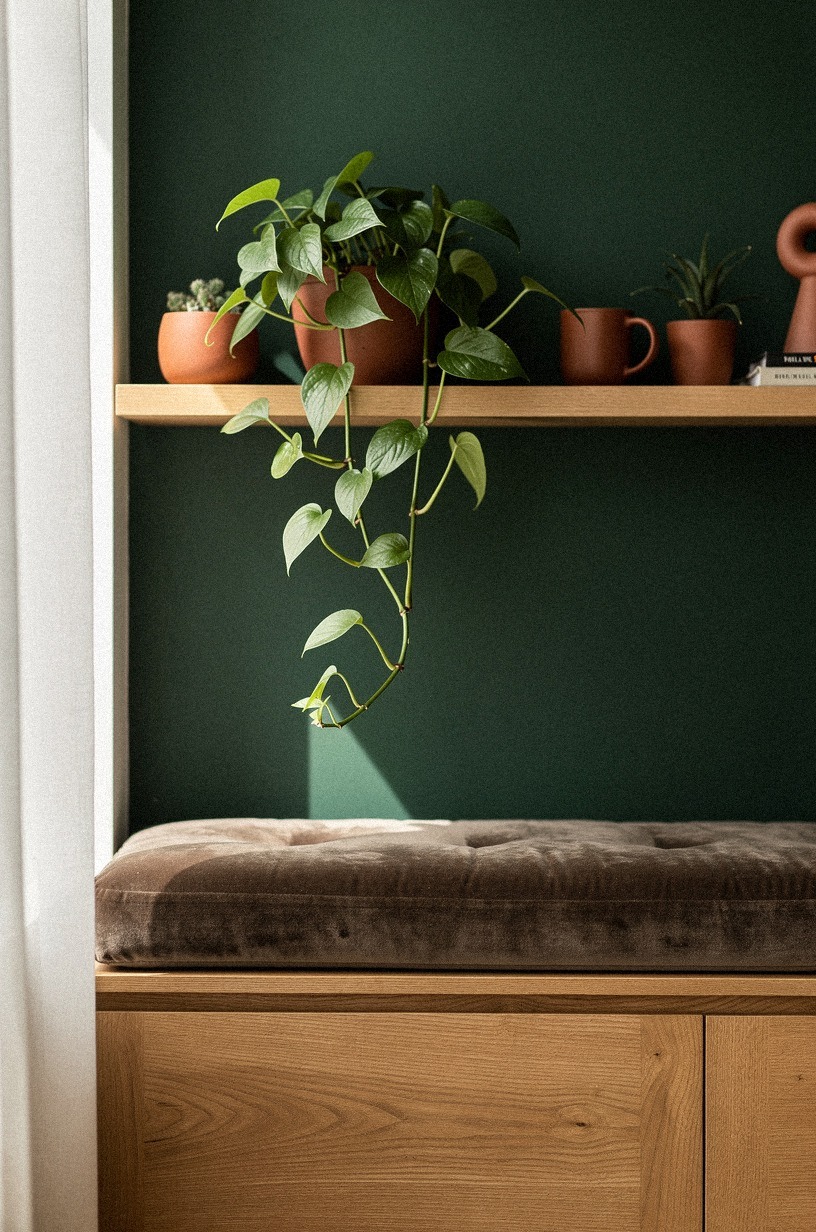
One shelf, one plant, done. A floating shelf mounted above the window nook with a single trailing pothos cascading down adds life without clutter.
The forest green wall beyond the nook with rust ceramic pots gives the plant a context that feels intentional, not accidental. The natural oak frame on the window and the deep-pile mohair cushion below add layers of texture that the plant softens.
I've tried multiple shelves with multiple plants. It becomes a maintenance schedule, not a reading corner.
One plant, well-chosen, well-placed, is enough. The shelf should sit 12 to 18 inches above the window frame so the trailing vines don't block the light.
If you're not good with plants, pothos is the right choice: it tolerates low light, irregular watering, and general neglect. It will trail down the wall and look like you planned it, which you did.
For more low-maintenance corner ideas, our bedroom declutter for sleep guide shows how to style small spaces without adding clutter.
7Choose a chair with a high wingback to cradle the reader
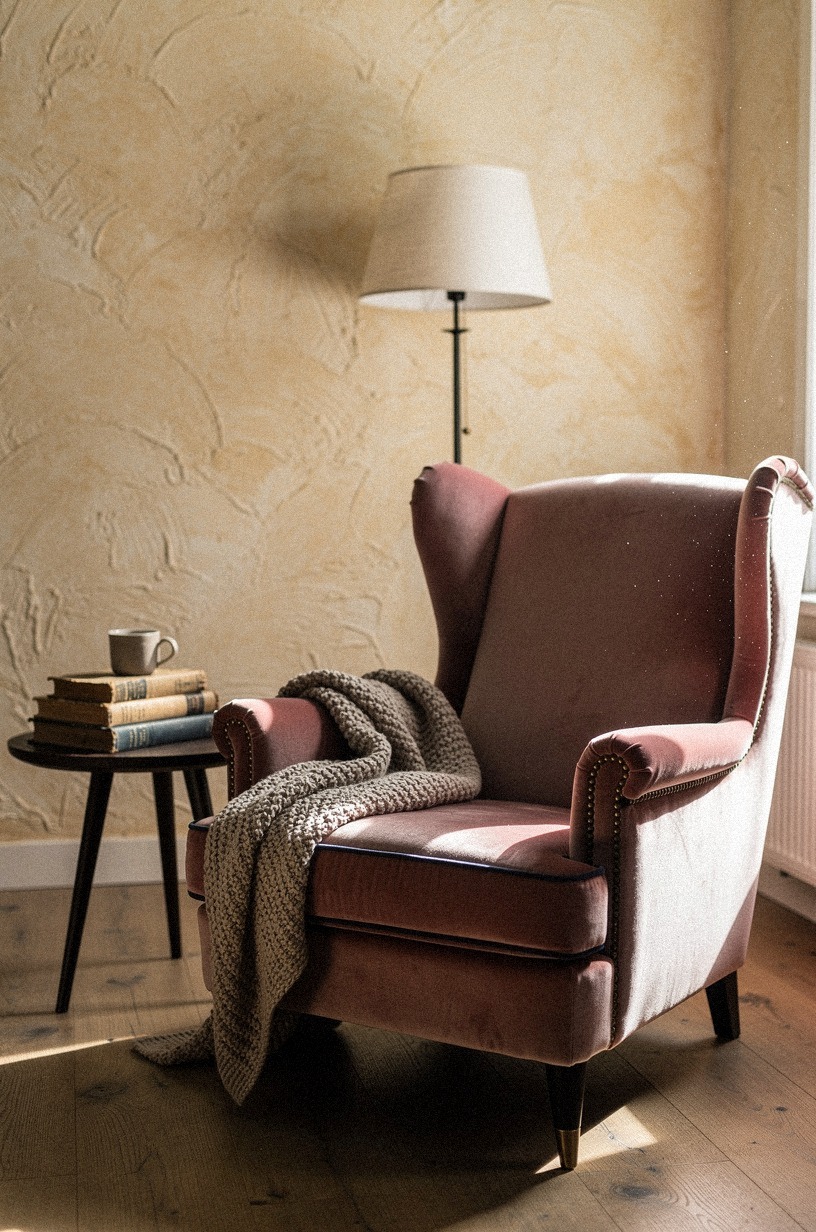
The chair is the non-negotiable. A high wingback with dusty rose velvet upholstery and charcoal piping cradles the reader from behind and from the sides, creating a sense of enclosure that makes the nook feel private even in an open room.
The brass nailhead trim catches light and adds a line of detail that keeps the silhouette from feeling heavy. The hand-applied Venetian plaster on the walls behind the chair gives the corner a depth that flat paint can't match. I've sat in low-backed chairs that look great in photos and feel like dining chairs when you try to read in them. The wingback is the right height for resting your head, for angling a pillow, for feeling held by the piece.
Seat depth at 22 to 24 inches is the sweet spot: deep enough to curl into, shallow enough that your feet touch the floor without effort. If you're hunting for the right seat, our best pillow for reading in bed guide covers the ergonomics of reading posture, which applies to nook chairs too.
The same principles of support and angle matter whether you're in bed or in a wingback.
8Paint the alcove wall a shade darker than the main room
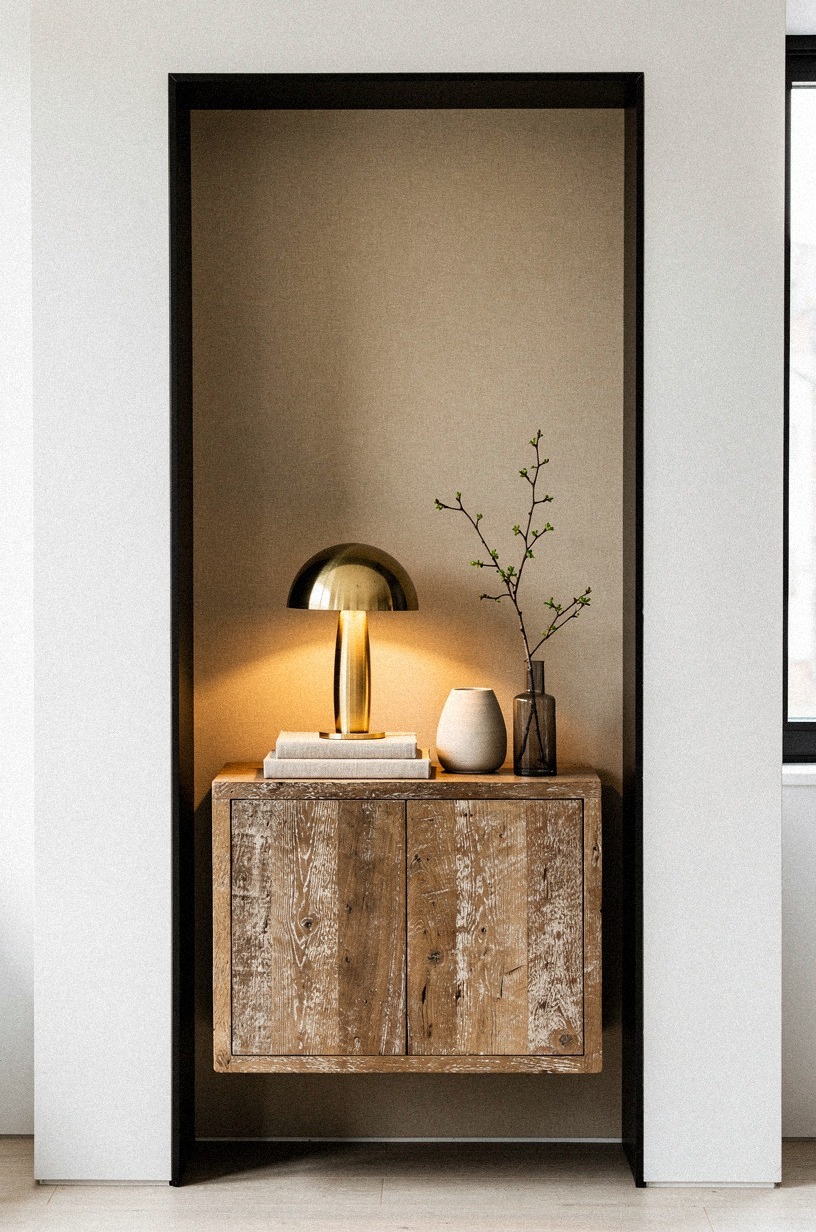
This is the cheapest way to create a zone without building a wall. The alcove wall painted one shade darker than the main living room gives the nook a visual boundary that costs about $60 in paint and a Saturday.
The transition from warm white walls to camel in the recess feels gradual and intentional, not jarring. A black accent frame on a reclaimed weathered teak console adds contrast and anchors the corner.
I've seen people go too dark, thinking drama is the goal. It's not.
The goal is definition. One shade darker is enough to signal "this space is different" without making the nook feel like a cave.
If you're renting, this is still doable: paint the alcove, leave the rest, repaint when you leave. The cost of a quart of good paint is less than most throw pillows, and the impact is ten times bigger.
For a full breakdown of paint choices that create cozy boundaries, our cozy bedroom sleep guide covers the best warm tones for small spaces.
9Stack vintage trunks as a side table with hidden blanket storage
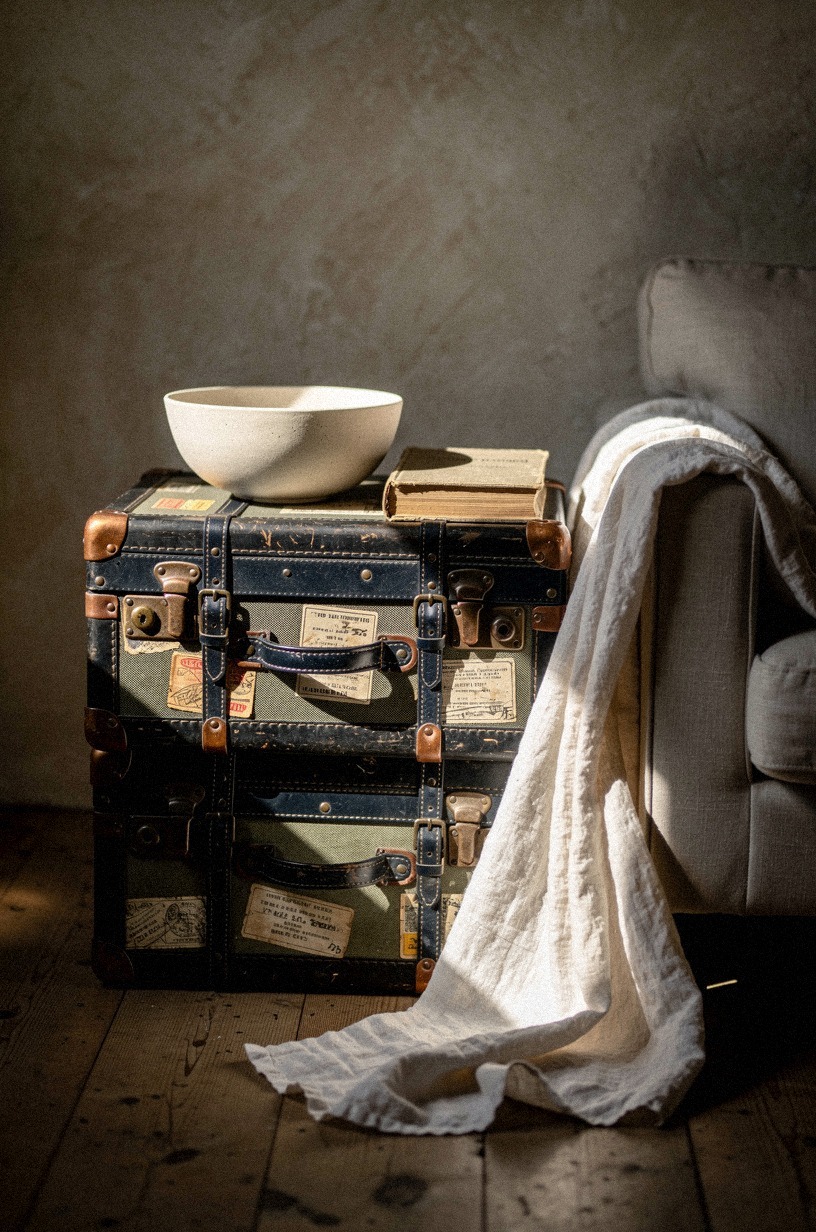
Side tables with drawers are fine. Side tables with history are better.
Stacked vintage trunks with midnight blue leather straps and copper corners give you a surface for a drink and a stack of books, plus hidden storage for blankets and extra pillows. The ivory ceramic bowl on top adds a shape that contrasts with the hard geometry of the trunks, and the washed Belgian linen draped nearby with lived-in texture keeps the corner from feeling like a museum piece.
I've used trunks I found at estate sales, at flea markets, at thrift stores. The dents and scratches are the point.
They tell a story that a new table from a big-box store can't match. Height is the only constraint: the top surface should sit within 4 to 6 inches of the chair's armrest so you're not reaching up or down for your coffee. If you love the vintage hunt, our bedroom declutter for sleep guide has a whole section on finding storage pieces with character.
The same flea-market strategy works for trunks, side tables, and unexpected shelving.
10Hang a brass swing-arm sconce to free the side table surface
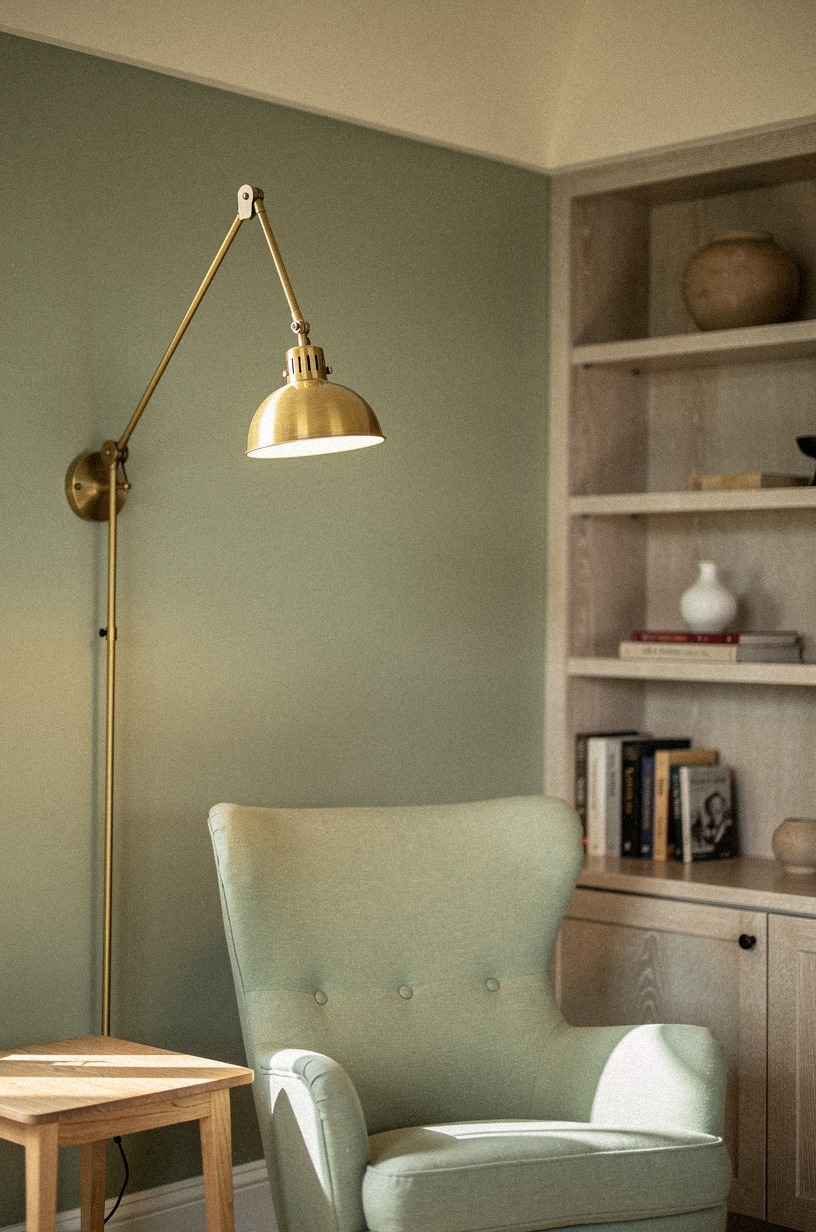
The side table in a reading nook has one job: hold your drink and your current book.
11Curate a small basket of unread books as a visual prompt
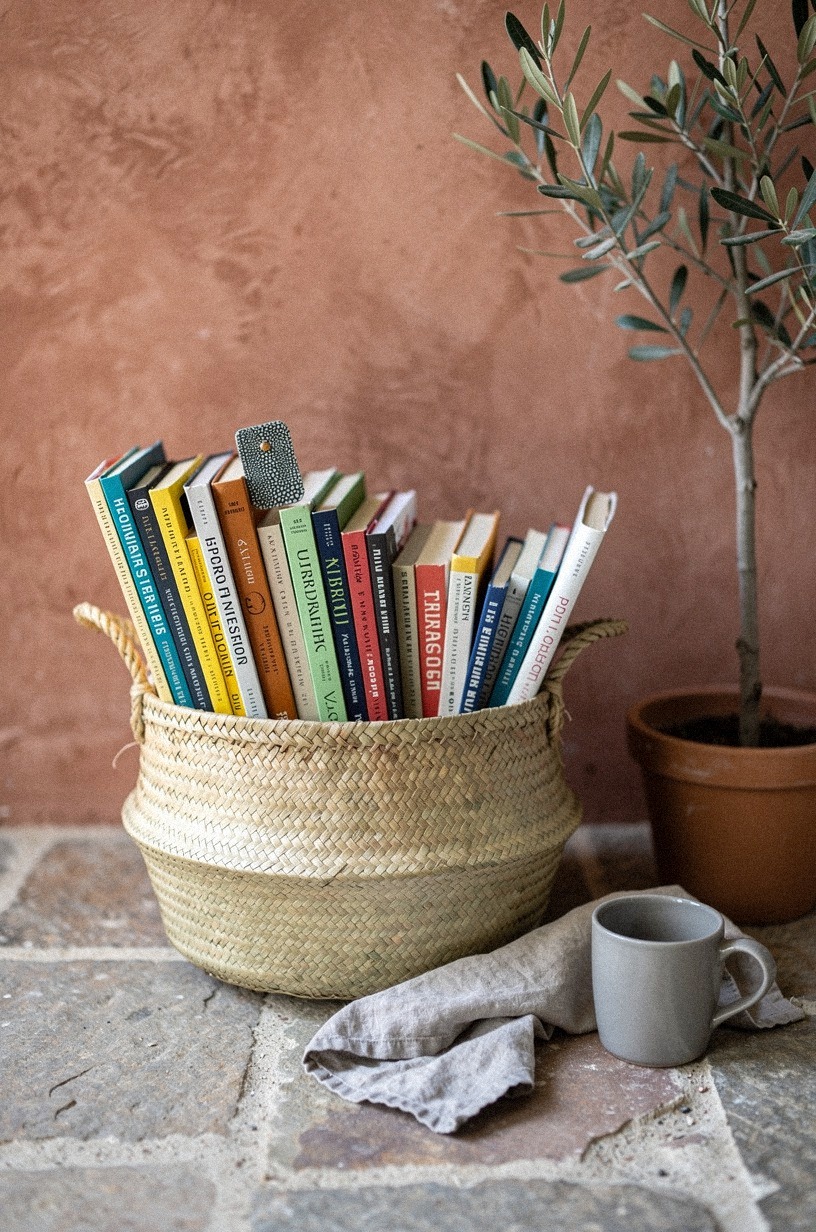
The books you haven't read yet are more interesting than the ones you have. A woven basket filled with unread books, spines facing outward as a visual invitation, turns the corner into a promise. The terracotta walls and stone flooring give the basket a warm base, and the olive plant in terracotta nearby adds a living element that keeps the scene from feeling static. The shagreen bookmark and reading glasses on top signal that this is an active corner, not a display.
I've rotated my unread basket every season, pulling from the main shelf and swapping based on mood. The basket itself should be small enough to force curation: 5 to 7 books max, or it becomes a dumping ground.
The visual prompt works. You walk past, you see the spine you meant to start, you sit down.
That's the whole point!
12Add a narrow ledge behind the seat for a mug and reading glasses
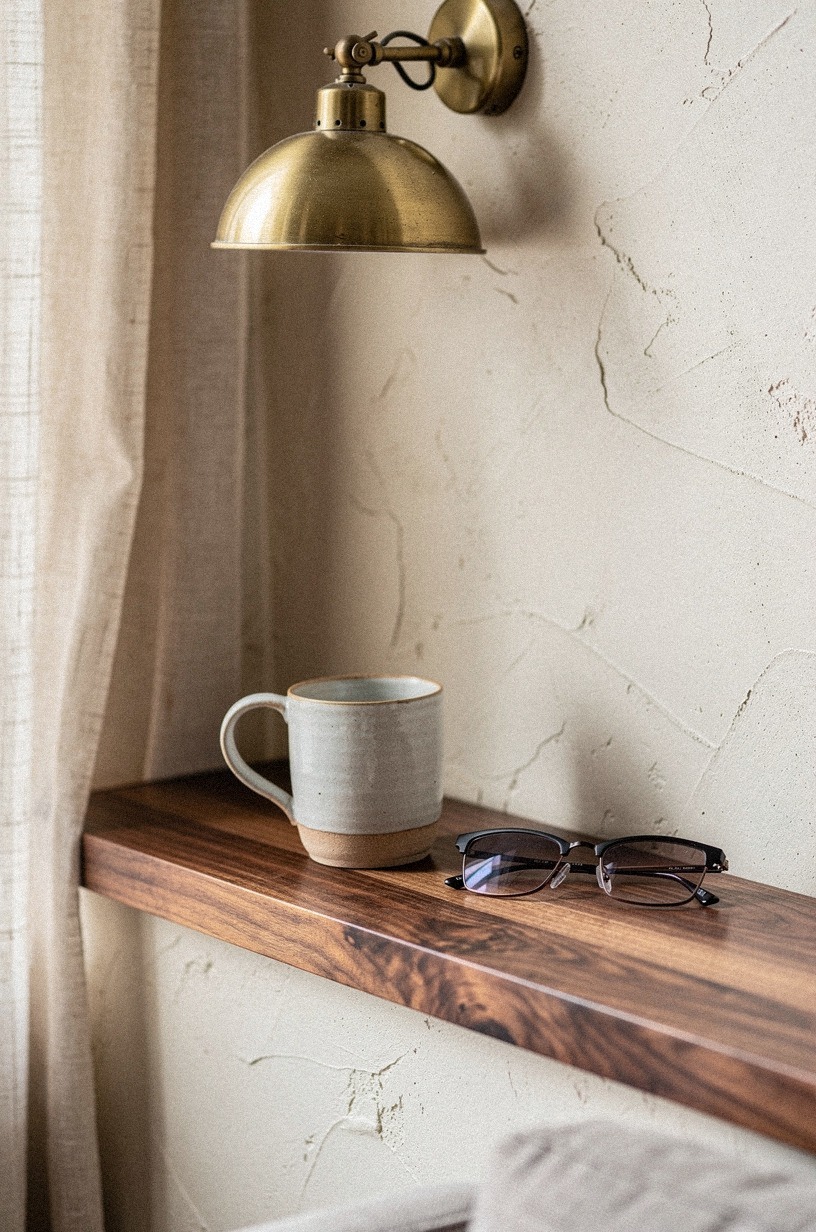
A built-in ledge is a luxury. A narrow shelf added behind the seat is a tip anyone can do. A ceramic mug and folded reading glasses sit on the book-matched walnut surface with brass trim, within reach but not in the way.
The clay plaster walls and linen curtain beyond give the nook a texture that feels hand-finished, not manufactured. The ledge should be 4 to 6 inches deep: enough for a mug and a phone, not deep enough to collect clutter.
I've added these behind armchairs, behind benches, behind window seats. The placement is consistent: just above the seat back, so you reach back without looking.
The ledge becomes part of the chair's architecture, not an extra piece of furniture fighting for space. If you're building from scratch, specify it. If you're retrofitting, a floating shelf at the right height does the same job. Our bedroom declutter for sleep guide has similar ledge ideas for bedside setups that translate perfectly to reading nooks.
13Use a folding screen to carve the nook from open floor space
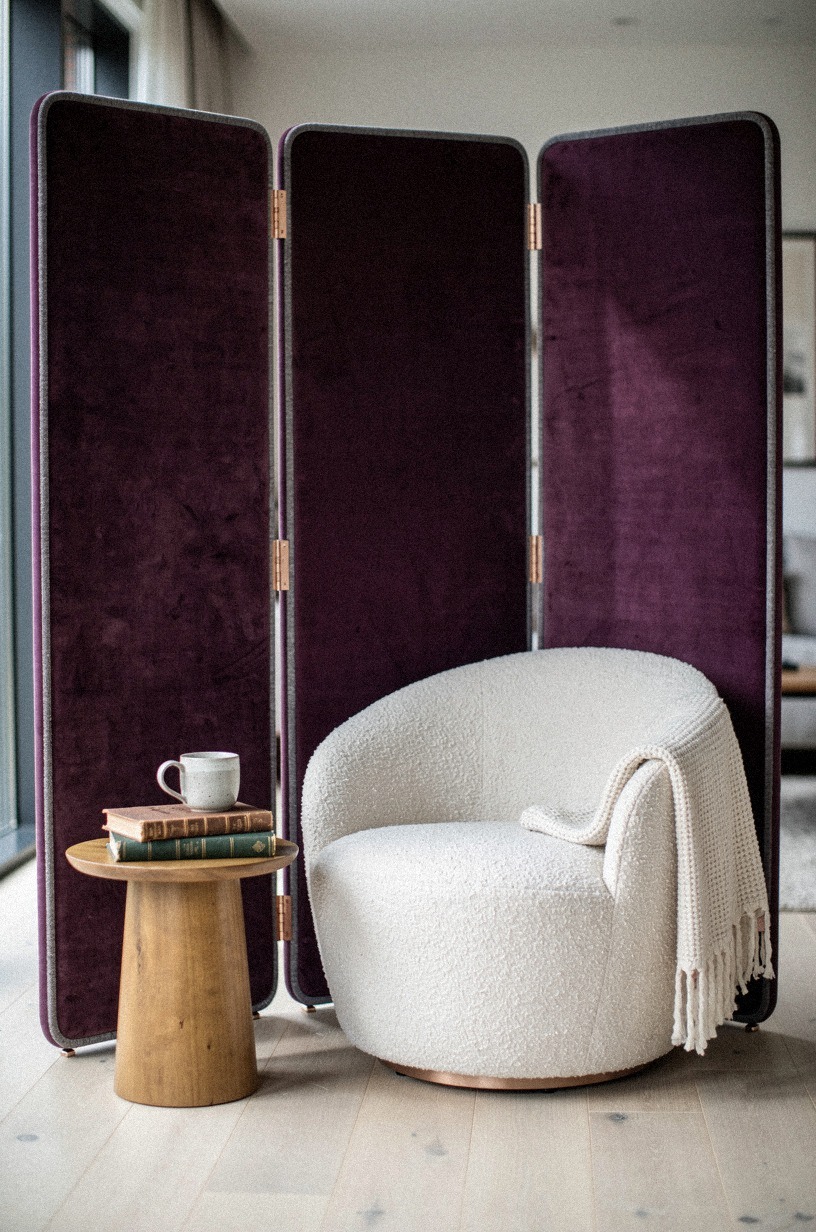
Not every room has a natural corner. A folding screen positioned to carve a reading nook from open floor space creates privacy without construction.
The plum velvet panels with grey trim and rose gold hinges catch light and add a layer of theater that a plain wall can't provide. The organic bouclé chair visible behind the screen invites you in, and the screen itself becomes a design statement from every angle.
I've used screens in studios, in lofts, in open-plan living rooms where the only "corner" is the one you invent. The screen should be tall enough to block sightlines when you're seated: 5 to 6 feet is the minimum.
The panels should be wide enough to create a real sense of enclosure, not just a visual divider. Three panels at 18 to 24 inches each gives you a nook depth of 4 to 6 feet, which is enough for a chair, a side table, and a sense of retreat. If you're working with truly tight quarters, our bedroom declutter for sleep guide shows how to carve functional zones out of spaces you thought were too small.
14Swap overhead lighting for a dimmable pendant low over the zone
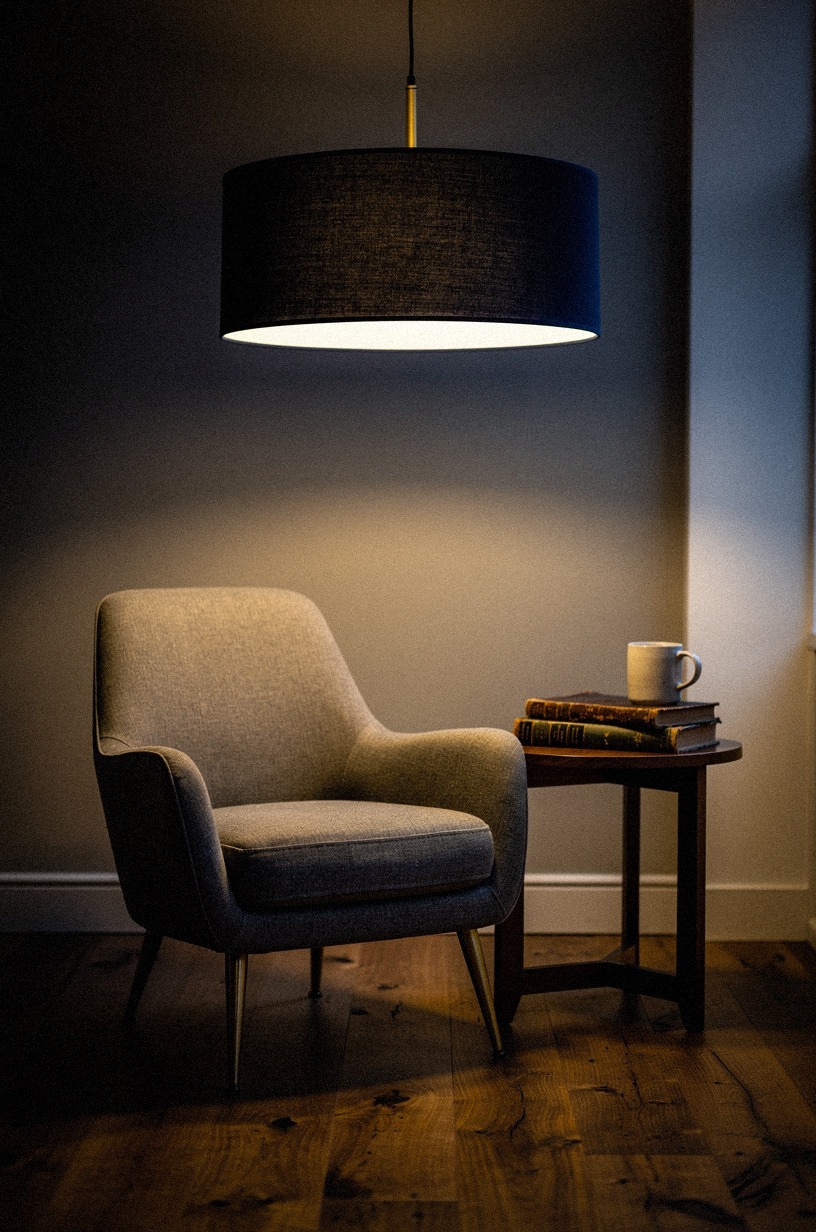
Overhead lighting is the default in most rooms. It's also the wrong default for a reading nook.
A dimmable pendant suspended low over the zone, with a navy shade and white interior casting warm glow downward, creates a pool of light that defines the space and keeps the rest of the room in softer shadow. The walnut floor and unlacquered brass hardware developing patina add warmth that the pendant reinforces. A single-stem side table with a small stack of books keeps the floor clear and the sightlines open.
I've swapped pendants in rooms where the ceiling fixture was centered on the room, not the nook. The fix is a ceiling hook and a swag: move the light to where the reading happens, not where the architect assumed the sofa would go. The pendant should hang 30 to 36 inches above the seat: low enough to feel intimate, high enough that you don't bump it standing up.
15Line the back of the niche with vertical tongue-and-groove paneling
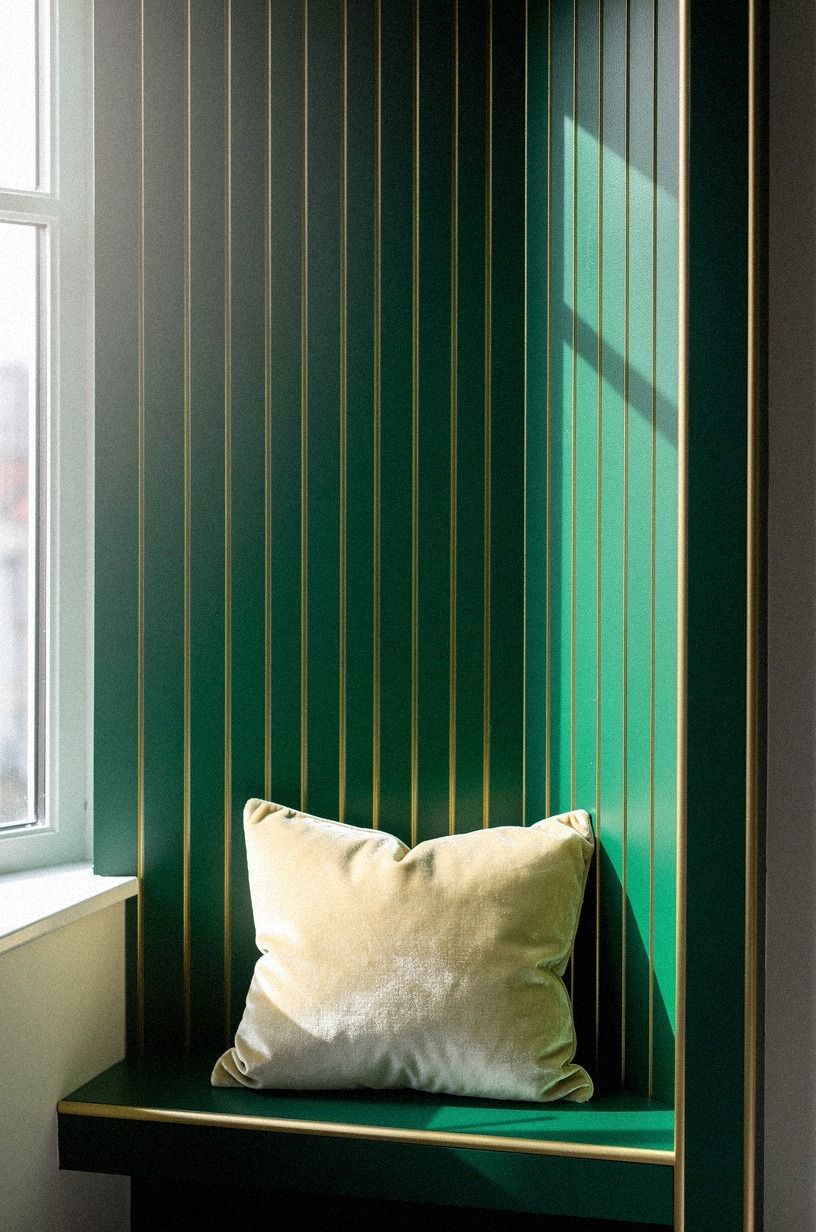
The back wall of a nook is usually flat paint. It could be architecture. Vertical tongue-and-groove paneling lining the back of the window niche, painted in emerald with gold trim catching daylight, adds a layer of craft that makes the nook feel built-in even if it wasn't.
The cream mohair velvet cushion below on a built-in bench with hidden storage underneath gives you seating and function in one piece. The vertical lines draw the eye up and make the nook feel taller, which matters in smaller spaces.
I've added paneling to rentals using peel-and-stick versions that look convincing from three feet away. The real thing is better, but the fake thing is better than flat paint.
The paneling should run floor to ceiling if possible, or at least from the seat height to the ceiling, to maximize the vertical effect. The emerald paint is bold, but in a small nook it reads as jewel-box, not overwhelming.
For more ways to add architectural detail without major construction, our cozy bedroom sleep guide has paneling and trim ideas that work in any room.
The Honest Cost of a Reading Nook Refresh
Most people overestimate what a reading nook costs and underestimate what it returns in daily use. A cosmetic refresh, paint, throws, a rug, and a lamp, runs about $300 to $1,200.
A mid-range setup with a quality chair, layered lighting, and a proper side table lands around $2,500 to $8,000. A full built-in with custom millwork and integrated storage starts near $12,000 and climbs from there.
The smart money starts at the bottom. Paint the alcove darker.
Add a sheepskin rug. Angle a lamp behind the chair.
Those three moves cost under $400 and change how the room feels every evening. If you're working with a tighter budget, here's what the typical line items look like:
The chair is the line item that matters most. Everything else is styling around it.
A good chair at $800 with a $100 sheepskin and a $150 lamp gives you a functional nook for under $1,100. That's less than most people spend on a sofa they never sit in.
Why the Nook Is Having a Moment (And Why It Won't Leave)
The reading nook is back because the open-plan living room failed. We tore down walls to create flow and ended up with spaces where you couldn't hear yourself think.
The nook is the correction: a small, bounded space within the larger room that gives you permission to stop, to sit, to read without the implicit demand to be social. Designers are specifying them in new builds again. Hotels are adding them to lobbies as a signal of comfort. The trend has legs because it solves a real problem, not because it photographs well. (Though it does photograph well.) The best nooks I've seen aren't the ones with the most money spent.
They're the ones with the clearest boundary: a darker wall, a rug that defines the zone, a light that keeps the rest of the room in shadow. The boundary is the design. Everything else is decoration.
The Questions Worth Answering First
What is the best cozy reading nook for a small living room?
The best small-space reading nook uses vertical boundaries instead of floor space. A high wingback chair against a painted alcove wall, a swing-arm sconce, and a narrow floating shelf for your mug.
The IKEA STRANDMON wingback is a proven small-space pick: compact footprint, high back, under $300. If you're tight on space, skip the side table and use a wall-mounted ledge instead.
The chair is the only piece that needs real floor area. Everything else can hang, float, or stack vertically.
Our bedroom declutter for sleep guide has more ideas on carving functional zones out of tight square footage.
Where can I buy cozy reading nook pieces on a budget?
IKEA for the chair frame and basic lighting. Target Threshold and Studio McGee for throws, baskets, and side tables that punch above their price. Wayfair for rugs and accent lighting with more variety than the big-box stores.
The real tip is Facebook Marketplace and estate sales for vintage trunks, brass lamps, and solid wood side tables. I've found unlacquered brass sconces for under $40 at thrift stores that would cost $300 new. The pieces with patina and wear are the ones that make a nook feel collected, not purchased.
If you're building a sleep-reading hybrid space, our cozy bedroom sleep guide covers the same sourcing strategy for bedroom pieces.
How much does a cozy reading nook makeover cost?
A budget refresh runs about $300 to $1,200. A mid-range setup with a quality chair and layered lighting lands around $2,500 to $8,000.
A full built-in with custom millwork starts near $12,000. The free moves are the most important: repositioning furniture to catch natural light, clearing the side table surface, and angling a lamp you already own.
The money matters most on the chair and the rug. Everything else is incremental.
If you want to know where to put the money first, our best pillow for reading in bed guide covers the ergonomics of reading posture, which applies to nook chairs too.
Can I create a cozy reading nook on a budget?
Yes, and the budget version is often better than the expensive one. Three free or cheap moves: paint the alcove wall one shade darker using a $60 quart of Benjamin Moore Revere Pewter HC-172. Layer a $100 sheepskin rug from IKEA under a chair you already own.
Angle a floor lamp from another room behind the seat. Those three changes cost under $200 and transform a corner into a destination!
The expensive mistake is buying a new chair before you've defined the zone. Define the zone first.
Then buy the chair that fits it.
Is a cozy reading nook worth it in a small space?
Worth it, and arguably more valuable than in a large one. A small space forces you to be intentional.
Every piece has to earn its place, which means you end up with a nook that works instead of one that looks good in a floor plan. The move is using vertical space: wall-mounted shelves, swing-arm sconces, floating ledges.
The footprint can be as small as 4 by 4 feet if the boundaries are clear. A small reading corner with a defined zone feels larger than an undefined corner with more square footage.
The boundary creates the room.
Is a cozy reading nook a good idea for a rental?
Yes, with three no-damage swaps. Peel-and-stick wallpaper or a removable paint film for the alcove wall.
A tension rod with linen drapes instead of mounted curtains. A plug-in swing-arm sconce with a cord cover painted to match the wall.
The rolling cart is perfect for rentals: it moves when you need the floor, it stores what you need, and it leaves no trace when you go. I've built nooks in rentals that felt more personal than the permanent furniture in places I owned. The temporary nature forces you to be creative, and creativity usually wins!
Where I'd Start First
If I had to pick one, I'd start with the wall color. You can't layer warmth on top of a cold room.
The rug, the chair, the lamp will all fight the walls instead of building on them. Get the color right first. Everything else lands.
Paint the alcove one shade darker, angle a warm lamp behind the seat, and drape a throw where you can see it. That's the whole recipe.
The rest is just shopping. Pin the wall color idea for later and read our cozy bedroom sleep guide if you're building a sleep-reading hybrid space.
The same rules apply: boundaries first, stuff second.