
 by
by Disclosure: MattressNut earns a commission if you purchase through our links at no extra cost to you. We only recommend products we have tested or researched thoroughly.
Our Top Pick
Saatva Bedding — Deep Pocket Available
365-night trial • Free white-glove delivery • Lifetime warranty
Available in standard, deep, and extra-deep pocket depths
Measuring a mattress seems straightforward until you discover that sheets don't fit, a new frame is too small, or your mattress topper is pushing the total height past what your sheets can handle. Getting accurate measurements takes 5 minutes and prevents expensive mistakes.
The Three Measurements You Need
1. Width
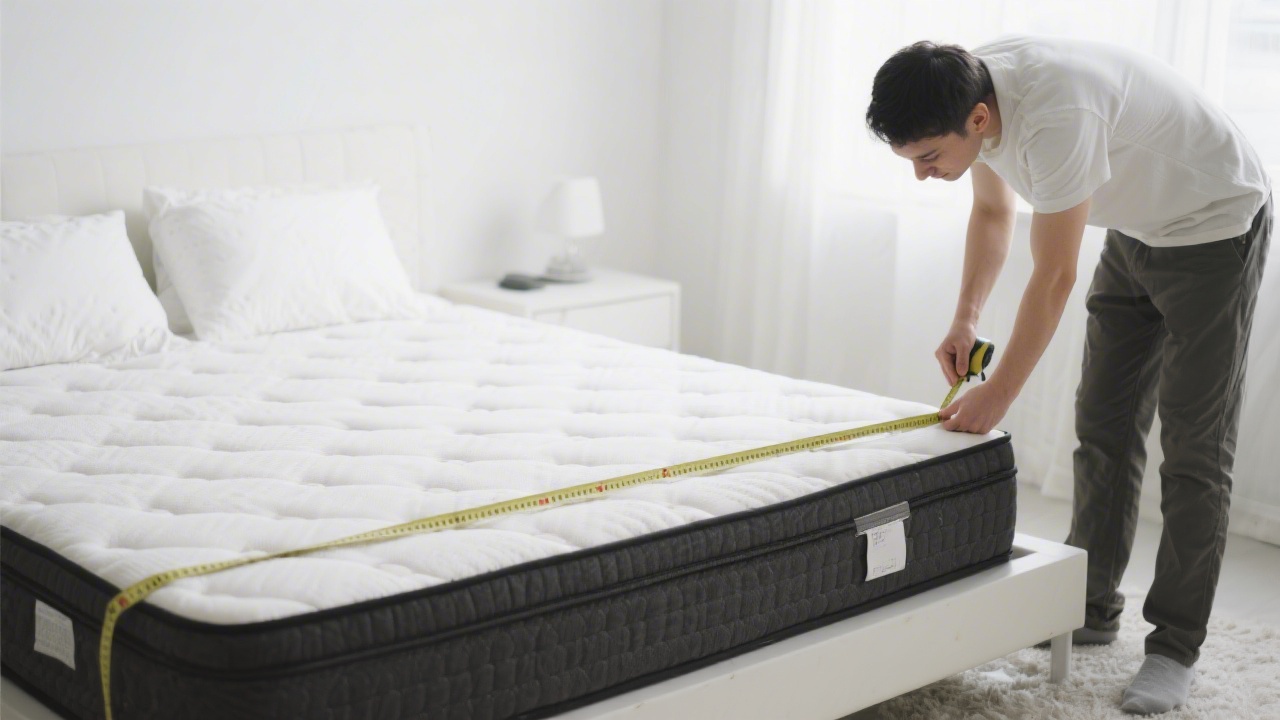
Measure from the left edge to the right edge at the widest point. Do this at the top, middle, and bottom of the mattress — mattresses can bow slightly and width may vary. Use the largest measurement.
2. Length
Measure from the head to the foot of the mattress along the edge (not across the surface, which can give a slightly different reading depending on how flat the surface is). Measure both sides and use the larger measurement.
3. Height (Depth / Thickness)
This is the measurement most people miss. Place a flat object on top of the mattress (like a hardback book) and measure from the floor or platform to the top of the object. For sheet-fitting purposes, also measure the total height of the sleep surface including any mattress topper or protector.
Standard Mattress Dimensions Reference
- Twin: 38" x 75" — typically 8-12" tall
- Twin XL: 38" x 80" — same width, 5" longer
- Full (Double): 54" x 75" — 16 inches wider than twin
- Queen: 60" x 80" — the most common adult size
- King: 76" x 80" — 16 inches wider than queen
- California King: 72" x 84" — narrower and longer than standard king
See our complete mattress sizes guide for room size requirements for each dimension.
Why Mattress Height Matters More Than You Think
Modern mattresses are significantly taller than the 8-10 inch standard of 20 years ago. Premium hybrids and latex mattresses typically run 12-16 inches tall. Add a 2-3 inch mattress topper and you are at 14-19 inches total height.
Standard sheets have an 8-12 inch pocket depth. They will not stay on a 14-inch mattress — the corner pockets will pull off during the night. You need deep pocket sheets (14-16 inches) or extra-deep pocket sheets (18-21 inches).
Before buying bedding, measure your mattress height (including any topper) and add 1-2 inches for the pocket overlap. That is your minimum pocket depth.
Measuring for Sheets — Step by Step
- Measure mattress height from the platform/box spring to the top surface.
- If using a topper, add its depth to the mattress height.
- Add 2 inches for the pocket tuck (the amount of sheet that wraps under to hold).
- That total is your minimum pocket depth. Buy sheets rated at or above this number.
Example: 14-inch mattress + 2-inch topper = 16 inches. You need sheets with a pocket depth of at least 18 inches to stay secure.
Measuring for a Bed Frame
For platform beds and standard frames, measure the interior platform dimensions (length x width) and compare to your mattress. The mattress should fit with minimal gap — 0.5-1 inch per side is acceptable. Too much gap and the mattress shifts; too tight and it may compress the edges.
For slatted platforms, confirm the slat gap is under 3 inches (2.5 inches is better). Wider gaps allow the mattress to sag between slats, reducing support and accelerating wear. See our guide on how heavy a mattress is if you're also evaluating whether your frame can support the weight.
Common Measuring Mistakes
- Measuring only once per dimension. Measure at least twice and in multiple spots.
- Forgetting the topper. Always measure with the topper in place if you use one.
- Using stated dimensions as gospel. Manufacturing tolerances mean actual sizes vary. Measure your specific mattress.
- Measuring across the top instead of along the edge. Surface measurements can be misleading if the mattress is not perfectly flat.
Our Top Pick
Saatva Classic
365-night trial • Free white-glove delivery • Lifetime warranty
Consistent sizing — fits standard queen/king frames precisely
Frequently Asked Questions
What three dimensions do I need to measure on a mattress?
You need length, width, and height (depth). Length and width determine compatibility with your bed frame. Height (also called depth or thickness) is the critical measurement for sheet pocket depth — sheets made for a 10-inch mattress will not fit a 14-inch one.
What is a standard queen mattress size?
A standard queen mattress measures 60 inches wide by 80 inches long. However, actual measurements can vary by up to 1-2 inches between brands. Always measure your specific mattress rather than relying on the stated size.
What sheet pocket depth do I need for a thick mattress?
Standard sheets have an 8-12 inch pocket depth. For mattresses over 12 inches, look for 'deep pocket' sheets (14-16 inch depth). For mattresses with a topper, you may need 'extra deep pocket' sheets at 18-21 inches.
How do I measure for a bed frame?
Measure the mattress width and length, then compare to your frame's interior platform dimensions. Leave a small gap (0.5-1 inch on each side) to avoid the mattress rubbing against the frame. For platform beds, confirm the slat gap is under 3 inches to prevent sagging.
Can a mattress be wider or longer than the stated size?
Yes. Manufacturing tolerances mean a 'queen' mattress can measure 59-62 inches wide. Premium brands typically have tighter tolerances. Always measure both your mattress and your frame before purchasing bedding or furniture.