
 by
by The Saatva Classic's innerspring construction retains warmth naturally — and with the right bedding system, delivers year-round comfort for both warm and cold sleepers.
The Science of Staying Warm at Night
Sleep and warmth have a complicated relationship. Your body temperature drops during sleep initiation and stays lower through deep sleep stages — but your extremities need warmth to initiate that drop. Cold feet, cold hands, and a chilly mattress surface can all delay sleep onset and fragment light sleep.
The goal isn't maximum warmth — it's thermal balance. Warm enough to initiate sleep quickly, stable enough to stay asleep, without overheating into night sweats at 2am. Here's how to build that system.
Layer Your Bedding System
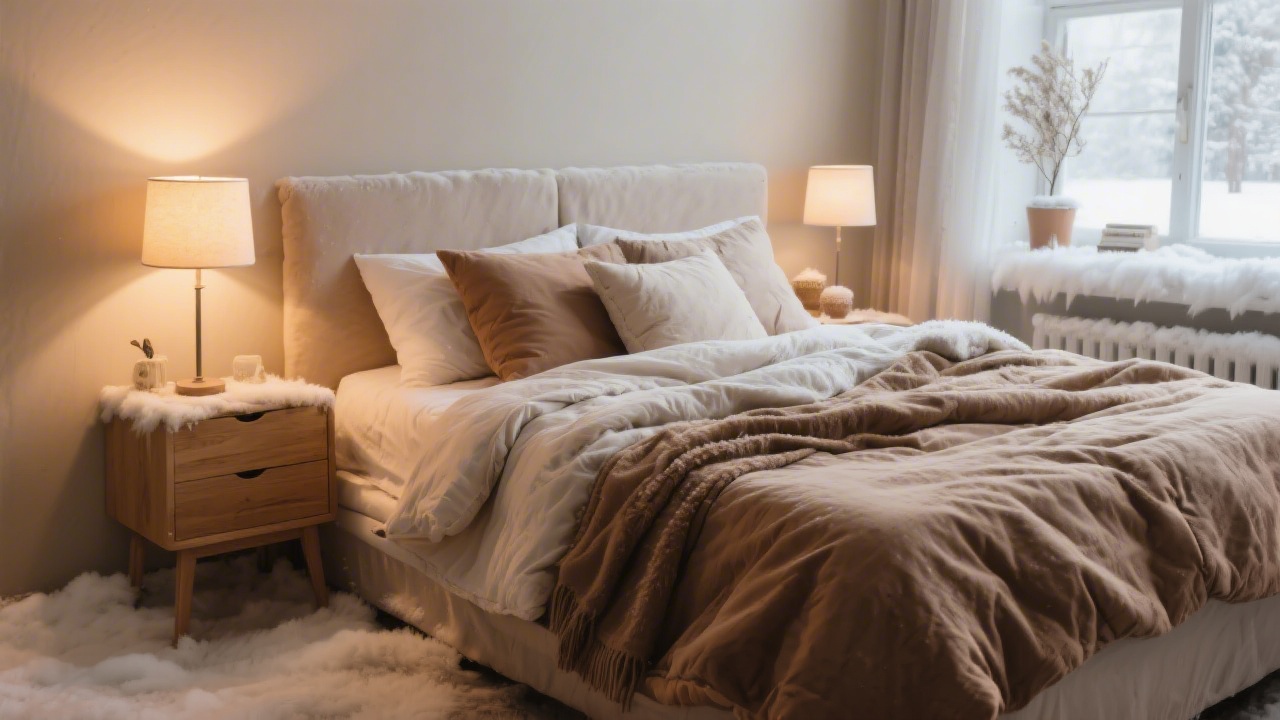
The most effective approach to winter sleep warmth is layering rather than one heavy cover. Layering lets you fine-tune temperature in the middle of the night without fully waking up.
Base Layer: Flannel or Jersey Fitted Sheet
A flannel fitted sheet adds immediate warmth at the sleep surface — the point of first contact. Unlike cotton percale (which sleeps cool by design), flannel has a brushed nap that traps a thin air layer against the body. It feels warmer immediately, even before body heat builds.
Middle Layer: Wool Blanket or Lightweight Quilt
A thin wool blanket or a cotton quilt between your fitted sheet and main duvet gives you a warmth dial. Push the duvet off at 3am without losing all insulation. Pull it back when the pre-dawn temperature drops.
Top Layer: Down or Wool Duvet
For sustained warmth in cold climates, a down or wool-filled duvet is the gold standard. Down provides the highest warmth-to-weight ratio — a quality down duvet (600+ fill power) will keep you warm at temperatures that defeat any synthetic alternative. Wool duvets are slightly heavier but naturally regulate moisture, reducing night sweat risk.
Down fill power guide: 400–500 (lightweight), 600–700 (mid-weight, versatile), 800–900 (expedition-grade, cold sleepers only).
Preheat Your Bed
A cold mattress requires body heat to warm up before sleep is comfortable. Two strategies:
- Electric blanket as pre-warmer: Turn on 30–45 minutes before bed, turn off (or to low) when you get in. The mattress and bedding are pre-warmed, but you're not sleeping under active heat.
- Heated mattress pad: Dual-zone heated pads warm the sleep surface from below. More even than an electric blanket. The Beautyrest Heated Mattress Pad and the Sunbeam are reliable mid-range options.
Mattress Considerations for Cold Sleepers
Mattress construction affects warmth retention in a meaningful way:
- Dense foam mattresses retain more body heat than spring mattresses — a benefit for cold sleepers, though they can become uncomfortably warm in summer.
- Innerspring and hybrid mattresses like the Saatva Classic breathe more freely but warm up quickly with proper bedding. The advantage is year-round versatility — you manage warmth through bedding rather than being locked into a hot-sleeping foam.
- Mattress toppers for cold sleepers: a wool or memory foam topper adds insulating mass at the sleep surface.
Warm Your Extremities First
Cold feet are the most common complaint of cold sleepers — and there's research behind the solution. Wearing socks to bed dilates peripheral blood vessels, which actually improves whole-body thermoregulation and speeds sleep onset. A hot water bottle at the foot of the bed provides sustained low-level warmth without the overheating risk of an electric blanket.
Bedroom Setup for Cold Nights
- Draft-proof the room: Cold air at floor level is the most common temperature leak. Check door gaps, window seals, and electrical outlets on exterior walls.
- Reverse the ceiling fan: Most fans have a winter setting (clockwise rotation, low speed) that pushes warm air from the ceiling back down to sleeping level.
- Heavy curtains or thermal drapes: Windows are the primary heat loss point in most bedrooms. Thermal-lined curtains reduce heat loss significantly, especially in older homes with single-pane glass.
What Cold Sleepers Get Wrong
The two most common mistakes: sleeping under one very heavy blanket (creates pressure discomfort and makes middle-of-night adjustment difficult) and wearing heavy fleece pajamas (they overheat the torso while extremities stay cold). The layered system — lighter base bedding, socks, and one quality duvet — outperforms both.
Internal Resources
Voted best luxury innerspring mattress with exceptional lumbar support and white-glove delivery.
Check Price & Availability FAQPage", "mainEntity": [{"@type": "Question", "name": "What is the best bedding for cold sleepers?", "acceptedAnswer": {"@type": "Answer", "text": "Wool or down duvets provide the highest warmth-to-weight ratio. Flannel sheets add surface warmth. Layering a cotton blanket under a duvet allows temperature adjustment without getting up."}}, {"@type": "Question", "name": "Does a warmer mattress help with cold sleep?", "acceptedAnswer": {"@type": "Answer", "text": "A mattress doesn't generate heat, but materials affect warmth retention. Dense foam mattresses retain more body heat than spring mattresses — which is a negative in summer but a benefit for cold sleepers in winter."}}, {"@type": "Question", "name": "Are electric blankets safe to sleep with all night?", "acceptedAnswer": {"@type": "Answer", "text": "Modern dual-control electric blankets with auto-shutoff are generally safe for most healthy adults. The standard advice is to use them to preheat the bed, then turn off before sleeping to avoid overheating during deeper sleep cycles."}}, {"@type": "Question", "name": "What pajamas are warmest for cold sleepers?", "acceptedAnswer": {"@type": "Answer", "text": "Merino wool and brushed flannel are the warmest natural options. They insulate without bulk and manage moisture if you do warm up overnight."}}, {"@type": "Question", "name": "Why do I feel cold in bed even with a heavy blanket?", "acceptedAnswer": {"@type": "Answer", "text": "Extremity cold (cold feet, cold hands) is often circulation-related rather than ambient temperature. Wearing socks to bed has been shown to dilate peripheral blood vessels and improve whole-body warmth. Also check if cold air is entering at mattress level from uncovered gaps in blankets."}}]}Frequently Asked Questions
- What is the best bedding for cold sleepers?
- Wool or down duvets provide the highest warmth-to-weight ratio. Flannel sheets add surface warmth. Layering a cotton blanket under a duvet allows temperature adjustment without getting up.
- Does a warmer mattress help with cold sleep?
- A mattress doesn't generate heat, but materials affect warmth retention. Dense foam mattresses retain more body heat than spring mattresses — which is a negative in summer but a benefit for cold sleepers in winter.
- Are electric blankets safe to sleep with all night?
- Modern dual-control electric blankets with auto-shutoff are generally safe for most healthy adults. The standard advice is to use them to preheat the bed, then turn off before sleeping to avoid overheating during deeper sleep cycles.
- What pajamas are warmest for cold sleepers?
- Merino wool and brushed flannel are the warmest natural options. They insulate without bulk and manage moisture if you do warm up overnight.
- Why do I feel cold in bed even with a heavy blanket?
- Extremity cold (cold feet, cold hands) is often circulation-related rather than ambient temperature. Wearing socks to bed has been shown to dilate peripheral blood vessels and improve whole-body warmth. Also check if cold air is entering at mattress level from uncovered gaps in blankets.
Year-round sleep comfort starts with the right mattress base. Explore the Saatva Classic with 365-night trial.