
 by
by Upgrade your sleep when you get home
After nights on planes, couches, or hotel mattresses, your body deserves proper support. Saatva's mattresses are handcrafted with luxury coils and organic materials — starting at $1,395.
Getting real, restorative sleep on a plane is one of the most valuable travel skills you can develop. Whether you're crossing time zones or logging a red-eye, the quality of your in-flight sleep determines how you arrive — functional or wrecked.
Why Plane Sleep Is So Hard
Aircraft cabins combine almost every sleep-disrupting factor simultaneously: ambient noise at 75–85 dB, cabin pressure equivalent to 6,000–8,000 feet altitude, low humidity (under 20%), fluctuating temperature, and intermittent light from windows and screens. Your body doesn't resist sleep because you're not tired — it resists because the environment is physiologically hostile.
Economy Class: Work With What You Have
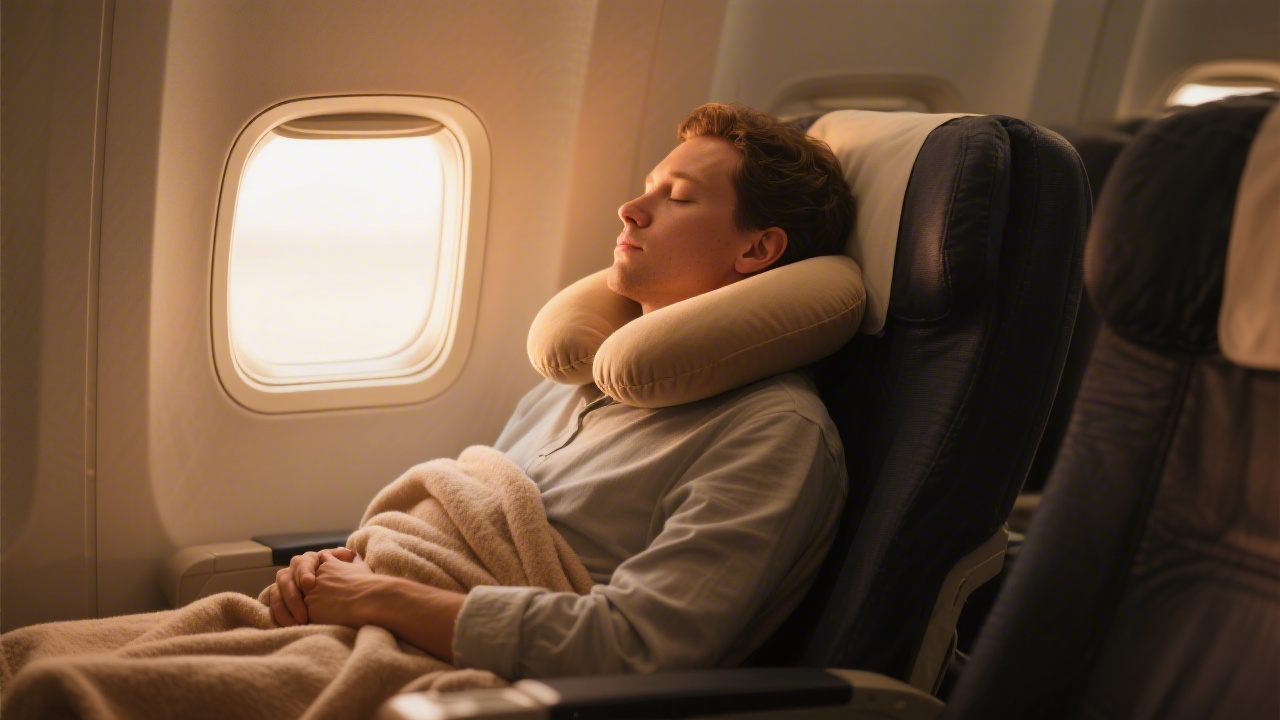
Economy seats recline 3–4 inches, which is barely enough to shift your center of gravity. The key moves: request a window seat so you have something to lean against, bring a quality U-shaped neck pillow (not the thin foam ones sold in airports), and use a sleep mask. Block noise with foam earplugs rather than noise-cancelling headphones — headphones create pressure on your temples over several hours.
Sleep position in economy: lean slightly toward the window, tuck your neck pillow high under the jaw (not just behind the neck), and cross your arms loosely. This reduces head-bob significantly. Avoid the middle seat if you can — you have no wall to lean against and get disturbed from both sides.
Premium Economy: The Underrated Class for Sleep
Premium economy seats typically offer 5–7 extra inches of pitch and a more substantial recline. The critical upgrade: footrests on many carriers. When your feet are elevated, lumbar pressure drops and you're far more likely to achieve the quasi-horizontal position that allows genuine sleep. Combine this with a wrap-style blanket and the noise isolation already present in the forward cabin sections.
Business and First Class: Sleep Engineering
Lie-flat business class seats remove the main barrier — spine misalignment. The primary sleep challenge shifts to: melatonin timing, light management, and meal scheduling. Eat before boarding if possible to avoid the heavy in-flight dinner service that delays sleep onset. Request your bed to be made before takeoff on carriers that allow it. Use a light therapy approach: keep screens dim for 90 minutes before your target sleep window.
Gear That Actually Helps
- Neck pillow: Trtl Travel Pillow or Cabeau Evolution S3 — both support the neck without the full U-shape bulk
- Eye mask: Sleep Master Sleep Mask or Manta Sleep Mask — full blackout, no eye pressure
- Earplugs: Howard Leight MAX-1 foam earplugs — 33 NRR, better than most premium options
- Melatonin: 0.5mg taken 90 minutes before target sleep — lower doses work as well or better than 5mg
- Compression socks: Reduces leg swelling, improves circulation, makes you more comfortable
Timing Your Sleep on Long-Haul Flights
Match your sleep window to the destination time zone, not your origin. On a transatlantic flight leaving at 10pm EST landing at 10am London time, sleep as much as possible — that's your only viable window. On a transpacific flight leaving at noon and arriving the next morning, stay awake for the first 4–5 hours, then sleep. Don't chase sleep the moment you board — you'll be restless and frustrated.
Internal Links
Frequently Asked Questions
What is the best seat for sleeping on a plane?
A window seat in a row not near lavatories or galleys. Window seats give you a wall to lean against and you control the window shade. Row selection matters: bulkhead rows have extra legroom but fixed armrests; exit rows have space but also fixed armrests and are often colder.
Does melatonin help you sleep on flights?
Yes, but use low doses. 0.5mg of melatonin taken 90 minutes before your target sleep time is as effective as 3–5mg doses with fewer next-day grogginess effects. Melatonin works as a sleep-phase shifter, not a sedative.
How do I stop my head from falling forward on planes?
A high-wrap neck pillow positioned under the jaw rather than behind the neck holds your head upright without tension. Alternatively, recline your seat the full amount and lean toward the window with your head resting on the pillow against the fuselage wall.
Is it OK to take sleep aids on a plane?
Mild sleep aids like diphenhydramine (Benadryl) or melatonin are generally safe for healthy adults on flights over 6 hours. Prescription sleep medications like Ambien carry more risk in-flight because you may need to respond to emergencies. Consult your doctor before using prescription sleep aids on planes.
How do you sleep comfortably in economy class?
Secure a window seat, bring a quality neck pillow and eye mask, wear foam earplugs, dress in layers, and schedule your sleep window to align with destination time. Avoid alcohol and heavy meals before your sleep window — both fragment sleep quality even if they help you fall asleep faster.
Voted best luxury innerspring mattress with exceptional lumbar support and white-glove delivery.
Check Price & Availability FAQPage", "mainEntity": [{"@type": "Question", "name": "What is the best seat for sleeping on a plane?", "acceptedAnswer": {"@type": "Answer", "text": "A window seat in a row not near lavatories or galleys. Window seats give you a wall to lean against and you control the window shade. Row selection matters: bulkhead rows have extra legroom but fixed armrests; exit rows have space but also fixed armrests and are often colder."}}, {"@type": "Question", "name": "Does melatonin help you sleep on flights?", "acceptedAnswer": {"@type": "Answer", "text": "Yes, but use low doses. 0.5mg of melatonin taken 90 minutes before your target sleep time is as effective as 3\u20135mg doses with fewer next-day grogginess effects. Melatonin works as a sleep-phase shifter, not a sedative."}}, {"@type": "Question", "name": "How do I stop my head from falling forward on planes?", "acceptedAnswer": {"@type": "Answer", "text": "A high-wrap neck pillow positioned under the jaw rather than behind the neck holds your head upright without tension. Alternatively, recline your seat the full amount and lean toward the window with your head resting on the pillow against the fuselage wall."}}, {"@type": "Question", "name": "Is it OK to take sleep aids on a plane?", "acceptedAnswer": {"@type": "Answer", "text": "Mild sleep aids like diphenhydramine (Benadryl) or melatonin are generally safe for healthy adults on flights over 6 hours. Prescription sleep medications like Ambien carry more risk in-flight because you may need to respond to emergencies. Consult your doctor before using prescription sleep aids on planes."}}, {"@type": "Question", "name": "How do you sleep comfortably in economy class?", "acceptedAnswer": {"@type": "Answer", "text": "Secure a window seat, bring a quality neck pillow and eye mask, wear foam earplugs, dress in layers, and schedule your sleep window to align with destination time. Avoid alcohol and heavy meals before your sleep window \u2014 both fragment sleep quality even if they help you fall asleep faster."}}]}Upgrade your sleep when you get home
After nights on planes, couches, or hotel mattresses, your body deserves proper support. Saatva's mattresses are handcrafted with luxury coils and organic materials — starting at $1,395.