
 by
by Our Top Pick: Saatva Classic Mattress
MattressNut readers get exclusive savings — click to see current pricing.
Most mattress damage in storage is entirely preventable. The two main causes are moisture (leading to mold) and improper orientation (leading to permanent sagging). Follow the steps below and your mattress will come out of storage in the same condition it went in.
Step 1: Clean and Dry the Mattress Thoroughly
Strip all bedding. Vacuum both sides using the upholstery attachment. Spot-clean any stains with a diluted enzyme cleaner and a cloth — never saturate the foam. Let the mattress air in a well-ventilated room for a minimum of 24 hours before bagging. Any trapped moisture becomes mold within 2 to 4 weeks in an enclosed bag.
Step 2: Use the Right Storage Bag
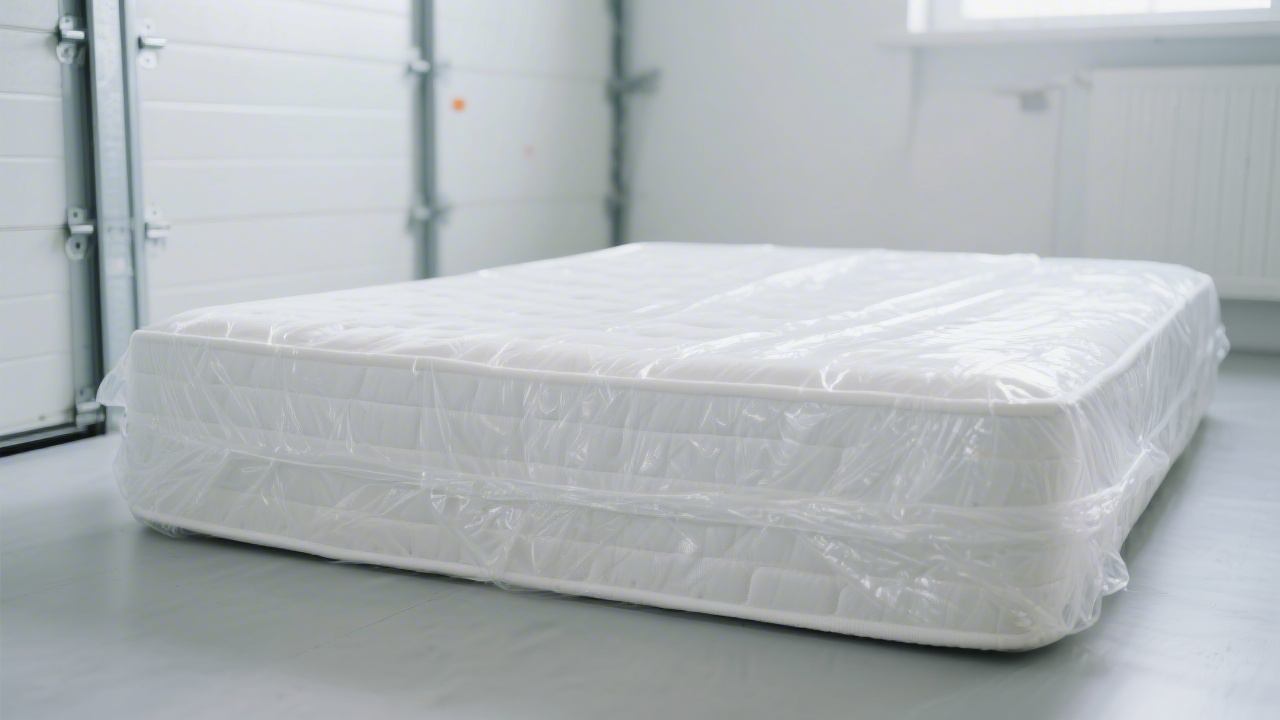
A purpose-built mattress storage bag with a zip seal is far better than wrapping in plastic sheeting. The sealed bag blocks dust mites, pests, and moisture while the mattress is in transit and storage. Size options: Twin, Full, Queen, King, California King. Do not use a vacuum storage bag — compressing the foam layer damages it permanently.
Related: Best Mattress Protectors | How to Clean a Mattress
Step 3: Transport Flat, Not Upright
Moving trucks often tip mattresses on their sides due to space constraints. For short moves this is acceptable for innerspring mattresses. For foam or latex, transport flat or on its back. Never allow anyone to sit or stand on a mattress during transport.
Step 4: Store Flat in a Climate-Controlled Space
Lay the mattress flat on a clean surface — a pallet or wooden boards slightly off the floor is ideal. This prevents floor moisture wicking through. Do not stack heavy items on top. Temperature range: 55 to 77 F, humidity below 50%. A rented climate-controlled storage unit (typically $60 to $120/month for a 10x10 space) meets all these requirements.
Related: Mattress Sizes Guide
Maximum Storage Duration by Mattress Type
Innerspring: Up to 12 months in proper conditions. The steel coils do not degrade, but the foam comfort layer can compact over time.
Memory foam: 3 to 6 months maximum. The open-cell structure loses resilience in compressed storage.
Latex: 3 to 6 months. Natural latex is especially susceptible to temperature extremes.
Hybrid (foam + coils): 6 to 9 months. Sits between the two categories.
When Replacing Makes More Sense Than Storing
If the mattress is already 7 or more years old, or if it has visible sag, springs that poke through, or persistent odors, storage is wasted effort. A mattress stored in poor condition will not improve. Replacing before a move or renovation is often the more practical decision — and you start fresh with no stored wear.
Frequently Asked Questions
Can you store a mattress on its side?
Memory foam and latex mattresses should never be stored on their side — the foam compresses unevenly and causes permanent sag. Innerspring and hybrid mattresses can tolerate short-term upright storage (under 2 months) but flat is always safer for all types.
How long can a mattress be stored before it gets damaged?
In ideal conditions (climate-controlled, flat, dry), an innerspring mattress can store for 6 to 12 months. Memory foam and latex degrade faster in storage and should not be kept more than 3 to 6 months. Beyond that, consider replacing rather than storing.
Do you need a special mattress storage bag?
Yes. A standard plastic mattress bag from a moving company works, but a purpose-built sealed mattress bag with a zip closure and waterproof membrane is better. It blocks dust mites, moisture, and pests. Cost is typically $20 to $40 for a queen.
What temperature should a mattress be stored at?
Store between 55 and 77 degrees Fahrenheit (13 to 25 Celsius) with humidity below 50%. Temperatures above 90 F accelerate foam breakdown and adhesive failure. Below freezing can make foam brittle. A climate-controlled storage unit is strongly recommended.
Can storing a mattress cause mold?
Yes. Moisture trapped inside the storage bag or inside the mattress itself will grow mold within weeks. Always let the mattress air dry for 24 hours before bagging, and never seal it while damp. Mold damage is permanent and renders the mattress unsafe.
Our Top Pick: Saatva Classic Mattress
MattressNut readers get exclusive savings — click to see current pricing.
Disclosure: MattressNut earns a commission from qualifying Saatva purchases at no extra cost to you.