
 by
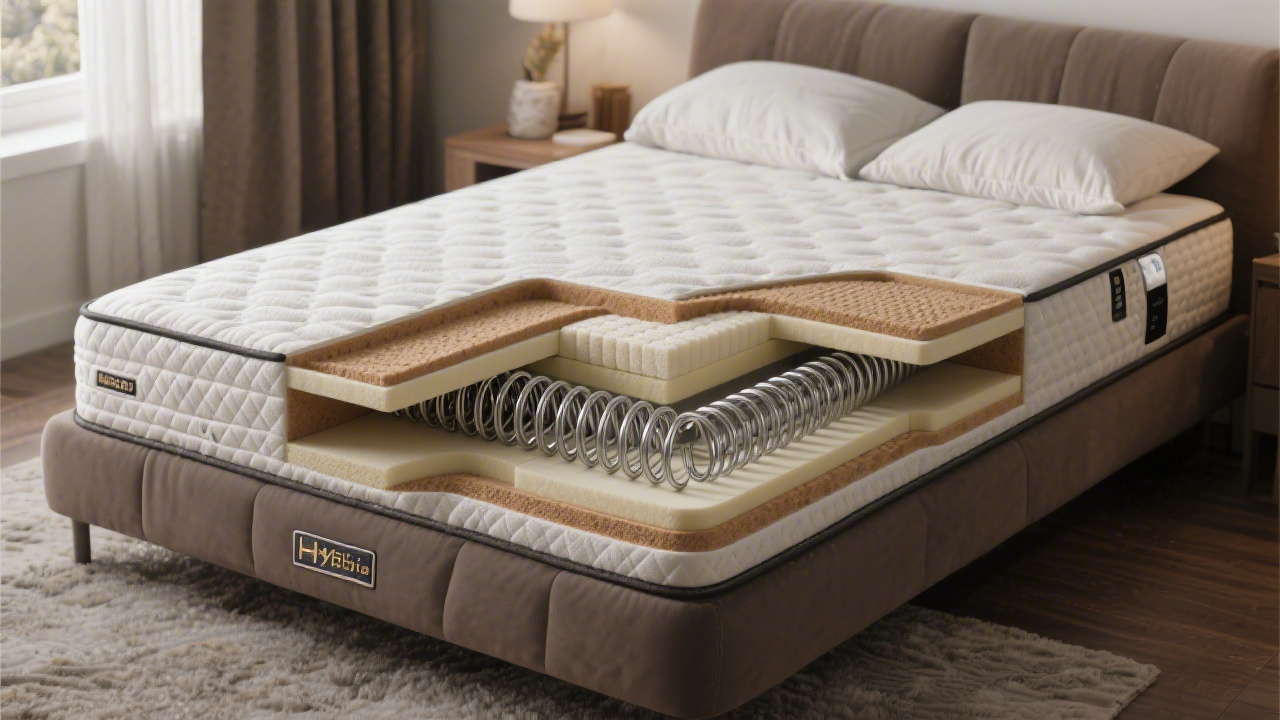
by Hybrid mattresses have become the dominant category in the mid-to-premium segment for good reason: they combine the support of coils with the pressure relief of foam layers. But memory foam’s motion isolation and lower entry price keep it competitive. Here is an honest look at how these two construction types compare across every meaningful dimension.
Best Hybrid for 2026
Saatva Classic Mattress
Dual coil-on-coil construction with a Euro pillow top delivers the best of innerspring support and premium comfort. Three firmness options, 365-night home trial, free white-glove delivery.
Affiliate disclosure: We earn a commission at no extra cost to you.
Key Differences: 4 Criteria That Matter Most
1. Support and Responsiveness
Hybrid mattresses use individually wrapped pocketed coils as their support core, topped with 2–4 inches of comfort foam. The coils provide a responsive, bouncy feel that makes it easy to move and change positions. Memory foam offers deep contouring but resists movement — some sleepers love the “hugged” feeling, others find it trapping. For combination sleepers or those who change positions frequently, hybrids have a clear edge in responsiveness.
2. Temperature Regulation
This is the most significant practical difference. Hybrid coil layers allow air to circulate through the mattress core, keeping the sleep surface markedly cooler than all-foam constructions. Memory foam manufacturers have made progress with gel infusions and open-cell foam, but the thermal advantage of a coil core remains measurable. Hot sleepers and those in warm climates consistently report better results on hybrids.
3. Motion Isolation
Memory foam’s ability to absorb and contain movement is unmatched. High-quality hybrids with individually wrapped coils perform well, but a dedicated memory foam mattress will always isolate motion better. This matters most for couples where one partner moves frequently or wakes up early.
4. Edge Support and Durability
Hybrids win on edge support without contest. The reinforced coil perimeter provides a stable sitting and sleeping edge that foam cannot replicate. This is practically important for couples who use the full width of the mattress, and for those who sit on the edge to dress or read. On durability, quality hybrids routinely outlast all-foam options by 2–4 years due to the resilience of tempered steel coils.
| Criterion | Hybrid | Memory Foam | Winner |
|---|---|---|---|
| Support | Coils + foam layers, responsive | Body-conforming, less push-back | Hybrid |
| Cooling | Excellent — coil airflow | Moderate (gel/copper help) | Hybrid |
| Motion Isolation | Good (pocketed coils) | Excellent isolation | Memory Foam |
| Edge Support | Strong coil perimeter | Weak at edges | Hybrid |
| Durability | 8–12 years | 6–9 years | Hybrid |
| Price | $900–$2,500 | $400–$1,800 | Memory Foam |
Who Should Choose Hybrid?
Hybrids are the best default choice for most adult sleepers. Back sleepers who want responsive support and cooling will find hybrids superior to memory foam in nearly every way. Hot sleepers benefit from the coil airflow. Couples benefit from better edge support and reasonable motion isolation. Anyone over 230 lbs benefits from the coil support core’s resistance to sagging. If budget is not the primary constraint, a quality hybrid is the better long-term investment for most households.
Who Should Choose Memory Foam?
Memory foam remains the best choice for light sleepers whose partners move frequently — the motion isolation advantage is real and significant. Side sleepers with sensitive pressure points (shoulder impingement, hip bursitis) often prefer the deep contouring that memory foam provides. Budget-conscious shoppers will also find a wider range of solid options at lower price points than hybrid mattresses.
Verdict: Hybrid Wins for Most Sleepers
After testing both types across firmness levels and sleep positions, the hybrid construction provides a better overall experience for the majority of sleepers. The cooling, edge support, and longevity advantages are tangible. The Saatva Classic is our top-tested hybrid: dual offset coil construction, Euro pillow top, three firmness options, and a 365-night trial. Memory foam is the right call only if motion isolation is your overriding priority.
Our Top-Tested Hybrid Mattress for 2026
Saatva Classic Mattress
Dual coil-on-coil construction with a Euro pillow top delivers the best of innerspring support and premium comfort. Three firmness options, 365-night home trial, free white-glove delivery.
Affiliate disclosure: We earn a commission at no extra cost to you.
Related reading: Saatva Classic full review, best mattress picks for 2026, best mattress for combination sleepers, and best mattress for hot sleepers.
Frequently Asked Questions
Do hybrid mattresses sleep cooler than memory foam?
Yes. The pocketed coil layer in a hybrid allows significant airflow that dense memory foam cannot match. Even gel-infused foam cannot fully replicate the breathability of an open coil structure.
Is a hybrid mattress worth the higher price?
For most sleepers, yes. Hybrids outperform all-foam mattresses on edge support, cooling, and durability. The added lifespan alone often justifies the price difference when calculated as cost per year of use.
Which is better for combination sleepers?
Hybrids are generally better for combination sleepers who change positions throughout the night. The responsive coil layer makes it easier to move and reposition compared to the body-hugging resistance of memory foam.
Can memory foam be as supportive as a hybrid?
High-density memory foam provides solid support, but lacks the responsive push-back of coils. For heavier sleepers (over 230 lbs), a hybrid is usually the better long-term choice to prevent premature sagging.
What is the difference between a hybrid and a pillow-top innerspring?
A pillow-top innerspring adds a soft comfort layer on top of the coil unit. A true hybrid has multiple foam layers (often 2–4 inches) between the coils and the sleep surface, providing more contouring and pressure relief than a simple pillow-top.