
 by
by Our Top Pick for Creative Professionals: Saatva Classic
Deep, restorative sleep starts with the right mattress. The Saatva Classic delivers the pressure relief and temperature regulation serious creatives need.
Affiliate disclosure: We may earn a commission if you purchase through our links, at no extra cost to you.
In 1921, Thomas Edison was famously reluctant to discuss sleep. He considered it a waste of productive time. Yet Edison napped constantly and deliberately. He sat in a chair with steel balls in each hand, let himself drift toward sleep, and the moment the balls dropped and clattered on the floor, he snapped awake and wrote down whatever images or ideas had surfaced. What Edison was exploiting was hypnagogia.
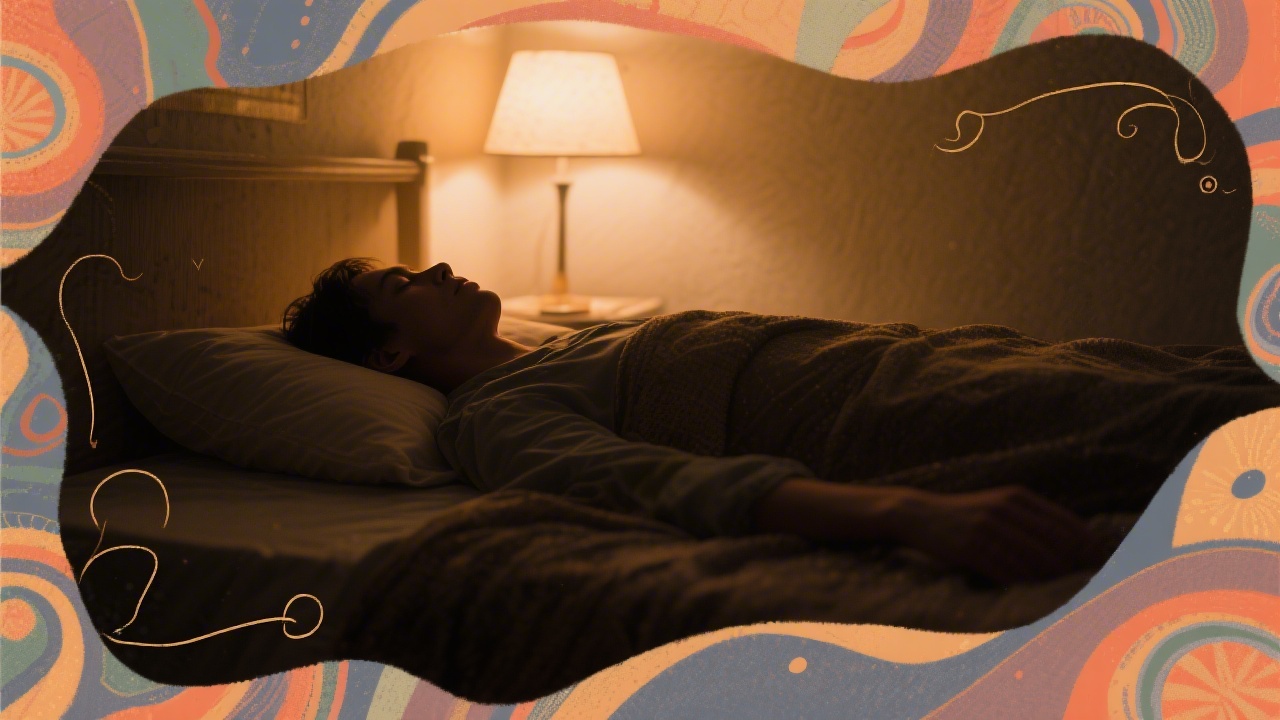
Hypnagogia is the threshold state between wakefulness and sleep, a zone of consciousness where rational thought loosens its grip and associative, non-linear thinking takes over. It is the same state Salvador Dalí called "the slumber with a key," the same one Nikola Tesla used to visualize his electrical inventions in three dimensions before building them. Modern neuroscience has since confirmed what these figures intuited: hypnagogia is a genuine and reliably reproducible state of enhanced creative cognition.
The Neuroscience of the Hypnagogic State
During normal wakefulness, your prefrontal cortex exercises tight executive control over thought. It filters out remote associations, maintains logical sequences, and suppresses ideas that do not fit established patterns. This filtering is efficient for routine tasks but counterproductive for creative problem-solving, which depends on connecting ideas across conceptual distance.
As you enter sleep stage N1 (the first stage of non-REM sleep), prefrontal control relaxes. The brain shifts toward slower alpha and theta waves. Default mode network activity increases, the same network responsible for mind-wandering, autobiographical memory, and future imagination. The result is a flood of loosely connected imagery, sound fragments, and abstract concepts that your waking mind would normally suppress.
A landmark 2021 study by Lacaux and colleagues published in Science Advances quantified this effect. Participants were given a math task with a hidden shortcut that required a non-obvious cognitive leap. Those who entered N1 sleep (hypnagogia) were nearly three times more likely to discover the shortcut than those who remained fully awake. Importantly, participants who fell into deeper sleep stages (N2, N3) lost this advantage, suggesting the creative benefit is specific to the hypnagogic threshold, not sleep in general.
Characteristics of Hypnagogic Experience
Hypnagogia is distinct from dreaming in several ways. Dreaming occurs during REM sleep and involves immersive narrative experiences with little self-awareness. Hypnagogia is more fragmentary and allows a degree of metacognitive awareness. You may observe images or hear words without fully losing the sense that you are awake and lying in a room.
Common hypnagogic phenomena include:
- Phosphenes and geometric patterns — abstract shapes, fractals, or grids of light that appear behind closed eyes
- Hypnagogic imagery — vivid, fleeting scenes or faces that appear spontaneously
- Auditory hallucinations — hearing one's name called, music, or disconnected phrases
- Myoclonic jerks — the sudden muscle twitch (often called the "sleep start") that accompanies N1 entry
- Thought loosening — ideas connecting in ways that the waking mind would reject as illogical
How to Cultivate Hypnagogic Creativity Deliberately
The Edison method remains valid but can be refined based on current neuroscience research. The core protocol involves four elements:
1. Prime the problem beforehand
Spend 20-30 minutes of focused, active work on the specific problem you want to incubate before your hypnagogic session. The brain needs to encode the problem thoroughly before it can reprocess it creatively during N1. Passive exposure (reading about the problem) is less effective than active engagement (attempting solutions, writing about constraints, drawing diagrams).
2. Create the right physical conditions
Lie down or recline in a quiet, dimly lit environment. Body temperature should be comfortable, slightly cool, since warmth accelerates the transition to deeper sleep and compresses the N1 window. Avoid eating heavily in the preceding hour, as digestion can affect sleep architecture. Most practitioners find a semi-reclined position (not fully horizontal) makes it easier to maintain light sleep.
3. Use a mild interruption mechanism
The original Edison steel ball method works because it is passive: the balls drop automatically when muscle tone relaxes at N1 entry. Modern alternatives include a light alarm set for 10-15 minutes, holding a small object loosely in one hand, or using a sleep-tracking wearable with a haptic alert for N1 detection. The goal is to wake at the threshold, not after crossing into deeper sleep.
4. Capture immediately
Hypnagogic content decays rapidly, faster than dream memory. Keep a notepad and pen within arm's reach. Do not reach for your phone first. The screen light suppresses the recall state. Write in stream-of-consciousness without editing, capturing images, words, or emotional impressions before evaluating them.
Conditions That Promote vs. Inhibit Hypnagogia
Certain conditions reliably extend the N1 window and enhance hypnagogic content quality. Mild sleep deprivation (4-5 hours the previous night) intensifies hypnagogic imagery. Periods of high cognitive engagement prior to the session increase the richness of the content. Some researchers note that the early afternoon window (1-3 pm) corresponds to a natural circadian dip in alertness that makes N1 entry more accessible.
Alcohol, benzodiazepines, and antihistamines all suppress N1 duration and reduce hypnagogic activity. Caffeine taken within 4-5 hours of a session delays sleep onset enough that you may overshoot N1 entirely. Stimulating content (news, social media, action films) in the 30 minutes before a session increases prefrontal activation and reduces the associative loosening that makes hypnagogia creative.
Hypnagogia vs. REM Sleep for Creativity
REM sleep is often cited as the primary creative sleep stage, and it does contribute significantly to creative cognition, particularly for integrating emotionally relevant material and building narrative connections. But REM requires 60-90 minutes of prior sleep to occur, making it less accessible for on-demand creative sessions. Hypnagogia offers a faster, more controllable entry point to altered creative cognition, accessible within minutes and without disrupting a full sleep cycle.
The two mechanisms are complementary. A full night of REM-rich sleep provides broad creative consolidation. Targeted hypnagogic sessions provide rapid, focused problem-incubation access. Serious creative practitioners can use both strategically.
Related Guides
The Role of Sleep Quality in Hypnagogic Access
One factor that undermines hypnagogic creativity is a poor baseline of sleep quality. When you are chronically sleep-deprived, N1 sleep is compressed as the brain prioritizes recovery in deeper NREM stages (N2 and N3). The hypnagogic window narrows, and the richness of hypnagogic content declines. Maintaining consistent, high-quality sleep architecture is a prerequisite for reliable hypnagogic creativity access.
This is where mattress quality becomes directly relevant. Pressure points, temperature dysregulation, and motion disturbance all fragment the early stages of sleep, including N1. A supportive, temperature-regulating sleep surface extends the quality and duration of all sleep stages, including the hypnagogic threshold.
Ready to Upgrade Your Sleep — and Your Creativity?
The Saatva Classic is our top-rated mattress for deep, restorative sleep. Exceptional spinal support, precise temperature regulation, and white-glove delivery.
Affiliate disclosure: We may earn a commission if you purchase through our links, at no extra cost to you.
Frequently Asked Questions
What exactly is hypnagogia?
Hypnagogia is the transitional state of consciousness between full wakefulness and sleep onset. It is characterized by fragmented, associative thinking, vivid imagery, and unusual sensory experiences. Unlike dreams, hypnagogic experiences occur while you retain some awareness of your surroundings.
How did Edison use hypnagogia for creativity?
Thomas Edison reportedly napped in a chair while holding steel balls in his hands. As he drifted toward sleep, his muscles relaxed, the balls dropped, the noise woke him, and he immediately captured the ideas from his hypnagogic state. Salvador Dalí and Nikola Tesla described similar techniques.
How long does the hypnagogic state last?
Hypnagogia typically lasts between 5 and 20 minutes as you fall asleep. You can extend or repeatedly access it by using mild sleep-interruption techniques, such as Edison's steel ball method or setting a light timer alarm for 10-15 minutes after lying down.
Is there scientific evidence that hypnagogia enhances creativity?
Yes. A 2021 study published in Science Advances (Lacaux et al.) found that participants in sleep stage N1 (early hypnagogia) were nearly three times more likely to solve creative math problems compared to those who remained fully awake. Brain activity during N1 shows a loosening of associative constraints, which is the neural signature of creative insight.
What is the best way to cultivate hypnagogic creativity?
The most reliable method is to lie down after focused work on a specific problem, avoid any screens or stimulating content, keep a notepad and pen within reach, and use a mild interruption technique (alarm, held object) to wake yourself within 10-20 minutes of drowsiness. Consistency across multiple sessions improves results.