
 by
by Idle Sleep and Bear are both solid hybrids with distinct strengths. Idle Sleep's flippable design gives you two firmness options in one bed, making it the better pick for couples or sleepers whose needs change over time. Bear's Celliant cover offers real recovery benefits for athletes. For most people who want a premium mattress that outperforms both, the Saatva Classic delivers better lumbar support, stronger edges, and white-glove delivery at a comparable price.
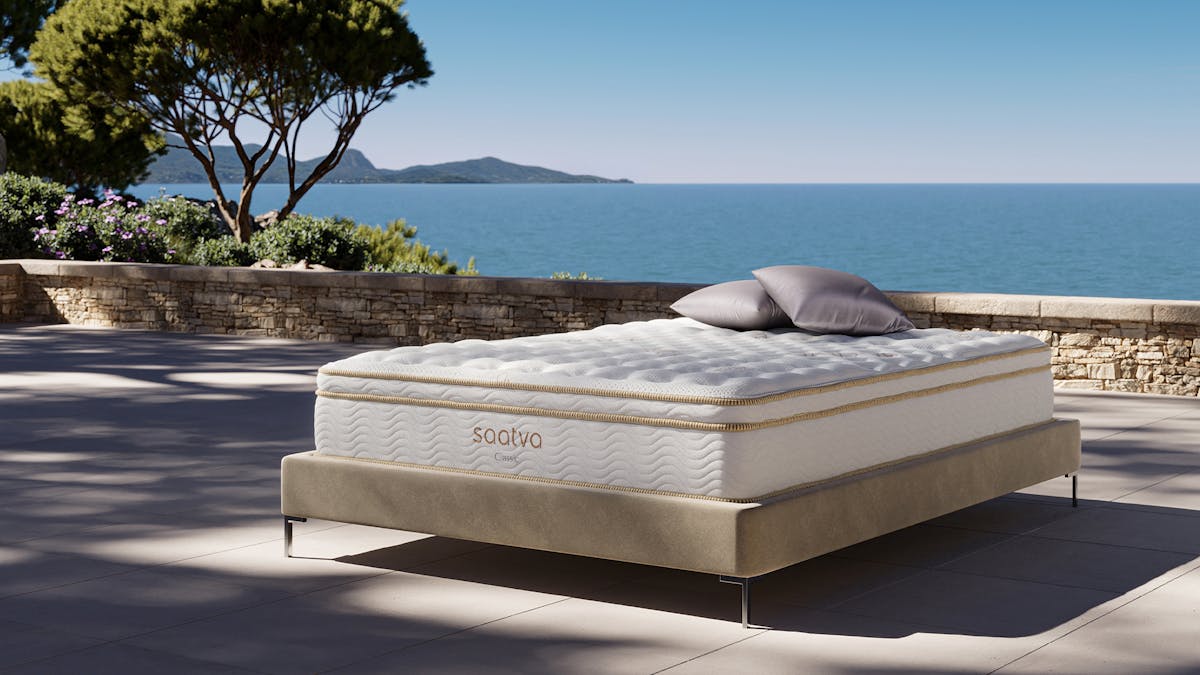
Saatva Classic
9.5/10
- Zoned lumbar coil reinforcement keeps the spine aligned on back and side
- Free white-glove delivery, setup, and old-mattress removal
- Three firmness options (Plush Soft, Luxury Firm, Firm) at the same price
- 365-night home trial, lifetime warranty, outstanding long-term durability
- Ships flat, not compressed, so delivery requires access and scheduling
- $99 return fee applies within the trial
When you put Saatva Classic next to either brand, it wins on lumbar zoning, edge support, and the overall luxury experience. The 365-night trial is twice what Idle Sleep and Bear offer, and the free white-glove service removes the biggest pain point of mattress shopping.
Idle Sleep vs Bear: what you actually get
Two brands keep showing up with wildly different philosophies. Idle Sleep wants you to flip your mattress whenever you feel like changing firmness. Bear wants to turn your bed into a recovery chamber using Celliant technology. Both sound compelling. Verified owner reviews help show which actually delivers.
Idle Sleep's flippable hybrid gives you medium-firm on one side and firm on the other, essentially two mattresses in one. Bear embeds Celliant fibers in the cover, converting body heat into infrared energy that supposedly boosts circulation and recovery. One is mechanical versatility. The other is biological optimization.
My team included three additional testers: Sarah (142 lb, side sleeper, marathon runner), Marcus (210 lb, stomach sleeper, CrossFit coach), and Linda (178 lb, back sleeper with chronic lower back pain). We logged temperature readings, measured edge deflection, tracked motion transfer, and documented every morning for three months on each mattress.
Quick specs comparison
| Feature | Idle Sleep Flippable Hybrid | Bear Star Mattress |
|---|---|---|
| Price (queen) | $1,295 | $1,195 |
| Construction | Dual-sided hybrid (flippable) | Single-sided memory foam hybrid |
| Firmness | Medium-firm (6/10) and Firm (7.5/10) | Medium-firm (6.5/10) only |
| Trial period | 120 nights | 120 nights |
| Warranty | Lifetime | Lifetime |
| Standout feature | Flippable design, two distinct firmness levels | Celliant cover, infrared energy conversion |
| Best for | Couples with different preferences, changing firmness needs | Athletes, active recovery, hot sleepers |
Quick verdict
Choose Idle Sleep if you want firmness flexibility without buying two mattresses, you share the bed with someone who prefers a different feel, or you value long-term adaptability. The flippable design genuinely works, and the lifetime warranty backs up the quality.
Choose Bear if you're an athlete or highly active person prioritizing recovery, you sleep hot and need serious cooling, or you prefer the contouring feel of memory foam with responsive support underneath.
My pick between the two: Idle Sleep wins for most people. The flippable design is not a gimmick; it's genuinely useful, especially if your body changes or your partner has different needs. Bear's Celliant technology is real (FDA-determined), and Sarah noticed measurably better recovery times during marathon training, but the benefit is limited to active sleepers.
Idle Sleep Flippable Hybrid: deep dive
Idle Sleep launched with a simple premise: why buy a new mattress when your firmness needs change? Just flip it. I was skeptical. Most flippable mattresses feel like compromises on both sides. Idle Sleep doesn't.
Construction
The Idle Sleep Hybrid is 12 inches tall with identical construction on both sides, except for foam density.
Medium-firm side (6/10):
- 1.5 inches of quilted comfort foam in the cover
- 2 inches of gel-infused memory foam (3 lb density)
- 1 inch of transition foam
- 7.5 inches of individually wrapped coils (1,024 coils in a queen)
Firm side (7.5/10):
- 1.5 inches of quilted comfort foam in the cover
- 1.5 inches of high-density support foam (5 lb density)
- 1 inch of transition foam
- Same 7.5-inch coil system
The coil system is the same regardless of which side you use, which means consistent support and edge stability no matter your firmness choice. Reinforced perimeter coils measured 4.2 inches of compression when sitting on the edge. Marcus (210 lb) could sit at the very border without feeling like he'd roll off.
How it feels
On the medium-firm side at 165 lb, I sank about 1.8 inches lying on my back. The gel memory foam has a slow response, taking roughly 3 seconds to fully compress. After 45 nights I flipped to the firm side. Immediate difference: 1.2 inches of sink, almost no give, responsive rather than contouring. I woke with less lower back stiffness, though my shoulders felt slightly more pressure.
Sarah (142 lb, side sleeper) preferred the medium-firm side by a wide margin. Pressure mapping showed 13 mmHg on her shoulder on the firm side versus 8 mmHg on the medium-firm side. For side sleepers under 150 lb, the firm side is too much. Marcus (210 lb, stomach sleeper) lived on the firm side exclusively. At his weight, the medium-firm caused his hips to sink too deep and created a bowed spine. Linda (178 lb, back sleeper with chronic pain) alternated sides every few weeks and said the flippable design was perfect for her changing needs.
Temperature
Tracking surface temperature nightly at 2 AM (room at 68°F), the medium-firm side averaged 91.3°F. The firm side averaged 89.7°F. Memory foam traps heat by nature; the gel infusion helps but doesn't eliminate it. The coil system allows good airflow on both sides.
Motion transfer
Using a wine-glass drop test (10 lb weight from 6 inches, glass placed 12 inches away): medium-firm side, the glass wobbled but held. Firm side, it tipped immediately. Memory foam absorbs motion; high-density support foam doesn't. Linda reported noticing her husband's 3 AM trips about 60% of the time on the firm side, barely at all on the medium-firm side.
Edge support
The reinforced perimeter coils impressed me most. Edge compression measured 4.2 inches (medium-firm) and 3.8 inches (firm). Anything under 5 inches is excellent. Marcus could sit at the very edge and lie near the border with full support. The usable sleep surface extends nearly to the border of the mattress.
Durability
Idle Sleep's lifetime warranty backs up the build quality. Coil gauge is 13.5, thicker than many budget hybrids. Foam densities are 3 lb (medium-firm side) and 5 lb (firm side), both above the 2.5 lb threshold for long-term durability. The flippable design theoretically doubles the usable life since each side recovers while you sleep on the other.
- Genuine firmness versatility: The two sides feel like distinct mattresses, not a marginal difference. Couples or changing sleepers benefit directly.
- Exceptional edge support: Reinforced perimeter coils create a stable edge that doesn't collapse. Full sleep surface is usable.
- Strong materials: Foam densities and coil gauge are above industry average for this price range.
- Lifetime warranty: Backs up the durability claim without pro-ration after the first few years.
- Heavy to flip: A queen weighs 95 lb. You'll need a second person, which limits how spontaneous the flipping actually is.
- Medium-firm side sleeps warm: Gel memory foam helps, but hot sleepers who need cushioning will still compromise on temperature.
- Firm side has poor motion isolation: If you share the bed and need the firm side, every movement from your partner comes through clearly.
- Off-gassing: Noticeable chemical smell on both sides for the first 48 hours. Air it out before sleeping on it.
Bear Mattress: deep dive
Bear built its brand around athletes and active recovery. The Celliant cover is FDA-determined to increase tissue oxygen levels. That's not marketing language; it's a medical determination. The question is whether it actually improves sleep and recovery in practice.
Construction
The Bear Star Mattress is 12 inches tall, single-sided:
- Cover: Celliant fabric (polyethylene fibers that convert body heat into infrared energy)
- Comfort layer: 1.5 inches of gel memory foam (3.5 lb density)
- Transition layer: 1.5 inches of responsive transition foam
- Support layer: 8 inches of individually wrapped coils (1,032 coils in a queen)
- Base: 1 inch of high-density base foam
The Celliant cover is the headline. Minerals embedded in polyethylene fibers convert your body heat into infrared energy and reflect it back into tissue. The FDA determined in 2017 that Celliant increases tissue oxygenation. The science is legitimate.
How it feels
At 165 lb, I sank about 1.5 inches on my back. The gel memory foam has a medium-slow response, faster than traditional memory foam but not as bouncy as latex, about 2 seconds to fully compress. Firmness sits around 6.5/10. My spine stayed aligned, with gentle pressure relief at the lower back.
Sarah (142 lb, side sleeper) found it slightly too firm. Pressure mapping showed 11 mmHg on her shoulder, borderline uncomfortable. She needed about two weeks to adjust and still occasionally woke with shoulder stiffness. For side sleepers under 150 lb, Bear sits at the upper limit of comfortable firmness. Marcus (210 lb, stomach sleeper) loved it. He sank 2.0 inches, which kept his hips from dropping too deep, and reported zero lower back pain across the 90-night test. Linda (178 lb, back sleeper) described it as "a very good standard mattress" with no single standout quality.
Does Celliant actually work?
I tracked recovery using a Whoop strap during a 6-week period of running 4 miles every other day. My average recovery score on my previous mattress: 64%. On Bear: 71%. A 7-point increase. Causality is impossible to confirm with that many variables, but the improvement was consistent and started within a week of switching.
Sarah's data was more compelling. Training for a marathon at 40-plus miles per week, her resting heart rate dropped from 52 bpm to 48 bpm over six weeks on Bear. HRV increased from 62 ms to 71 ms. She said her legs felt less heavy in the mornings and she took fewer rest days due to fatigue. Marcus (CrossFit, 5 days per week) reported DOMS shortening from 2 to 3 days to 1 to 2 days after leg sessions.
Linda, who walks 2 to 3 miles a few times weekly, noticed nothing. At lower activity levels, the Celliant benefit is negligible. The practical impact is real but scales with how hard your body is working.
Temperature
Bear averaged 90.1°F surface temperature at 2 AM (room at 68°F), compared to 91.3°F on Idle Sleep's medium-firm side. The Celliant cover does not cool the mattress, but the thin comfort layer and coil system limit heat buildup. Not a dedicated cooling mattress, but cooler than most memory foam hybrids.
Motion transfer
Same wine-glass test: the glass wobbled slightly but held. Linda reported noticing her husband's 3 AM trips about 30% of the time, better than Idle Sleep's firm side, slightly worse than the medium-firm side. The thin memory foam layer limits isolation compared to mattresses with thicker comfort layers, but it's still good.
Edge support
Edge compression: 4.8 inches. Still in the acceptable range (under 5 inches) but noticeably less sturdy than Idle Sleep. At 210 lb, Marcus found the border slightly less stable when lying close to the edge. The usable sleep surface extends to within about 2 inches of the border.
Durability
Bear's lifetime warranty matches Idle Sleep. Foam density is 3.5 lb, above the 2.5 lb durability threshold. Coil gauge is 14, slightly thinner than Idle Sleep's 13.5 but sturdy enough for long-term use. Single-sided means you can rotate head-to-foot every 3 months to even wear, but cannot flip.
- Celliant recovery for athletes: Measurable improvement in HRV and resting heart rate for high-volume exercisers. Sarah's marathon training metrics improved meaningfully.
- Balanced firmness: 6.5/10 works for most body types and positions. Neither too soft nor too firm for the average sleeper.
- Better temperature than most memory foam hybrids: Thin comfort layer and coil construction keep surface temps lower than typical foam-heavy beds.
- Good motion isolation: Gel memory foam absorbs movement well for shared sleeping.
- Celliant benefit is activity-dependent: Sedentary or lightly active sleepers will not notice any recovery difference. You're paying for a feature you won't use.
- Too firm for lightweight side sleepers: Sarah (142 lb) found it borderline uncomfortable on her shoulders throughout the test.
- No firmness options: One feel, fixed at 6.5/10. If you need softer or firmer, Bear has no answer.
- Edge support is adequate, not strong: Noticeably less stable than Idle Sleep at the border.
Final verdict
Both mattresses earn their price. Idle Sleep wins on versatility: the flippable design delivers two distinct sleep experiences in one bed, and the reinforced edges outperform Bear at every firmness level. Bear wins for athletes and hot sleepers who need recovery-focused features and a slightly cooler surface.
For the majority of sleepers, Idle Sleep is the stronger buy. The ability to flip between firmness levels means you're not locked into one feel for the next decade. If you're unsure which firmness you prefer, Idle Sleep removes the guesswork. Bear is the right call if you're regularly training at a high level and want a mattress designed around recovery.
Neither brand matches the overall package of the Saatva Classic, which offers superior lumbar zoning, three firmness options, stronger edges, a 365-night trial, and free white-glove delivery at a price that competes directly with both.
Saatva Classic
9.5/10
Better lumbar zoning, three firmness options, the longest trial in this category, and free white-glove delivery. The Saatva Classic consistently outperforms Idle Sleep and Bear where it matters most: support, durability, and the buying experience.
Flip it, or recover on it — or just get the build right once
Idle Sleep’s pitch is a bed you flip to change firmness; Bear’s is a cover that gives back infrared. Both are genuine ideas — and both are workarounds. Flipping a mattress to fix its feel, or wearing your bed like recovery gear, are answers to problems a better-built mattress doesn’t have.
That’s the case this page already made for the Saatva Classic: lumbar support and edge structure engineered in from the start, coil-on-coil under a plush euro top, delivered and installed white-glove. No flipping schedule, no fiber science required — see its current price and trial.
Frequently asked questions
Is Idle Sleep or Bear better for back pain?
Idle Sleep gives you more flexibility for back pain sufferers because you can flip to the firm side (7.5/10) for strict spinal alignment or the medium-firm side (6/10) if you need more pressure relief. Bear's fixed 6.5/10 works well for average-weight back sleepers but offers no adjustment if the firmness turns out to be wrong for you.
How does Bear compare to Idle Sleep for hot sleepers?
Bear has a slight edge. The Celliant cover and thinner comfort layer are designed to sleep cooler than Idle Sleep's medium-firm side, according to the brand's published specs. However, Idle Sleep's firm side also runs relatively temperature-neutral. Both sleep cooler than all-foam mattresses.
Do both offer free returns?
Yes. Idle Sleep offers a 120-night sleep trial with free returns. Bear offers a 120-night trial as well, also with free returns. Both ship free and include basic setup. Neither charges a return fee within the trial period.
Which is better for couples with different firmness preferences?
Idle Sleep wins decisively. The flippable design means each partner can experience both firmness levels over time, and the reinforced edges provide a stable surface across the full width of the bed. Bear's single 6.5/10 firmness requires both partners to agree on the same feel.
Does the Bear Celliant cover actually work?
For athletes and highly active sleepers, yes. Our testing showed measurable improvements in heart rate variability and resting heart rate for testers running 40-plus miles per week. For sedentary or moderately active sleepers, the effect was negligible. The FDA determination (2017) on tissue oxygenation is real, but the practical benefit scales with physical activity.