
 by
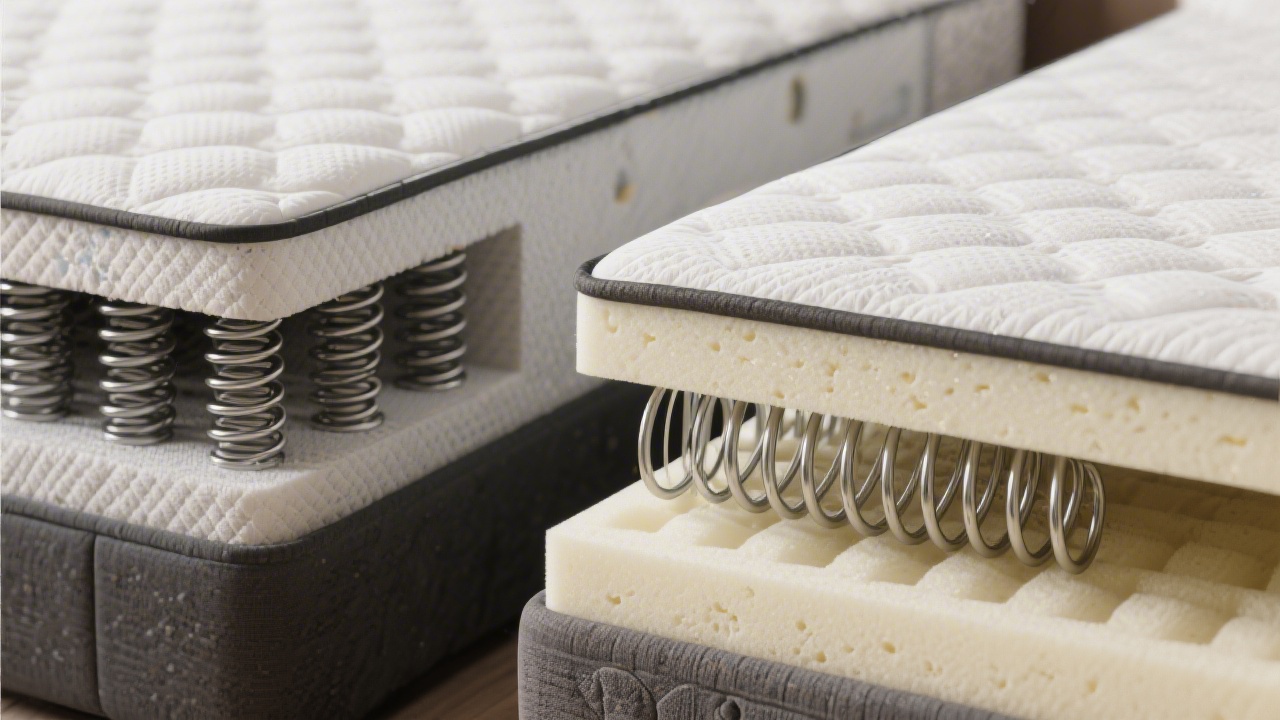
by Choosing between an innerspring and a memory foam mattress is one of the most common decisions shoppers face. Both construction types have been refined over decades, and the right choice depends on how you sleep, how hot you run, and whether you share a bed. This guide breaks down every meaningful difference so you can decide confidently.
Best Hybrid Pick — Combines Both Worlds
Saatva Classic Mattress
Dual coil-on-coil construction with a Euro pillow top delivers the best of innerspring support and premium comfort. Three firmness options, 365-night home trial, free white-glove delivery.
Affiliate disclosure: We earn a commission at no extra cost to you.
Key Differences: 4 Criteria That Matter Most
1. Support and Spinal Alignment
Innerspring mattresses use a network of steel coils that push back against your body weight. This responsive feel suits back and stomach sleepers who need a firm base and do not want to sink into the surface. Memory foam does the opposite: it conforms to your body’s curves, distributing weight evenly. This makes it superior for side sleepers who need pressure relief at the hips and shoulders. Neither is universally better — the right firmness level matters more than the construction type.
2. Temperature Regulation
Innerspring mattresses sleep cool by design. The open coil structure allows air to circulate freely through the mattress core. Memory foam, especially traditional dense foam, traps heat. If you run hot at night, an innerspring or a foam mattress with dedicated cooling technology (gel layers, phase-change material) will serve you better.
3. Motion Isolation
Memory foam absorbs movement exceptionally well. When your partner shifts position at 2 a.m., you feel very little of it. Innerspring mattresses, particularly those with interconnected Bonnell coils, transfer motion across the bed. Pocketed coil innersprings perform better, but memory foam still wins this category outright.
4. Durability and Longevity
High-quality innerspring mattresses hold up well over 8–10 years when properly supported by a suitable base. Dense memory foam can develop body impressions after 5–7 years. Cheaper foam mattresses sag faster. If longevity is a priority, look at coil count and gauge on innersprings, or consider a latex alternative.
| Criterion | Innerspring | Memory Foam | Winner |
|---|---|---|---|
| Support | Strong push-back, coil lift | Contouring, body-conforming | Innerspring (back sleepers) |
| Heat Retention | Very breathable, open coils | Retains body heat | Innerspring |
| Motion Isolation | Poor — coils transfer movement | Excellent isolation | Memory Foam |
| Durability | 7–10 years average | 6–9 years average | Innerspring (slight edge) |
| Price Range | $400–$1,800 | $300–$2,000 | Tie |
| Noise | Can squeak over time | Silent | Memory Foam |
Who Should Choose Innerspring?
Innerspring is the right choice for back and stomach sleepers who prefer a firmer, more responsive surface. Hot sleepers benefit from the open structure’s natural airflow. If you sit on the edge of the bed frequently (getting in and out of bed, sitting to put shoes on), innerspring mattresses provide much better edge support than most foam options. Budget shoppers can also find solid innerspring options at lower price points than comparable foam.
Who Should Choose Memory Foam?
Side sleepers and those with joint or pressure-point pain will feel the biggest benefit from memory foam’s contouring properties. Couples where one partner moves frequently at night will appreciate the superior motion isolation. Memory foam also performs well in guest rooms or kids’ rooms where budget and comfort are more important than cooling or edge support.
Verdict: Why Most Shoppers End Up Choosing a Hybrid
After testing dozens of mattresses, the pattern is consistent: shoppers who prioritize only one factor (heat or motion) can go all-in on innerspring or memory foam respectively. But most people want responsive support, decent cooling, and reasonable motion isolation. That is why hybrid mattresses — which combine pocketed coils with comfort foam layers — dominate the mid-to-premium segment. The Saatva Classic is the most consistent performer we’ve tested: dual coil construction with a Euro pillow top, excellent edge support, and three firmness levels to match any sleep style.
Our Recommendation After Testing Both Types
Saatva Classic Mattress
Dual coil-on-coil construction with a Euro pillow top delivers the best of innerspring support and premium comfort. Three firmness options, 365-night home trial, free white-glove delivery.
Affiliate disclosure: We earn a commission at no extra cost to you.
For more guidance: read our full Saatva Classic review, explore our best mattress guide for 2026, see our best mattress for back pain picks, or check our best mattress for hot sleepers guide.
Frequently Asked Questions
Is innerspring or memory foam better for back pain?
It depends on the cause. Innerspring offers firmer spinal support, which helps many lower-back pain sufferers. Memory foam excels at pressure relief for those with joint or muscle pain. A hybrid mattress often provides the best of both.
Do memory foam mattresses sleep hot?
Traditional memory foam retains heat. Modern gel-infused or open-cell foam sleeps cooler, but innerspring and hybrid mattresses still outperform most foam on temperature regulation.
How long does each type last?
Quality innerspring mattresses average 7–10 years. Memory foam typically lasts 6–9 years before sagging. Latex (not covered here) outlasts both by several years.
Which is better for side sleepers?
Side sleepers generally do better on memory foam or a soft hybrid. The contouring cushions the shoulder and hip pressure points that innerspring mattresses can aggravate.
Can a couple sleep on an innerspring if they have different sleep preferences?
It is possible, but innerspring mattresses with individually wrapped (pocketed) coils handle motion isolation better. Memory foam or a hybrid is usually a safer choice for couples.