
 by
by Editor's pick — melatonin-free
NooCube Sleep Upgrade
Melatonin-free formula · 60-night guarantee · Lemon balm 600 mg + magnesium + lavender
TL;DR
Insomnia tips stack in a clear order: environment first, behavior second, supplements third. Cool the bedroom to 65–68°F, blackout the light, keep screens out. Anchor a fixed wake time, apply stimulus control, cut caffeine at 2 PM and alcohol 3 hours pre-bed. Add magnesium, L-theanine, or a melatonin-free stack like NooCube Sleep Upgrade once the foundation holds. For chronic insomnia (3+ months), CBT-I is the gold standard and outperforms medication long-term. Avoid the classic quick fixes (alcohol, high-dose melatonin, scrolling until tired) — they make things worse.
Jump to section
Most insomnia responds to a small, ordered set of behavioral and environmental changes — not to a better pill. Roughly 30% of adults have an insomnia episode in any given year and 10% struggle chronically, but the fix is usually the same: build the environment, fix the schedule, then reach for a supplement. This guide walks through every actionable tip that holds up in clinical research, in the order you should apply them.
Environment Tips: The Bedroom Comes First
Make the room a place your body wants to sleep. Environment changes are cheap, immediate, and often resolve 30–40% of insomnia by themselves.
- Temperature 65–68°F (18–20°C). Core temperature needs to drop 1–2°F to initiate sleep. A warm room blocks that. If yours runs hot, start with a fan or lighter bedding.
- Blackout the room. A 2022 Northwestern study found even 100 lux of ambient light raised resting heart rate and worsened next-day insulin resistance. Blackout curtains, a proper eye mask, or both. Cover LED clocks and charger lights.
- White noise or a quiet room. Inconsistent noise fragments sleep even when you don't wake fully. A fan or a dedicated machine masks the fluctuations.
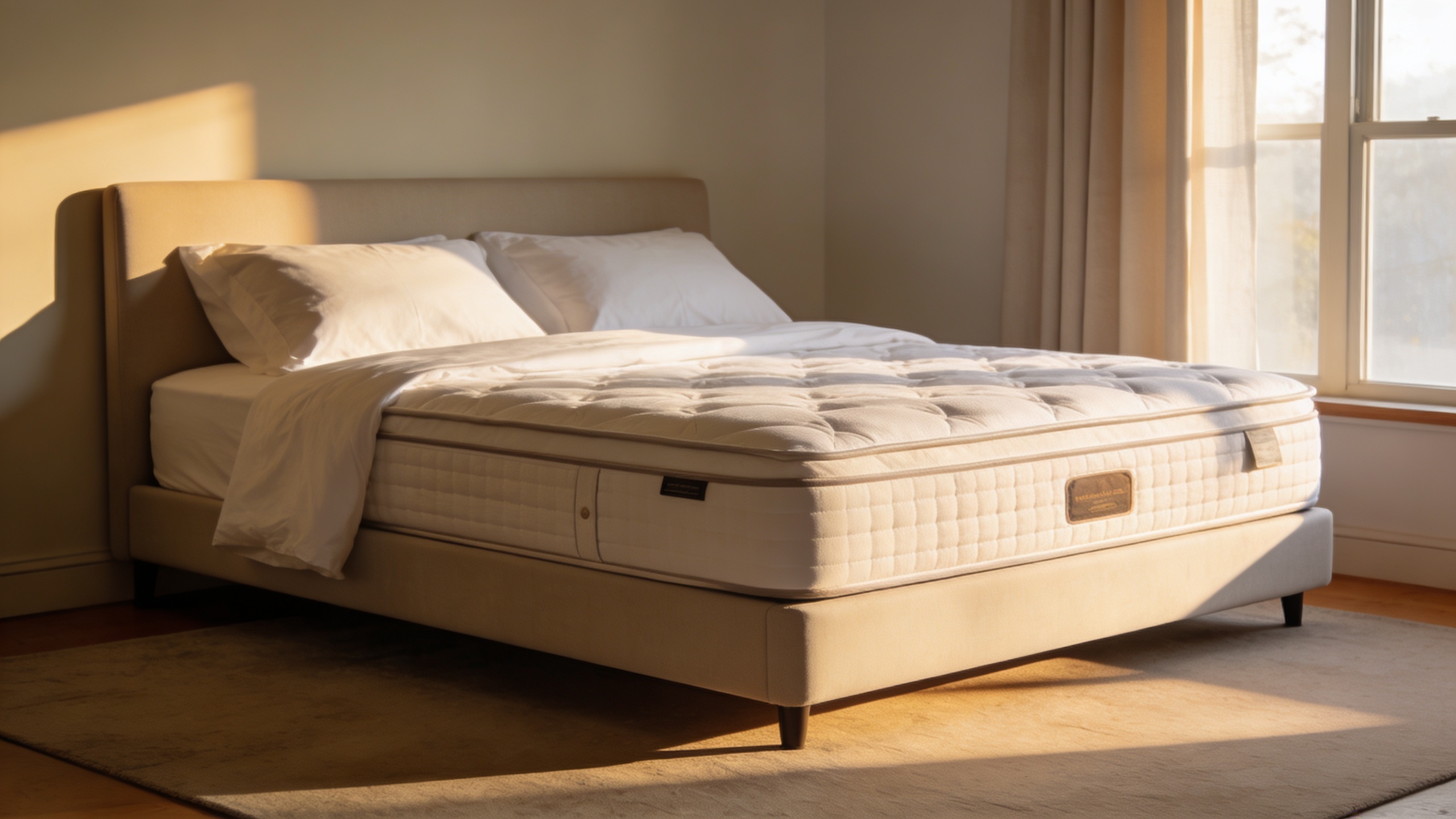
- Mattress-comfort match. Waking with back, hip, or shoulder pain means the surface is the problem. A bed 7+ years old or sagging quietly costs you sleep.
- Tech out of bed. Phones and tablets are the single largest trigger for modern insomnia. Keep them in another room. Buy an actual alarm clock.
Order matters: temperature, light, tech, mattress. The first three are free — dial them before blaming the bed.
Evening Wind-Down Routine
Your nervous system doesn't flip from day mode to sleep mode instantly — it needs a 45–90 minute runway. A wind-down routine is that runway.
- Start 60 minutes before lights-off. Set a recurring alarm labeled "wind-down" so it doesn't rely on willpower.
- Dim the lights. Overhead lighting in the last hour suppresses melatonin. Switch to lamps and warm bulbs (2700K or lower).
- Screens off. Content is a bigger issue than wavelength. If you can't quit cold, switch to an e-reader with warm backlight and stop scrolling feeds.
- Warm shower or bath. A 2019 meta-analysis found a 40–60 minute pre-bed warm bath at 104–109°F shortened sleep onset by ~10 minutes. Warming the skin dumps core heat afterward, which signals sleep.
- Read a physical book. Nothing that activates problem-solving or emotional reactivity. Boring is best.
Consistency beats perfection — three things in the same order every night beats a rotating nine-step protocol.
Stimulus Control: Bed Is for Sleep Only
Spending hours in bed tossing, scrolling, or worrying trains your brain that bed = alert. Stimulus control reverses that. Large effects in 2–4 weeks.
- Bed is for sleep and sex only. No laptops, bills, TV, or phone calls. Your brain should associate the bed with exactly two states.
- Only get in bed when actually sleepy. Not tired, not "it's bedtime" — sleepy. Heavy eyelids, head nodding.
- The 20-minute rule. If you aren't asleep in ~20 minutes (don't stare at a clock — estimate), get up. Dim light, boring task. Return only when drowsy.
- No clock watching. Turn the face to the wall. "If I fall asleep now I'll get X hours" is sleep-effort anxiety that guarantees you stay awake.
- Same wake time after a bad night. Sleeping in poisons the next night's sleep drive.
The first 3–5 nights are uncomfortable. The sleep-drive rebound usually arrives in week two.
Timing and Schedule: Anchor the Circadian Rhythm
Your internal clock runs on two inputs: consistent wake time and morning light. Fix both and mild-to-moderate insomnia often resolves in 10–14 days.
- Fixed wake time, seven days a week. Pick one you can hold Tuesday and Saturday. ±30 minutes. Bedtime becomes a consequence of sleepiness, not a number you force.
- Consistent bedtime ±30 minutes. Once wake time is stable, your body pulls bedtime into a natural window.
- Morning light within 1 hour of waking. 10–30 minutes outdoors, even overcast. Outdoor light is 10–50× brighter than indoor lighting.
- No weekend catch-up sleep. Sleeping in Saturday and Sunday creates social jet lag — Monday insomnia is downstream. Take a 20-minute afternoon nap instead.
Diet and Drink: What You Consume and When
You can't out-supplement a bad diet-timing pattern. What you eat in the 6–10 hours before bed matters more than most people realize.
- Caffeine cutoff at 2 PM. 5–7 hour half-life — a 3 PM coffee still has half its dose at 10 PM. Deep and REM sleep suffer even if you fall asleep. Slow metabolizers: cut off at noon.
- Alcohol: none within 3 hours of bed. Accelerates onset, fragments the second half as it metabolizes. You wake at 3 AM with elevated heart rate. A nightcap is a sleep debt paid with interest.
- Magnesium-rich foods. Pumpkin seeds, almonds, spinach, black beans, dark chocolate, avocado. Most adults eat below the RDA.
- Avoid heavy, fatty, or spicy meals 3 hours pre-bed. High-fat delays gastric emptying; spicy raises core temperature and triggers reflux.
- Hydrate earlier. Sipping water in the last hour guarantees a 3 AM bathroom trip.
Exercise: The Underrated Sleep Tip
Regular aerobic exercise is one of the most robust non-drug insomnia interventions. Meta-analyses show 10–15 minutes off sleep onset and meaningful gains in deep sleep — timing matters.
- 30 minutes moderate, 4–5× per week. Walking, cycling, swimming, easy running, or strength training all qualify. Cumulative effect in 1–2 weeks.
- Morning or afternoon is ideal. Morning reinforces circadian rhythm; afternoon builds the largest same-night sleep drive.
- Avoid intense training in the last 2–3 hours pre-bed. High-intensity cardio or heavy lifting raises core temperature and sympathetic tone. Gentle yoga is fine late.
- Outdoor is double-duty. A morning walk combines exercise, light, and fresh air. If you only do one thing, make it a 20-minute morning walk.
Stress and Anxiety: Quiet the Racing Mind
A huge share of insomnia isn't a sleep problem — it's an anxiety problem that shows up at night. These techniques downshift the nervous system.
- 4-7-8 breathing. Inhale through the nose 4, hold 7, exhale through the mouth 8. Four cycles. The long exhale activates the parasympathetic vagal response. Works in 60–90 seconds.
- Progressive muscle relaxation. Tense each muscle group 5 seconds, release 10, feet up to face. Ten minutes.
- Journaling open loops. Keep a notebook by the bed. Write each worry in one sentence and close it. The brain stops rehearsing what it knows is recorded.
- Worry window earlier in the day. Give anxiety a scheduled 15-minute slot at 6 PM. Bedtime worries: "Not now — 6 PM tomorrow."
- Cognitive restructuring. Challenge catastrophic sleep thoughts. "If I don't sleep I'll fail tomorrow" is rarely true.
NooCube Sleep Upgrade
A melatonin-free sleep supplement that works with your body instead of replacing hormones. Clinical testing (DBEM) showed 35% faster sleep onset and 28% higher sleep score on Oura/Whoop over 30 nights.
- Lemon balm 600mg + lavender extract for calm
- Magnesium citrate + calcium + vitamin D3 for sleep architecture
- No habit-forming ingredients, no morning grogginess
- 60-day money-back guarantee, GMP-certified USA manufacturing
Affiliate disclosure: we may earn a commission from this link at no extra cost to you.
Supplement Support: What Actually Helps
Supplements are the third layer, not the first. They multiply a working foundation, not replace one. A small number have credible research; the rest is marketing.
- Magnesium glycinate or citrate (200–400 mg, 30–60 min pre-bed). Best-evidenced single ingredient, especially in deficient adults. Glycinate is gentler. See best sleep supplements.
- L-theanine (100–200 mg). Amino acid from tea. Calm without sedation. Pairs well with magnesium.
- NooCube Sleep Upgrade. Melatonin-free stack (magnesium, lemon balm 600 mg, lavender, calcium, vitamin D3). One formula instead of three bottles. See NooCube Sleep review.
- Melatonin (0.3–1 mg — NOT 5–10 mg). Low doses work better for circadian reset. Best for jet lag, shift work, delayed sleep phase. Not a general insomnia cure. See natural sleep aids.
Skip: valerian, 5-HTP, tryptophan, high-dose melatonin, most "sleep tea" blends.
When to Use Sleep Medications
Sleep medications have a narrow role. Not first-line. Not long-term.
- OTC antihistamines (diphenhydramine, doxylamine). OK for 2–3 nights of situational insomnia. Tolerance builds fast; not chronic, especially over 50.
- Prescription Z-drugs. Short-term bridge under physician supervision — 2–4 weeks while CBT-I ramps up. Rebound insomnia is common.
- Trazodone, mirtazapine, doxepin low-dose. Off-label, usually when insomnia co-occurs with depression or anxiety. Better long-term profile than Z-drugs.
- Orexin antagonists (suvorexant, lemborexant, daridorexant). Newer class acting on the wake system. Fewer rebound issues. Prescription only.
Medication is a bridge, not a destination. If you're on a sleep med nightly for more than a few weeks, ask about CBT-I or sleep restriction therapy. See our sleep medication overview.
CBT-I: The Gold Standard for Chronic Insomnia
If you've slept poorly for 3+ months despite decent sleep hygiene, CBT-I is the most effective treatment available — outperforming every sleep medication long-term with a 70–80% response rate. Typically a 6–8 week protocol with five components.
- Sleep restriction. Temporarily compress time-in-bed to match actual sleep duration, then expand as efficiency exceeds 85%.
- Stimulus control. The bed-is-for-sleep protocol, formalized and tracked.
- Cognitive restructuring. Identify and challenge catastrophic sleep thoughts.
- Relaxation training. PMR, 4-7-8 breathing, body-scan. Practiced during the day.
- Sleep hygiene education. Integrated with the rest of the protocol.
Access: apps (Somryst FDA-cleared, Sleepio, CBT-i Coach free), books ("Say Good Night to Insomnia" by Jacobs), or a board-certified behavioral sleep medicine therapist.
Shift Work Tips
Shift work is circadian misalignment by job description. You can't fix it entirely, but you can manage it.
- Strategic light exposure. Bright during the first half of the shift, dim the final 2 hours.
- Blackout day sleep. Blackout curtains, eye mask, ear plugs, white noise. A dim room isn't enough.
- Anchor sleep on off-days. Don't fully flip to day-schedule if night shift returns soon. Hold a consistent anchor (3–10 AM) across on and off days.
- Sunglasses on the drive home. Bright morning light after a night shift shifts your clock the wrong way.
Travel and Jet Lag Tips
Jet lag is acute circadian mismatch. The fix is small and well-timed — not a sledgehammer melatonin dose.
- Timing beats dose. 0.3–0.5 mg melatonin at destination bedtime for the first 3–5 nights. High doses shift phase unpredictably.
- Light is the strongest lever. Outdoor morning light at destination within an hour of waking; avoid bright evening light until adapted. Apps like Timeshifter map this by flight.
- Hydrate aggressively. Cabin humidity runs 10–20%. Plain water, not coffee or wine.
- Preserve routine immediately. Shift meals, exercise, and bedtime to destination time on day one. Commit, don't ease in.
When to See a Doctor
Most insomnia is behavioral. A meaningful minority is medical, and missing it is costly.
- Chronic insomnia >3 months. Sleep difficulty 3+ nights per week for 3+ months with daytime consequences warrants evaluation.
- Daytime impairment. Falling asleep at the wheel, cognitive fog that interferes with work, chronic irritability.
- Loud snoring, gasping, or witnessed apneas. Sleep apnea is the most commonly missed cause of chronic fatigue. A home sleep test is the next step.
- Depression, anxiety, or trauma symptoms. Insomnia is a core feature of mood disorders. Treating the underlying condition often resolves the sleep problem.
- New medications, thyroid symptoms, or menopause onset. Beta blockers, steroids, SSRIs, and hormonal transitions all disrupt sleep.
For age-specific guidance, see our insomnia after 50 guide. For underlying drivers, see insomnia causes and insomnia remedies.
Common Mistakes That Make Insomnia Worse
- "Trying hard to sleep." The more you try, the more alert you become. Paradox: give up on sleeping, rest quietly or get up.
- Screens in bed. Content, light, and association all work against you. Keep them out of the room.
- Long or late naps. A 90-minute 5 PM nap kills sleep drive. If you must nap, 20 minutes before 3 PM.
- Alcohol as a sleep aid. Sedating for 90 minutes, then fragments REM and wakes you at 3 AM.
- Stopping too early. Behavioral changes need 10–14 days; CBT-I needs 4–8 weeks.
FAQ
How long until I see results?
Environmental fixes (temperature, light, mattress) work the same night. Schedule changes show up in 5–14 days. Stimulus control is 2–4 weeks. CBT-I runs 6–8 weeks. Give each at least 10–14 days.
Do these tips work the same for kids?
The environmental and routine tips do — cool room, blackout, consistent schedule, wind-down ritual. Medications and adult-dose supplements do not. Children's sleep is sensitive to screens, sugar timing, and routine disruption. Don't give melatonin without pediatrician guidance.
What about insomnia tips for older adults?
Same framework, with two caveats: endogenous melatonin declines with age, so low-dose melatonin (0.3–0.5 mg) has more utility after 55. OTC antihistamines become a worse idea after 60 due to anticholinergic burden.
Are these tips safe during pregnancy?
Environmental, schedule, and behavioral tips are safe and encouraged. Supplements are different — talk to your OB before starting magnesium, melatonin, L-theanine, or herbal blends. CBT-I is an excellent drug-free option.
What if my brain won't turn off?
This is the most common adult pattern, and it's anxiety-driven. Priority stack: worry window earlier in the day, 4-7-8 breathing at bedtime, journaling to close open loops, CBT-I cognitive restructuring if chronic. Forcing your brain to stop fails — redirecting into a slow, vivid mental scene works.
Does counting sheep actually work?
No — research specifically shows it does not. A 2002 Oxford study found counting sheep delayed sleep onset compared to visualizing a calm, detailed scene (a beach, a forest). The more vivid and sensory, the better.
What's the best bedroom temperature?
65–68°F (18–20°C). Some sleepers need closer to 60°F; hot sleepers may need active cooling. A hot-sleeping mattress can add 3–4°F of surface temperature without your realizing it.
Can weight affect insomnia?
Yes, meaningfully. Weight gain is a primary risk factor for obstructive sleep apnea, which presents as insomnia in many adults. Weight loss often improves apnea and sleep quality together.
Why do I dream more on bad-sleep nights?
You wake during or just after REM cycles more often when sleep is fragmented, which is why dream recall spikes during poor stretches. Fix the fragmentation (environment, stimulus control, alcohol cutoff) and the dreams settle.
Related reading: Insomnia Remedies | Insomnia Causes | Insomnia After 50 | CBT-I for Sleep | Sleep Restriction Therapy | Best Sleep Supplements | Natural Sleep Aids | Sleep Medication | NooCube Sleep Review