
 by
by Editor's pick — melatonin-free
NooCube Sleep Upgrade
Melatonin-free formula · 60-night guarantee · Lemon balm 600 mg + magnesium + lavender
TL;DR
The natural sleep aids with the best evidence work in three layers: environment (cool 65–68°F bedroom, blackout darkness, quiet), behavior (CBT-I, consistent schedule, 30-minute moderate exercise most days), and targeted supplementation on top.
For the supplement layer, the cleanest picks are NooCube Sleep Upgrade (melatonin-free stack, editor's pick), magnesium glycinate, and L-theanine. Stack behaviors first, supplement second — pills around poor environment and habits never outperform the reverse.
Jump to section
- What "natural sleep aid" actually means
- Evidence hierarchy, tier 1 to tier 4
- Bedroom environment
- Behaviors and habits
- Exercise and movement
- Herbal teas
- Supplements that work
- Aromatherapy and essential oils
- Weighted blankets and sensory tools
- Mind-body practices
- Grounding and earthing
- What to avoid
- Build your personal natural sleep stack
- When natural isn't enough
- FAQ
Natural sleep aids are anything non-prescription that helps you fall asleep, stay asleep, or sleep more restoratively — environment, behavior, or plant-derived supplementation. The ones that actually work are unglamorous: a cool dark room, a consistent schedule, regular movement, and a small handful of supplements with real trial data behind them. This guide ranks the full landscape honestly, flags what to skip, and shows how to sequence aids into a personal stack.
What "Natural Sleep Aid" Actually Means
"Natural sleep aid" is a marketing phrase, not a regulated term. The FDA doesn't certify anything as natural and doesn't require efficacy testing before supplements reach shelves. The label covers three categories: plant-derived supplements (herbs, amino acids, minerals), behaviors (CBT-I, sleep hygiene, exercise), and environmental tools (cooling mattresses, weighted blankets, blackout curtains).
The implication: "natural" says nothing about whether something works or is safe. Kava is natural and hepatotoxic. A 65°F bedroom is natural and costs nothing. Evaluate each aid on evidence and safety. Natural aids also don't replace clinical care — for chronic insomnia, apnea, or mood-driven disruption, see a specialist and consider CBT-I.
Evidence Hierarchy: Tier 1 to Tier 4
To cut through the marketing, rank natural sleep aids by evidence strength. We use a four-tier system modeled on clinical review standards.
- Tier 1 — strong, consistent evidence: CBT-I, bedroom temperature control (65–68°F), blackout darkness, magnesium glycinate in deficient adults, and melatonin for specific circadian use cases (jet lag, delayed sleep phase, shift work).
- Tier 2 — moderate or emerging evidence: L-theanine, ashwagandha, oral lavender (Silexan), chamomile for mild pre-sleep anxiety, glycine, weighted blankets for anxiety-driven insomnia.
- Tier 3 — limited human data or folk remedies with partial support: valerian, passionflower, lemon balm (monotherapy), topical essential oils, grounding/earthing sheets.
- Tier 4 — no meaningful evidence or actively risky: kava, high-dose 5-HTP without supervision, most "sleep teas" marketed as cures, nighttime alcohol as a sleep aid.
One nuance worth remembering: a tier 1 intervention like sleep hygiene is unsexy but compounds for life. Tier 2 and 3 supplements can help on the margins once the foundation is in place. They rarely help much without it.
Bedroom Environment
The bedroom environment is the most underrated natural sleep aid. Four variables carry most of the impact: temperature, darkness, sound, and your sleep surface.
Temperature. Sleep onset and deep-sleep maintenance depend on a core body temperature drop of roughly 1–2°F. The AASM and most sleep physicians converge on 65–68°F (18–20°C) for adults. Hot bedrooms increase wake after sleep onset, reduce REM, and correlate with higher overnight heart rate. If you run hot, a cooling mattress and breathable bedding do more than any pill.
Darkness. Ambient light suppresses melatonin and shifts circadian timing. Blackout curtains or a quality sleep mask reduce bedroom lux to near zero; a 2022 Northwestern study showed a single night of moderate room light raised heart rate and insulin resistance measurably. Fix streetlights, alarm clock LEDs, and partner phones before you supplement.
Sound. Consistent low-volume white, pink, or brown noise masks intermittent disturbances (traffic, pets, a partner's movement) more effectively than silence that is then punctured. Earplugs with an NRR of 27–33 are an inexpensive upgrade.
Mattress and comfort match. A mattress that creates pressure points or fails to support spinal alignment produces micro-arousals that chew through deep-sleep architecture. Side sleepers need more cushioning at shoulder and hip; back and stomach sleepers need firmer support. If you wake with hip, lower-back, or shoulder pain, the mattress is the first thing to change.
Behaviors and Habits
Behaviors are the second-most-leveraged natural aid after environment, and they cost nothing.
- Consistent schedule. A fixed wake time (even weekends) anchors circadian rhythm better than a fixed bedtime. Drift >60–90 minutes across the week produces "social jet lag."
- Evening wind-down. The 60–90 minutes before bed should taper — dim lighting, non-stimulating activity, a consistent pre-sleep routine that becomes a conditioned cue.
- Screen limits. Blue light suppresses melatonin, but the bigger issue is cognitive activation from scrolling. A 60-minute screen cutoff (or aggressive Do Not Disturb) meaningfully shortens sleep latency.
- Caffeine cutoff. Caffeine has a 5–6 hour half-life. Finish 8–10 hours before bed. "Coffee doesn't affect me" usually means it's eating your deep sleep without affecting onset.
- Alcohol limits. Alcohol fragments the second half of the night, suppresses REM, and worsens apnea. It trades sleep quality for sleep onset — not a sleep aid.
Exercise and Movement
Regular physical activity is one of the most consistent interventions in the sleep literature. Across dozens of trials, 30 minutes of moderate-intensity movement 4–5 times per week reduces sleep onset latency, increases deep sleep, and improves subjective sleep quality — with effect sizes rivaling some pharmacological options and a far cleaner side-effect profile.
Timing. Morning and early afternoon workouts maximize benefit without pushing body temperature or adrenaline too close to bedtime. Intense exercise within 2 hours of bed can delay sleep onset; gentle movement (a walk, light yoga, stretching) is fine right up to wind-down.
Intensity. You don't need to train hard to sleep better. Brisk walking, cycling, swimming, and strength training all show benefit; 7,000–10,000 steps daily is a reliable sleep-quality predictor in population data. Yoga nidra and evening mobility routines reduce physical tension and downshift the nervous system.
Herbal Teas
Herbal teas are the gentlest tier. Pharmacological effect is modest, but the ritual — warm drink, dim light, unhurried pause — signals the body toward rest.
- Chamomile. Contains apigenin, a flavonoid with mild GABA-A affinity. At tea concentrations, direct pharmacology is small; the calm is mostly ritual and expectation. Still worth drinking.
- Lemon balm (Melissa officinalis). Modest trial evidence for reducing pre-sleep anxiety, especially combined with valerian. It's the anchor active in NooCube Sleep Upgrade at 600 mg — far higher than a tea delivers.
- Passionflower. Limited human data, a few small trials showing modest improvement in subjective sleep quality.
- Valerian. Strong off-putting smell, mixed efficacy, long folk tradition. Tea is weak; trials use standardized extracts at 300–600 mg.
Supplements That Work
A short list has trial data worth acting on. For depth, see our best sleep supplements breakdown and the supplements sleep stack guide.
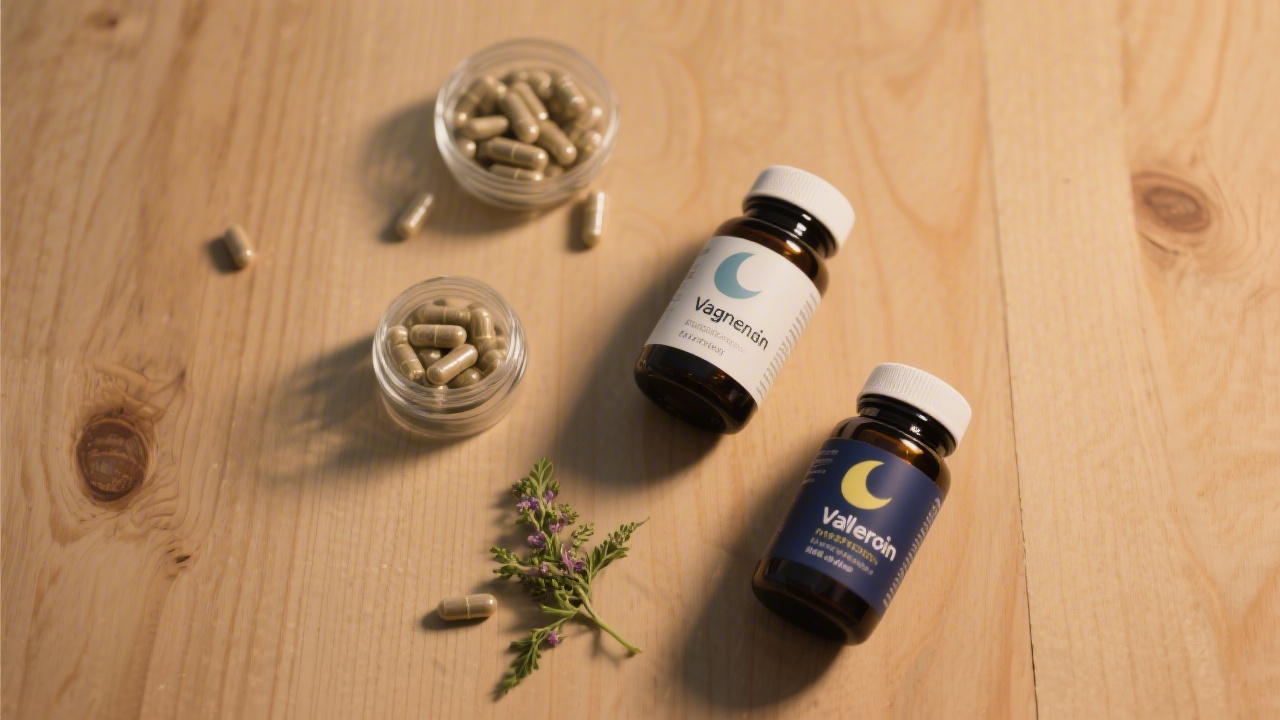
- NooCube Sleep Upgrade (editor's pick). Melatonin-free stack: lemon balm 600 mg, magnesium, lavender, calcium, vitamin D3. Five complementary actives so no single one carries the load. Brand-reported DBEM testing: 35% faster sleep onset, 28% higher Oura/Whoop sleep score over 30 nights. Main draw is the melatonin-free design.
- Magnesium glycinate (200–400 mg). Supports GABA-A activation, NMDA regulation, muscle relaxation. Glycinate is best tolerated; threonate has emerging cognitive data; oxide is poorly absorbed. Effect largest in people below the RDA — about half of American adults.
- L-theanine (100–400 mg). Tea-derived amino acid, promotes alpha-wave calm without sedation. Best for "can't stop thinking" insomnia. Pairs well with magnesium.
- Ashwagandha (300–600 mg standardized). Adaptogen with consistent small trials showing reduced cortisol and improved sleep in stressed adults. Works over weeks.
- Melatonin (0.3–1 mg). Best for jet lag, shift work, delayed sleep phase — not general insomnia, where effect is 7–12 minutes of earlier onset. 5–10 mg is overkill and produces morning grogginess. See our melatonin guide.
One supplement at a time, 2–4 weeks, track with wearable or sleep diary. For product-based aids, see natural sleep products.
NooCube Sleep Upgrade
A melatonin-free sleep supplement that works with your body instead of replacing hormones. Clinical testing (DBEM) showed 35% faster sleep onset and 28% higher sleep score on Oura/Whoop over 30 nights.
- Lemon balm 600mg + lavender extract for calm
- Magnesium citrate + calcium + vitamin D3 for sleep architecture
- No habit-forming ingredients, no morning grogginess
- 60-day money-back guarantee, GMP-certified USA manufacturing
Affiliate disclosure: we may earn a commission from this link at no extra cost to you.
Aromatherapy and Essential Oils
Aromatherapy sits in tier 2 to tier 3 — modest but real evidence, negligible downside if you avoid skin sensitization.
- Lavender. Best-studied oil for sleep. Small RCTs show reduced sleep latency and better subjective quality with diffused lavender. Oral lavender (Silexan) has stronger evidence for anxiety that indirectly helps sleep.
- Bergamot. Less studied but calming in small trials. Common in blended sleep formulations with lavender.
- Chamomile oil. Limited direct data. Gentler than lavender for those sensitive to linalool-heavy oils.
Use a proper diffuser rather than undiluted skin application. Avoid around infants and pets (many oils toxic to cats). Treat aromatherapy as an additive cue, not a primary intervention.
Weighted Blankets and Sensory Tools
Weighted blankets deliver deep touch pressure (DTP), which appears to downshift the sympathetic nervous system. Evidence is strongest for anxiety-driven insomnia, autism-spectrum sensory overload, and restless-legs-adjacent disruption. A 2020 RCT in Journal of Clinical Sleep Medicine found a 10–15% body-weight blanket meaningfully reduced insomnia severity over four weeks in adults with insomnia plus a psychiatric diagnosis.
Standard rule: ~10% of body weight (150 lb adult → 15 lb blanket). Heavier is not better — it disrupts turning and heat regulation. Cooling-weave versions matter if you run warm. Related sensory tools (eye masks, earplugs, noise machines) slot into the same low-risk category — match the tool to the disruption.
Mind-Body Practices
Mind-body practices are among the few natural sleep aids with robust trial data, largely because they target cognitive hyperarousal — the engine of modern insomnia.
- Meditation. MBSR has multiple RCTs showing moderate improvements in sleep quality, especially in adults with chronic insomnia and stress-related arousal.
- Progressive muscle relaxation (PMR). Systematic tensing and releasing of muscle groups reduces physical tension. Useful for "can't turn my body off" insomnia.
- Yoga nidra. Guided body-scan practice producing deep relaxation while technically awake; small trials show benefit for sleep latency.
- Breathwork. 4-7-8 or box breathing for 3–5 minutes at bedtime shifts the nervous system toward parasympathetic dominance.
These compound: 10 minutes daily for 4–6 weeks beats occasional longer sessions.
Grounding and Earthing
Grounding (or earthing) is direct electrical contact with the Earth, either barefoot outdoors or via a conductive sheet connected to a grounded outlet. The mechanism is debated — proponents argue it neutralizes excess positive charge and reduces inflammation; skeptics note the rigorous evidence is thin.
The honest read: trial effect sizes are small but non-zero, with improvements in subjective sleep quality, reduced cortisol variability, and lower pain scores in some studies. User reports, especially from grounding sheets, are more consistent than the trial data alone would predict — whether a real under-characterized effect, a strong expectation effect, or both. Downside risk is essentially zero with a properly manufactured product (GFCI-protected outlet). See grounding sheets benefits for our full review.
What to Avoid
- Kava. Linked to liver toxicity in multiple case series. Banned in several countries. Hepatic risk outweighs sleep benefit, especially with alcohol or acetaminophen.
- Alcohol as a sleep aid. Fragments sleep, suppresses REM, worsens apnea. Not a sleep aid despite being used as one.
- High-dose 5-HTP without supervision. Raises serotonin and can interact dangerously with SSRIs, MAOIs, and tramadol. Get a physician signoff first if you're on any serotonergic medication.
- Heavy meals within 2 hours of bed. Digestion raises core temperature and fragments sleep.
- Stacking six supplements at once. You learn nothing and multiply interaction risk.
- Proprietary-blend "sleep teas." If the label won't disclose doses, assume they're too low to matter.
Build Your Personal Natural Sleep Stack
The highest-leverage approach is layered, not additive. Fix the foundation before reaching for the next lever.
Layer 1 — environment. Cool the bedroom to 65–68°F. Add blackout curtains or a mask. Address noise with earplugs or white noise. Audit your mattress. Measurable improvement in 1–2 weeks.
Layer 2 — behaviors. Consistent wake time. Screen cutoff. Caffeine 10 hours before bed. Cap evening alcohol. 30 minutes of movement 4–5 times a week. Stabilizes in 3–4 weeks.
Layer 3 — mind-body. A 10-minute pre-bed practice — meditation, PMR, breathwork, or yoga nidra. The routine itself becomes a conditioned cue.
Layer 4 — targeted supplementation. Add one supplement at a time. Starting picks: magnesium glycinate for most adults, L-theanine for a racing mind, ashwagandha for chronic stress, melatonin only for circadian problems. A pre-built stack like NooCube Sleep Upgrade is a reasonable shortcut.
Layer 5 — sensory adjuncts. Weighted blanket, aromatherapy, grounding sheet. Optional, low-risk, sometimes surprisingly effective.
When Natural Isn't Enough
Natural aids have a ceiling. Escalate to a sleep specialist if:
- Chronic insomnia >3 months despite good hygiene — first-line per AASM is CBT-I, not supplementation.
- Loud snoring, witnessed apneas, or morning headaches — possible sleep apnea. Supplements cannot treat it.
- Depression, anxiety, trauma-linked insomnia — treat the mood condition, not melatonin.
- Restless legs, periodic limb movement, sleep paralysis — diagnosable conditions with specific treatments.
- Persistent daytime sleepiness despite 7–9 hours in bed — fragmented architecture; clinical workup.
FAQ
Does "natural" mean "safe"?
No. Kava is natural and hepatotoxic. High-dose 5-HTP can trigger serotonin syndrome with SSRIs. Evaluate each aid on evidence and safety, not the label.
Can natural sleep aids interact with prescription drugs?
Yes, sometimes dangerously. Valerian, kava, and 5-HTP have the most documented interactions; melatonin can interact with blood thinners and blood-pressure meds. Confirm with your pharmacist or physician before adding any supplement.
Are they safe for children?
Not without pediatric guidance. Melatonin has driven a sharp rise in accidental pediatric exposures. For kids, use behavior and environment first (consistent schedule, cool dark room, screen limits); add supplements only with a pediatrician's input.
What about pregnancy?
Most aren't well-studied in pregnancy, and many (melatonin, valerian, high-dose herbs) are not recommended. Environment and behavior are safe; discuss any supplement individually with an OB.
Do natural sleep aids cause tolerance?
Most don't at typical doses. Magnesium, L-theanine, and ashwagandha show no meaningful tolerance. Melatonin at physiological doses (0.3–1 mg) appears fine long-term; high doses more likely to dysregulate rhythm.
Should I rotate supplements?
No strong evidence rotation is needed. If something works, keep it. Loss of effect usually signals schedule drift, new stress, or environmental change — not a need to switch compounds.
Which one first?
Fix environment and schedule before any supplement. Then: magnesium glycinate is the default first pick for most adults; L-theanine if insomnia is mostly a racing mind; NooCube Sleep Upgrade if you want a pre-built stack.
Are they cost-effective vs prescription sleep meds?
Dramatically. Magnesium or L-theanine: $10–$20/month. NooCube Sleep: $50–$70. Prescriptions cost far more across a year and carry real dependence and side-effect risk.
OTC vs natural supplement — what's the difference?
US OTC sleep aids are typically diphenhydramine or doxylamine (sedating antihistamines). Effective short-term but cause next-day grogginess, impair cognition, and are tied to higher dementia risk in older adults with long-term use. Natural aids have smaller effect sizes but far cleaner safety — for chronic use, natural wins.
Related reading: NooCube Sleep Review | Natural Sleep Products | Best Sleep Supplements | Supplements Sleep Stack | Magnesium for Sleep | L-Theanine for Sleep | Melatonin for Sleep Guide | CBT-I for Sleep | Grounding Sheets Benefits