
 by
by Our Top Pick for Creative Professionals: Saatva Classic
Deep, restorative sleep starts with the right mattress. The Saatva Classic delivers the pressure relief and temperature regulation serious creatives need.
Affiliate disclosure: We may earn a commission if you purchase through our links, at no extra cost to you.
The night is not empty time between workdays. For the brain, it is the most active processing period of the 24-hour cycle: consolidating memories, integrating emotional experiences, making connections across the day's inputs, and reorganizing knowledge in ways that produce the insights and clarities that arrive the next morning. Knowing this, the question is not whether sleep can help with creative problems but whether you are loading the right material into the system before sleep begins.
Pre-sleep priming is the deliberate practice of reviewing a creative problem immediately before sleep in order to direct the brain's overnight processing toward that specific problem. It is one of the most consistently supported interventions in applied sleep science, practiced intuitively by creative figures for centuries and now validated by cognitive neuroscience research.
The Neuroscience of Memory Prioritization During Sleep
Not all of the day's experiences are processed equally during sleep. The hippocampus, which temporarily stores new memories before transferring them to long-term cortical storage, uses several criteria to prioritize what gets consolidated during the night. Among the most important: recency (how recently the memory was encoded), emotional significance (how strongly the amygdala was activated during encoding), and repetition (how many times the memory has been activated).
Pre-sleep priming exploits all three of these factors. Reviewing a problem immediately before sleep encodes it at maximum recency. Engaging with it in a focused, stakes-laden way activates mild emotional salience (curiosity, care, creative investment). Returning to a problem that has been worked on extensively over days or weeks provides repetition. The combined effect is a high-priority memory that the hippocampus preferentially processes during the night.
What the Research Shows
The most direct evidence for pre-sleep priming comes from studies on sleep-dependent memory consolidation and insight. Wagner and colleagues (Nature, 2004) showed that sleep produced a 2.9-fold improvement in insight problem solving, but only for problems that participants had been actively engaged with before sleep. Passive exposure without active encoding produced no sleep benefit.
Cai and colleagues (PNAS, 2009) showed that REM sleep specifically enhanced creative association for primed material. Participants who were given word association priming for specific concepts before sleep showed enhanced creative association with those concepts after REM sleep, compared to participants who had not been primed or who had rested without REM sleep.
The common finding across studies is that sleep works with what you give it. The quality and specificity of the pre-sleep encoding determines the quality and relevance of the sleep-driven creative output.
The Priming Protocol: A Practical Guide
A pre-sleep creative priming session does not need to be long or elaborate. The following protocol is drawn from the research literature and is compatible with a standard evening wind-down routine:
Step 1: Active engagement earlier in the evening (not immediately before sleep)
Do intensive creative work on the target problem 2-4 hours before sleep. This is the encoding session: the work that actually loads the problem into hippocampal memory. Attempting solutions, making failures, and confronting specific constraints all produce richer encoding than passive review. The evening session does not need to produce results; it needs to establish a clear and specific memory of the problem.
Step 2: Brief review 15-30 minutes before sleep
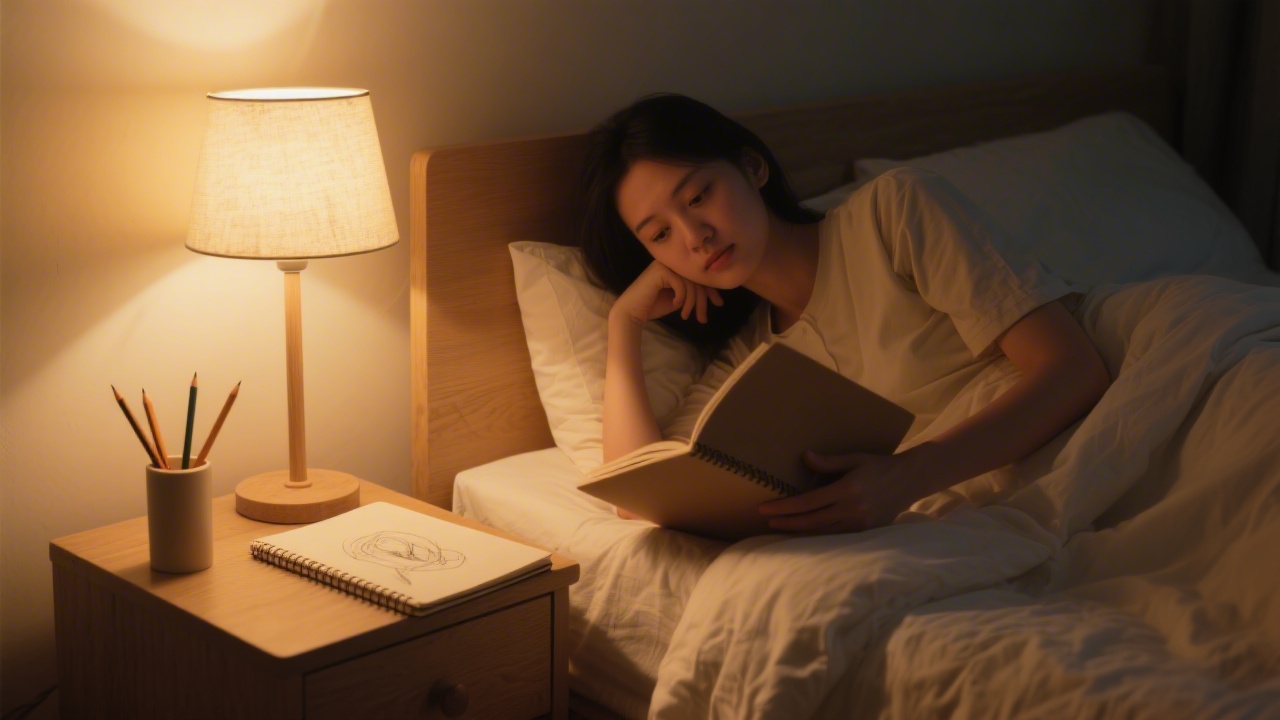
Return to the problem briefly, not to work on it, but to re-activate the memory and note specifically where you are stuck. Write three things: what you know about the problem, what you have tried and why it failed, and what a successful solution would look like. This review should take 10-15 minutes and should be written, not mental.
Step 3: Deliberately release the problem
Close the notebook. Do not attempt to solve the problem further. This step is as important as the review itself. Continued effortful problem-solving maintains cortical arousal and competes with the sleep onset process. The goal is to hand the problem to the sleeping brain and then step back. Trust the process.
Step 4: Wind down and protect the sleep environment
The 20-30 minutes after the review should be low-stimulation: dim lighting, no screens, light reading (not related to the problem), or conversation. Core body temperature must drop for sleep onset; the wind-down period facilitates this. A cool, dark sleep environment completes the conditions for rapid sleep onset and consolidated sleep architecture.
Step 5: Capture the morning output
The hypnopompic transition state (the first 10-20 minutes after waking) often contains the most direct output from the night's processing. Keep a notepad at the bedside and write before reaching for any device. Stream-of-consciousness, not edited notes, works best for capturing pre-cognitive material.
What Pre-Sleep Priming Cannot Do
Pre-sleep priming is not a magic insight delivery system. Several conditions limit its effectiveness. Problems that have not been worked on recently and thoroughly produce little material for the brain to process. Chronic sleep deprivation compresses the REM sleep that creative processing requires. Alcohol and cannabis, even in moderate amounts, suppress REM sleep and dramatically reduce the creative output of the night. And some problems require more information or different perspectives, not just more processing of existing information, which sleep cannot supply.
Realistic expectations are important: pre-sleep priming increases the probability of creative insight; it does not guarantee a solution on any given night. Practiced consistently over weeks and months, it builds a more efficient relationship between creative work and sleep, making the creative professional's nights productive in ways that add up over the course of a career.
Related Guides
The Sleep Environment and Creative Priming Outcomes
The quality of pre-sleep priming outputs depends directly on the quality of the subsequent sleep. Fragmented sleep, temperature dysregulation, partner motion disturbance, and chronic discomfort all reduce the coherence and duration of the REM cycles that process primed creative content.
Many creative professionals who diligently practice pre-sleep priming report inconsistent results. Often the inconsistency correlates not with the quality of the priming itself but with the quality of the sleep that follows. On nights when sleep is deep and consolidated, morning insights are more frequent and more specific. On nights of fragmented sleep, even well-primed problems produce little.
A mattress that supports deep, pressure-free, temperature-regulated sleep is not incidental to creative productivity. For those who deliberately use sleep as a creative tool, it is one of the direct inputs into the quality of the creative output.
Ready to Upgrade Your Sleep — and Your Creativity?
The Saatva Classic is our top-rated mattress for deep, restorative sleep. Exceptional spinal support, precise temperature regulation, and white-glove delivery.
Affiliate disclosure: We may earn a commission if you purchase through our links, at no extra cost to you.
Frequently Asked Questions
How long before sleep should I review my creative problem?
The review should happen within 30-60 minutes of sleep onset for reliable priming effects. Reviews done more than 2-3 hours before sleep are subject to competitive encoding from subsequent activities, which can reduce the priority the hippocampus gives to the target material during overnight consolidation. A focused 10-15 minute review immediately before the wind-down period is optimal.
What is the best format for a pre-sleep creative review?
Written reviews outperform purely mental reviews for priming purposes. Writing activates multiple encoding systems simultaneously (semantic, motor, visual) and creates a more robust hippocampal memory trace. Bullet-point format works well: what you know, what you have tried, what the specific gap is, and what a solution would look like. Avoid rereading old notes extensively; focus on the current state of the problem.
Does emotional engagement with the problem matter for priming?
Yes. The hippocampus prioritizes emotionally significant memories for consolidation, a process mediated by the amygdala. Problems that the creative professional genuinely cares about, where there is real stakes or genuine curiosity, tend to be processed more thoroughly during sleep than problems approached with indifference. This is one reason why creative work that aligns with intrinsic motivation tends to benefit more from sleep incubation than assigned or purely commercial work.
What should I do if I wake up in the middle of the night with an idea?
Capture it immediately. Night wakings during or after REM cycles are often accompanied by accessible creative content. Keep a dim-light notepad or a voice memo device at the bedside. Turning on a phone screen suppresses melatonin and can make returning to sleep difficult; a pen-and-paper solution with a small clip-on book light is more practical. The idea does not need to be fully formed — a few key words or a rough sketch that triggers recall in the morning is sufficient.
Are there realistic expectations for what pre-sleep priming can produce?
Pre-sleep priming reliably improves the probability of creative insight; it does not guarantee it on any given night. The research on sleep-driven creativity describes probabilistic improvements (20-300% depending on the task type), not certainties. Problems that have been worked on actively and recently benefit more than problems approached for the first time. Consistent practice over weeks builds the habit of creative sleep incubation more effectively than isolated sessions.