
 by
by Quick answer: No. Crying in your sleep can occur alongside mental-health concerns, but the event alone doesn’t establish depression. Check the wider awake-hours pattern and seek qualified support if the concern persists.
- Verywell Mind describes sleep crying as an experience that may involve sleep, mental-health, or medical issues.
- PSYCULATOR discusses multiple possible causes and emotional warning signs rather than treating nighttime crying as proof of depression.
- The National Institute of Mental Health publishes guidance covering depression signs, symptoms, types, treatments, and therapies.
Updated July 2026 · Reviewed for accuracy
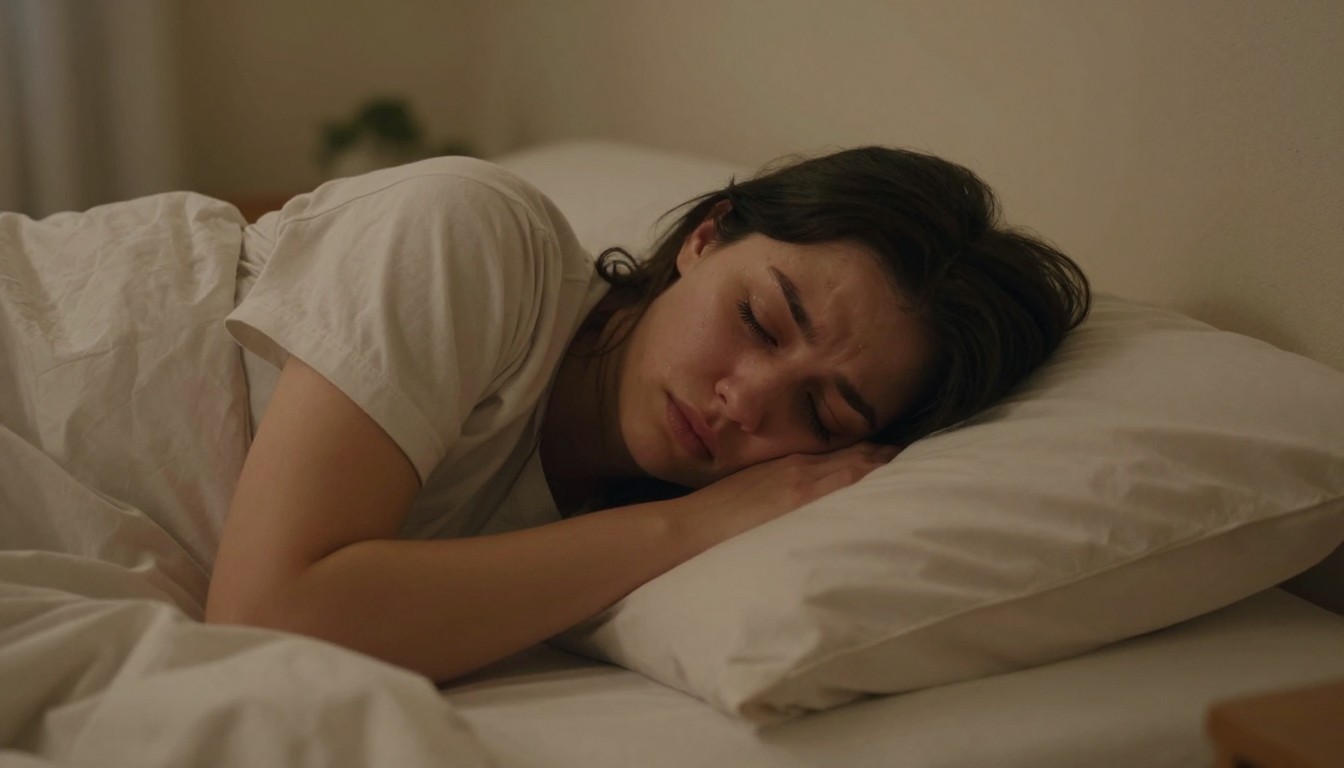
Crying during sleep may be unsettling, especially when there’s no obvious explanation the next morning. My verdict is simple: treat it as an observation, not a diagnosis.
Depression may be one concern to consider, but the crying itself can’t tell you whether depression is present. What happens repeatedly and how the person feels while awake provide the context that a single nighttime event lacks.
Does crying in your sleep mean depression?
A crying episode proves only that crying was observed during sleep. It doesn’t prove why it happened, what the sleeping person was experiencing, or whether a mental-health condition is involved.
The National Institute of Mental Health presents depression through a wider set of signs and symptoms and provides information about treatment and therapy. That broader framing is useful here. Nighttime crying is one piece of information to place beside the person’s awake experience, not a stand-alone depression label.
Verywell Mind also frames crying in sleep as something that may involve sleep, mental-health, or medical issues. Because the possible context extends beyond depression, sleep crying isn’t specific enough to answer the diagnostic question by itself.
My take: “This happened” and “this explains why it happened” are different statements. The first may be clear. The second needs more context and, when the concern persists, qualified professional judgment.
That distinction matters whether you noticed yourself waking in tears or someone else heard you crying. An observer can describe sounds, movement, waking, and what happened afterward. They can’t see the sleeper’s emotional state or establish a cause from the outside.
The same caution applies to self-assessment. A frightening search result can make an isolated event feel like proof of something serious. It isn’t. Use the event as a reason to pay attention, not as permission to diagnose yourself.
What sleep crying can and cannot tell you
Verywell Mind places possible explanations across sleep, mental-health, and medical areas. That range makes the boundaries of the evidence more useful than a long list of guesses.
| What you know | What it may justify | What it doesn’t establish |
|---|---|---|
| Crying was heard or noticed during sleep | Recording the event accurately | Its cause |
| The event has happened repeatedly | Looking for a wider pattern and discussing it | That depression is responsible |
| There are also concerns during waking hours | Seeking qualified guidance | A particular diagnosis |
| A medical concern or treatment change exists | Giving that context to a clinician | That the crying identifies the problem |
A single episode may remain unexplained. That can feel unsatisfying, but an unsupported explanation isn’t more useful than uncertainty. Avoid filling the gap with assumptions about hidden sadness, dreams, or a particular condition.
A repeated pattern deserves more attention because it gives you more to describe. Repetition still doesn’t identify the cause, though. Frequency helps define the question; it doesn’t answer it.
Keep the categories separate: the event happened during sleep, the person may or may not be distressed while awake, and a cause remains unconfirmed. Joining those statements without evidence is where needless alarm begins.
Sleep-related behaviors often attract diagnostic searches because they happen outside conscious control. Our guide asking whether drooling in your sleep is a sign of diabetes uses the same basic distinction: a nighttime observation and a medical conclusion aren’t interchangeable.
Check the wider pattern while awake
Frequency is the first useful detail: was this an isolated observation or part of a recurring change? Follow that with the person’s own account of how they’ve been feeling while awake.
PSYCULATOR discusses nighttime crying alongside possible causes and emotional warning signs. I’d use that framing as a prompt to notice context, not as an online diagnostic test. The person experiencing the concern should remain at the center of the conversation.
Context worth recording
- Whether the crying was isolated or has formed a pattern
- What an observer actually heard or saw, without interpreting it
- Whether the sleeper woke and what they reported afterward
- Whether the person has concerns about their emotional wellbeing while awake
- Whether ordinary routines have recently felt harder to manage
- Whether there is any immediate concern for the person’s safety
Use plain language. “You cried while you were asleep and woke shortly afterward” is an observation. “You must be depressed” is an interpretation. The second statement may make someone defensive or frightened before they’ve had a chance to explain how they feel.
Don’t force a meaning onto missing memory, either. Remembering the event doesn’t confirm a cause, and not remembering it doesn’t rule one in. Both are simply details that may help a professional understand the concern.
Age can also shape the questions people bring to their sleep, even though it doesn’t explain a specific crying episode. For broader, age-focused sleep reading, see our guides to sleep in your fifties and sleep in your sixties.
What to do after crying during sleep
The most useful first record is plain and short: what happened, who observed it, whether the person woke, and what they said afterward. Accuracy beats interpretation.
A sensible response
- Check calmly for any immediate safety concern.
- Describe the event without attaching a diagnosis to it.
- Ask the person how they feel when they’re fully awake.
- Keep a simple record if the event happens again.
- Arrange professional support if there is continuing distress or a broader emotional concern.
If you’re the person who cried, you don’t need to produce an explanation on demand. Write down what you remember and what you were told. Then consider whether the event sits beside concerns you already have during the day.
If you’re the observer, choose a calm moment for the conversation. Avoid interrogation and don’t present a search result as a verdict. “I noticed this and wanted to check how you’re doing” leaves room for an honest answer.
Keep bedding questions separate from mental-health questions. An uncomfortable sleep setup can be assessed for comfort in its own right, but a mattress choice can’t tell you why someone cried or establish whether depression is present. I wouldn’t treat a bedding purchase as an answer to an emotional or medical concern.
Avoid self-diagnosis by checklist: online information can help you prepare questions, but it can’t evaluate the complete circumstances. Use reputable guidance, including the National Institute of Mental Health depression resources, as background for a conversation with a qualified professional.
Don’t alter an existing treatment plan based only on a nighttime episode or an article. If there is already a medical or mental-health concern, give the new observation to the professional involved so it can be considered in context.
When qualified support makes sense
A recurring or distressing pattern is enough reason to ask for help, even if you can’t explain it. You don’t need to prove that depression is involved before arranging a conversation.
Support is also sensible when the person reports broader emotional difficulty while awake, when the crying is causing significant worry, or when another medical concern may be relevant. A primary care clinician or licensed mental-health professional can consider the fuller picture rather than guessing from one sleep behavior.
Act on urgent safety concerns: if someone may be in immediate danger, don’t wait for the sleep pattern to become clearer. Contact local emergency services or an appropriate local crisis service.
The National Institute of Mental Health provides information about potential depression treatments and therapies. Hedepy’s depression guidance also describes depression as treatable and encourages people to ask for help. The practical point is that seeking an assessment isn’t an admission that you know the diagnosis; it’s a way to stop guessing.
Bring the plain record of what happened. Include the person’s own concerns and any relevant medical context. Leave out conclusions you can’t support, because clear observations give a professional a cleaner starting point.
The bottom line
My answer is no: crying in your sleep isn’t, by itself, proof of depression. Verywell Mind’s overview places sleep crying across several possible areas, while the National Institute of Mental Health approaches depression through a broader signs-and-symptoms framework.
Pay attention without jumping to a label. Look for a recurring pattern, listen to how the person feels while awake, and seek qualified support when the concern continues or affects their wellbeing.
Final verdict: sleep crying is a clue that may deserve context, not a depression test. Calm observation and an honest awake-hours conversation are the right starting points.
FAQ
Can depression make someone cry in their sleep?
Verywell Mind includes mental-health issues among several areas that may play a role in sleep crying, so a connection is possible. That doesn’t make the behavior specific to depression or establish that depression caused a particular episode.
Does one episode of crying during sleep mean something is wrong?
One episode tells you that the event occurred, but not why. Record what actually happened and pay attention to the wider context rather than assigning a diagnosis from an isolated observation.
What if the person doesn’t remember crying?
A lack of memory doesn’t explain the event or identify its cause. Note what the observer noticed, ask how the person feels while awake, and discuss the pattern with a qualified professional if concern continues.
Should I tell someone that they cried in their sleep?
Yes, but stick to a calm description of what you observed. Ask how they’re doing without telling them what the event “must” mean, and take any immediate safety concern seriously.
When should sleep crying be discussed with a professional?
Consider professional support when the crying recurs, causes distress, accompanies concerns about waking emotional wellbeing, or sits beside a medical concern. If anyone may be in immediate danger, contact local emergency or crisis services promptly.