
 by
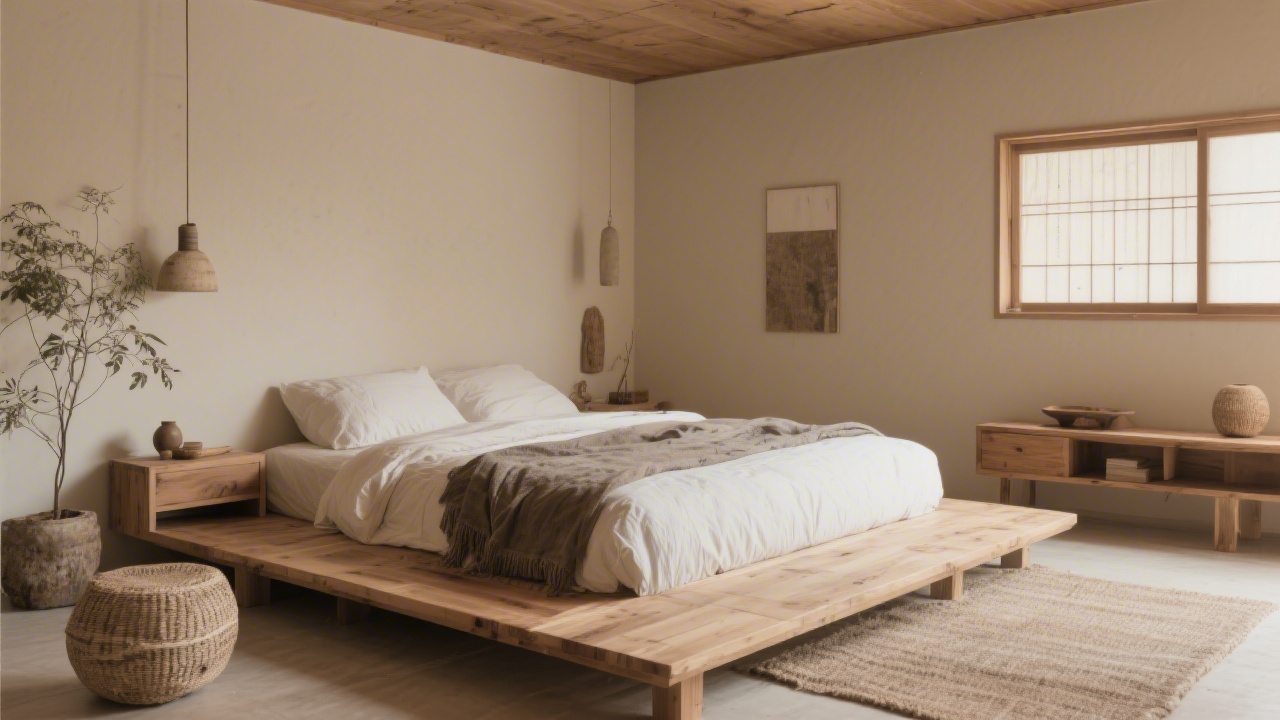
by Japandi is the design portmanteau for the union of Japanese minimalism and Scandinavian hygge. The result is a bedroom aesthetic that happens to align almost exactly with what sleep researchers identify as an optimal sleep environment: low visual stimulation, natural materials, controlled temperature, minimal light, and a space free of environmental stressors.
Affiliate link — we earn a commission at no cost to you.
Why Japandi Promotes Better Sleep
The research on visual environment and sleep onset is clear: visual complexity increases cognitive arousal, which delays sleep onset. A cluttered, visually busy bedroom creates a state of low-level vigilance that makes the brain resist transitioning to sleep. Japandi's commitment to minimal visual elements — often literally one object per surface — reduces this arousal effect.
The natural material preference in Japandi also has a physiological basis. Studies on biophilia (the human affinity for natural environments) show that visual exposure to natural materials — wood grain, stone, textile weave — activates the parasympathetic nervous system, producing a mild calming response. Synthetic and highly processed surfaces do not produce the same effect.
The Low Platform Bed
Japanese sleeping tradition historically favored low or floor-level sleeping positions (futon directly on tatami). The Japandi version is a low platform bed, typically 12-18" off the floor, rather than a conventional 25-30" height Western bed.
The practical sleep benefit: the lowest zone of a room is typically the coolest, and cooler ambient temperature promotes deeper sleep. More relevant, the low profile of the bed eliminates the visual dominance of the headboard zone, making the room feel more open and calm.
If you are switching to a low platform bed, mattress selection matters. A mattress designed for platform frames — without a box spring requirement — works best. The Saatva Classic and similar innerspring hybrids are built to work on both platform and traditional foundations.
The Japandi Color Palette
Japandi uses a warmer, earthier neutral palette than Scandinavian design, influenced by the Japanese wabi-sabi concept of imperfect natural beauty:
- Warm white: Never cool/blue white — always cream-toned or warm
- Greige: The dominant Japandi tone — a grey-beige that transitions between warm and cool
- Warm charcoal: Deep but warm, not cold black
- Natural wood: Medium to dark wood tones (walnut, darker oak) rather than the pale Scandinavian woods
- One organic accent: Terracotta, sage green, or warm clay
Natural Materials in Japandi Bedding
Japandi bedding prioritizes natural fibers exclusively. Linen sheets or cotton (percale preferred for its matte surface) in warm whites and greige tones. A wool or cotton throw in a slightly deeper tone. Minimal pillow arrangement: 2 sleeping pillows per person in plain shams, nothing decorative.
The bedding should feel and look hand-made or natural — slightly textured, not perfectly smooth. A waffle-weave cotton duvet cover fits the aesthetic better than a crisp hotel-style percale, and a linen throw fits better than a synthetic velvet one.
Purposeful Emptiness
Perhaps the most foreign concept for Western bedrooms is the Japandi principle of ma — the intentional use of empty space. A Japandi bedroom should have significantly more empty floor space than a conventional Western bedroom. One nightstand instead of two, one plant instead of a collection, no items on the floor, no visual clutter on surfaces.
This is not deprivation — it is curation. Every object in a Japandi bedroom is chosen deliberately. The empty space around each object is part of what gives it visual weight and significance.
Related guides: Scandinavian bedding style, linen bedding aesthetic, and bedding color matching.
The Foundation of the Japandi Sleep Space
Saatva Classic works on platform beds without a box spring — the right choice for the low-profile Japandi bed frame that anchors the aesthetic.
Frequently Asked Questions
What is Japandi design?
Japandi is a design style that combines Japanese minimalism (wabi-sabi, function over decoration, natural materials, empty space) with Scandinavian hygge (warmth, comfort, natural wood, cozy living). The result is a warm minimalism — spaces that are simple and uncluttered but feel comfortable and lived-in rather than cold and sterile.
Does the Japandi aesthetic actually improve sleep?
The evidence supports several mechanisms: low visual complexity reduces pre-sleep cognitive arousal, natural material exposure activates the parasympathetic nervous system (calm response), cooler room temperatures facilitated by low furniture and minimal heat-retaining objects promote deeper sleep stages, and reduced bedroom clutter correlates with lower stress levels and better sleep quality in research studies.
What is wabi-sabi in bedroom design?
Wabi-sabi is the Japanese aesthetic of imperfect, incomplete, and impermanent beauty. In bedroom design, it means embracing natural material imperfections: the grain variation in wood, the slight irregular texture of linen, the uneven glaze of a ceramic object. It is the opposite of the polished, perfect surfaces of contemporary high-gloss interiors.
What height should a platform bed be for Japandi style?
Japandi platform beds typically sit 12-18 inches off the floor, compared to the conventional Western 25-30 inch height. The lower profile reflects the Japanese sleeping tradition of proximity to the floor, reduces the visual dominance of the bed in the room, and positions the sleeper in the slightly cooler lower air zone of the room.
What bedding colors work for Japandi?
Japandi uses warm neutrals: warm white (cream-toned, never cool), greige (grey-beige), warm charcoal, and one organic accent like terracotta or sage. The palette is warmer and earthier than Scandinavian design, influenced by Japanese wabi-sabi aesthetics. Avoid cool whites, bright colors, and any hue that reads as synthetic.
Key Takeaways
Japandi Bedroom for Better Sleep is a topic that depends heavily on individual needs and preferences. The most important thing is to consider your specific situation — your body type, sleep position, and personal comfort preferences — before making any decisions. When in doubt, take advantage of trial periods to test before committing.