
 by
by Ready for better sleep?
The mattress you sleep on shapes every night's rest. Saatva's luxury innerspring delivers orthopedic support with Euro pillow-top comfort — trusted by sleep-focused households.
The question "what can I eat after 8pm without affecting sleep?" has a more evidence-based answer than most nutrition advice. Eating within 2–3 hours of bedtime is not uniformly bad — it depends entirely on what you eat, how much, and how close to bedtime. This guide covers the specific physiological effects, which foods are safe (and why), and the research on late-night eating patterns. For a broader look at how meal timing affects sleep throughout the day, see our companion guide on eating before bed.
Why Late-Night Eating Disrupts Sleep
Core Body Temperature
Digestion is a thermogenic process — it raises core body temperature. Falling core temperature is one of the primary physiological triggers for sleep onset. It begins 1–2 hours before natural sleep and continues through the night. Eating a large meal within 2 hours of bedtime raises core temperature at exactly the wrong time, delaying sleep onset and reducing slow-wave sleep depth.
The magnitude matters: a 600-calorie meal raises core temperature by approximately 0.3–0.5°C for 2–3 hours. A 200-calorie snack raises it by 0.1–0.15°C for 1–1.5 hours. For most people, the effect of a small snack has cleared by the time they sleep.
Metabolic Activity and Sleep Quality
A 2015 study in Nutrients found that late-night eating (within 1 hour of sleep) was associated with 40% more nighttime awakenings and 21% less slow-wave sleep compared to eating 3+ hours before bed. Insulin secretion triggered by late eating activates metabolic pathways that are meant to be dormant during sleep, creating a state of physiological conflict between digestive and sleep processes.
GERD and Mechanical Disruption
Lying down with a full stomach — particularly after fatty or acidic foods — allows gastric acid to reflux into the esophagus. GERD-related sleep disruption is underdiagnosed: many people who wake in the night with vague chest discomfort or throat clearing are experiencing acid reflux, not anxiety. This is most pronounced within 2 hours of eating while lying flat.
What Is Safe After 8pm
The Exception: Small Tryptophan-Rich Snacks
Research consistently finds that certain small snacks consumed 30–60 minutes before bed can actually improve sleep rather than disrupt it. The qualifying criteria: the snack must be small (under 200 calories), contain meaningful tryptophan, and include a small amount of carbohydrate to facilitate tryptophan's entry into the brain.
Evidence-backed pre-sleep snacks:
- Tart cherry juice (240ml): The highest documented dietary melatonin source. Two studies found tart cherry juice increased sleep time by 34–84 minutes and improved sleep efficiency.
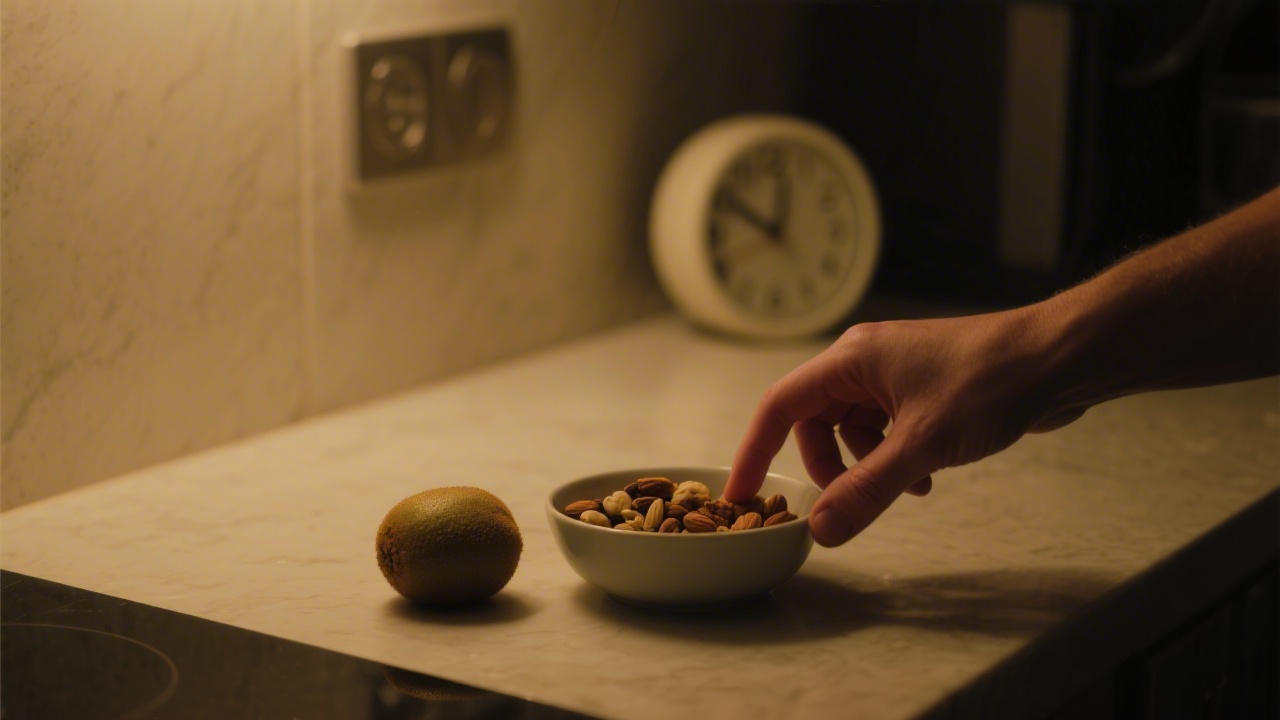
- Small portion of nuts (especially walnuts/almonds, 30g): Tryptophan, magnesium, and melatonin in walnuts; magnesium and calcium in almonds. Both promote melatonin synthesis.
- Kiwi fruit (1–2 kiwis): A New Zealand RCT found two kiwis consumed 1 hour before bed for 4 weeks improved sleep onset, duration, and efficiency. Mechanism likely involves serotonin precursors and antioxidant activity.
- Warm milk or chamomile tea: Classic folk remedies with genuine evidence. Milk provides tryptophan and calcium. Chamomile contains apigenin, a flavonoid that binds to GABA receptors.
- Small portion of complex carbohydrate with protein (e.g., whole grain crackers + nut butter): Provides tryptophan with carbohydrate-facilitated uptake without significant caloric load.
What to Avoid After 8pm
- High-fat meals: Fat delays gastric emptying, extending the thermogenic period and increasing GERD risk. High-fat meals within 3 hours of bed are the most disruptive class of late-night eating.
- Spicy food: Capsaicin elevates core body temperature directly and is a potent GERD trigger. Studies show spicy food within 4 hours of bed increases waking time by an average of 30 minutes.
- Alcohol: Sedating on sleep onset but severely disruptive across the full sleep period.
- High-sugar, high-glycemic foods: Blood sugar spikes trigger reactive cortisol release in the early morning hours, causing early-morning awakening.
- Large volumes of liquid: Beyond 300ml within 2 hours of bed substantially increases nocturia (nighttime urination) — one of the most common causes of sleep fragmentation.
The 8pm Rule: Does Timing Matter or Is It Always Calories?
Research has tried to disentangle whether late-night eating causes weight gain through caloric surplus or through circadian disruption independent of calories. A 2022 study by Frank Scheer's group at Harvard randomized participants to identical caloric intake but different meal timing — early vs. late eating. The late-eating group showed higher hunger, lower leptin, higher fat deposition rates, and lower metabolic rate, independent of total caloric intake. This suggests circadian disruption from late eating has metabolic consequences beyond calories that also affect sleep quality through the same hormonal pathways.
For the full science of how the circadian clock interacts with eating patterns, see our intermittent fasting and sleep guide. For how dietary pattern over the full day affects sleep architecture, see Mediterranean diet and sleep. Our sleep and weight management guide covers the bidirectional relationship comprehensively.
Frequently Asked Questions
Does eating after 8pm cause weight gain that then affects sleep?
Late eating independently increases fat deposition (lower metabolic rate, higher lipogenesis genes active at night) beyond calorie counting. Over time, this can increase body weight and neck circumference, worsening sleep apnea risk and sleep quality. The circadian metabolic disruption is a real mechanism independent of caloric accounting.
How long before bed should I stop eating?
For a full meal: at least 2–3 hours before bed. For a large or high-fat meal: 3–4 hours. Small tryptophan-rich snacks under 200 calories can be consumed 30–60 minutes before bed without disrupting sleep. The key variable is the size and macronutrient composition, not simply the time.
What is the best bedtime snack for sleep?
The best-evidenced options are tart cherry juice (240ml, two RCTs showing 34–84 minute sleep increase), kiwi fruit (1–2 kiwis, RCT showing improved sleep onset and efficiency), and a small portion of walnuts or almonds (30g, providing tryptophan, melatonin, and magnesium). Warm milk remains a reasonable option. The common denominator is tryptophan content, small caloric load, and some carbohydrate.
Does eating late affect REM sleep specifically?
Yes. Late eating is more disruptive to REM sleep than to deep sleep. Insulin-triggered metabolic activity during the second half of the night (when REM sleep dominates) produces alerting signals that fragment REM cycles. High-glycemic late meals additionally trigger cortisol release in early morning hours, which specifically suppresses REM and produces early awakening.
Is late-night eating worse for some people than others?
Significantly, yes. Evening chronotypes (natural night owls) tolerate later eating better, as their circadian active phase extends later. People with GERD, IBS, or metabolic syndrome experience more pronounced sleep disruption from late eating. Postmenopausal women show heightened sensitivity to late eating's effect on core temperature and sleep.
Ready for better sleep?
The mattress you sleep on shapes every night's rest. Saatva's luxury innerspring delivers orthopedic support with Euro pillow-top comfort — trusted by sleep-focused households.
Our Top Mattress Pick
The Saatva Classic consistently ranks #1 for comfort, support, and long-term durability.
Key Takeaways
Late Night Eating and Sleep is a topic that depends heavily on individual needs and preferences. The most important thing is to consider your specific situation — your body type, sleep position, and personal comfort preferences — before making any decisions. When in doubt, take advantage of trial periods to test before committing.