
 by
by Disclosure: This post contains affiliate links. We may earn a commission at no extra cost to you if you purchase through our links. We only recommend products we have researched thoroughly.
Core Material Differences
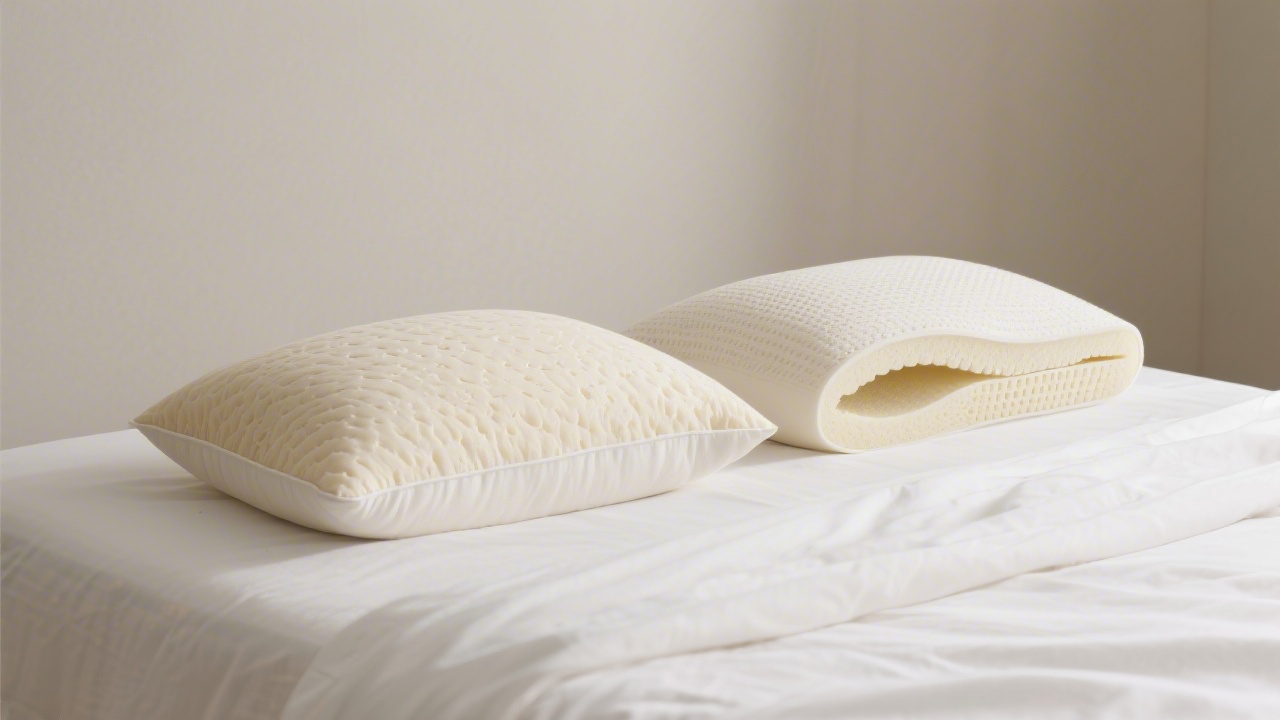
Latex is processed rubber from rubber tree sap (natural latex) or synthesized from petrochemicals (synthetic latex), or a blend of both. Memory foam is polyurethane foam with added chemicals that increase viscosity and temperature sensitivity. The different source materials create fundamentally different sleep experiences.
Pros and Cons
What We Like
- Luxury innerspring with excellent lumbar support
- Multiple firmness options available
- Free white-glove delivery and mattress removal
- 365-night trial and lifetime warranty
What Could Be Better
- Higher price than many online brands
- Heavier than foam mattresses
- Not compressed in a box
- Some off-gassing possible initially
Feel and Responsiveness
The most noticeable difference is responsiveness. Memory foam is viscous-elastic: press into it and it conforms slowly, filling around your head and neck. Release pressure and it returns slowly. This means the pillow “remembers” your position and offers consistent contouring support.
Latex behaves more like a spring: it gives under pressure and immediately returns when released. There is no slow contouring. Instead, latex provides consistent, slightly firmer support throughout the night. Many sleepers who change positions frequently prefer latex because it accommodates movement without needing to contour each time.
Cooling Performance
Latex wins on cooling for most sleepers. Natural latex has an open-cell structure that allows air circulation. Many latex pillows are also perforated with small holes during manufacturing specifically to enhance airflow. Memory foam's dense structure restricts airflow; even gel-infused varieties trap more heat than baseline latex.
If heat during sleep is your primary complaint, latex is the more reliable choice without other modifications.
Support and Durability
Both materials provide good cervical support, but they do it differently. Memory foam distributes pressure by conforming; latex distributes pressure by consistent resistance across the support surface. For people with neck pain, this means memory foam may feel more cradling while latex feels more uniformly firm.
On durability, latex has a clear advantage. Natural latex resists breakdown for 4 to 5 years versus 2 to 3 years for most memory foam. Latex doesn't develop the soft spots or permanent compressions that memory foam eventually does.
Weight and Feel Differences
Latex pillows are notably heavier than memory foam. A full-size latex pillow typically weighs 4 to 6 lbs; memory foam of comparable size weighs 2 to 4 lbs. For most sleepers this doesn't matter, but it's relevant if you frequently flip or adjust your pillow during the night.
Comparison Summary
| Feature | Latex | Memory Foam |
|---|---|---|
| Cooling | Better | Fair to Good |
| Responsiveness | High (springy) | Low (slow contour) |
| Contouring | Moderate | High |
| Durability | 4-5 years | 2-3 years |
| Weight | Heavier | Lighter |
| Best for | Hot sleepers, combo sleepers | Single-position sleepers needing precise contouring |
Our Recommendation
For hot sleepers or combination sleepers who move often, latex is typically the better material. For sleepers who stay in one position all night and want maximum contouring, solid memory foam works well. The Saatva Pillow uses a premium fill designed to balance responsiveness and support in a cooler construction.
Frequently Asked Questions
- What is the main difference between latex and memory foam pillows?
- Latex is more responsive — it springs back when you move rather than slowly conforming. Memory foam contours more precisely to head and neck shape. Latex sleeps cooler because the open-cell or perforated structure allows airflow. Memory foam feels softer initially but can trap heat and slow your movement.
- Which pillow lasts longer: latex or memory foam?
- Natural latex pillows typically last 4 to 5 years, compared to 2 to 3 years for most memory foam. Latex resists breakdown better over time, maintains loft without significant compression, and doesn't develop the soft spots that solid memory foam can develop after extended use.
- Is latex pillow good for neck pain?
- Latex pillows can be good for neck pain if the loft matches your sleep position. Natural latex has consistent support throughout without soft spots, which helps maintain spinal alignment. The key is choosing the correct height — latex is less forgiving of incorrect loft than adjustable alternatives because it cannot be customized after purchase.
- Are latex pillows safe for people with latex allergies?
- Natural latex pillows pose a risk for people with latex allergies, potentially causing contact dermatitis or systemic reactions in sensitized individuals. Synthetic or blended latex may have lower allergenic potential but isn't guaranteed safe. People with latex allergies should choose memory foam, down, or synthetic fill options and verify with their physician.
- Which is better for hot sleepers: latex or memory foam?
- Latex is consistently better for hot sleepers. The open-cell or perforated structure of latex allows air to circulate, dissipating heat. Traditional solid memory foam traps heat by design. Gel-infused or open-cell memory foam improves temperature regulation but typically still doesn't match latex for overall breathability.
Related guides: Best Memory Foam Pillow • Shredded Memory Foam Pillow Guide • Best Adjustable Pillow • Pillow Care Guide