
 by
by Latex mattresses are all-latex, naturally breathable, and exceptionally durable. Hybrid mattresses layer foam or latex over pocketed coils for added edge support and a responsive, on-top feel. For most shoppers, the best move is a latex hybrid that delivers both: our top pick is the Saatva Latex Hybrid, which pairs zoned Talalay latex with organic-certified coils and comes with a 365-night trial. If you want a pure-latex bed without coils, the PlushBeds Botanical Bliss is the most-certified all-latex option available.
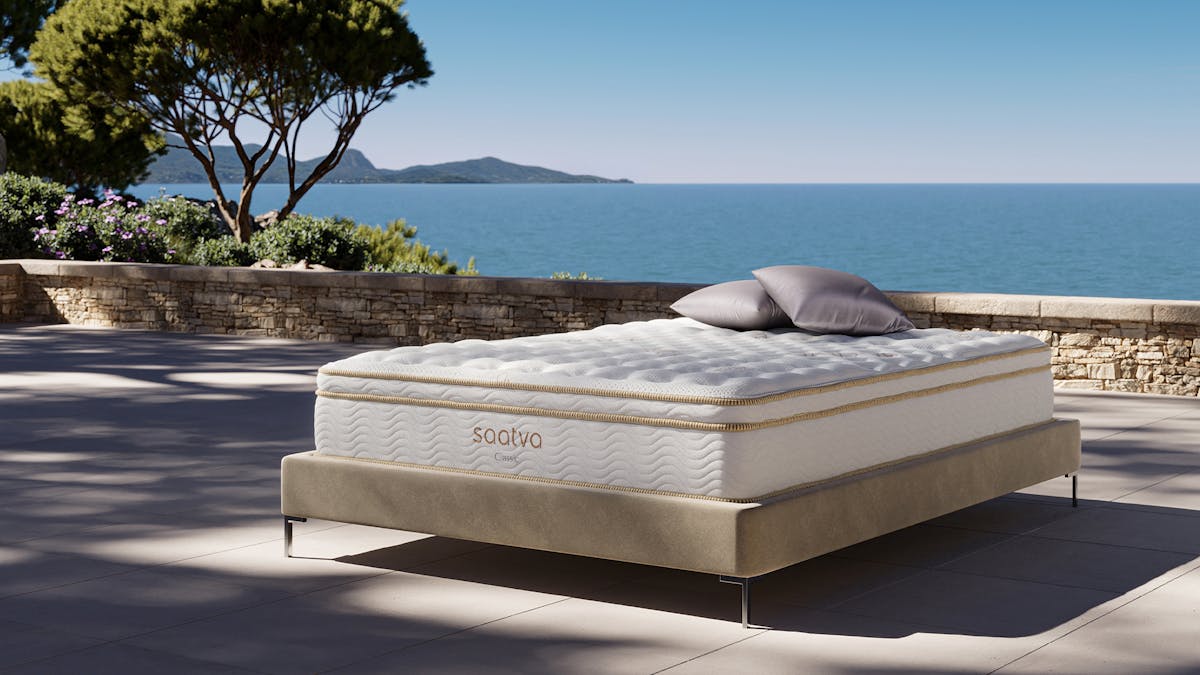
Saatva Latex Hybrid
9.6/10
- 3" zoned Talalay latex (5 zones) over zoned pocketed coils, reinforced perimeter
- GOTS-certified organic cotton and wool cover, GOLS-certified natural latex
- Excellent temperature regulation (8.5/10): perforated latex + open coil airflow
- Strong edge support (8/10) from reinforced perimeter coils
- Free white-glove delivery, 365-night trial, lifetime warranty
- Higher motion transfer than all-foam (latex + coils are bouncy, not ideal for restless partners)
- $99 return fee if returned during trial
- One firmness option only (Medium Firm)
The Saatva Latex Hybrid answers the latex-vs-hybrid question directly: you get the breathability and responsive feel of Talalay latex, the edge support of a coil system, and organic-certified materials throughout. At 9.6/10 from Sleep Foundation testers, it outperforms both pure-latex and standard hybrid beds on temperature regulation and support.
Latex vs hybrid: the core difference
The distinction comes down to construction. An all-latex mattress is built entirely from latex foam, typically stacked Dunlop or Talalay layers from softer on top to firmer below. A hybrid mattress uses a coil support core, usually pocketed springs, topped with one or more comfort layers of foam, latex, or both. The hybrid category is broad by design: a hybrid can use memory foam, polyfoam, latex, or any combination above the coil system.
In practice, the choice matters most across four dimensions: edge support, temperature regulation, motion isolation, and durability. Both types outperform all-memory-foam beds on cooling, but they diverge sharply on edge support and bounce.
Latex vs hybrid: side-by-side specs
| Category | All-Latex Mattress | Hybrid Mattress |
|---|---|---|
| Construction | Multiple latex layers (Dunlop or Talalay), no coils | Pocketed coil support core + foam/latex comfort layer(s) |
| Edge support | Fair to moderate, no reinforced perimeter | Good to excellent, reinforced perimeter coils |
| Temperature regulation | Excellent, open-cell latex breathes naturally | Excellent, coil airflow + breathable comfort layers |
| Motion isolation | Moderate (latex rebounds, transfers some motion) | Moderate to good (depends on coil gauge and foam type) |
| Bounce / responsiveness | High, floats-on-top feel | Moderate to high, responsive but grounded |
| Durability | Exceptional, 20+ years with quality latex | Good to very good, 10-15 years typical |
| Price range (queen) | $1,500-$3,000+ for quality all-latex | $1,000-$2,500+ across the range |
| Weight | Heavy (dense latex layers) | Moderate to heavy (coil system adds weight) |
| Best for | Hot sleepers, eco-conscious buyers, durability-first | Edge sleepers, couples, sleepers wanting coil feel |
What is a latex mattress?
A latex mattress uses natural or synthetic latex foam throughout its construction, with no coil support layer. Natural latex comes from rubber tree sap processed by one of two methods: Dunlop, which is denser and firmer with a heavier feel, or Talalay, which is softer, more consistent in cell structure, and slightly less durable but more pressure-relieving.
The open-cell structure of latex allows air to move freely, which is why all-latex beds consistently sleep cooler than memory foam. Latex is also naturally resistant to dust mites and mold, making it a strong choice for allergy sufferers. Quality natural latex mattresses, particularly those using GOLS-certified organic latex, can last 20 years or more, which offsets the premium price over time.
Pros and cons of latex mattresses
- Pro: Outstanding durability, natural latex can outlast most foam and hybrid beds by years
- Pro: Excellent cooling via open-cell structure, no heat trapping
- Pro: Naturally hypoallergenic and antimicrobial
- Pro: Available with organic certifications (GOLS, GOTS)
- Con: Weaker edge support without a reinforced perimeter coil system
- Con: Higher price entry point for quality all-latex construction
- Con: New latex can have a noticeable rubber odor for the first week or two
What is a hybrid mattress?
A hybrid mattress combines a pocketed coil support core with one or more comfort layers above it. The coils are individually wrapped, which allows them to respond to pressure independently, reducing motion transfer compared to older interconnected spring systems. The comfort layers can be memory foam, polyfoam, latex, or any combination.
The coil system is what primarily distinguishes a hybrid from an all-foam or all-latex bed. It provides stronger edge support, better airflow through the mattress base, and a more traditional, responsive feel that many sleepers prefer over the deep-sink of foam. Hybrids tend to sit in the $1,000 to $2,500 range for queen, making them accessible across several price points.
Pros and cons of hybrid mattresses
- Pro: Strong edge support from reinforced perimeter coils
- Pro: Good temperature regulation via coil airflow
- Pro: Broad range of feels depending on comfort layer material
- Pro: Responsive, on-top feel rather than deep body hug
- Con: Memory foam comfort layers can trap heat if poorly ventilated
- Con: Motion isolation varies, coils with thin foam layers can transfer movement
- Con: Shorter lifespan than all-latex if comfort layers compress prematurely
Which one should you choose?
Choose a latex mattress if: you sleep hot and want the coolest possible all-natural surface, you prioritize long-term durability and organic certifications, or you prefer a firm-to-medium feel with a floating, responsive sensation rather than foam cradling.
Choose a hybrid mattress if: you want strong edge support for sitting on the side or using the full surface area, you share a bed and need the coil system's structured support, or you want more firmness options across a wider price range.
The strongest argument for a latex hybrid is that it resolves the trade-off. Zoned Talalay latex over pocketed coils gives you the natural cooling and organic certifications of latex with the edge support and grounded responsiveness of a coil system. That is exactly what the Saatva Latex Hybrid delivers.
PlushBeds Botanical Bliss
9.2/10
- Exceptional pressure relief (10/10 per NapLab testing): 5.25" comfort layer vs 4.33" average
- Excellent cooling (9.0/10): organic latex, wool, and cotton breathe consistently
- Very low motion transfer (9.8/10): better than most latex beds due to soft feel dampening
- GOLS, GOTS, and GREENGUARD Gold certified, handcrafted in California
- 365-night trial, lifetime warranty
- Weak edge support (7.4/10): 4.75" sitting sinkage, loses usable perimeter surface area
- New latex rubber odor lasts up to 10 days, longer than average
- Premium pricing, $2,649 queen, roughly 77% above the latex foam category average
If you want a pure all-latex bed with the most thorough organic certifications available, the Botanical Bliss is the benchmark. NapLab measured near-perfect pressure relief and motion isolation scores. The main trade-off versus a latex hybrid is the weaker edge support, inherent in any all-latex construction without reinforced perimeter coils.
Motion isolation: which type performs better?
Hybrid mattresses with quality pocketed coils and thicker foam comfort layers generally perform well on motion isolation. The individual coil wrapping prevents vibrations from traveling across the bed. All-latex beds have natural bounce that can transfer movement, though this varies with firmness. A softer all-latex bed, like the Botanical Bliss, can actually measure very low motion transfer because the deep sinkage dampens vibration before it crosses the surface.
Temperature regulation
Both types outperform all-memory-foam beds on temperature regulation, though through different mechanisms. Latex is naturally breathable because of its open-cell structure. Hybrid mattresses benefit from coil-layer airflow through the base. Problems arise in hybrids that use thick memory foam comfort layers, which can trap heat and cancel out the coil system's ventilation benefits. A latex hybrid or a hybrid with latex comfort layers avoids this trade-off entirely.
Durability
All-latex mattresses, particularly those built with natural GOLS-certified Dunlop latex, are the most durable mattress type available. Quality construction can last 20 to 25 years. Hybrid mattresses typically last 10 to 15 years, with durability depending heavily on the comfort layer materials. Polyfoam comfort layers compress faster than latex; latex-topped hybrids last significantly longer than memory-foam hybrids.
For the best of both worlds, choose a latex hybrid: the Saatva Latex Hybrid pairs zoned Talalay latex with a reinforced pocketed coil system, organic certifications, and a 365-night trial. For a pure all-latex bed, the PlushBeds Botanical Bliss is the most-certified option with exceptional pressure relief scores.
Frequently asked questions
Is a latex mattress better than a hybrid?
Neither is universally better. Latex beds win on durability, organic certifications, and cooling. Hybrid beds win on edge support and offer a wider range of feels and price points. A latex hybrid, using Talalay or Dunlop latex over pocketed coils, resolves most trade-offs between the two.
Does a latex mattress sleep cooler than a hybrid?
All-latex and latex hybrid beds both sleep cool. Pure memory-foam hybrids can sleep warm if the foam comfort layer traps heat. Any mattress with latex or coil components will outperform a thick all-memory-foam bed on temperature regulation.
Which is better for back pain, latex or hybrid?
Both can be excellent for back pain if the firmness suits your sleep position and weight. Latex offers consistent zoned support across the surface. Hybrids with reinforced lumbar coil zones provide targeted lower-back support. The right choice depends on whether you prefer the bounce of latex or the more grounded feel of coils with foam.
How long does a latex mattress last compared to a hybrid?
Natural latex mattresses typically last 15 to 25 years. Hybrid mattresses average 10 to 15 years, though a latex-topped hybrid will outlast a memory-foam hybrid by several years. Dunlop latex is slightly denser and longer-lasting than Talalay.
Are latex mattresses good for hot sleepers?
Yes. The open-cell structure of latex foam allows air to circulate freely, and the material does not retain body heat the way dense memory foam does. Latex and latex hybrid beds consistently rank among the coolest-sleeping mattress types available.