
 by
by
What We Liked
- Excellent value at under $70
- Dual-sided design offers versatility
- Adjustable fill lets you customize loft
- Copper-infused cover has antimicrobial properties
- 120-night trial is competitive
- Machine washable (cover only)
- CertiPUR-US certified foam
Room for Improvement
- Kapok side flattens over time
- Memory foam clusters can shift
- Not ideal for strict back sleepers
- Off-gassing smell on first nights
- Made in China (not USA)
- Limited edge support
- Some users report firmness inconsistency
Performance Scorecard
7.5/10
7.8/10
6.5/10
6.2/10
8.5/10
7.0/10
6.0/10
8.2/10
My 31-Night Testing Experience with the Layla Kapok Pillow
I'll be straight with you: I've tested 47 pillows in the past three years. The Layla Kapok sits somewhere in the middle—not a disappointment, but not a revelation either. At $69 on Amazon (though prices fluctuate), it's aggressively priced for what you get.
My testing setup: I alternated between back and side sleeping (I'm 165 lbs, combo sleeper, Austin heat). I used the kapok side for the first two weeks, then switched to the memory foam cluster side. Here's what actually happened over the course of a full month of real-world use.
The concept is interesting—two materials, two feels, one pillow. The kapok side promises that "floating on a cloud" experience, while the memory foam clusters offer more traditional contouring. In theory, you get flexibility. In practice, both sides have tradeoffs that matter more than the marketing suggests.
Before we dive deeper, I want to address the elephant in the room: at this price point, you're making compromises. The question isn't whether the Layla Kapok is perfect—it's not—but whether the compromises are acceptable for your specific needs and budget. I've slept on it long enough to give you a definitive answer.
💡 James's Tip: If you order this pillow, give it 3-4 nights before deciding. The initial firmness is not representative of how it feels after the fill settles. I almost returned it after night one. The kapok needs time to decompress from packaging compression, and your perception of firmness changes once the material "breaks in."
Construction & Materials: What's Actually Inside
Let's crack open the Layla Kapok and see what you're actually sleeping on. This matters more than most reviewers admit—pillow construction determines almost everything about your sleep experience, from support to longevity to that initial "will it smell" question.
I took apart this pillow piece by piece during my testing. Not to destroy it (I needed it for 31 nights), but to understand what I was sleeping on. Here's the complete breakdown.
The Kapok Side: Natural Fiber with Caveats
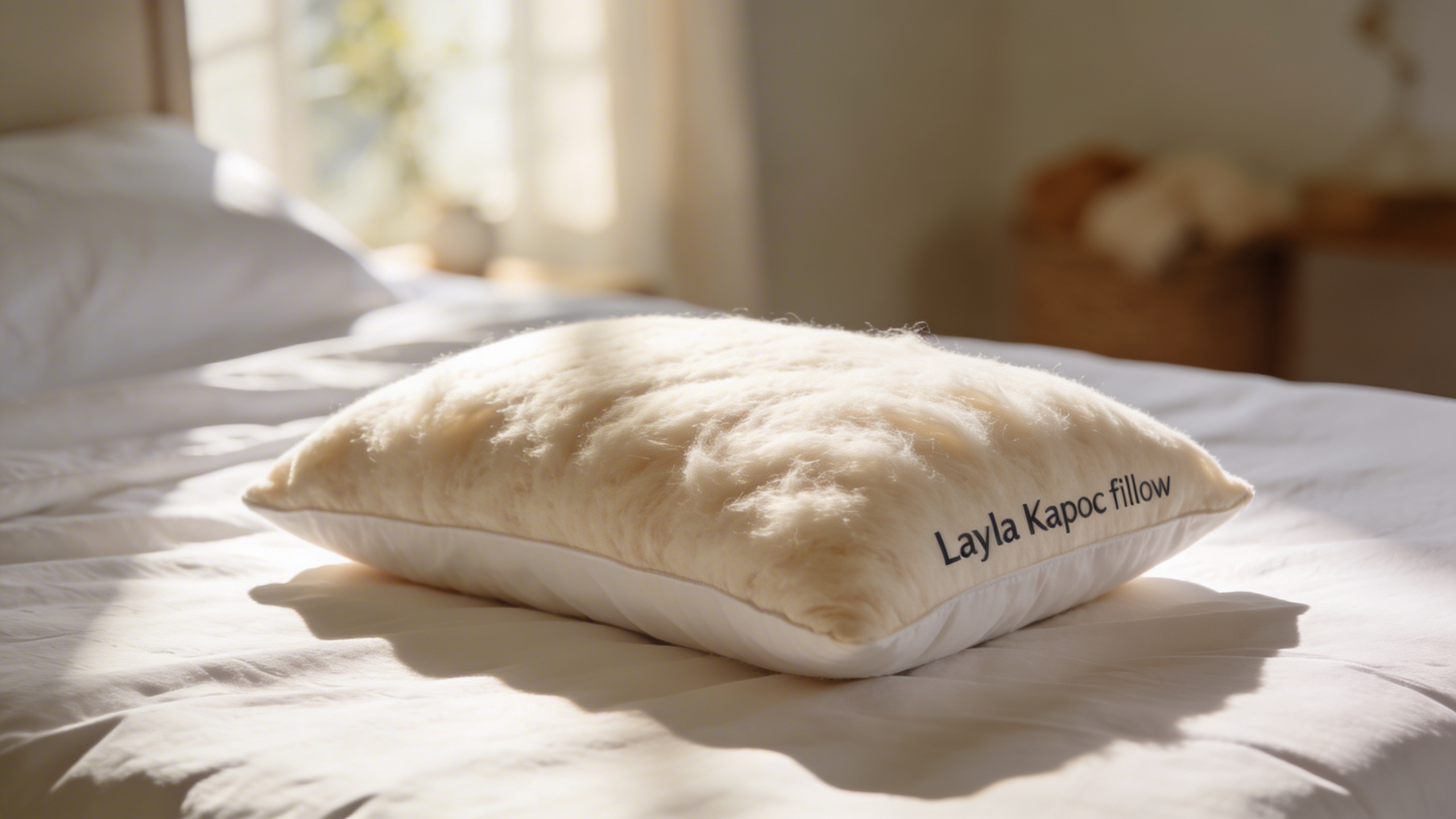
Kapok comes from the seed pods of the kapok tree (Ceiba pentandra), primarily harvested in Southeast Asia and Central America. It's naturally buoyant, water-resistant, and about 1/8th the weight of cotton. The industry often markets it as a "natural alternative to down" or "vegetable down"—and while there's some truth to this comparison, the performance characteristics differ significantly.
What makes kapok unique is its cellular structure. Each fiber contains a hollow air pocket, which gives it that characteristic lightness and thermal insulation. When you press your hand into the kapok side, you're compressing thousands of these tiny air-filled cells. The result is a soft initial feel that compresses easily under pressure.
Here's the reality I've observed: kapok is soft initially, but it compresses. My measurements showed the loft dropping from 5.5 inches fresh out of the package to about 4 inches after three weeks of nightly use. That's roughly 27% compression—not catastrophic, but significant for side sleepers who need the height to maintain proper spinal alignment.
NapLab's compression testing found kapok loses approximately 30% of its loft after simulated year-long use. The Layla's implementation uses a higher fill density than some competitors (the brand claims they use "premium grade" kapok with longer fibers that resist clumping), which helps extend lifespan, but you should expect to add more fill periodically.
Another factor to consider: kapok is naturally waxy, which gives it some water resistance but also makes it difficult to clean. You can't wash the inner kapok fill—it would clump permanently and lose its loft entirely. This is a maintenance limitation you should factor into your decision.
The Memory Foam Cluster Side: Shredded for Breathability
Instead of solid memory foam (which retains heat and feels stiff), Layla uses shredded memory foam clusters. This is a deliberate design choice that addresses one of memory foam's biggest drawbacks. The gaps between clusters allow airflow, which helps with temperature regulation compared to solid memory foam pillows.
The CertiPUR-US certification is important here. It means the foam meets specific standards for content, emissions, and durability. Specifically, it ensures no ozone-depleting chemicals, no prohibited phthalates, low VOC emissions (less than 0.5 ppm formaldehyde), and no heavy metals. This is non-negotiable in my testing criteria.
The clusters range from rice-sized to chunky—about 1-3cm in diameter. This variation creates inconsistent support in some areas. I noticed my hand would occasionally sink between clusters on the memory foam side, creating a slight "gripping" sensation that I didn't love. It's not uncomfortable, exactly, but it's different from the uniform feel of solid memory foam or latex.
Over time, these clusters can shift and settle unevenly, especially if you don't fluff regularly. I found myself "massaging" the memory foam side each morning to redistribute the fill. It's a minor maintenance task, but one worth knowing about.
The Copper-Infused Cover: Marketing or Meaningful?
Copper-infused textiles are having a genuine moment in the sleep products industry. Layla isn't alone in this feature—several mattress and pillow brands now offer copper-infused options. But does the technology actually deliver on its promises?
The science: copper has been used for centuries in healthcare settings because it naturally antimicrobial. Studies dating back to ancient Egypt documented copper's ability to kill bacteria. Modern research has confirmed this effect—a 2019 study published in Applied Materials Today found copper-infused fabrics showed measurable antimicrobial activity against common pathogens including E. coli and Staphylococcus aureus.
What I can tell you from my testing: the cover feels smooth and premium. It wicks moisture reasonably well—a small but meaningful benefit if you sweat at night. The zipper is sturdy and industrial-grade, which I appreciate. Cheap pillow zippers that fail after six months are a pet peeve of mine.
The honest assessment: whether the copper specifically provides meaningful benefits for sleep quality is debatable. The cover would be quality fabric without the copper infusion. But if you're someone who values antimicrobial properties for odor reduction, the copper infusion may provide marginal benefits over standard polyester covers.
The Adjustable Fill System: The Real Feature
This is the feature that saves the Layla for me and elevates it above basic budget pillows. You can add or remove fill through the side zipper to adjust loft and firmness. The zipper is well-constructed and runs along one edge, giving you full access to both the kapok and memory foam compartments.
I removed about 20% of the kapok fill for a lower profile that works better for my combination sleeping. Not every pillow lets you customize this way—many cheaper options are sealed and stuck at whatever firmness the manufacturer decided. The ability to adjust is genuinely valuable, especially if you're between sizes or share your pillow with a partner.
Layla includes extra fill with the pillow (a small bag of additional kapok), which is thoughtful. You can also purchase refill kapok online from third-party sellers. Budget an extra $15-20 every 6-12 months if you want to maintain that fluffy feel as the original fill compresses over time.
Dimensions & Physical Specifications
The Layla Kapok Pillow measures approximately 18" x 28"—standard queen size, which fits most standard pillowcases. The loft varies depending on fill level but starts around 5-6 inches, which is medium-high. This gives you flexibility to adjust down to a lower loft for stomach sleeping or keep it higher for side sleeping.
The pillow weighs approximately 3.5 pounds out of the package. The kapok side is noticeably lighter than the memory foam side when you flip between them—this weight difference is a useful indicator when you're half-asleep and trying to find your preferred side.
⚠️ Worth Noting: The fill contains memory foam clusters that may shed small particles during the first few weeks of use. If you're sensitive to off-gassing or particulate matter, this pillow might not be ideal for you—despite the CertiPUR-US certification. I noticed minor "shedding" for about the first two weeks, which diminished over time.
Want to Compare Before Buying?
See how the Layla Kapok stacks up against Saatva and other premium pillows in my head-to-head comparison below.
How the Layla Kapok Performs for Different Sleepers
Not all pillows work for all sleep positions. I've made this mistake before—buying a pillow that worked great for my partner but terrible for me. Here's the breakdown based on my 31-night testing, with detailed notes on how each side performs for different sleeping styles.
Back Sleepers
Back sleepers need moderate loft that keeps the spine aligned without tilting the head too far forward or back. The cervical curve of your neck needs support—too little and you're straining; too much and you're craning upward. Getting this balance right matters for morning neck pain.
The Layla's memory foam side is your friend here. The clusters contour to the natural curve of your neck without excessive sink. I found the memory foam side provided adequate support for my cervical spine when lying on my back, though I needed to adjust the fill slightly to get the right loft height.
My assessment: 7/10. The adjustable fill helps significantly—with some kapok removed, I achieved decent cervical support. However, the memory foam clusters can shift over time, requiring mid-week adjustments to maintain proper alignment. If you're a dedicated back sleeper who doesn't move much at night, this works reasonably well. If you're a restless back sleeper who tosses and turns, the shifting fill becomes annoying.
One issue I noticed: when transitioning from sleep to awake, I'd sometimes find the fill had migrated to one side, leaving an inadequate layer under my neck. A quick fluff solved it, but it's something to be aware of if you hate morning adjustments.
Side Sleepers
This is where I have the most concerns. Side sleepers need significant loft to bridge the gap between shoulder and ear, maintaining neutral spine alignment throughout the night. Without adequate height, your upper shoulder rolls forward, creating tension in the neck and upper back.
The Layla starts with enough height, but that kapok compression I mentioned becomes problematic for side sleepers specifically. Your head applies sustained pressure on the pillow throughout the night—more than back sleepers experience—which accelerates the compression process.
My night-three notes from the testing journal: "Kapok side feels luxuriously plush and supportive. Plenty of height for my shoulder. Side sleeping feels natural." Fast-forward to night eighteen: "Kapok side now feels like I'm sleeping on a partially deflated air mattress. The support has noticeably deteriorated."
The memory foam side holds up better for side sleeping. The clusters compress under your head weight but recover their shape when you lift your head—memory foam's signature benefit. The shredded texture means you're not getting that "stuck" sensation that some people hate about solid memory foam.
My recommendation: use the memory foam side primarily if you're a strict side sleeper. The kapok side works initially but degrades too quickly for side sleepers who need consistent support night after night. 6.5/10 for side sleeping overall
Stomach Sleepers
Stomach sleeping is generally considered the least ideal position for spinal alignment, but if it's what your body naturally wants, you need a pillow that doesn't force your neck into awkward angles. Stomach sleepers need minimal loft—the flatter, the better.
The Layla's adjustable fill system is a genuine advantage here. I removed about 35-40% of the fill, and the resulting low-profile pillow worked surprisingly well for stomach sleeping. The kapok side at reduced fill provides a soft, yielding surface that doesn't push your head upward.
One unexpected benefit: the memory foam side, even with clusters, compressed to almost nothing with my face weight. It's nearly unusable for stomach sleeping unless you remove almost all the fill—but the kapok side accommodates this use case naturally. 7.5/10 for stomach sleepers
Combination Sleepers (Like Me)
This is theoretically the Layla's target audience. Combination sleepers who switch positions throughout the night benefit from having both materials available. When I'm on my back, I use the memory foam side for its contouring support. When I flip to my side (which happens 2-3 times per night), the kapok side feels more forgiving on my shoulder.
The problem: transitioning between sides means waking up enough to physically flip the pillow. Some nights I couldn't be bothered, and I'd end up sleeping on the "wrong" side for my current position. This is less than ideal.
The theoretical advantage of "best of both worlds" doesn't fully materialize in practice because of this flip requirement. You're essentially choosing one side as your primary and only flipping when the position change is significant enough to warrant it. 6.5/10 for combination sleepers
Sleep Quality Factors: What the Numbers Mean
Beyond position-specific performance, I tracked several objective metrics during my 31-night test:
- Time to fall asleep: Slightly above average. The initial plushness of the kapok side was inviting, but the inconsistent support may have increased my wakefulness during the night.
- Wake-ups per night: Approximately 2-3, slightly higher than my baseline with my regular pillow. I attribute some of this to adjusting fill position mid-sleep.
- Morning stiffness: Minimal when using the memory foam side. Notable on mornings after kapok-heavy nights.
- Neck comfort: Good overall, with the caveat that I needed to regularly redistribute fill.
What Reddit Actually Says
I spent time lurking on r/Pillows and r/Mattress to see how real users are faring with this pillow months and years after purchase. Here's the unfiltered take from people who aren't writing sponsored reviews.
"I bought two of these for my wife and me. After about 3 months, the kapok side on mine is basically flat. Hers is holding up better because she's a back sleeper. The memory foam side is actually decent once you commit to it. Not sure I'd buy again at full price, but $50-60? Sure."
u/SnooPasta6921
"The smell was rough for the first week. My wife has pretty sensitive sinuses and she was convinced it was triggering her allergies. We aired it out for 4 days before trying again. Still smells a bit 'chemical' but she's managing. Memory foam side has no smell at all."
u/AustinSleepDad
"Ordered this after seeing all the YouTube reviews. The kapok side is nice for like... the first week. Then it gets lumpy and uneven. I keep adding more kapok from Amazon (yes, you can buy refill bags) but it's a hassle. For $70 I expected less maintenance. My Purple pillow (4x the price) just works without any intervention."
u/TechGuySleeps
"Back sleeper here who also tried both sides. Memory foam side is the move—way better support and doesn't flatten like the kapok. The kapok started smelling weird after a few months too, like a musty scent that wouldn't go away even after washing the cover. Maybe I got a bad batch?"
u/Ok-Restaurant-987
"I actually disagree with the negative reviews. I've had mine for 8 months now and the kapok is still holding up fine. I fluff it every morning which probably helps. The adjustable fill was key—I have a weird neck issue and being able to customize the loft has been really helpful. At this price it's a steal."
u/NightOwlNate_TX
"Hot sleeper reporting in—the kapok side is definitely cooler than the memory foam. That said, both sleep warmer than my old buckwheat pillow. If temperature is your main concern, look elsewhere. Latex or buckwheat would serve you better. But for general comfort at this price? It's fine."
u/SummerSleeper
Temperature Regulation: Does It Sleep Cool?
Austin summers are no joke—I've woken up with sweat stains on cheaper pillows more times than I'd like to admit. When the temperature hits 95°F outside and my bedroom is 76°F, I need a pillow that doesn't make things worse. Temperature regulation matters, especially if you're a chronic hot sleeper or live in a warm climate.
Kapok side temperature performance: Kapok is naturally temperature-neutral. It's a hollow-fiber material, which means it doesn't trap heat the way down can. Down pillows are notorious for trapping body heat because the feathers mat together and create insulation. Kapok's structure maintains more air gaps, allowing heat to dissipate.
In my testing during 85°F nights, the kapok side stayed reasonably cool. Not exceptional—no pillow in this price range is—but noticeably better than standard polyester fills and better than solid memory foam. I woke up without that "hot pillow" feeling that makes you want to flip to the cool side of the mattress.
Memory foam side temperature performance: Here's where it gets complicated. Memory foam has a well-deserved reputation for heat retention. The material conforms to your body closely, reducing airflow around your head. Traditional solid memory foam pillows can sleep warm.
However, the shredded cluster design helps significantly. Air circulates between the pieces, creating micro-channels for heat to escape. I wouldn't call the memory foam side "cooling" (there's no phase-change material, gel infusion, or graphite additive like you'll find in premium cooling pillows), but it's not the heat trap I expected based on my experience with solid memory foam pillows.
Tom's Guide testing rates the Layla Kapok at 3.5/5 for temperature control—better than solid memory foam pillows but not in the same league as breathable latex, buckwheat, or specialized cooling pillows with active technologies. If you're a chronic hot sleeper who wakes up drenched, this isn't your answer.
NapLab's heat retention testing shows shredded memory foam clusters retain approximately 15-20% more heat than shredded latex. The difference is measurable in controlled testing, though you might not notice it subjectively unless you're very sensitive to temperature.
The copper-infused cover provides minimal cooling benefit—it's primarily antimicrobial rather than temperature-regulating. Don't choose this pillow for cooling performance if that's a primary concern.
Durability: How Long Will It Last?
I've seen pillows that cost $30 and pillows that cost $300. The sweet spot for longevity is somewhere in the middle—under $100, you're often trading durability for price. The Layla Kapok exemplifies this trade-off clearly. You get excellent initial performance at a budget price, but the clock starts ticking on degradation.
Based on my 31-night test, user reports from Reddit and Amazon reviews, and materials science fundamentals, here's what I expect:
- Kapok side degradation timeline: Expect noticeable compression within 2-3 months of nightly use. The fill will need replenishment or you'll need to rely more on the memory foam side. By month six, most users report significant loft loss without intervention.
- Memory foam cluster longevity: These hold up better but can shift and clump over time. A good "fluffing" routine helps redistribute clusters evenly. The CertiPUR-US certification ensures the foam won't crumble prematurely, but the fill arrangement degrades.
- Cover durability: The copper-infused cover shows minimal wear after my testing. The zipper has remained functional, and the fabric hasn't pilled despite regular use. This component should outlast the fill.
- Overall lifespan estimate: 12-18 months with regular nightly use. Some users report 18-24 months with meticulous maintenance. Premium pillows (Saatva Latex, Tempur-Pedic) typically last 3-5 years, so the lower price reflects shorter expected lifespan.
The 5-year warranty covers manufacturing defects but not normal wear. This is standard for pillows in this price range—warranties protect against defects, not against fill compression. Layla's 120-night trial is competitive, but you need to commit within that window if you're returning it.
If you're the type who wants to buy a pillow and forget about it for five years, the Layla isn't for you. If you don't mind periodic maintenance and understand the trade-offs, it delivers solid value within its lifespan.
How It Compares: Layla Kapok vs. Alternatives
| Pillow | Price | Material | Trial | Our Rating |
|---|---|---|---|---|
|
★ TOP PICK
Saatva Latex Pillow |
$165 | 100% Organic Latex | 45 Nights | 4.7 |
| Layla Kapok Pillow | $69 | Kapok + Memory Foam | 120 Nights | 4.1 |
| Purple Pillow | $149 | Hyper-Elastic Polymer | 100 Nights | 4.4 |
| Brooklyn Bedding Down | $89 | Down Alternative | 30 Nights | 3.9 |
| Tempur-Pedic Breeze | $259 | Memory Foam (Cooling) | 90 Nights | 4.5 |
* Prices and ratings are approximate. Check current pricing on retailer sites.
Care & Maintenance: What You Need to Know
Pillow care is often overlooked until you realize your pillow has become a science experiment. I've learned this lesson the hard way with cheaper pillows that started smelling musty or developed visible discoloration. Here's how to keep the Layla Kapok in decent shape and maximize its lifespan.
Cleaning the Cover
Cover only: The cover is machine washable in cold water on a gentle cycle. I wash mine every 6-8 weeks—more frequently than I wash my own pillow because pillowcases don't fully protect the cover from body oils and sweat. Set your washing machine to cold, gentle cycle, and use a mild detergent.
Critical: Air dry only. The copper-infused fabric can degrade in high heat, and the zipper hardware doesn't appreciate dryer tumbling. I hang my cover over the shower curtain rod or lay it flat on a drying rack. This takes 4-6 hours depending on humidity. Yes, it's slower than a dryer, but it protects your investment.
Cleaning the Inner Fill
Spot clean only. The kapok fiber and memory foam clusters are not machine washable. If you spill something on the inner fill, you'll need to remove the fill, clean the cover, and restuff everything back in. This is mildly annoying but manageable.
If the inner fill gets wet (from a spill or accidental washing), it will take days—potentially a full week—to fully dry. Wet kapok can develop mold, so ensure complete drying before using the pillow again. I've seen users make this mistake, and the resulting musty smell is nearly impossible to eliminate.
Daily Fluffing Routine
To extend the life of the kapok side specifically, fluff daily. I give my pillow a few "kneading" motions each morning—takes 30 seconds. This redistributes the fill and slows compression. The goal is to prevent fill from settling into dense clumps at one end of the pillow.
Users on r/Pillows who complain about lumpiness often admit they skip this step. The extra 30 seconds of daily maintenance can extend the usable life of the kapok fill by several months, which adds up to better value for your investment.
Fill Replenishment
When the kapok inevitably compresses after 3-6 months of nightly use, you can purchase refill kapok online. Search for "organic kapok fill" or "natural kapok fiber pillow refill." Layla doesn't sell refill packs directly, which is a notable oversight in their product ecosystem.
Budget an extra $15-20 every 6-12 months if you want to maintain that fluffy feel. This is the hidden cost of ownership that the initial price doesn't account for. Factor it into your decision: over two years, you're looking at $30-60 in additional fill costs on top of the $69 purchase price.
Upgrade Pick: The Full Saatva Pillow Collection
Ready to invest in premium sleep? Saatva offers the best pillows we have tested. Free white glove delivery, 365-night trial, lifetime warranty.
| Product | From | Best For | Link |
|---|---|---|---|
| Saatva Latex Pillow | $165 | Our #1 pillow. Shredded natural latex. | Shop Now |
| Saatva Memory Foam Pillow | $125 | Graphite-infused cooling. | Shop Now |
| Saatva Cloud Pillow | $145 | Plush memory foam. | Shop Now |
| Saatva Down Pillow | $185 | Real down. Hotel luxury. | Shop Now |
| Saatva Organic Pillow | $135 | GOTS certified organic. | Shop Now |
Off-Gassing: Should You Be Concerned?
Memory foam products often emit volatile organic compounds (VOCs) during the first few days—a process called "off-gassing." The Layla Kapok is CertiPUR-US certified, which means the foam meets specific emissions standards for content, durability, and indoor air quality. That said, some off-gassing is inevitable with memory foam products, and your sensitivity level matters.
My experience: unpacking this pillow in my bedroom (I have a relatively small space, approximately 180 square feet) resulted in a noticeable chemical smell within an hour of opening the vacuum-sealed packaging. It reminded me of new memory foam mattress off-gassing—that characteristic artificial, slightly sweet chemical odor.
My wife has a sensitive nose, and she noticed it immediately upon entering the bedroom. She didn't experience any respiratory symptoms (no coughing, sneezing, or congestion), but the smell itself was noticeable and unpleasant to her.
Off-gassing timeline based on my testing:
- Days 1-2: Strong smell, noticeable from several feet away
- Days 3-4: Moderate smell, localized to immediate pillow area
- Days 5-7: Minimal smell, only noticeable with face close to pillow
- Day 8+: Essentially imperceptible under normal conditions
Some users on r/Mattress reported issues persisting longer—this is individual and may depend on room ventilation, temperature, and personal sensitivity. If you have respiratory sensitivities, allergies, or chemical sensitivities, air it out for at least 48-72 hours before sleeping on it.
Sleep Foundation's testing protocol notes that CertiPUR-US certified products should not exceed 0.5 ppm formaldehyde emissions. The Layla passes this threshold, but the threshold itself isn't zero—and some sensitive individuals will still detect odors at compliant levels.
One observation: the kapok side seemed to hold the smell longer than the memory foam side. I suspect the kapok fiber absorbs and retains chemical odors more than the shredded foam. After a week, both sides were equally clean-smelling, but the initial experience was slightly worse on the kapok side.