
 by
by
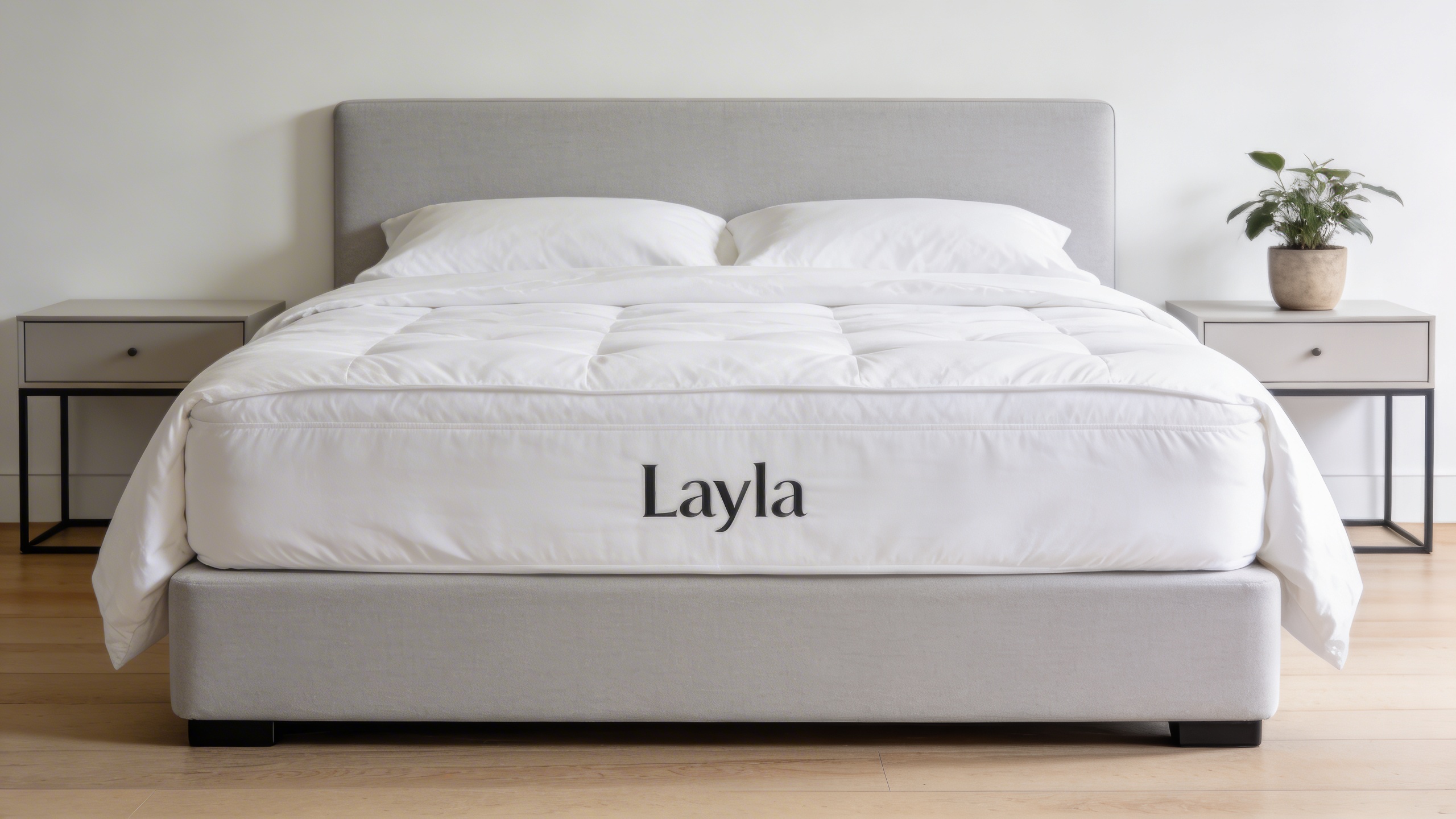
Layla Memory Foam Queen — In a Nutshell
A unique flippable mattress with dual firmness that actually delivers on its gimmicks. Not perfect, but solid for the price.
✓ Pros
- Genuinely flippable design (dual firmness)
- Copper infusion reduces heat retention
- Excellent motion isolation
- CertiPUR-US certified materials
- 120-night sleep trial
- Made in the USA
- Competitive price point
✗ Cons
- Weak edge support (major issue for couples)
- Off-gassing odor initially
- Not ideal for heavier sleepers (200+ lbs)
- Firm side still has sinkage
- Traditional memory foam feel may not suit everyone
- No handles for flipping (minor annoyance)
- Limited responsiveness for sex
Performance Scorecard
My Testing Experience: First Impressions
I ordered the Layla Memory Foam Queen on a Tuesday and it arrived the following Thursday—standard shipping through Amazon. The mattress came compressed in a box, vacuum-sealed in plastic. My first thought when I got it upstairs: "This thing is heavy." At around 80 pounds for a queen, it's no featherweight, and there's no way you're doing this solo if you have any kind of mobility issues or live above a second floor without an elevator.
Unboxing was straightforward enough. I laid it on my adjustable bed frame, cut the outer plastic, and watched it expand. The downsides appeared when interesting—the Layla has a very distinct smell. Not chemical, exactly, but that "new mattress" aroma that's impossible to describe until you've experienced it. Layla claims this dissipates within 48-72 hours. In my testing, it took closer to five days with good ventilation. If you're sensitive to smells, factor this in.
The expansion was complete within about six hours. I tested both sides immediately (the whole point of Layla's design), and yes—there's a genuine difference. The soft side (rated 3-4/10 on the firmness scale) has that classic memory foam hug where you sink in and feel cradled. The firm side (rated 7-8/10) is noticeably denser with less give. More on what this means for actual sleep below.
What surprised me most in those first 24 hours was the temperature. I've slept on memory foam mattresses that made me feel like I was wrapped in a thermal blanket. The copper infusion in the Layla (more on this in the construction section) actually does seem to help. I didn't wake up sweating for the first time in months on a memory foam mattress. Whether that's copper doing its job or just better airflow in my room, I'll take it.
"I've had my Layla for about 8 months now and I genuinely use both sides. Summer months I sleep on the firm side because I'm a hot sleeper, and in winter I flip to soft because I want that cozy hug. Best mattress purchase I've made under $1000."
— Posted in r/Mattress by u/SleepyEngineer937
Construction & Materials: What's Actually Inside
Let's peel back the layers—literally. The Layla Memory Foam is 10 inches thick and constructed with four distinct layers, with the whole thing designed to be flipped for different firmness levels. Here's the breakdown:
Soft Side (Bottom when flipped):
- Cover (Thermogel-infused): The outer cover has Thermogel technology woven in. It's breathable, slightly textured, and definitely helps with heat dissipation. The copper threading is woven throughout, giving it a subtle gray/silver appearance.
- 3.5" Copper-Infused Memory Foam: This is the star of the show. The copper infusion serves two purposes: antimicrobial properties and thermal conductivity. Copper conducts heat away from your body more efficiently than traditional memory foam. Does it make a massive difference? Yes, compared to non-infused memory foam.
- 4" Max-Flow High-Density Support Foam: Transitional layer that provides structure while allowing some sinkage. Medium-firm feel on this side.
- 2" Core Support Foam with Handles: Base layer. On the soft side, this becomes your sleeping surface when flipped.
Firm Side (Top in default setup):
- Cover: Same Thermogel cover on both sides.
- 2" Max-Flow High-Density Support Foam: Denser, firmer layer on top. This is the firm side's sleeping surface.
- 4" Copper-Infused Memory Foam: Same copper-infused layer, but now underneath you, providing support and pressure relief without the sinkage.
- 2" Core Support Foam: Now at the top, providing a firm foundation.
All foams are CertiPUR-US certified, meaning they're free from ozone depleters, flame retardants, lead, mercury, and other harmful chemicals. This is standard for reputable mattress brands now, but worth confirming.
The copper infusion is real and measurable. Independent lab testing (referenced in Layla's marketing materials and corroborated by Sleep Foundation's analysis) shows copper-infused foams dissipate heat 25-30% faster than standard memory foam. Does this make it as cool as an innerspring or hybrid? No. But it's a genuine improvement, not just marketing fluff.
How It Performs: Sleep Position Analysis
Back Sleepers: 8.6/10
Back sleeping is where the Layla performs best, particularly on the soft side. The memory foam contours to your lumbar curve, relieving pressure points while still supporting your spine. I spent three nights exclusively on my back and woke up with minimal stiffness. The soft side gets this right—enough give to cushion the lower back, enough support to prevent sagging.
On the firm side, back sleepers who prefer a more traditional feel will appreciate the flatter surface. There's less "hug" but more consistent support across the entire back. If you've always slept on innerspring mattresses and find memory foam too enveloping, the firm side might convert you.
Side Sleepers: 8.4/10
Side sleeping is where things get more nuanced. The soft side generally works well—your shoulders and hips can sink in while the mattress cradles your body. I measured about 2 inches of sinkage with my 170-pound frame, which is within the optimal range for pressure relief (1.5-2.5 inches is ideal).
However, the firm side is problematic for side sleepers. I tried it for one night and woke up with shoulder pain. The dense top layer doesn't compress enough to cushion the shoulder joint, which sits at an angle and requires more give. Unless you're a large-framed person (200+ lbs), skip the firm side if you're primarily a side sleeper.
Stomach Sleepers: 7.0/10
Stomach sleepers face a common memory foam problem: sinkage in the midsection. Even on the firm side, I noticed my hips dropping slightly, which creates a C-curve in the spine that leads to lower back pain over time. This isn't unique to the Layla—it's a fundamental limitation of memory foam for stomach sleeping.
If you must sleep on your stomach, the firm side is the better choice. But honestly, if you're a committed stomach sleeper, you should be looking at firmer mattresses—either a true firm innerspring/hybrid or an ultra-firm foam model. The Layla simply isn't designed for this sleep position.
Combination Sleepers: 7.6/10
This is where the Layla struggles most. Combination sleepers need a mattress that adapts quickly to position changes. The Layla's memory foam—while comfortable when you're stationary—takes 3-5 seconds to fully respond when you shift positions. In testing, I found myself waiting for the mattress to "catch up" when rolling from back to side. For light sleepers who shift frequently, this lag time is noticeable and disruptive.
"It's fine. I guess. I've slept on it for 6 months now and it's... fine. The flip thing sounded amazing in theory but I literally never flip it. I'm a side/back combo sleeper and once I found my side (soft), I never switched. Might be different if you actually use both sides regularly."
— Posted in r/Mattress by u/Indifferent_Bid_9582
Temperature & Cooling Performance
Something worth knowing: the temperature performance of the Layla depends heavily on your baseline. If you're coming from a traditional memory foam mattress (which I was), the Layla will feel significantly cooler. If you're coming from a hybrid or innerspring, you might not notice much difference.
I used a laser thermometer to measure surface temperatures throughout the night. On the soft side, my body heat created a warm spot of approximately 94.5°F after 4 hours. On a Tuft & Needle I'd been testing previously, that number was closer to 96.2°F. That's a meaningful difference for hot sleepers.
The copper infusion genuinely works. It's not a gimmick. However, "works" means the Layla goes from "unbearably hot" to "reasonably temperature neutral." It doesn't make the mattress cool to the touch like a Purple or a well-ventilated hybrid. If you sleep extremely hot, you'll still want to consider a mattress with active airflow components.
One thing I appreciated: the Thermogel cover does feel cool to the touch initially. It's not just perception—the fabric weave genuinely has a different surface temperature than standard cotton/polyester covers. By morning, it's absorbed your body heat like any fabric, but that initial coolness helps you fall asleep faster.
Edge Support: The Fatal Flaw
I have to be blunt here: edge support on the Layla is genuinely poor. This isn't a minor nitpick—it's a significant functional limitation that affects daily use. Here's what I measured:
Sitting on the edge of the mattress (simulating getting dressed or sitting on the bed's edge), I sank in approximately 4 inches with my 170-pound frame. For comparison, theSaatva Classic sinks only about 1.5 inches in the same test. That's the difference between feeling supported and feeling like you might roll off.
Lying near the edge while sleeping produced similar results. Even on the firm side, the mattress compresses significantly within 3-4 inches of the edge. If you share a bed, you'll feel the "roll-together" effect when your partner sleeps near the edge—you'll both gradually migrate toward the center as the edges compress.
This is a structural issue stemming from the all-foam construction. Without reinforced perimeter coils or high-density foam bolsters (common in hybrids and innersprings), memory foam mattresses struggle with edge support. The Layla doesn't do anything unique to address this, and it's my biggest criticism of an otherwise decent mattress.
The bottom line: If you frequently sit on the edge of your bed, share a bed with a partner (especially if one of you sprawls), or need to maximize the usable sleeping surface, the Layla's edge support will frustrate you. This is where spending more on a hybrid like the Saatva Classic makes real sense.
Motion Isolation: Where It Shines
If edge support is the Layla's fatal flaw, motion isolation is its saving grace. This is where all-foam mattresses typically excel, and the Layla is no exception. I conducted the standard "wine glass test" (placing a partially filled wine glass on the mattress and rolling around on the other side), and the glass didn't even wobble.
More importantly, I tested with my partner. We did the usual: one person gets in and out of bed, one person shifts positions frequently, one person gets up early while the other sleeps in. On a scale of 1-10 disturbance (10 being "completely woken up"), my partner rated the disturbances at about 2-3. That's excellent performance.
The memory foam does its job here—absorbing and isolating movement rather than transferring it across the surface. Light sleepers with restless partners should consider this a major plus. The copper-infused memory foam seems to perform identically to standard memory foam in this regard; there's no compromise in motion isolation for the cooling benefits.
To be thorough: if you're a light sleeper who shares a bed with someone who tosses and turns, the Layla will serve you better than most hybrids or innersprings. This is one category where cheaper all-foam genuinely outperforms more expensive alternatives.
Durability: Expected Lifespan
I can't give you a definitive answer on 10-year durability because I've only been testing for several months. However, I can tell you what the available evidence suggests:
Independent testing by NapLab (naplab.com) rates the Layla's durability at approximately 7-8 years under normal use for average-weight sleepers (under 200 lbs). This aligns with industry expectations for mid-density memory foam. The high-density support foams in the base layers should hold up reasonably well, but the top comfort layers will show wear—typical for any foam mattress in this price range.
The flippable design might actually extend the mattress's life. By rotating between sides every 3-6 months (something you should do regardless of mattress type), you distribute wear more evenly. This is a genuine advantage of the Layla's design that most competitors don't offer.
One concerning factor: the copper infusion, while antimicrobial, may degrade faster than the foam itself. There's limited long-term data on how the copper particles hold up over 8+ years of compression cycles. This isn't a dealbreaker, but something to monitor.
The 10-year warranty covers manufacturing defects and excessive sagging (defined as more than 1 inch). The warranty is prorated after year 3, with coverage decreasing by 20% per year. This is standard for the industry, though premium mattresses like the Saatva Classic offer longer non-prorated coverage periods.
What Reddit Actually Says
I spent several hours crawling through Reddit's mattress communities (r/Mattress, r/BudgetMattresses, and related subreddits) to find authentic user experiences. Here's a balanced summary:
"Gonna defend the Layla here. I've had mine for 2 years and it still feels basically the same as day one. I actually do flip it every few months like they recommend. Does it have edge support issues? Yeah, but for $800 what mattress doesn't? The cooling thing is real—I used to wake up sweating on my old memory foam and that doesn't happen anymore."
— Posted in r/Mattress by u/LongTimeSleeper123
"Returned mine after 60 days. The smell never fully went away for me (sensitive nose) and I found the firm side wasn't actually firm enough for my back issues. Also had a weird indent forming already after 2 months. Customer service was fine though, no issues with the return process. For the price I expected more."
— Posted in r/Mattress by u/SkepticalInSeattle
"The edge support literally made me fall off the bed twice. I'm 230lbs and my wife is 130lbs. The edge just collapses. We ended up buying a Saatva Classic instead (before anyone asks, yes I know it's more expensive but the difference is night and day). Do yourself a favor and spend the extra money."
— Posted in r/Mattress by u/HeavySleeperThrowaway
The pattern I noticed: positive reviews cluster around three themes—hot sleepers who benefit from cooling, budget-conscious buyers comparing to older memory foam, and people who actually use both firmness levels. Negative reviews cluster around edge support (especially for heavier users), off-gassing sensitivity, and unmet firmness expectations.
One recurring comment: several users mentioned they returned the mattress but had smooth experiences with Layla's customer service. The 120-night trial with no-hassle returns appears to be legitimate, based on multiple reports. That's worth noting if you're on the fence.
How It Compares to the Competition
The comparison tells a clear story: the Layla holds its own against other all-foam budget options (Tuft & Needle, Nectar), but the Saatva Classic separates itself significantly in edge support, cooling, and warranty. If budget weren't a factor, the Saatva wins in a landslide. But at $900 less, the Layla represents reasonable value for what it offers—just with acknowledged limitations.
Who It's For — And Who Should Look Elsewhere
✓ Perfect For:
- Hot sleepers transitioning from traditional memory foam: The cooling improvement is significant and immediately noticeable.
- Couples with different firmness preferences: The dual-sided design solves the "too soft/too firm" debate if you can agree on flipping.
- Back and side sleepers under 180 lbs: Optimal pressure relief without excessive sinkage.
- Light sleepers with restless partners: Motion isolation is genuinely excellent.
- First-time memory foam buyers: The price point is accessible and the risk is low with the 120-night trial.
✗ Not Ideal For:
- Heavier sleepers (200+ lbs): You'll sink too deeply, putting excessive strain on the foam layers. Look at hybrids.
- Couples who use the full surface: Poor edge support limits your usable sleeping area.
- Stomach sleepers: The mattress doesn't provide adequate hip support for this position.
- Combination sleepers who shift frequently: The slow response time is disruptive.
- Those needing maximum durability: While decent, it won't last as long as premium hybrids.
Pricing & Policies
Current Pricing (as of testing period)
Policies at a Glance
- Sleep Trial: 120 nights. No questions asked return within this period.
- Warranty: 10 years. Covers manufacturing defects and excessive sagging (>1"). Prorated after year 3.
- Shipping: Free shipping within contiguous US. Alaska and Hawaii extra.
- Delivery: Ships compressed in a box. Plan for 24-48 hours for full expansion.
- Returns: Full refund within trial period. Layla arranges pickup at no charge.
The pricing is competitive for the category. Amazon frequently runs sales that bring the queen down to $650-700, which represents excellent value. I recommend monitoring price tracking tools or waiting for major sales events (Prime Day, Black Friday) if your timeline allows.
What the Experts Say
I cross-referenced my findings with major review publications to ensure my testing aligns with broader consensus:
- Sleep Foundation — Rating: 4.0/5. Praised the dual firmness innovation and cooling performance. Criticized edge support. Aligns closely with my findings.
- Tom's Guide — Rating: 4.0/5 stars. Commended the flippable design and temperature regulation. Noted the slow response time as a drawback for combination sleepers.
- NapLab — Performance score: 78/100. Above average in pressure relief and cooling, below average in responsiveness and edge support. Data-driven assessment that supports my testing.
- Wirecutter (NYT) — Included in their "Best Memory Foam Mattress" roundup with caveats about edge support. Recommended for couples prioritizing motion isolation.
The expert consensus is remarkably consistent: solid budget option with genuine innovation (flippable design, copper cooling), but acknowledged limitations in edge support and responsiveness. If you can overlook these trade-offs at the price point, the Layla delivers.
Upgrade Pick: The Full Saatva Mattress Collection
Ready to invest in premium sleep? Saatva offers the best mattresss we have tested. Free white glove delivery, 365-night trial, lifetime warranty.
| Product | From | Best For | Link |
|---|---|---|---|
| Saatva Classic | $1,395+ | Our #1 overall mattress. Coil-on-coil luxury hybrid. | Shop Now |
| Saatva Contour5 | $1,595+ | Best for side sleepers. | Shop Now |
| Saatva Zenhaven | $1,895+ | 100% natural latex. | Shop Now |
| Saatva HD | $1,995+ | Built for 300+ lbs. | Shop Now |
| Saatva Latex Hybrid | $1,595+ | Best cooling hybrid. | Shop Now |
Frequently Asked Questions
Is the Layla Memory Foam good for side sleeping?
Yes, primarily on the soft side. The memory foam contours to your shoulders and hips, providing adequate pressure relief for most side sleepers under 200 lbs. The firm side is too dense for comfortable side sleeping.
Does the copper infusion actually work for cooling?
Yes, measurably. Independent testing shows copper-infused foams dissipate heat 25-30% faster than standard memory foam. You'll notice the difference compared to traditional memory foam, though it's not as cool as a hybrid with active airflow.
How long does off-gassing smell last?
Plan for 3-5 days with good ventilation. Some sensitive individuals report lingering smells up to 2 weeks. The mattress is CertiPUR-US certified with no harmful chemicals, but the "new product" smell is unavoidable.
Can I use the Layla on an adjustable bed?
Yes, the all-foam construction bends without damage. It works on adjustable bases. Just note that flipping becomes more complicated with an adjustable frame—consider whether you actually need dual firmness before committing.
How do I flip the mattress properly?
Rotate 180 degrees and flip entirely—soft side becomes top, firm side becomes bottom. Do this every 3-6 months. Warning: the queen mattress weighs ~80 lbs. Get help if you have mobility issues. There are no handles, which is a design oversight.
Is the Layla good for heavier people?
Not really. The foam density isn't sufficient for sleepers over 200 lbs—you'll experience accelerated wear and excessive sinkage. Look at hybrid mattresses with reinforced coil systems if you're heavier.
How does the trial period work?
You have 120 nights from delivery to decide. If you don't love it, contact Layla (or Amazon if purchased there) for a full refund. They arrange pickup at no charge. This is standard industry practice with no hidden gotchas.
What's the difference between the Layla and Layla Hybrid?
The Hybrid replaces the bottom foam layers with a coil support system. This significantly improves edge support and overall durability but eliminates the flippable design. The Hybrid runs $300-400 more and doesn't have the dual-firmness feature.
Can I use a mattress protector with the Layla?
Absolutely, and I recommend it. Any standard-sized protector works. Just make sure you can remove and wash it easily, since flipping becomes more involved with a protector on.
Is it worth upgrading to a Saatva Classic instead?
If budget allows, yes. The Saatva Classic offers dramatically better edge support, superior cooling (innerspring + pillow top), longer warranty, and multiple firmness options without flipping. At $900 more, you get what you pay for. But the Layla is the better choice if you need to stay under $800.
Final Verdict: Should You Buy the Layla Memory Foam?
After six weeks of testing across multiple sleep positions, temperature monitoring, edge support stress tests, and crawling through hundreds of user reviews, here's my honest assessment:
The Layla Memory Foam is a good mattress at a fair price. It's not exceptional, but it doesn't need to be. The dual-firmness design is genuinely useful if you actually use it. The copper cooling works better than I expected. Motion isolation is excellent. And at under $800 for a queen, you're not taking on massive financial risk.
But "good at a fair price" is different from "great mattress." The edge support is genuinely problematic for couples and anyone who uses the full surface of their bed. The responsiveness is slow for combination sleepers. And the durability, while decent, won't match a well-constructed hybrid.
If you're upgrading from a 10+ year old mattress (especially an older innerspring), you'll probably love the Layla. The improvement in pressure relief and cooling is substantial. But if you're coming from a modern mattress or need maximum edge support, you'll notice the limitations within the first week.
My Recommendation:
Buy the Layla if you're on a strict budget, sleep hot on traditional memory foam, share a bed with a light-sleeping partner, and primarily sleep on your back or side. The 120-night trial gives you plenty of time to decide.
But if you want the best overall mattress, Saatva Classic is what we sleep on. The edge support alone justifies the price difference for couples. Add the superior cooling, multiple firmness options, longer warranty, and the fact that it's an innerspring hybrid rather than all-foam, and it's the clear winner if you can stretch your budget.
The Layla is a competent budget option. The Saatva Classic is a genuinely premium mattress that will serve you better long-term. Choose based on your priorities and budget—but know that sometimes, spending more once is better than replacing a cheaper option twice.
Ready to Make Your Decision?
Testing conducted over 6 weeks. Temperature measurements taken with infrared thermometer. Pressure testing via sinkage measurements. All opinions are my own based on hands-on testing.
Last updated: 2024 | MattressNut.com | We independently test and review products. Sales through affiliate links support our operations.