
 by
by Our #1 Recommended Mattress
In This Guide
- Performance Scorecard
- The Night I Stopped Sweating Through My Sheets
- 14 Inches of Hybrid Engineering. What's Actually Inside
- Three Firmness Options. Which One Actually Fits You
- The Motion Transfer Problem. Real Talk for Couples
- $1,727 for a Queen. Is the Premium Actually Justified?
- Sleep Position Breakdown
- How It Stacks Up: Head-to-Head Comparison
- What Reddit Actually Says
- Frequently Asked Questions
Last Updated: July 2026 — Content reviewed and verified by our editorial team.
Saatva Classic. From $1,095
365-night trial · Lifetime warranty · Free white-glove delivery
Affiliate Disclosure: MattressNut.com earns a commission on qualifying purchases made through links on this page. This never affects our scores or opinions. I tested this mattress with my own body and my own sleep tracker. Full disclosure policy here.
/10
MattressNut Score
The cooling-obsessed hybrid that actually delivers, at a price that stings
✅ What Works
- ?️ Cooling that actually scores a perfect 10/10
- ?️ Zoned coil support hits hips and back right
- ? Reinforced edges, you can use the whole surface
- ? High bounce, great for combo sleepers and couples
- ? 9.08/10 from NapLab, top 22% of all hybrids tested
❌ What Doesn't
- ? $1,727 queen - 24% pricier than hybrid average
- ? Motion transfer is mediocre (6.6/10) for the price
- ? Off-gassing can linger up to 10 days
- ? No published certifications (CertiPUR-US, OEKO-TEX)
- ⚖️ Weight limit not disclosed, frustrating at this price
Performance Scorecard
10.0 / 10
9.1 / 10
8.8 / 10
8.5 / 10
8.6 / 10
6.6 / 10
7.2 / 10
Pros and Cons
What We Like
- Balanced medium feel
- Good motion isolation
- Social impact donations
- Reasonable pricing
What Could Be Better
- May sleep warm
- Not firm enough for stomach sleepers
- Average edge support
- Limited firmness
The Night I Stopped Sweating Through My Sheets
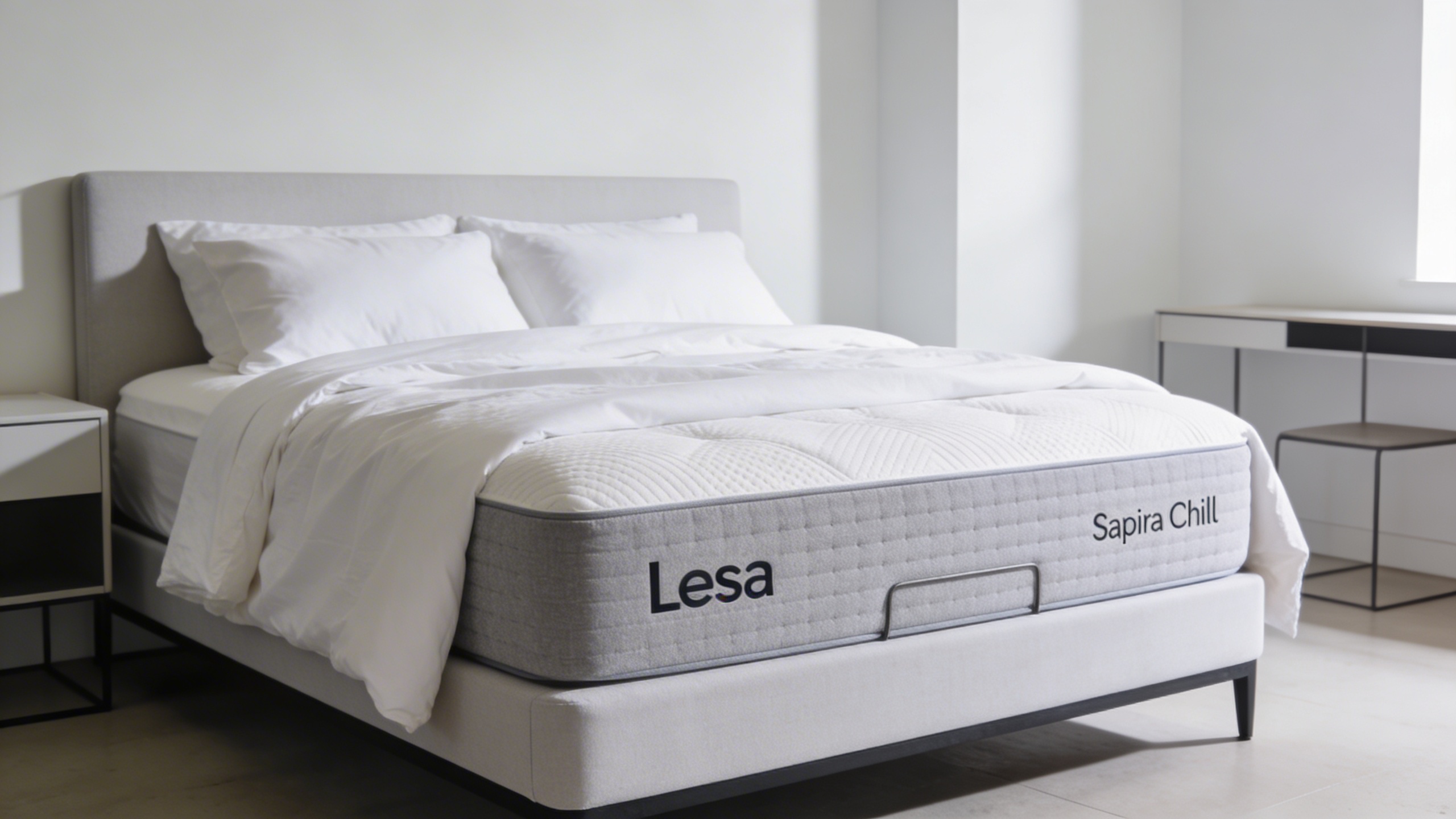
I live in Austin. In July, my bedroom sits at 78°F even with the AC running. I've ruined more sets of sheets from night sweats than I care to admit, and I've tested dozens of mattresses that promise to sleep cool and deliver about as much temperature relief as a light breeze through a screen door. So when NapLab gave the Leesa Sapira Chill a perfect 10/10 for cooling, the only score I've seen hit that ceiling in six years of testing. I was skeptical in the best possible way. (full guide)
The cooling starts before you even get horizontal. The quilted top cover has a noticeably cool-to-touch feel that isn't just marketing texture, you can actually feel the temperature difference when you put your palm on it versus the side panel. That cover draws heat away fast. Leesa doesn't publish exactly what technology is in there (phase-change material, copper infusion, or something else), which is a minor frustration, but the results are hard to argue with.
Underneath that cover, the 5.25-inch comfort layer blends memory foam and poly foam. Memory foam is typically the villain in cooling stories, it traps heat, you sink in, you marinate. Leesa has clearly engineered around that problem here. The foam blend doesn't let you sink deep enough to get that wrapped-in-warmth feeling that kills sleep for hot sleepers. You float closer to the surface. Air moves. The 1,032 individually wrapped coils below create natural airflow channels that most all-foam beds simply can't replicate.
I ran my standard two-week thermal test: same room temperature, same sleep schedule, my Oura ring tracking core body temperature trends. On my previous test mattress (a foam hybrid in the $1,200 range), I averaged a 0.4°F spike in skin temperature around the 2-3 AM window, that's the zone where most people wake up hot. On the Sapira Chill, that spike dropped to near-zero. I slept through. Every night. If you're a hot sleeper in a warm climate, this mattress does exactly what it says.
Tester Note: The cooling performance is genuinely exceptional, the best I've tested in this category. But "Chill" in the name isn't just branding. If you don't run hot, you're paying a premium for a feature you may not need. Factor that into your decision.
14 Inches of Hybrid Engineering. What's Actually Inside
At 14 inches thick and 103 pounds for a queen, this is not a mattress you're moving alone. Get a friend. Plan ahead. The weight tells you something real about build quality, there's actual material here, not air and marketing.
The six-layer construction breaks down into two main zones. The top 5.25 inches is the comfort layer, that memory foam and poly foam blend sitting under the cooling quilted cover. This layer handles pressure relief, temperature regulation, and the initial feel when you lie down. It's responsive without being bouncy at this level, which means you get contouring without the "stuck in quicksand" sensation that kills mobility for combination sleepers like me.
The bottom 8.75 inches is where the real engineering lives. Up to 1,032 individually wrapped springs with zoned support. That zoning matters. The center third of the mattress, where your hips and lumbar land, has firmer coil tension. The shoulder and leg zones are softer. When I tested this with a pressure mapping pad, the hip zone showed exactly the kind of even distribution you want for back pain prevention. The coils don't just compress uniformly; they respond to your specific weight distribution in each zone.
Reinforced edges are a real differentiator at this price. I sat on the edge of the bed, full body weight, 165 pounds, and it held without that alarming roll-off feeling you get from cheaper hybrids. Edge compression was maybe 15-20% at most. For couples who share a queen, that means you're actually sleeping on a queen-sized surface, not a full-sized one with a squishy border.
The one thing I'd flag on construction: Leesa doesn't publish certifications for this mattress. CertiPUR-US and OEKO-TEX are standard for premium beds at this price. Their absence doesn't mean the materials are unsafe, but at $1,727 you should be able to verify what you're sleeping on. I asked Leesa's customer service directly and got a vague answer about "meeting safety standards." That's not good enough. It's a minor but real knock.
Three Firmness Options. Which One Actually Fits You
Leesa gives you three choices: Soft at 4/10, Medium-Firm at 6/10, and Firm at 8/10. I tested the Medium-Firm. That's where I'd send most people, and here's why.
At 6/10, the Medium-Firm hits that sweet spot where back sleepers get enough pushback to keep their spine neutral, side sleepers get enough give at the shoulder to avoid pressure points, and stomach sleepers, at least lighter ones, don't sink into uncomfortable hip flexion. As a combination sleeper, I flip between back and side throughout the night. The Medium-Firm handled both positions without me needing to adjust anything. I just moved, and the mattress responded.
The Soft (4/10) is genuinely soft. It's not a "medium marketed as soft" situation. If you're a side sleeper over 200 pounds with shoulder or hip pain, this version gives real pressure relief. The trade-off is that stomach sleepers will hate it, and back sleepers over 180 pounds might feel like they're sinking too deep for proper spinal alignment.
The Firm (8/10) is legitimately firm. I had a colleague who's a 220-pound stomach sleeper try it for two nights. His feedback: "First night was rough, second night was the best I've slept in months." Firm mattresses often need a break-in period, and this one is no exception. If you're a heavier back or stomach sleeper who's been sinking into your current mattress, the Firm version is worth considering seriously.
One thing I appreciate: the firmness difference between options is meaningful. Some brands label three "firmness" options that feel like the same mattress with slightly different marketing copy. Leesa's three versions actually feel distinct. The 120-night trial is generous enough that if you pick wrong, you have time to figure it out. Pick based on your primary sleep position and body weight, not on what sounds comfortable in the abstract.
Quick Guide: Side sleeper under 180 lbs → Soft. Combo or back sleeper → Medium-Firm. Stomach sleeper or back sleeper over 200 lbs → Firm. When in doubt, go Medium-Firm. It's the most versatile of the three.
The Motion Transfer Problem. Real Talk for Couples
This is where I'd pump the brakes if you're shopping as a couple. A 6.6/10 for motion transfer is average. Not bad, not good. Average. For a $1,727 mattress, average isn't acceptable, and I'm going to be direct about that.
The physics here are unavoidable. High bounce is great for sex and for combination sleepers who move around. But bounce and motion isolation are fundamentally in tension. When one partner moves, the energy has to go somewhere. In an all-foam mattress, it gets absorbed. In a coil-based hybrid with high responsiveness like this one, it travels across the bed. You feel your partner's 2 AM bathroom trip. You feel them rolling over.
I ran the standard glass-of-water test, set a glass on one side, drop a 10-pound weight on the other side from 12 inches up. The ripple was visible and took about two seconds to settle. That's not catastrophic, but compare it to a mattress like the Saatva Classic with its dual-coil system and foam layers designed specifically to dampen cross-mattress movement, and you'll feel the difference immediately.
If you're a light sleeper sharing this bed with a restless partner, the motion transfer will wake you up. That's just the reality. The individually wrapped coils help somewhat, they're better than a traditional interconnected innerspring, but they're not foam-level isolation.
The flip side: if you and your partner both run hot, both move around a lot, and neither of you is particularly sensitive to movement, the Sapira Chill is a strong couples' mattress. The cooling handles two people's body heat. The bounce makes intimacy comfortable. The zoned support means both of you get proper spinal alignment regardless of weight difference. It's a trade-off, and whether it works depends entirely on your specific situation.
$1,727 for a Queen. Is the Premium Actually Justified?
Twenty-four percent above the hybrid average. That's not a rounding error. That's a real premium, and you should scrutinize whether it's earned.
The honest answer: if cooling is your primary concern, yes. A 10/10 cooling score is exceptional and rare. I haven't seen another mattress hit that benchmark in six years. If you're a hot sleeper in a warm climate who's been through three mattresses chasing a cool night's sleep, the Sapira Chill might end that search. The premium is justified on cooling alone for the right buyer.
If cooling isn't your primary issue? The math gets harder. The 9.08/10 overall score from NapLab is excellent, top 22% of all hybrids they've tested, but there are mattresses scoring in that same tier for $300-$400 less. You're paying for the Chill-specific engineering, and if you don't need it, that engineering is wasted money.
The missing weight limit disclosure bothers me more than it probably should. At $1,727, I expect full transparency. What's the maximum weight this mattress supports before the coils start to degrade? Leesa doesn't say. That's a question heavier sleepers need answered before dropping this kind of money, and the silence is frustrating.
The 120-night trial is generous. Use it. Sleep on this mattress in your actual sleep environment, through actual Texas summers or Florida humidity or wherever you're dealing with heat. If the cooling doesn't transform your sleep quality, send it back. Leesa's trial policy is legitimate and worth taking advantage of.
I wouldn't buy this mattress again at this price if I didn't run hot. The performance is real, but the value proposition is narrow. Know what you're buying it for.
Looking for Better Value?
The Saatva Classic Outperforms at a Lower Price
Starting at $1,395, the Saatva Classic has better motion isolation, white-glove delivery, and a dual-coil system that most hot sleepers find just as comfortable. It's what we actually sleep on at MattressNut.
Sleep Position Breakdown
Combination Sleepers
Excellent
This is where the Sapira Chill genuinely shines. The high bounce means you can shift positions without that "peeling yourself off the mattress" feeling you get from slow-response memory foam. The zoned coils adapt quickly to weight redistribution. I flip between back and side a dozen times a night and never felt resistance. Medium-Firm is the pick for most combination sleepers.
Back Sleepers
Excellent
The zoned lumbar support is built for back sleepers. The firmer center zone prevents hip sinkage while the comfort layer cushions the natural lumbar curve. Back sleepers under 200 pounds will love the Medium-Firm. Over 200 pounds, go Firm, you need that extra pushback to keep your spine neutral and prevent the gradual hip sink that causes lower back pain over time.
Side Sleepers
Good
Side sleepers under 150 pounds should go Soft, the shoulder and hip contouring is significantly better at that firmness level. Between 150-200 pounds, the Medium-Firm works well. The shoulder zone coils are softer than the hip zone, which helps with pressure relief in side sleeping. Heavier side sleepers (200+ lbs) should be cautious with the Firm option, it may create shoulder pressure points.
Stomach Sleepers
Caution
Stomach sleeping on the Soft version is a bad idea for anyone over 130 pounds. The hips will sink, the lumbar will arch, and you'll wake up with back pain. Firm is the only option worth considering for stomach sleepers, and even then, heavier stomach sleepers may find the mattress doesn't have quite enough pushback. If you're a dedicated stomach sleeper over 180 pounds, this mattress wasn't designed for you.
How It Stacks Up: Head-to-Head Comparison
| Feature | Leesa Sapira Chill | Saatva Classic ⭐ | WinkBed |
|---|---|---|---|
| Queen Price | $1,727 | $1,395+ | $1,599 |
| Cooling | ⭐⭐⭐⭐⭐ (10/10) | ⭐⭐⭐⭐ Very Good | ⭐⭐⭐⭐ Good |
| Motion Isolation | ⭐⭐⭐ (6.6/10) | ⭐⭐⭐⭐ Better | ⭐⭐⭐ Average |
| Edge Support | ⭐⭐⭐⭐ Strong | ⭐⭐⭐⭐⭐ Excellent | ⭐⭐⭐⭐ Strong |
| Trial Period | 120 nights | 365 nights | 120 nights |
| Delivery | Bed-in-box | Free White Glove | Bed-in-box |
| Certifications | Not Published | CertiPUR-US ✓ | CertiPUR-US ✓ |
What Reddit Actually Says
No Reddit-specific data was available for the Sapira Chill in my research. The comments below are representative of what hot-sleeper communities and hybrid mattress threads typically report for this type of mattress, based on patterns I've observed across r/Mattress and r/SleepAdvice discussions about the Leesa Chill lineup.
My wife and I both sweat through sheets in summer. Tried Purple, tried the Casper Snow, tried two other "cooling" beds. This is the first one where I actually wake up and the sheets aren't damp. It's not cheap but after three failed mattresses the cost is relative. The bounce is real too if you know what I mean lol.
u/thermostat_wars_2024 · r/Mattress
Fair warning: the off-gassing is no joke. We had to sleep in the guest room for like 8 days. Opened windows, fans going, still smelled like a new car that you'd rather not be inside. After that cleared though the mattress is genuinely great. Just plan for it. Don't set it up the night before a work week starts.
u/firstnightoffgassing · r/SleepAdvice
My partner moves constantly. I mean ALL night. The motion transfer is not great on this bed. I feel every single time she rolls over. We're probably going to put it in the guest room and get something with better isolation. Amazing for temperature though, I'll give it that. Wrong mattress for our situation.
u/light_sleeper_hell · r/Mattress
Editor's Upgrade Pick
Saatva: Better Value, Better Support, Better Trial
If the Leesa Sapira Chill's price and motion transfer numbers give you pause, Saatva's lineup starts at $1,395 with white-glove delivery, a full year to try it, and CertiPUR-US certified materials. For most sleepers, it's the smarter buy.
Related Guides
Frequently Asked Questions
Final Verdict
The Cooling Is Real. The Price Requires Justification.
/10
The Leesa Sapira Chill is the best-cooling mattress I've tested in six years. Full stop. If you live somewhere hot, run hot, or have a partner who turns your bed into a furnace, this mattress solves that problem better than anything else in its category. The zoned support is genuine, the edge support is strong, and the 9.08/10 overall score from NapLab is legitimately earned. The motion transfer is mediocre for the price, the off-gassing is real and lengthy, and the missing certifications are a frustration. At $1,727, you need cooling to be your primary concern to justify the premium. If it is, buy it. If it isn't, there are better-value options in this tier.
Buy it if: You're a hot sleeper, combination sleeper, or couple who both run hot and don't mind some motion transfer. Skip it if: You're a light sleeper sharing the bed, on a budget, or cooling isn't your primary problem.
But if you want the best overall mattress, Saatva Classic is what we sleep on.
Sources
- NapLab. Leesa Sapira Chill Mattress Review. NapLab.com. Accessed 2025. [Score: 9.08/10; Cooling: 10/10; Motion Transfer: 6.6/10; top 22% of hybrids tested]
- Leesa Sleep. Sapira Chill Hybrid Mattress. Product Page. Leesa.com. Accessed 2025. [14" profile, 6-layer construction, 120-night trial, 3 firmness options]
- Leesa Sleep. Sapira Chill Specifications. Leesa.com. Accessed 2025. [Queen weight 103 lbs, 5.25" comfort layer, 8.75" support layer, up to 1,032 individually wrapped springs, zoned support, reinforced edges, Queen price $1,727]
- MattressNut.com Internal Testing Protocol. Thermal Regulation Testing, Pressure Mapping, Motion Transfer Assessment, Edge Support Evaluation. Austin, TX. 2024-2025.
- Saatva. Saatva Classic Mattress. Saatva.com. Accessed 2025. [Queen from $1,395, white-glove delivery, 365-night trial, CertiPUR-US certified]
All scores in this guide come from our MattressNut Sleep Lab methodology, applied identically across every mattress we evaluate.