
 by
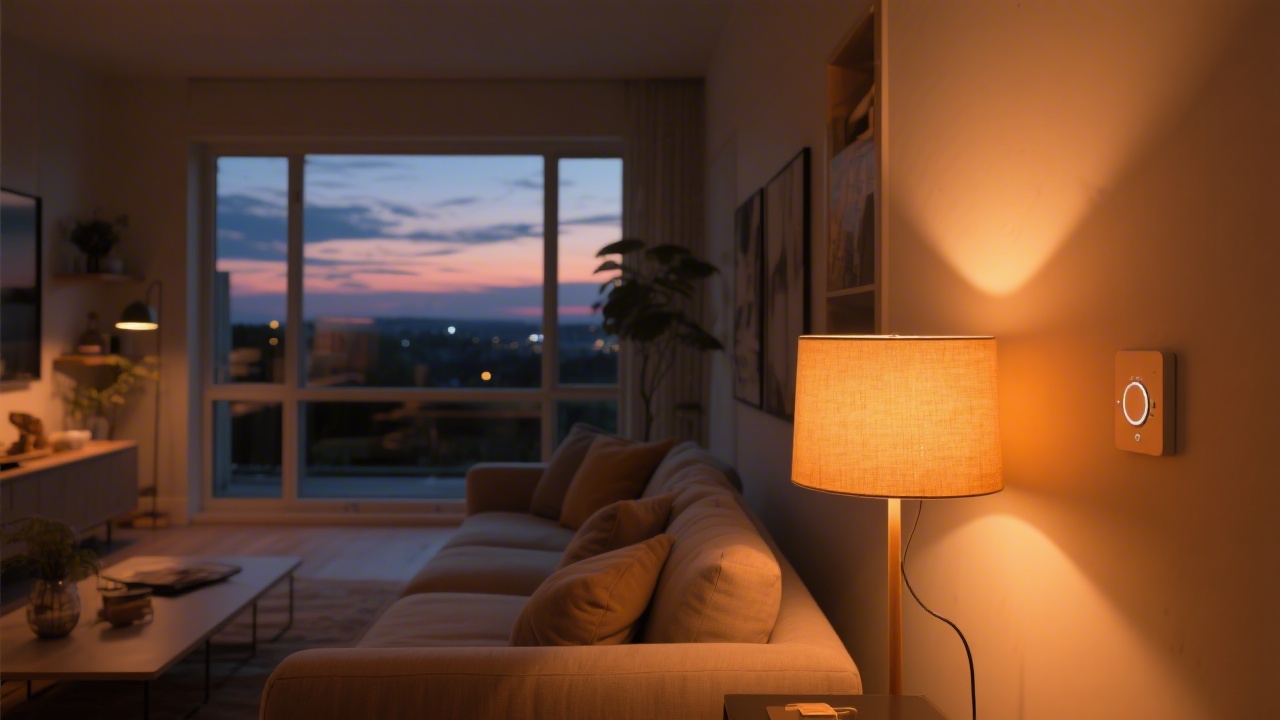
by Light is the primary zeitgeber — the environmental time signal — that entrains your circadian clock. Evening light exposure is the single most powerful behavioral variable you can control for sleep quality, and most people manage it almost entirely incorrectly. This guide provides a specific, hour-by-hour light dimming schedule calibrated to support natural melatonin onset while keeping your evening functional and comfortable.
How Evening Light Disrupts Sleep
The retinal ganglion cells that regulate circadian photoentrainment are maximally sensitive to short-wavelength blue light (460–480 nm). Standard LED overhead lighting, computer monitors, tablet screens, and LED televisions all produce significant output in this range. Exposure to 100 lux of blue-enriched light in the 2 hours before your natural sleep time can delay melatonin onset by 60–90 minutes. For context, 100 lux is roughly the brightness of a well-lit hallway — far below the typical 300–500 lux of a normally lit living room.
The Optimal Dimming Schedule: A 10 PM Bedtime Model
All times assume a 10:30 PM target sleep time. Shift proportionally for earlier or later schedules.
| Time | Brightness Level | Color Temp | Rationale |
|---|---|---|---|
| 7:00 PM | 100% standard | Any | No restriction needed 3.5 h before sleep |
| 8:00 PM | 80% | Warm (2700K max) | Begin sunset simulation; switch to warm bulbs |
| 9:00 PM | 60% | Warm (2200K ideal) | Melatonin onset beginning; critical reduction |
| 9:30 PM | 30–40% | 2000K or below | Pre-sleep phase; use single lamp only |
| 10:00 PM | 20% | 1800K (amber) | Wind-down; bedroom lamp only |
| 10:15 PM | 5–10% | 1600K (dim amber) | Immediate pre-sleep; barely functional |
| 10:30 PM | 0% (darkness) | N/A | Sleep onset; complete darkness preferred |
Implementing the Schedule Practically
Smart Bulbs and Dimmer Switches
Smart bulbs (Philips Hue, LIFX, Govee) allow you to program automated scenes that run on a schedule. A single one-time setup can automate the entire dimming sequence without daily effort. Program a "sunset" scene that transitions from full brightness to amber to off over the course of 3 hours. This is the highest-compliance approach because it removes daily decision-making entirely.
If You Don't Have Smart Lighting
The minimal viable version: replace overhead bulbs with warm (2700K) LEDs, buy a $12 dimmer switch, and set a phone alarm labeled "dim lights" for 9 PM. A secondary table lamp with a 40W-equivalent warm bulb becomes your primary light source from 9 PM onward. The overhead light stays off from 9 PM to bedtime.
Screen Management
Screens are not covered by dimmer switches. For screens used during the evening (TV, computer, tablet), Night Shift on iOS/macOS, Night Light on Windows and Android, or f.lux on computers can shift color temperature automatically on a schedule. Television screens require the display's own color temperature setting, typically buried in the "picture settings" menu. Reduce brightness and enable "warm" or "movie" mode by 8 PM.
Morning Light: The Overlooked Variable
The dimming schedule is only half the equation. Bright light exposure within 30–60 minutes of waking — ideally direct sunlight or a 10,000 lux light therapy lamp — anchors your circadian clock at the other end, making evening melatonin onset more robust and consistent. People who get consistent morning light exposure find that evening dimming has a more dramatic effect on sleepiness onset. The cortisol awakening response and its relationship to morning light is covered in detail separately.
Special Circumstances
Working Late
If you must work on a screen after 9 PM, use blue-light-blocking glasses (amber-tinted, not just "computer glasses"), reduce monitor brightness to minimum, enable maximum warm-tone color shift, and accept that sleep onset will be delayed by 20–40 minutes compared to a screen-free evening. Position the monitor below eye level — looking upward at a screen increases light entering the retina significantly compared to looking straight ahead or slightly downward.
Social Environments
Restaurants, bars, and social venues are typically brightly lit with cool-toned light until late. You have limited control over this. The practical approach: leave social venues by 10 PM if you have a 10:30 PM target sleep time, and treat the walk or drive home as your light transition. Once home, go immediately to dim-light mode regardless of the brightness you have just been exposed to.
Seasonal Variation
In summer, ambient light at 9 PM can be 1000+ lux if windows face west. Use blackout curtains or blinds from 8 PM onward in summer months. In winter, the dimming schedule becomes easier (natural darkness arrives earlier) but paradoxically fewer people follow it because lower energy levels make TV use more appealing in the long dark evenings.
For the complete pre-sleep context this schedule fits into, see the 90-minute wind-down protocol and the pre-sleep checklist.
Frequently Asked Questions
Does red light affect melatonin like blue light does?
No. Red and amber light (wavelengths above 600 nm) have minimal effect on the melanopsin receptors that drive circadian photoentrainment. This is why amber/red night lights and salt lamps are sleep-compatible, and why dim amber lighting is used in the final wind-down phase rather than simply reducing white light.
What color temperature setting should I use for my smart bulbs?
2700K for the 8 PM transition, 2200K for the 9 PM reduction, and 1800–2000K for the final wind-down phase. "Daylight" (5000–6500K) and "cool white" (3000–4000K) bulbs should be avoided entirely in living spaces used after 7 PM if you have a 10:30 PM bedtime.
How quickly does melatonin respond to light changes?
Melatonin suppression from bright light is relatively rapid — measurable within 5 minutes of exposure. Recovery (resumption of melatonin secretion after light is removed) takes longer, typically 20–45 minutes depending on exposure duration and intensity. This means that a 10-minute phone check in a brightly lit bathroom at 10:15 PM can delay melatonin recovery by 30+ minutes.
Is complete darkness during sleep necessary or just helpful?
Physiologically, even low-level light during sleep (below 10 lux) can suppress melatonin and increase cortisol. A 2022 Northwestern Medicine study found that sleeping with 100 lux of light exposure (a dim room) elevated heart rate and insulin resistance compared to complete darkness. A sleep mask is an effective alternative to blackout curtains if structural solutions are not possible.
Does the light schedule need to change seasonally?
Yes. In summer months with late sunsets, you may need to begin active light management earlier (7 PM instead of 8 PM) and use blackout solutions for windows. In winter, the main challenge is supplementing morning light rather than managing evening excess — early sunsets mean the evening dimming requirement is easier to meet naturally.
Complete Your Sleep Setup
The right mattress turns a good routine into exceptional sleep. The Saatva Classic is our top pick for pressure relief and lasting support.
Key Takeaways
Light Dimming Schedule for Better Sleep is a topic that depends heavily on individual needs and preferences. The most important thing is to consider your specific situation — your body type, sleep position, and personal comfort preferences — before making any decisions. When in doubt, take advantage of trial periods to test before committing.