
 by
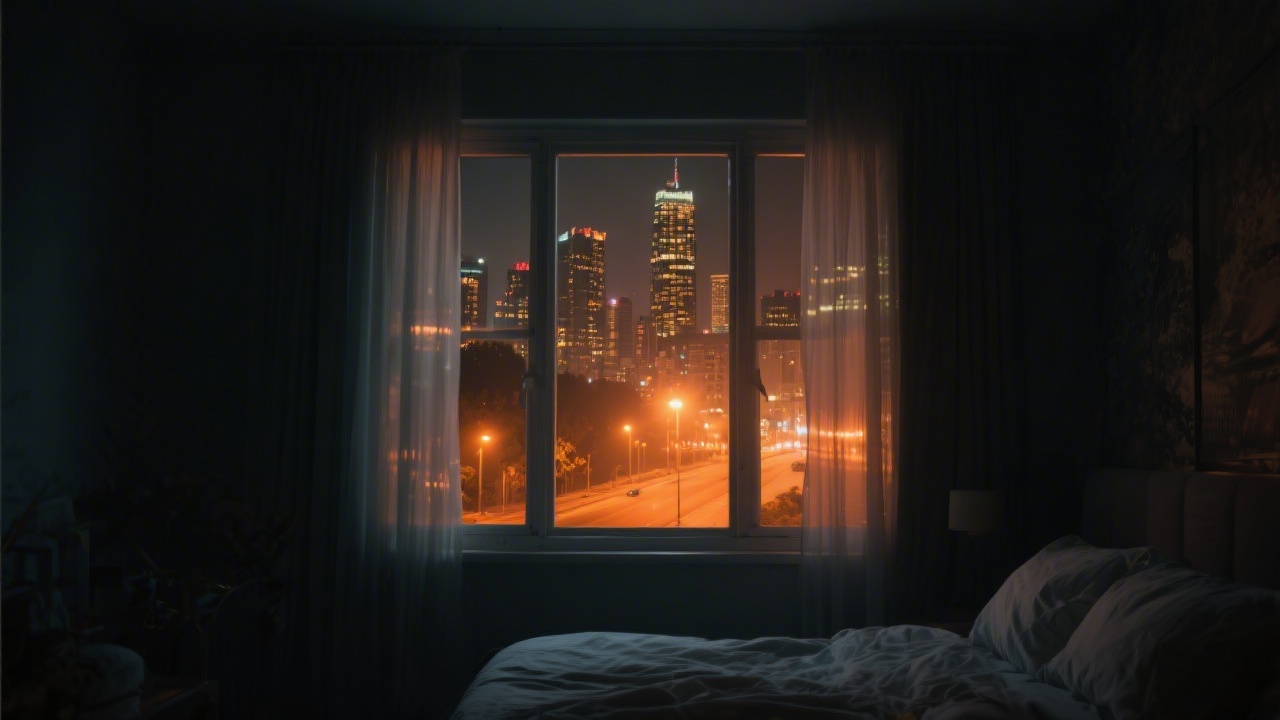
by Light pollution is a recently recognized sleep hazard. Two-thirds of the world's population lives under light-polluted skies, and in cities the situation is often extreme — bedrooms that never reach true darkness. The consequences are not trivial: melatonin suppression, delayed circadian timing, and reduced sleep quality are measurable effects of the ambient glow that enters most urban bedrooms every night.
The Biology of Light and Sleep
The human circadian system uses light as its primary timing signal. Specialized cells in the retina — intrinsically photosensitive retinal ganglion cells (ipRGCs) — detect ambient light levels and send signals directly to the suprachiasmatic nucleus (SCN), the brain's master clock. This system:
- Suppresses melatonin secretion in response to light exposure, particularly blue wavelengths (450-480 nm).
- Delays the circadian clock when light is detected at the wrong biological time — in the evening, it tells the brain "it is still daytime."
- Can respond to very low light levels — as low as 1-3 lux — when the eyes are dark-adapted.
The problem is that typical urban bedroom light levels with standard curtains range from 5-100 lux — well above the suppression threshold.
What Light Pollution Actually Does in Bedrooms
Outdoor light pollution enters bedrooms through:
- Curtains and blinds — Most standard curtains transmit 10-40% of incident light. Even "room-darkening" curtains often leak significant light at edges.
- Gaps around window frames — Light enters around the perimeter of window treatments regardless of fabric density.
- Skylights and high windows — Often overlooked sources of significant ambient light.
Research measuring melatonin onset time in urban versus rural environments shows urban residents' melatonin production begins 30-90 minutes later due to chronic evening light exposure — consistently delaying their biological readiness for sleep.
Quantifying Your Light Exposure
Measure bedroom darkness with a lux meter app (most smartphones can function as rough lux meters) or an inexpensive dedicated lux meter ($15-30). Measure at your pillow position:
- Under 1 lux — Suitable for sleep. True darkness.
- 1-5 lux — Low but not ideal. Some melatonin suppression.
- 5-50 lux — Common in urban bedrooms. Meaningful melatonin suppression and circadian delay.
- Above 50 lux — Significant sleep disruption likely. Active intervention needed.
Effective Interventions
True Blackout Curtains
Look for three-pass blackout coating or dense woven with attached blackout liner. Extend the curtain rod 4-6 inches beyond the window frame on each side. Use a ceiling mount if possible to eliminate the top gap. This single change can reduce bedroom lux from 20-40 down to 1-3 lux in most apartments.
Curtain Edge Sealing
Magnetic curtain seal strips or L-channel curtain tracks eliminate edge light leakage. For renters, double-sided velcro tape attaching the curtain edge to the wall creates an effective seal without permanent damage.
Sleep Masks
Quality contoured sleep masks that do not press on the eyelids (3D eye masks) block any residual ambient light with complete reliability. Particularly useful for shift workers and travelers. For home use, combine with blackout curtains for belt-and-suspenders darkness.
Elimination of Indoor Light Sources
LED standby lights on electronics, router indicator lights, smoke detector LEDs, and charging cable indicators collectively contribute meaningful ambient light. Covering these with black electrical tape or removing devices from the bedroom is a low-effort high-impact change.
The Complete Bedroom Sleep Environment
Light is one dimension of the bedroom sleep environment. Addressing it together with sleep quality improvements, sleep and snoring, and mattress for hot sleepers creates a genuinely optimized sleep space. Your mattress contributes to how well your body thermoregulates during sleep — overheating is an underrecognized cause of nighttime awakenings that compounds light-driven disruption.
Frequently Asked Questions
How much light is too much for sleep?
Melatonin suppression begins at exposures as low as 1-3 lux — roughly equivalent to dim candlelight — when the eyes are adapted to darkness. Most urban bedrooms with uncurtained windows register 5-100 lux from outdoor sources alone. Studies show even 10 lux of ambient light exposure reduces melatonin production by 30-50% compared to complete darkness.
Do blackout curtains make a meaningful difference?
Yes, measurably. A study comparing salivary melatonin in participants sleeping in light-polluted rooms with and without blackout curtains found significantly higher melatonin levels and better sleep efficiency with blackout curtains. The effect is most pronounced in people with thin or reflective curtains currently — the improvement from switching to true blackout can be substantial.
Is light through closed eyelids enough to affect sleep?
Surprisingly, yes. Research shows that even light at levels below the threshold for visual perception can suppress melatonin through the intrinsically photosensitive retinal ganglion cells (ipRGCs), which are particularly sensitive to blue wavelengths and can respond to light even during sleep. This is why sleep masks provide additional benefit beyond room-darkening curtains.
What color light is most disruptive to sleep?
Short-wavelength blue and green light (450-550 nm) suppresses melatonin most strongly. This is why LED streetlights and white-light sources (which have strong blue peaks) are more disruptive than the older sodium vapor streetlights they replaced. Amber LED fixtures emit far less blue wavelength energy and are less disruptive, which is why some municipalities are adopting them for residential areas.
Does sleeping with the lights on cause long-term health problems?
Longitudinal research suggests it might. Chronic exposure to artificial light at night (ALAN) during sleep is associated with increased risk of obesity, metabolic syndrome, mood disorders, and potentially certain cancers (via melatonin suppression, as melatonin has antioxidant and tumor-inhibiting properties). The NIEHS considers ALAN a potential carcinogen. Most risk studies focus on shift workers, but residential light pollution exposure may contribute at lower magnitudes.