
 by
by If you could make one change that would improve sleep quality, mood, daytime alertness, and circadian alignment simultaneously, it would be morning bright light exposure. Light therapy is the most evidence-based, side-effect-free, and underutilized intervention in sleep medicine — and most people have never seriously tried it.
Our Recommended Mattress for Healthy Sleep
The Saatva Classic offers zoned lumbar support and premium coil-on-coil construction that promotes proper spinal alignment — key for restorative sleep that keeps your circadian rhythm on track.
How Light Resets the Circadian Clock
Light is the primary zeitgeber — the dominant external signal that synchronizes your internal clock to the 24-hour day. The mechanism runs through specialized photoreceptive cells in the retina called intrinsically photosensitive retinal ganglion cells (ipRGCs), which contain the photopigment melanopsin. These cells project directly to the suprachiasmatic nucleus (SCN) via the retinohypothalamic tract.
Unlike the rods and cones used for vision, ipRGCs are maximally sensitive to short-wavelength blue light (~480nm). They accumulate light signals over time — they don't respond to brief flashes but integrate sustained exposure. This is why a 30-minute exposure to bright light is more effective than 5 minutes, and why consistent morning light is more powerful than a single bright day.
The circadian effect of light is phase-dependent: morning light advances the clock (helps you fall asleep and wake earlier); evening light delays the clock (helps you stay up later). For most people in modern environments, evening artificial light is already shifting the clock later — morning light therapy compensates by advancing it.
What the Research Shows
Light therapy has the strongest evidence base of any non-pharmacological sleep intervention for:
- Seasonal affective disorder (SAD): First-line treatment. Meta-analyses show effect sizes comparable to antidepressants, typically taking effect within 1-2 weeks.
- Delayed sleep phase: Morning bright light combined with gradual sleep schedule advancing is the primary behavioral treatment for DSPS.
- Social jet lag: Regular morning light exposure in social jet lag sufferers shows measurable advances in sleep timing over 2-4 weeks.
- Shift work adaptation: Bright light during night shifts and light avoidance (dark glasses) during morning commutes home helps shift workers adapt their clocks.
- Non-seasonal depression: Multiple trials show significant antidepressant effects of morning bright light in non-seasonal depression, including augmentation with antidepressants.
- Cognitive performance: Morning light exposure improves alertness, reaction time, and working memory — especially in evening chronotypes operating under conventional schedules.
Optimal Protocol: Timing, Intensity, Duration
Timing: Within 30-60 minutes of waking. The earlier in the subjective morning, the stronger the phase-advancing effect. For clock advancement (going to sleep earlier), earlier is better. Using light therapy within 15 minutes of waking produces larger phase advances than waiting an hour.
Intensity: The research standard is 10,000 lux at the eye level — roughly equivalent to outdoor light on a clear spring morning. Standard indoor lighting is 200-500 lux, which is insufficient for reliable circadian effects. Outdoor natural light on a bright day is 30,000-100,000 lux.
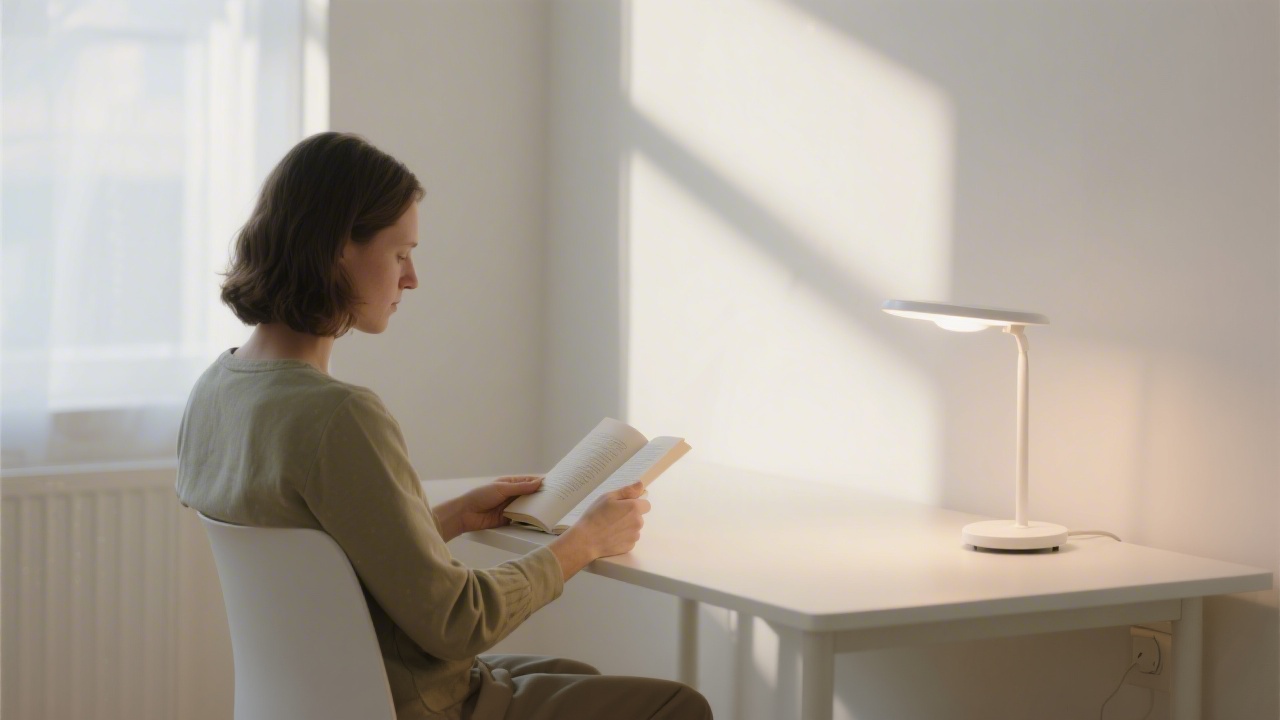
Duration: 20-30 minutes at 10,000 lux is the standard protocol. You don't need to stare at the light — side exposure while reading, eating, or working is sufficient. The lamp should be positioned 16-24 inches away and angled downward to avoid glare.
Consistency: Like any chronobiological intervention, consistency matters more than intensity. Daily use at the same time produces larger cumulative effects than sporadic intense sessions.
Choosing a Light Therapy Device
Key specifications to check:
- 10,000 lux rating at the specified distance — some budget lamps claim 10,000 lux at 2 inches, which is useless. Check the lux at the working distance (typically 16-24 inches).
- Full-spectrum or cool-white LED — the blue-enriched spectrum (5000-6500K color temperature) produces the strongest circadian signal. Warm amber bulbs are largely ineffective.
- Flickering: Quality LEDs are flicker-free. PWM-driven budget lights can cause eye fatigue with extended use.
- Size: Larger light-emitting area is more forgiving of exact positioning. A postcard-sized lamp requires precise placement; a larger lamp allows normal movement.
Side Effects and Precautions
Light therapy is very safe for most people. Minor side effects include headache, eye strain, and mild agitation in the first few days, which typically resolve. More significant cautions:
- Bipolar disorder: Morning light therapy can trigger manic episodes in bipolar patients without mood stabilizer coverage. Requires psychiatric supervision.
- Photosensitizing medications: Lithium, some antibiotics, and antipsychotics can increase light sensitivity. Check with prescriber.
- Retinal conditions: Consult an ophthalmologist before starting if you have retinal disease or macular degeneration.
For your circadian rhythm to respond optimally, light therapy works best alongside consistent sleep timing and a sleep environment optimized for quality rest.
Our Recommended Mattress for Healthy Sleep
The Saatva Classic offers zoned lumbar support and premium coil-on-coil construction that promotes proper spinal alignment — key for restorative sleep that keeps your circadian rhythm on track.
Frequently Asked Questions
Can regular outdoor morning walks replace a light therapy lamp?
Yes, often more effectively — outdoor morning light is typically 10,000-100,000 lux, far exceeding even the best therapy lamps. The challenge is weather, season, and schedule. In winter at northern latitudes, outdoor light intensity at 7am may be insufficient. Light therapy lamps provide consistent, reliable dosing year-round regardless of weather.
Does light therapy work in the evening for night shift workers?
Yes, with reverse protocol. Night shift workers benefit from bright light exposure during the first half of their shift (delaying the clock to match the shifted schedule) and light-blocking glasses during morning commutes home. The protocol is the mirror image of advancing-phase therapy.
Is dawn simulation as effective as bright light therapy?
Dawn simulators — alarm clocks with gradually brightening lights — have evidence for improving morning mood and arousal. Their circadian phase-shifting effect is weaker than 10,000-lux bright light therapy, but they're a reasonable adjunct for people who struggle with abrupt morning alarms.
Can you overdo light therapy?
Using it too late in the morning reduces the phase-advancing effect. Using light therapy in the afternoon or evening can delay the clock — counterproductive for most applications. Stick to within 60 minutes of waking and keep sessions to 20-30 minutes.
How quickly does light therapy produce results?
Mood effects often appear within 2-4 days. Measurable circadian phase shifts (earlier sleep onset) typically require 1-2 weeks of consistent use. The full therapeutic effect for SAD treatment is usually achieved in 2-4 weeks.