
 by
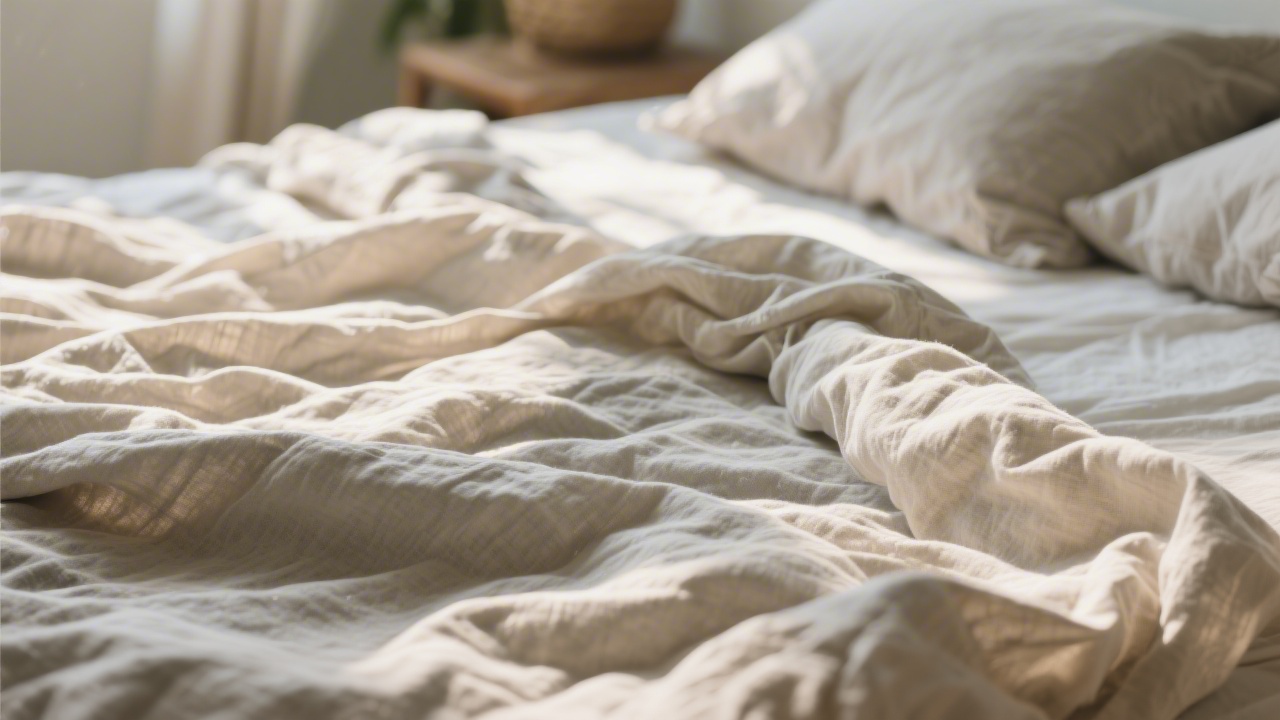
by Linen is made from flax plant fibers. It is structurally different from cotton — coarser, with a looser weave that creates natural air gaps. These air gaps make it the most breathable bed fabric available. If you sleep hot and have been frustrated by sheets marketed as cooling that still trap heat, linen is worth the adjustment period.
Why Linen Breathes Better Than Cotton or Bamboo
The breathability advantage of linen comes from fiber structure, not weave alone. Flax fibers are hollow and absorb moisture while releasing it quickly to the air. Cotton fibers are solid; they absorb moisture but release it more slowly. Bamboo viscose absorbs moisture but releases it poorly in high humidity. Linen's moisture transport is fastest among common bed fabrics.
In practical terms: on a warm night, linen sheets feel consistently fresh even if you sweat. Cotton sheets can feel damp. Bamboo sheets can feel warm in humid conditions despite marketing claims.
Pros and Cons
What We Like
- Luxury innerspring with excellent lumbar support
- Multiple firmness options available
- Free white-glove delivery and mattress removal
- 365-night trial and lifetime warranty
What Could Be Better
- Higher price than many online brands
- Heavier than foam mattresses
- Not compressed in a box
- Some off-gassing possible initially
The Linen Learning Curve: How Long Until Soft?
The most common complaint about linen sheets is initial stiffness. This is legitimate. New linen sheets feel scratchy and boardlike compared to cotton. They soften progressively with each wash and use, and the softness curve continues for years — high-quality linen sheets at 5 years are dramatically softer than at first use.
Based on our testing, linen sheets from the best brands become soft enough for most sleepers around wash 5-8. By wash 20, they feel genuinely luxurious. By 3 years of regular use, they are among the softest available — which reverses the usual textile trajectory (most sheets degrade over time; linen improves).
If you want softer linen faster, wash in warm water, line dry when possible, and sleep on them regularly. Stone-washing during manufacturing accelerates the softening — stone-washed linen starts noticeably softer than unwashed linen.
What to Look for in Linen Sheets: Fiber Weight and Weave
Linen quality is measured in grams per square meter (GSM). Most linen sheets range from 155-210 GSM:
- 155-175 GSM: Lighter weight, maximum airflow, best for very hot sleepers and warm climates. More delicate — requires gentle washing.
- 175-200 GSM: Balanced weight. Good airflow, more durable. The most practical range for year-round use.
- 200+ GSM: Heavier linen, warmer, more structured feel. Better for cooler climates or those who want a more substantial fabric weight.
European linen (grown in Belgium, France, Netherlands) is generally considered higher quality than linen from other regions, with more consistent fiber quality and traceable sourcing. OEKO-TEX certification confirms the finished product has been tested for harmful substances.
Our Testing Results: 7 Linen Sheet Sets
We tested 7 linen sheet sets over 8 weeks, 30 wash cycles, across four criteria: initial feel, feel at wash 10, feel at wash 30, and pilling/degradation at wash 30.
Key finding: the gap between quality and budget linen widens dramatically over time. Budget linen sheets (under $80 queen set) showed significant degradation and pilling at wash 20. Quality European linen (above $150 queen set) continued improving through all 30 wash cycles without pilling.
For hot sleepers, linen significantly outperformed all bamboo viscose and cotton sateen options on actual temperature feel. It was comparable to quality cotton percale on initial feel but superior by wash 20.
Best Linen Sheet Alternative for Hot Sleepers
If linen's initial stiffness is a barrier, the closest breathable alternative is organic cotton percale. Quality percale weave provides good airflow and improves with washing, without the adjustment period that linen requires. The Saatva Organic Percale Sheets are GOTS-certified and provide consistent cooling without the stiffness curve. See our organic cotton sheets guide for a full comparison.
Frequently Asked Questions
How long does it take for linen sheets to soften?
Most sleepers find linen sheets comfortably soft around wash 5-8. Stone-washed linen starts softer. The softening continues for years — linen at 3+ years of use is dramatically softer than new linen. This is the opposite of most textiles which degrade over time.
Are linen sheets good for hot sleepers?
Yes. Linen is the most breathable common bed fabric. Its hollow fiber structure absorbs and releases moisture faster than cotton or bamboo. Hot sleepers consistently report better temperature comfort with linen than with cotton sateen or bamboo viscose.
Do linen sheets wrinkle a lot?
Yes. Linen wrinkles significantly and does not smooth out the way cotton does. Most linen sheet buyers accept this as part of the aesthetic — linen has a characteristic lived-in, relaxed appearance. If wrinkle-free sheets are important to you, linen is not the right choice.
How do I wash linen sheets without damaging them?
Wash on a gentle or delicate cycle in cool to warm water (cold for dark colors). Use mild detergent without bleach. Tumble dry low or line dry — high heat can weaken linen fibers over time. Remove promptly to reduce wrinkles.
How long do linen sheets last?
Quality European linen sheets can last 20-30 years with proper care. This makes them among the longest-lasting bed textiles available. The high upfront cost — typically $150-$300 for a quality queen set — distributes over a very long lifespan.