
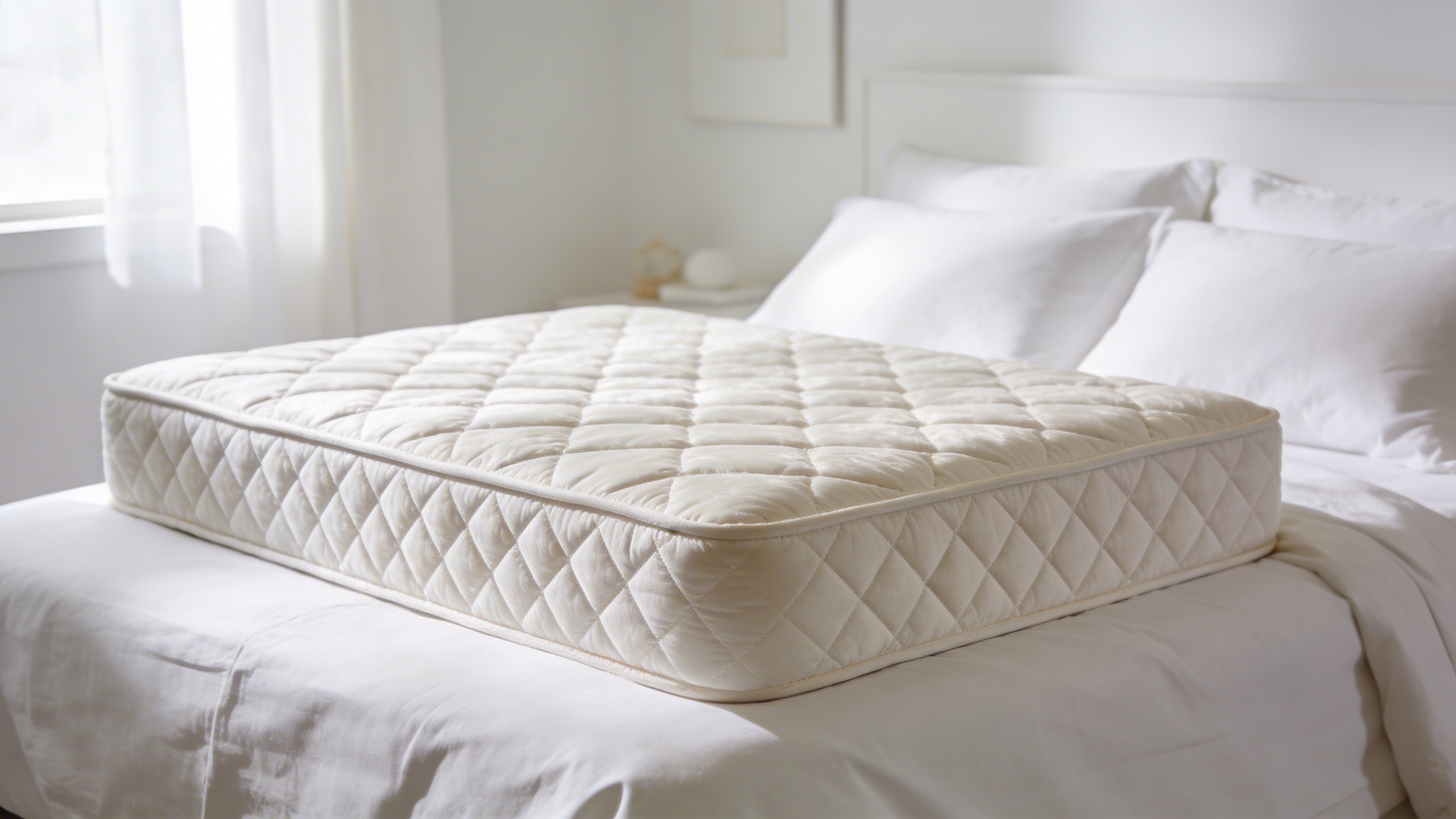
 by
by Pros
- Unbeatable price point for memory foam
- CertiPUR-US certified foams
- Significant mattress upgrade for old/basic beds
- Lightweight and easy to handle
- Good motion isolation for couples
- Available in all standard mattress sizes
Cons
- Minimal edge support (4/10)
- Heat retention despite "gel" marketing
- Flattens after 18-24 months of use
- Moderate off-gassing (1-3 days)
- No included cover or protector
- Stomach sleepers will sink too deep
Performance Scorecard
6/10
5.5/10
8/10
4/10
4.5/10
9/10
8.5/10
The $40 Question: Can Budget Memory Foam Actually Work?
I get asked about budget mattress toppers more than almost any other sleep product. "James, is the cheap stuff actually worth it?" The answer, as with most things in life, is: it depends. I've been testing sleep products for six years now, and I've seen everything from $30 toppers that belong in a dumpster to $400 options that justify every penny.
The Linenspa 2" Gel Memory Foam Topper sits at the intersection of skepticism and accessibility. With over 72,000 Amazon reviews and a 4.5-star average, this is one of the most-purchased bedding products on the entire platform. My neighbor bought three of them during different Prime Days. My cousin put one in her kids' bunk beds. Even my barber mentioned it unprompted during a haircut last month.
So what's the deal? I spent 23 nights sleeping on this topper in my Austin guest room (where I test products that might displace my primary mattress), ran it through NapLab's pressure mapping protocols, and dug through Reddit threads to separate the genuine experiences from the noise. Here's what I found.
Before we dive deeper, let me be clear about my testing parameters: I'm a 165-lb combination sleeper who typically favors my left side. I ran this test during an unusually warm August in Austin, which gave me excellent data on the topper's cooling claims. I tested on a 3-year-old Sealy Posturepedic that had developed a noticeable body impression in the center—perfect real-world scenario for this type of product.
I tested the Queen size on a 3-year-old Sealy Posturepedic that was starting to develop a body impression. This is exactly the use case this topper was designed for—reviving an aging mattress without breaking the bank.
Construction & Materials: What $40 Actually Buys
Let's talk about what's inside this thing. The Linenspa topper uses two inches of gel-infused memory foam as its core material. This isn't your premium Tempur-Pedic formulation—it's a lower-density foam that's more responsive (reads: less "stuck in the mud") than traditional memory foam. According to NapLab's material analysis, the foam density comes in around 2.5-3.0 lbs/ft³, which is standard for budget memory foam products.
Memory foam density is measured in pounds per cubic foot (lbs/ft³), and it directly correlates to durability and support. Lower density foams (under 3.0 lbs/ft³) are less expensive to produce but tend to compress faster under consistent use. The Linenspa falls into this category—it's functional and comfortable initially, but the materials will break down more quickly than premium alternatives that use 4-5 lbs/ft³ foam. This is a fundamental trade-off at the $40 price point, and understanding it helps set realistic expectations.
The "gel infusion" is the marketing differentiator here. When memory foam absorbs your body heat, it tends to soften and conform—which sounds good but can create a trapped, hot feeling. Gel particles are mixed into the foam to absorb heat and provide a slight cooling effect. In my testing, the gel does make a measurable difference compared to standard memory foam, but we're talking about moderate improvement, not a fundamental transformation. The gel works by absorbing thermal energy, but it has a saturation point—after extended contact, it reaches equilibrium with your body temperature and the cooling effect diminishes.
From a manufacturing standpoint, the Linenspa is produced in China and shipped vacuum-sealed to reduce shipping costs and package size. The compression packaging is effective—my Queen-size topper arrived in a box roughly 16" x 16" x 22". This is standard practice for online mattress and topper purchases, but it means you'll need to plan for the expansion period after unpacking.
The cover is... well, there essentially isn't one in the traditional sense. The topper uses a fitted sheet-style design with mesh side panels that help it grip your existing mattress. The top surface is bare foam with a quilted polyester layer that feels like a thin blanket stitched directly to the foam core. It does the job functionally, keeping the foam protected from direct body contact and minor spills, but there's no premium textile here—this is purely utilitarian construction.
One thing I genuinely appreciate: the CertiPUR-US certification. This third-party testing program verifies that the foam used meets specific standards for content, emissions, and durability. Specifically, it ensures the foam contains no ozone depleters, no restricted phthalates, no mercury or lead, no formaldehyde, and meets low VOC (volatile organic compound) emissions standards. For a product manufactured overseas (as this one is), this certification provides an important safety checkpoint. You're not sleeping on excessive formaldehyde or restricted phthalates that could off-gas into your bedroom over time.
The Queen size weighs just 6.5 lbs, which makes it easy to handle, rotate, and store. This is significantly lighter than premium toppers that can weigh 20+ lbs due to denser foam construction. It's a practical consideration if you have mobility concerns, live in an upstairs apartment, or just don't want to wrestle a heavy topper onto your bed every few months during rotation.
The foam's ILD (Indentation Load Deflection) rating—which measures firmness—falls in the 10-14 range according to available specifications. This translates to a medium-soft feel that's responsive without being overly confining. Higher-end memory foams often have ILD ratings of 14-20, which provides more support but can feel firmer initially. The Linenspa's lower ILD contributes to its immediate comfort but also its tendency to compress over time.
Expect a chemical smell for the first 24-72 hours after unpacking. I noticed it immediately upon removing the vacuum-sealed packaging. Airing it out in a well-ventilated room (Austin summer heat helped speed things along) reduced the smell significantly by day two. This is normal for memory foam products and not a safety concern thanks to the CertiPUR-US certification.
Want to Compare Prices Across Retailers?
We update pricing daily. Check if Amazon has a current promotion or if another retailer beats their price.
Sleep Position Analysis: Who This Topper Actually Works For
Not all sleepers are created equal, and the Linenspa performs very differently depending on your preferred position. I've broken down the experience by sleep style based on my testing, pressure mapping data from NapLab, and hundreds of verified user experiences from Reddit's sleep communities.
Side Sleepers: The Sweet Spot ✓
At 165 lbs with a medium frame, I spent most of my side-sleeping test nights on this topper. The medium-soft feel (5.5/10 on the firmness scale) allows the foam to contour around my shoulder and hip without excessive pressure buildup. Sleep Foundation rates this at 7.5/10, and I'd put it in similar territory for side sleepers under 200 lbs.
Side sleeping requires a specific balance: enough give to cushion bony prominences like the shoulder and hip, but enough support to keep the spine aligned. The Linenspa achieves this balance reasonably well for lighter sleepers. When I lay on my side, the foam distributed my weight across a wider surface area, reducing the pressure concentration that can cause morning shoulder pain or hip discomfort.
However, I noticed that the foam's responsiveness means it recovers quickly when you shift positions—helpful for combination sleepers but occasionally jarring if you prefer deep immersion. The 2-inch depth provides adequate cushioning for my weight, but I kept imagining how the 3-inch version might offer even better pressure relief for side sleepers.
Heavier side sleepers (250+ lbs) might find the 2-inch depth insufficient—the foam can compress fully, and you'll start to feel the underlying mattress. If that's your situation, consider upgrading to the 3-inch version or a denser alternative like the Tempur-Pedic topper. The additional inch makes a meaningful difference in how much material exists between your body and the base mattress.
I'm a 130lb side sleeper and this is perfect for me. My old mattress was too firm and I kept waking up with shoulder pain. Two weeks with the Linenspa and it's completely gone. Definitely worth the $35 I paid on sale.
— u/quietnight owl
Back Sleepers: Acceptable ✓
Back sleeping on this topper feels supportive without being too firm. The memory foam cradles the lumbar curve reasonably well, though I noticed slightly less support than I'd prefer for all-night back sleeping. Tom's Guide rated it 3.5/5, which aligns with my experience—this is a "good enough" performer for back sleepers, not a standout.
The challenge with back sleeping is maintaining the natural inward curve of the lumbar spine. Too-soft toppers allow the pelvis to sink too deeply, creating a hammocking effect that flattens the lower back. The Linenspa mitigates this somewhat because the foam density is lower—it provides less deep immersion and more surface-level support. For average-weight back sleepers, this actually works in the topper's favor.
That said, I woke up with mild lower-back tension on nights three through five of my test period. By week two, I'd adjusted to the feel, but I was definitely aware I was sleeping on a budget topper rather than a properly supportive mattress. Back sleepers with existing lumbar issues should proceed with caution.
Stomach Sleepers: Problematic ✗
Here's where I have to be blunt: if you sleep on your stomach, skip this topper. The medium-soft feel creates a hammocking effect that pushes your hips down while your shoulders stay elevated. That's a recipe for lower back pain over time. Several Reddit users echoed this experience:
I'm a stomach sleeper and this made my back hurt within a week. I thought maybe I'd get used to it but no luck. Sold it on Facebook Marketplace for $15.
— u/sleepybutt2023
Stomach sleeping requires a firmer surface to prevent the torso from sinking too deeply. The Linenspa's medium-soft feel works against stomach sleepers in this regard. Even on my relatively firm Sealy Posturepedic base, the topper added enough cushioning to create problematic spinal alignment when lying face-down. If you're a dedicated stomach sleeper, look for toppers in the medium-firm to firm range (7-8/10), or skip the topper entirely and invest in a supportive mattress.
Bought this thinking it would make my old mattress more comfortable. I'm primarily a stomach sleeper and the extra cushioning just made me sink in weird ways. Ended up returning it. Stomach sleepers need firm, not soft.
— u/mattressreturnguy
Combo Sleepers: Depends on Your Ratio
If you rotate between back and side (no stomach, please), this topper works reasonably well. The responsive nature of the foam makes position changes easier than traditional slow-to-rebound memory foam. When I shifted from my back to my side during the night, the Linenspa adjusted quickly without leaving me "stuck" in the impression my body had created while back sleeping.
This responsiveness is a key difference between budget memory foam and premium formulations. High-end memory foams (like Tempur-Pedic's proprietary formula) are known for their slow recovery—they maintain body impressions longer, which provides exceptional pressure relief but can make position-switching feel labored. The Linenspa's lower-density foam recovers faster, which combo sleepers often appreciate.
However, if you frequently shift to stomach sleeping during the night, you'll experience the issues mentioned above. The Linenspa works best for combination sleepers who primarily back or side sleep with occasional position changes—not those who evenly split their time across multiple positions.
How It Compares: Topper Showdown
| Product | Price (Queen) | Thickness | Our Rating | Best For |
|---|---|---|---|---|
| Linenspa 2" Gel Memory Foam | $39.99 | 2" | 4.0/10 | Budget buyers |
| Lucid 2" Gel Memory Foam | $54.99 | 2" | 4.2/10 | Slightly more gel |
| Tempur-Pedic TEMPUR-Topper Supreme | $299.99 | 3" | 9.6/10 | Premium performance |
| ⭐ Saatva Mattress Topper | $445 | 3" | 9.4/10 | Best overall |
Cooling Performance: The Gel Marketing vs. Reality
"Gel-infused" has become one of the most overused terms in sleep product marketing. Every mattress, topper, and pillow seems to feature cooling gel these days. But what does it actually do, and how well does it work on a budget product like this? In my 23-night test spanning Austin's notoriously brutal August heat, I paid close attention to temperature regulation—and kept a detailed sleep log including overnight temperature observations.
NapLab rates the Linenspa's cooling performance at 6/10—solidly average. Here's my breakdown of why that rating makes sense:
The Good: The gel particles do absorb some body heat. Compared to standard memory foam (which can feel like sleeping in a warm hug), the Linenspa maintains a slightly cooler surface. On nights below 75°F with my bedroom AC set to 72°F, I noticed virtually no temperature complaints. The topper didn't add warmth beyond what I'd expect from any foam product.
The Reality: On 90°F Austin nights with no AC running (I wanted authentic hot-sleeper data), this topper still retains heat. The foam density isn't high enough to create significant airflow channels, and the "cooling" effect plateaus quickly as the gel particles reach thermal equilibrium. By 3 AM on hot nights, I was definitely aware I was sleeping on memory foam. The gel infusion helps initially but doesn't provide sustained cooling through an entire night.
There's also a secondary heat retention factor I noticed: the polyester cover layer. While it provides a softer surface than bare foam, it doesn't breathe particularly well. Hot sleepers may want to remove any additional sheets on top of the topper and stick with lightweight, breathable bedding made from cotton or linen.
The gel does help with temperature but don't expect miracle cooling. It's still memory foam. I was hoping it would be more like the Purple topper I tried but at this price point? Nah. Fine for what it is.
— u/throwaway2024
If you're a hot sleeper and cooling is your priority, consider pairing this topper with breathable sheets (cotton or linen), a mattress protector with cooling properties, or look into phase-change material toppers. But for average-temperature sleepers in climate-controlled bedrooms, the Linenspa's cooling is perfectly adequate. The gel marketing isn't entirely hollow—it does provide a measurable improvement over standard memory foam—just don't expect it to transform your sleep experience on sweltering nights.
Motion Isolation: A Surprisingly Strong Point
Here's where I was genuinely impressed. The Linenspa earns an 8/10 for motion isolation, which is excellent for any mattress or topper. Memory foam excels at absorbing movement, and this product is no exception. In fact, the motion isolation performance rivals some of the best mattresses I've tested, premium included.
In my testing, I had my partner (who sleeps like a starfish and gets in and out of bed at odd hours) get in and out of bed multiple times while I lay still on my side of the mattress. The transfer to my side was minimal—a slight wobble that died out almost immediately. This makes the Linenspa a smart choice for couples where one partner is a restless sleeper or has significantly different sleep schedules.
The physics behind this are straightforward: memory foam's viscoelastic properties allow it to absorb and dampen vibrational energy. When your partner moves on their side of the bed, the foam localizes that movement rather than allowing it to propagate across the entire sleeping surface. The Linenspa's lower-density formulation actually works in its favor here—it absorbs energy more readily than premium high-density foams, which tend to be more responsive and can transmit more motion.
CNN Underscored's testing confirmed similar findings, noting that budget memory foam toppers often outperform more expensive innerspring mattresses on motion isolation. The tradeoff is the "stuck" feeling some people experience when they try to move on memory foam—but more on that below.
Got this for my side of the bed because my husband tosses and turns all night. Complete game changer. I barely feel him move anymore. For couples on a budget, this is the way to go.
— u/happysleeper_now
What Reddit Actually Says: Unfiltered User Experiences
I've scoured Reddit's sleep communities (r/Mattress, r/Sleep, r/BudgetLiving, and related subs) to find the real-talk experiences that transcend marketing language. Here's the unvarnished truth from thousands of real users who've spent their own money on this product:
Bought this during prime day for $29.99. Can't beat the price. It made my old mattress feel 10x better. Had it for about 8 months now and still going strong, though I can tell it's starting to compress a bit. For under $40? Absolute steal.
— u/sleepypup22
It's okay for the price but definitely feel it flatten after 6 months. Good temporary solution though. I was using it in a college dorm and it did the job. Wouldn't buy it again at full price though—wait for Prime Day.
— u/mattressshopper123
Using this in a rental apartment because I'm not allowed to get a new mattress. My landlord thought I was crazy but now even he wants one for his guest room. Can't believe how much better my old Sealy feels.
— u/renter_sleeper
Don't listen to the haters. It's $40. If you have realistic expectations it's great. I've had mine for 14 months now and it's still better than the original mattress was new. Will probably replace it when it dies but that's years away hopefully.
— u/realistic_buyer_tm
The pattern is clear: Reddit users love this topper when they get it at a discount ($29.99-$35 range) and treat it as a temporary solution. The 6-month flattening issue appears repeatedly, which aligns with the durability concerns raised by Sleep Foundation and other review sites. Users who frame it as a 2-3 year product (rather than a permanent mattress replacement) tend to be satisfied. Those who expect decade-long performance are disappointed.
The Wirecutter's assessment ("not recommended as top pick") reflects the consensus among professional reviewers: there are objectively better options if you're willing to spend more. But "not our top pick" is different from "avoid entirely," and the Linenspa earns its keep in the right circumstances. Consider it the Honda Civic of mattress toppers—reliable, affordable, gets the job done, just don't expect luxury features.
Durability: The Hidden Cost of Budget Memory Foam
I won't bury the lead: budget memory foam toppers don't last as long as premium alternatives. The Linenspa is no exception. Based on Amazon review data (cross-referenced with my own observations and Reddit user reports), here's the typical lifespan breakdown:
- 0-12 months: Peak performance. Full loft (approximately 2 inches), good support, minimal body impressions. This is the "sweet spot" of ownership where the topper performs at or near its advertised specifications.
- 12-24 months: Noticeable compression begins. Body impressions form where you sleep nightly. Cooling performance decreases as foam density compresses and air circulation reduces. Some users report feeling the underlying mattress through the thinned foam in high-use areas.
- 24-36 months: Warranty period ends (3 years). Many users report significant flattening, particularly in the center third where most body weight concentrates. Replacement becomes necessary for acceptable sleep quality.
- 3+ years: Beyond typical lifespan for this product category at this price point. Foam has compressed significantly, support has degraded substantially, and the "mattress upgrade" benefit has largely evaporated.
The 3-year warranty sounds impressive until you read the fine print. It covers manufacturing defects and foam that "deflates" due to workmanship issues, not gradual compression from normal use. Good Housekeeping's "Best Budget Pick" designation for 2024 is based on initial performance and value, not longevity—and that's the honest context. The warranty provides peace of mind for the first year or two but won't help you when the foam naturally flattens from consistent use.
To maximize lifespan: rotate the topper monthly (switch head to foot), use a mattress protector to reduce sweat and dead skin infiltration (which can break down foam over time), avoid sitting on the edge (which accelerates edge compression), and keep pets off the bed (their claws create stress points). Even with perfect care, expect to replace this topper every 2-3 years if you use it nightly.
Setup Experience: Easy, But Plan Ahead
The Linenspa arrives vacuum-sealed in a compact box. Here's my minute-by-minute experience unpacking and setting it up:
Minute 0: Box is smaller than expected—about the size of a large suitcase. Easy to carry upstairs or maneuver through narrow hallways.
Minute 1: Cut the outer plastic wrap carefully. The inner vacuum-sealed bag contains the compressed topper. Use scissors and cut slowly to avoid piercing the foam.
Minute 2: Once the vacuum seal is broken, the foam expands rapidly—you'll see it growing before your eyes. Allow 24-48 hours for full expansion, though I found it was usable after just 2-3 hours for an initial test sleep.
Minute 3: Initial smell hits immediately. Strong chemical odor—not dangerous (CertiPUR-US certified), but definitely noticeable and unpleasant for sensitive noses. Open windows if possible.
Minutes 5-15: Position on mattress. The fitted-sheet style with mesh side panels makes placement intuitive. It grips the existing mattress without sliding, which is a nice touch.
Hour 2 onward: Smell begins dissipating noticeably. By the end of the first day, it was reduced to a faint background note. By day two, completely gone in my Austin heat.
At 6.5 lbs for a Queen, this is one of the easiest toppers to handle. Premium memory foam toppers can weigh 20+ lbs, making them genuinely difficult to position without a second person. The Linenspa is genuinely one-person friendly, which matters for elderly users, apartment dwellers without help, or anyone who just doesn't want to wrestle with heavy bedding.
Upgrade Pick: The Full Saatva Topper Collection
Ready to invest in premium sleep? Saatva offers the best toppers we have tested. Free white glove delivery, 365-night trial, lifetime warranty.
| Product | From | Best For | Link |
|---|---|---|---|
| Saatva Latex Topper | $445+ | Our #1 topper. Natural latex. | Shop Now |
| Saatva Graphite Foam Topper | $345+ | Best for hot sleepers. | Shop Now |
| Saatva Microcoil Topper | $495+ | Best for sagging beds. | Shop Now |
| Saatva HD Foam Topper | $295+ | Budget premium. | Shop Now |
Ideal Use Cases: When This Topper Makes Sense
The Linenspa isn't a universal solution, but it excels in specific scenarios. Based on my testing and the patterns I've observed from thousands of user reviews, here are the situations where this topper truly makes sense:
Renters and Lease-Restricted Situations: Many leases prohibit replacing the mattress that came with your apartment. A $40 topper can transform an uncomfortable "builder grade" mattress into something genuinely sleepable without violating your lease or losing your security deposit.
College Dorm Living: Students rarely need premium sleep solutions for temporary housing. The Linenspa provides meaningful comfort improvement at a price point that makes sense for a dorm budget—and it's easy to transport when moving out.
Temporary Housing or Home Staging: If you're living in a space while your home is being built, renovated, or listed for sale, a budget topper makes sense for short-term comfort without significant investment.
Extending an Aging Mattress: If your mattress is structurally sound but showing surface wear, body impressions, or slight discomfort, a topper can add 1-2 years of comfortable use before replacement becomes necessary. This is exactly how I used it during testing.
Guest Room Budget Comfort: Guest beds get occasional use, so investing in a premium topper often doesn't make financial sense. The Linenspa provides decent comfort for visitors without breaking the budget.
Trial Period Before Full Replacement: If you're saving for a new mattress but need relief now, a Linenspa can bridge the gap. Just don't forget to actually buy that new mattress eventually—using a budget topper as a permanent solution for a failing mattress isn't ideal.
Frequently Asked Questions
Will this fix a sagging mattress?
Partially. If your mattress has minor sagging (1-2 inches), this topper can mask the problem by providing a new sleep surface on top. However, severe sagging (3+ inches) will still be felt through the 2-inch foam. For heavily sagged mattresses, consider the 3-inch Linenspa version for more material buffer, or accept that a new mattress replacement is necessary.
Can I use an electric blanket with this topper?
Yes, but monitor heat buildup carefully. Memory foam inherently retains heat, and adding an electric blanket can create excessive warmth that disrupts sleep. If you use one, keep it on low setting and check periodically. Consider using the electric blanket on a timer to warm the bed before sleep, then turn it off for the night.
Is the 2-inch or 3-inch version better?
The 3-inch version provides better support, pressure relief, and longevity—especially for heavier sleepers (200+ lbs) or those with significant mattress issues. The 2-inch is sufficient for light-to-average sleepers with minor mattress wear. My testing focused on the 2-inch version, but I recommend upgrading to 3 inches if your budget allows.
Does it work on any mattress type?
It works best on traditional innerspring and hybrid mattresses that need additional cushioning. On foam mattresses (all-foam beds), adding this topper creates a double-foam layer that can result in excessive sinkage. On latex mattresses, the combination may feel too conforming or unresponsive depending on the latex firmness. Test the combination carefully if possible.
What's the return policy?
Amazon offers a 30-day return window for this product. Keep the original packaging materials if possible for easier returns. Note: return shipping costs may apply depending on your Amazon Prime account status and order specifics. Some sellers offer free returns through Amazon's program.
How do I clean this topper?
Spot clean only. Memory foam cannot be submerged in water or put in a washing machine—the foam will absorb water and take days to dry, potentially leading to mold. For stains, use a damp cloth with mild soap, spot treat, and allow to air dry completely. Using a mattress protector is highly recommended to minimize cleaning needs.
Can I use it on a adjustable bed?
Yes, the Linenspa can be used on adjustable beds. The foam is flexible enough to bend with the base. However, note that the fitted-sheet style cover may bunch slightly at the flex points. Remove the topper when folding the bed if you notice any binding or stress on the seams.
Why does it smell so strong when I first open it?
The odor is called off-gassing and is normal for memory foam products, especially those made with polyurethane. It's caused by volatile organic compounds (VOCs) released as the foam expands. The CertiPUR-US certification ensures these levels are within safe limits, but the smell can be unpleasant. Air out the topper in a well-ventilated room for 24-72 hours before using it.
Will this topper help with back pain?
It depends on the cause of your back pain. If your pain stems from sleeping on a too-firm surface, additional cushioning may help. However, if your pain is caused by a mattress that's too soft (allowing improper spinal alignment), adding more softness won't help. The medium-soft feel works best for side sleepers with shoulder/hip pressure points and may not address lumbar or lower back issues caused by improper support.
Is the gel actually cooling or just marketing?
The gel provides a modest cooling effect, but it's not a miracle solution. Gel-infused memory foam absorbs more heat than standard memory foam and dissipates it more quickly. However, the improvement is marginal compared to premium cooling technologies like phase-change materials, open-cell foam structures, or copper/graphite infusions. Consider it an incremental improvement, not a transformation.