
 by
by Our #1 Recommended Mattress
Last Updated: July 2026 — Content reviewed and verified by our editorial team.
Saatva Classic. From $1,095
365-night trial · Lifetime warranty · Free white-glove delivery
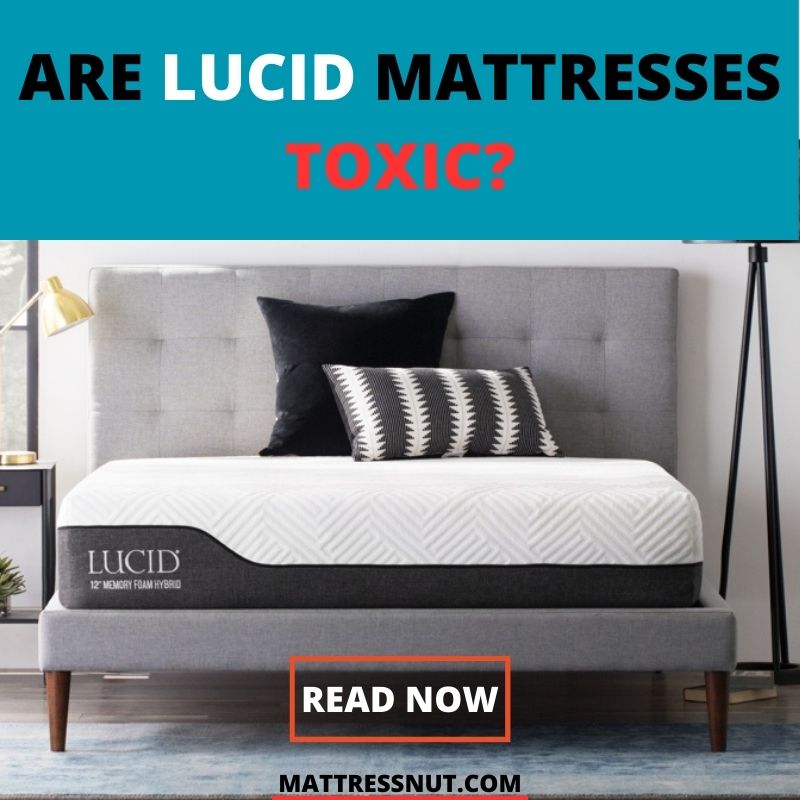
If you've been eyeing a Lucid mattress but wondering whether you're about to bring something harmful into your bedroom, you're asking the right question. The short answer: no, Lucid mattresses are not toxic. But there's nuance worth understanding, off-gassing, certifications, and what those foam layers actually contain all factor into whether a mattress is truly safe for your home.
What Makes a Mattress "Toxic", and What Doesn't
The word "toxic" gets thrown around a lot in mattress marketing, usually to sell you something pricier. In reality, mattress toxicity concerns fall into a few specific categories: volatile organic compounds (VOCs) from foam off-gassing, flame retardant chemicals, heavy metals, and ozone-depleting substances. A mattress that checks out on all four fronts is about as safe as it gets.
Lucid addresses all of these through third-party certification, specifically CertiPUR-US, which is the most relevant standard for foam mattresses sold in the United States.
Lucid's Certifications Explained
CertiPUR-US: What It Actually Means
Every Lucid foam mattress uses CertiPUR-US certified foam. This certification, run by a nonprofit program, tests polyurethane foam for a specific list of restricted substances. CertiPUR-US certified foam must NOT contain: ozone depleters, PBDE flame retardants, TDCPP or TCEP flame retardants, mercury, lead and other heavy metals, formaldehyde, or phthalates regulated by the Consumer Product Safety Commission. It also requires that foam emit less than 0.5 parts per million total VOCs, keeping off-gassing within safe indoor air quality thresholds.
The certification is not self-reported. Foam is tested by accredited third-party labs on a regular basis, and manufacturers must re-certify to maintain the designation. This is meaningful, it means what you read on the label has been independently verified.
Oeko-Tex Standard 100
Oeko-Tex Standard 100 tests every component of a product, not just the foam, for harmful substances. This includes cover fabrics, thread, adhesives, and fire barriers. It checks for over 100 substances including pesticides, pH levels, colorfast dyes, and allergenic substances. Lucid does not currently hold Oeko-Tex certification, which means their fabric components and cover materials haven't been independently tested to the same standard as their foam.
Greenguard Gold
Greenguard Gold is the certification designed specifically for products used in environments with children and sensitive individuals, schools, hospitals, and homes with young kids. It sets strict limits on total VOC emissions and over 360 individual chemical emissions. Lucid does not currently hold Greenguard Gold certification. This is relevant specifically for parents buying mattresses for young children's bedrooms.
What's Actually Inside a Lucid Mattress
Gel Memory Foam Models
Lucid's most popular line. Gel is infused into the memory foam to improve temperature regulation, the gel beads or swirls are embedded during the foam manufacturing process, not added afterward. All Lucid gel foam is CertiPUR-US certified, meaning the gel itself is part of the tested product. The gel addition doesn't introduce new chemical concerns beyond what's already covered by the certification.
Hybrid Mattresses
Lucid hybrid models combine individually wrapped coils with foam comfort layers. The coil system itself is steel, an inert material with no off-gassing concerns. The foam layers above the coils are CertiPUR-US certified. The cover fabric is typically a polyester blend. Hybrids tend to off-gas less intensely than all-foam models because there's simply less foam volume to release VOCs.
Latex Mattresses
Lucid offers both natural and blended latex options. Natural latex, derived from rubber tree sap, is one of the most inherently low-toxicity mattress materials available, it doesn't require the same chemical processing as polyurethane foam. Blended latex combines natural and synthetic latex. If you have a latex allergy, avoid these models entirely regardless of certification.
Bamboo Charcoal Foam
Some Lucid models infuse bamboo charcoal into the foam. Charcoal acts as an odor absorber, which can actually reduce the perceived intensity of off-gassing during the initial break-in period. It's a feature, not a concern. These models are still CertiPUR-US certified.
Off-Gassing: What It Is and What to Expect
Off-gassing is the release of VOCs from foam as it expands after being compressed for shipping. It produces the "new mattress smell", sometimes described as chemical or plastic-like. Almost all foam mattresses off-gas to some degree, and Lucid is no exception. The question isn't whether off-gassing happens, but whether the VOC levels are within safe ranges. With CertiPUR-US certified foam, they are.
How Long Does Lucid Off-Gassing Last?
For most Lucid mattresses, 24 to 72 hours is the typical window for the smell to dissipate. Some people notice nothing after a few hours in a well-ventilated room; others with sensitivity to chemical smells may want a full 3-day airing period before sleeping on the mattress. Thicker, denser all-foam models can take slightly longer than hybrid models.
How to Minimize Off-Gassing
- Unbox in a ventilated room, open windows and run a fan if possible for the first 24 hours
- Give it 24-72 hours before sleeping, air it in a spare bedroom or living area first if you can
- Don't make the bed immediately, keeping sheets off allows VOCs to escape faster from the surface
- Use a mattress protector, adds a layer between you and the foam surface long-term
- Avoid enclosing the mattress, don't put it in a tight platform base without air circulation underneath
People with asthma, chemical sensitivities, or latex allergies (for latex models) should take the airing period seriously. For the general population, VOC levels from CertiPUR-US foam are within safe ranges even on day one.
Looking for a Certified Non-Toxic Mattress?
Saatva Classic uses organic cotton, natural thistle fire retardant, and CertiPUR-US certified foam.
Flame Retardants: The Real Concern Behind the Question
When people ask about mattress toxicity, they're often really asking about flame retardants. Federal law (16 CFR Part 1633) requires mattresses sold in the U.S. to pass an open-flame test. Manufacturers meet this requirement in different ways:
- Chemical FR treatments, applied to the cover or foam; historically included PBDEs (now banned) and other compounds with health concerns
- Natural FR barriers, wool, thistle, silica fibers, or rayon/silica blends that act as fire barriers without added chemicals
- FR-free foam certification. CertiPUR-US certifies that foam is free of specific harmful FR chemicals
Lucid uses CertiPUR-US certified foam, which by definition excludes the most harmful flame retardant chemicals: PBDEs, TDCPP, and TCEP. Lucid doesn't publicly disclose exactly which FR method they use in their mattress covers, this is common across budget mattress brands. What they do confirm is that the foam layers are CertiPUR-US certified. The absence of full FR transparency doesn't mean their products are dangerous; it does mean buyers who want complete disclosure should factor that in.
Lucid vs. Other Budget Foam Mattresses on Safety
Compared to other brands in the same price tier, Lucid lands on the better end of the safety spectrum. CertiPUR-US certification requires third-party testing, that's more than many no-name imported foam mattresses offer. Some ultra-cheap mattresses sold online lack any third-party certification; Lucid is not in that category.
Where Lucid falls short of premium safety-focused brands is the absence of Oeko-Tex or Greenguard Gold certification. These standards cover components beyond just the foam, including cover fabrics, adhesives, and fire barriers. Lucid's CertiPUR-US certification applies specifically to the foam layers, not the whole mattress system.
Who Should Be Most Careful
For most adults, a Lucid mattress presents no meaningful toxicity risk. A few groups should think more carefully:
- Infants and young children, children's bedrooms ideally use mattresses with Greenguard Gold certification, which sets stricter emission standards for sensitive environments; Lucid doesn't currently hold this
- People with chemical sensitivities or MCS, the airing period is essential; some may prefer a natural latex or certified organic mattress
- Latex allergy sufferers, avoid Lucid's latex models entirely; stick to foam or hybrid options
- Asthma or respiratory conditions, air the mattress thoroughly before use and maintain good bedroom ventilation long-term
Related Guides
Frequently Asked Questions
Are Lucid mattresses CertiPUR-US certified?
Yes. All Lucid foam mattresses use CertiPUR-US certified foam. This certification requires third-party lab testing and verifies that the foam is free of ozone depleters, harmful flame retardants, heavy metals, formaldehyde, and regulated phthalates, with low VOC emissions below 0.5 ppm.
How long does the Lucid mattress smell last?
Most people find the off-gassing smell dissipates within 24 to 72 hours. Airing the mattress in a well-ventilated room before putting on sheets speeds up the process significantly. A small number of people with heightened chemical sensitivity may notice a faint smell for up to a week.
Does Lucid use harmful flame retardants?
The foam in Lucid mattresses is CertiPUR-US certified, which excludes the most harmful flame retardant chemicals including PBDEs, TDCPP, and TCEP. Lucid doesn't publicly specify the exact FR method used in their mattress covers, but the foam certification covers the primary chemical concerns most researchers focus on.
Can I sleep on my Lucid mattress right away?
The VOC levels in CertiPUR-US certified foam are within safe ranges from day one, so it's not dangerous to sleep on immediately. If you're sensitive to smells or have respiratory conditions, waiting 24-72 hours with the mattress airing in a ventilated room is the smarter approach. The smell can be unpleasant even when it's not harmful.
Are Lucid mattresses safe for kids?
Lucid mattresses are CertiPUR-US certified, which covers foam safety standards relevant to adults and older children. For infants and toddlers, Greenguard Gold certification is the stricter and more appropriate standard. Lucid doesn't currently hold this. For young children's bedrooms, consider brands that hold both CertiPUR-US and Greenguard Gold certifications.
The Bottom Line
Lucid mattresses are not toxic. The foam is CertiPUR-US certified, third-party tested and verified to be free of the most harmful chemicals associated with foam mattresses. Off-gassing is real but temporary: 24-72 hours of airing handles it for most people. The brand occupies solid middle ground: better certified than uncertified import mattresses, not as extensively certified as premium safety-focused brands with Oeko-Tex and Greenguard Gold. For most adult sleepers buying in Lucid's price range, that's a reasonable tradeoff. For parents buying for very young children or anyone with heightened chemical sensitivity, a mattress with broader certification coverage is worth the extra cost.
Looking for a Certified Non-Toxic Mattress?
Saatva Classic uses organic cotton, natural thistle fire retardant, and CertiPUR-US certified foam.