
 by
by Our #1 Recommended Mattress
Saatva Classic. From $1,095
365-night trial · Lifetime warranty · Free white-glove delivery
We earn a commission if you make a purchase through our links, at no extra cost to you. Full disclosure.
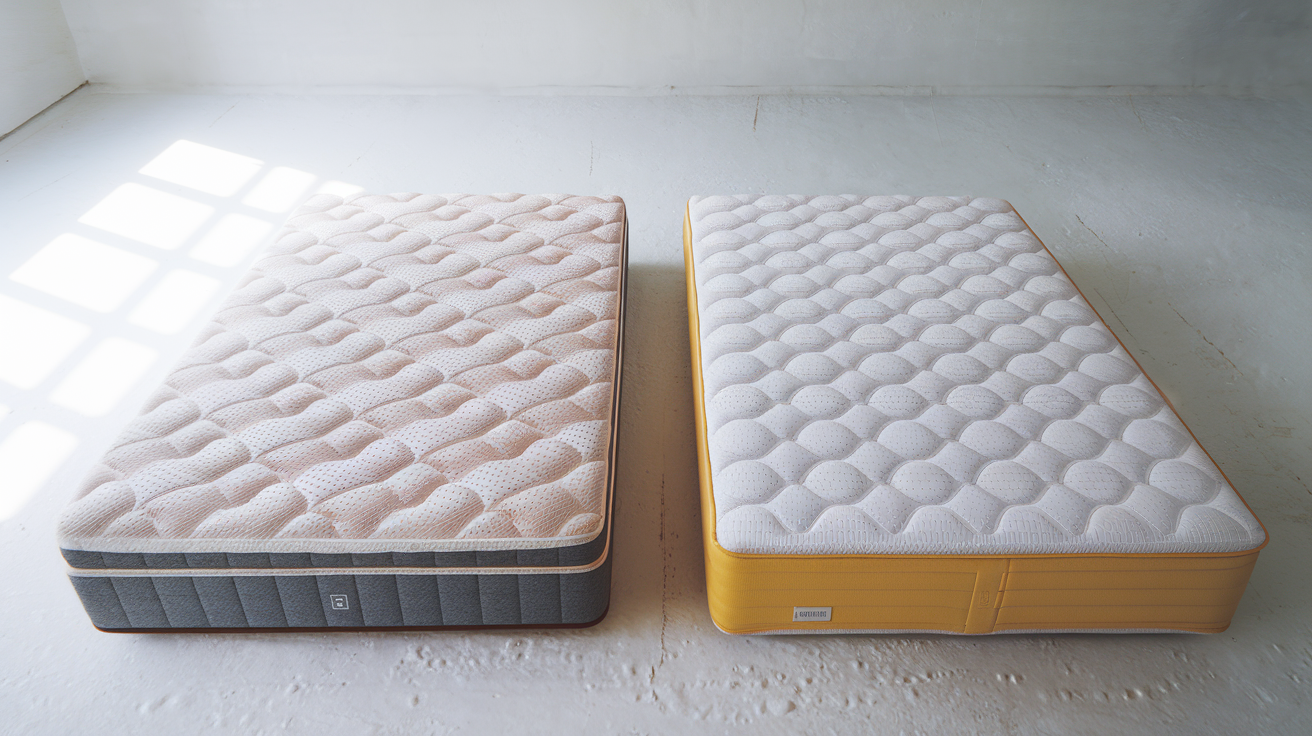
Lull vs Leesa. Mid-Range Foam Mattresses Compared
Lull and Leesa are both popular foam mattresses that compete for the attention of mainstream online shoppers. They share a similar all-foam construction but differ in feel, pricing, and brand positioning.
Leesa uses a proprietary foam blend with a responsive top layer that sets it apart from traditional memory foam mattresses. The feel is balanced, supportive yet pressure-relieving, and the mattress adapts well to different sleep positions. Its zoned construction provides firmer support where your body needs it most.
Lull opts for a more conventional layered memory foam design. The gel-infused top layer offers solid contouring, and the overall feel is medium, which works for most sleepers. It is a no-frills mattress that does the basics well without any standout innovations.
Lull has a pricing advantage, with a Queen often available around $800. Leesa's Queen sits near $1,099. However, Lull also offers a 365-night trial versus Leesa's 100 nights, giving you significantly more time to evaluate the mattress in your own home.
Both mattresses handle motion isolation well, a strength of all-foam designs. Edge support is mediocre in both cases. Leesa has a slight durability advantage thanks to its denser foam construction, but neither mattress is built to last a decade of heavy use.
For a meaningful upgrade in build quality and customer experience, Saatva delivers a luxury hybrid at $1,779 (Queen) with a 365-night trial, lifetime warranty, and free white-glove delivery, services that neither Lull nor Leesa can match.
Leesa: What Buyers Should Know Before Purchasing
Shopping for a Leesa mattress means weighing several factors that reviews alone cannot capture. Here is a practical framework for evaluating this brand against your specific sleep needs.
Questions to Ask Before Buying
- What is the trial period? Check whether the retailer or brand offers a risk-free trial. Anything under 100 nights limits your ability to properly evaluate comfort through different seasons and sleep cycles.
- What does the warranty actually cover? Read the fine print on sagging thresholds, stain exclusions, and foundation requirements. A warranty that sounds generous on paper may be difficult to claim in practice.
- How is the mattress delivered? Bed-in-a-box delivery means self-setup and potential off-gassing. White-glove delivery includes professional setup and old mattress removal.
- What do long-term owners say? Filter reviews by 1-year and 2-year owners. Initial comfort impressions often differ from long-term satisfaction.
How Leesa Compares on Key Metrics
Every mattress purchase involves trade-offs. Leesa may excel in certain areas while falling short in others. The most important factors for long-term satisfaction are durability (will it maintain support beyond year 3?), temperature regulation (will you sleep hot?), and purchase protections (can you return it hassle-free if it does not work?).
The Saatva Classic at $1,779 for a Queen benchmarks well on all three: coil-on-coil construction for proven durability, open coil airflow for cooling, and a 365-night home trial with free white-glove delivery and lifetime warranty. Use it as a reference point when evaluating any mattress in this category.
I've spent a lot of time testing budget-friendly foam mattresses, and two names keep popping up in my inbox: Lull and Leesa. Both are bed-in-a-box options that promise solid sleep at a reasonable price. But they're not the same mattress, and the differences matter more than you'd think.
So here's the deal. The Lull Original (around $779 for a queen) and the Leesa Original (around $1,099 for a queen at regular sale pricing) are both all-foam mattresses targeting the mid-range market. They look similar on paper. In practice? They feel pretty different. And honestly, after comparing them head to head, I think there's a third option worth your attention.
Let me break it all down so you can make the right call.
Lull vs Leesa: Quick Comparison Table
| Feature | Lull Original | Leesa Original |
|---|---|---|
| Price (Queen) | ~$779 | ~$1,099 |
| Type | All-foam (memory foam top) | All-foam (polyfoam top) |
| Height | 10 inches | 10 inches |
| Firmness | 7/10 (medium-firm) | 6.5/10 (medium) |
| Trial Period | 365 nights | 120 nights |
| Warranty | Lifetime (limited) | Lifetime (limited, prorated after 10 yrs) |
| Cooling | Gel-infused foam | Aerated polyfoam top |
| Delivery | Free shipping, bed-in-a-box | Free shipping, bed-in-a-box |
| Best For | Back sleepers, budget buyers | Side sleepers, combination sleepers |
Firmness and Feel
This is where the two mattresses really split. The Lull Original has memory foam right on top, so when you lie down, you get that slow, contouring sink. It rates about a 7 out of 10 on the firmness scale - medium-firm territory. Back sleepers and stomach sleepers tend to like it. There's decent support through the midsection, and you don't feel like you're sinking into quicksand.
The Leesa Original takes a different approach. Its top layer is an aerated polyfoam (not memory foam), with memory foam tucked underneath in the second layer. The result is a slightly softer mattress - around 6.5 out of 10 - with a more responsive, bouncy feel. Side sleepers usually prefer it because there's better pressure relief at the shoulders and hips.
But here's the thing. Neither mattress offers much in the way of firmness options. You get one firmness level, period. If it doesn't work for you, you're stuck returning it.
Cooling Performance
Neither of these mattresses will win awards for temperature regulation. That's just the reality of all-foam beds. But there is a noticeable difference between them.
The Lull Original puts memory foam right against your body. Memory foam is great for contouring, but it's also notorious for trapping heat. Lull tries to offset this with a gel-infused cooling layer underneath, and it helps - somewhat. If you're a naturally hot sleeper, though, you'll probably still wake up warm.
The Leesa Original does better here. Its top layer is an aerated polyfoam with small holes punched through it for airflow. It doesn't sleep truly cool, but it sleeps cooler than the Lull. The memory foam is buried in the second layer where it doesn't make direct contact with your body, which helps too.
That said, if cooling is a priority for you, neither foam mattress can match what a hybrid with innerspring coils can do. Coils create natural airflow channels that foam simply can't replicate. For a deeper look at cooling options, check out our guide to the best cooling mattress systems.
Price and Value
On price alone, the Lull wins. At around $779 for a queen, it's one of the more affordable memory foam mattresses out there. The Leesa Original queen runs about $1,099 at its typical sale price (retail is $1,332, but Leesa runs sales constantly). Both brands offer frequent promotions, especially around major holidays, so the prices you see today might shift by the time you're ready to buy.
So is the Leesa worth $300 more? Honestly, it depends on what you value. The Leesa has a slightly more refined feel and sleeps a bit cooler. But the Lull gives you a longer trial period (365 nights vs. 120 nights) and a lower entry price. For budget shoppers who primarily sleep on their back, the Lull is hard to beat.
Both mattresses ship free in a compressed box. Neither offers White Glove delivery or old mattress removal - you're on your own for setup and disposal. That means unboxing, waiting for it to expand, and figuring out what to do with your old mattress. That's pretty standard for bed-in-a-box brands, but it's worth mentioning because it's not standard everywhere.
Durability and Longevity
Here's where I have to be straightforward with you. All-foam mattresses don't last as long as hybrids or innerspring beds. Period. Both the Lull and Leesa are expected to last about 6 to 7 years before you start noticing body impressions, sagging, or reduced support.
The Leesa might have a slight edge in durability thanks to its denser base foam, but we're talking months, not years. Both mattresses carry lifetime warranties, which sounds great until you read the fine print. Leesa's warranty becomes prorated after year 10, meaning you'll pay a chunk of the replacement cost.
If longevity matters to you - and it should, since a mattress is a long-term investment - it's worth looking at mattresses with innerspring support systems. They tend to maintain their shape and support for 10 years or more. Our Saatva mattress review covers one of the best examples in detail.
Edge Support
And now the category where both mattresses fall flat. Literally.
All-foam mattresses generally struggle with edge support, and the Lull and Leesa are no exception. Sit on the edge of either bed and you'll feel the foam compress significantly under your weight. It's not a dealbreaker if you sleep in the center of your mattress. But for couples who use every inch of the sleeping surface, weak edges can feel like you're about to roll off. This also makes it harder to get in and out of bed, especially for older sleepers or anyone with mobility concerns.
The Lull is slightly better here because it's firmer overall, but neither bed offers the kind of reinforced perimeter you'd get from a mattress with a steel coil system. For more on how edge support compares across brands, see our GhostBed vs Saatva comparison.
Our Top Mattress Pick
| Saatva Classic | $1,395+ | Shop |
| Saatva Contour5 | $1,595+ | Shop |
| Saatva Zenhaven | $1,895+ | Shop |
The Better Alternative: Why I'd Pick the Saatva Classic
Look, the Lull and Leesa are fine mattresses for the money. But after testing dozens of beds, I keep coming back to the same final thoughts: most people would sleep better on a well-built hybrid than on an all-foam mattress. And the Saatva Classic is one of the best hybrids you can buy.
Here's why it's worth the step up (queen price is around $1,853):
- Three firmness levels - Plush Soft, Luxury Firm, and Firm. You're not locked into a single option.
- Coil-on-coil construction - Euro-style pillow top over individually wrapped coils on top of a support coil base. It breathes far better than any foam bed and provides real, lasting support.
- Free White Glove delivery - They deliver it to your room, set it up, and haul away your old mattress. No wrestling with a box.
- 365-night trial - Same generous window as Lull, and far longer than Leesa's 120 nights.
- Lifetime warranty - Full replacement, not prorated.
- Better durability - Innerspring hybrids routinely outlast all-foam beds by 3 to 5 years.
Yes, it costs more upfront. But when you factor in the White Glove delivery (which other brands charge $100+ for), the longer lifespan, and the fact that you won't need to replace it as soon, the cost per year of sleep is actually competitive. For the full breakdown on returns and trials, read our Saatva return policy guide.
The Bottom Line
If your budget is tight and you want a simple foam bed, the Lull Original is the better value at $779 with a full-year trial. The Leesa Original is a solid pick for side sleepers who want a softer feel and slightly better cooling, but it costs more and gives you less time to decide.
But if you can stretch your budget, the Saatva Classic outperforms both in cooling, edge support, durability, and overall sleep quality. It's the mattress I'd recommend to anyone who wants something that'll actually last. Sometimes spending a bit more now saves you from buying a replacement in five years.
- Mattress Finder Quiz - Find your perfect mattress in 60 seconds
- Mattress Size Guide - Visual size comparison and room requirements
- Mattress Age Calculator - Should you replace your mattress?
- Return Policy Comparison - 20 brands compared