
 by
by Our Top Mattress Pick for Better Sleep
The Saatva Mattress combines pressure relief with spinal support — the two factors that matter most for deep, restorative sleep cycles.
Affiliate link — we earn a commission at no extra cost to you.
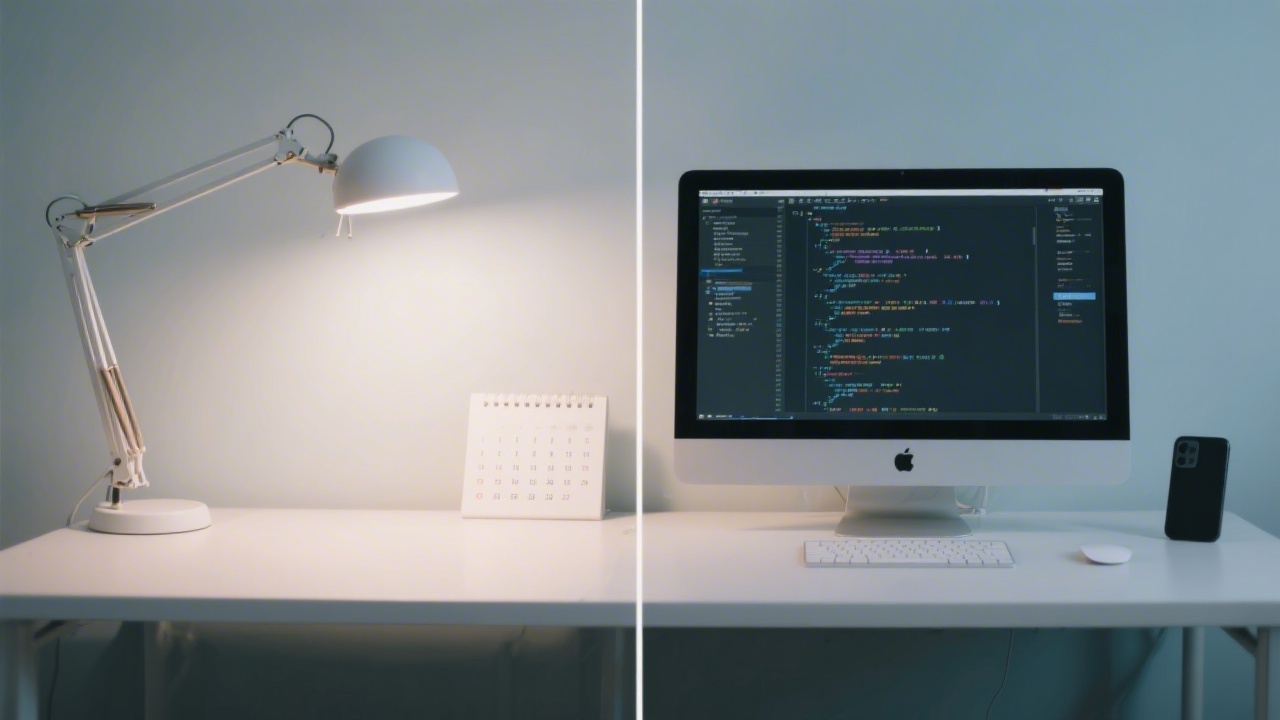
In 2009, Paul Graham published a short essay distinguishing two fundamentally different schedule types: the manager's schedule and the maker's schedule. Managers divide their day into one-hour blocks, meeting to meeting; any free hour is functionally a free unit. Makers — programmers, writers, designers, researchers — need half-day or full-day units to produce meaningful work. A single meeting in the middle of the afternoon destroys a maker's productive block not just for the meeting's duration, but for the entire half-day.
Graham's essay became influential for its insight about schedule architecture. What it doesn't address — but what sleep science fills in — is that maker versus manager schedules require fundamentally different sleep strategies.
Why Makers Need Different Sleep Architecture
Makers depend on entering flow states — the deeply absorbed concentration described by psychologist Mihaly Csikszentmihalyi in which time perception changes and cognitive output increases sharply. Flow states require approximately 15-20 minutes of uninterrupted warm-up to initiate and are immediately disrupted by external interruptions.
The prefrontal resources required to enter and sustain flow are directly dependent on slow-wave sleep (N3), which is concentrated in the first half of the night, and on REM sleep, which builds the cross-domain associative thinking that makers rely on for creative problem-solving. A maker operating on fragmented sleep — fewer than 7 hours, or sleep interrupted by poor sleep hygiene — will find flow states harder to enter, shorter, and less productive.
Managers, by contrast, depend heavily on emotional regulation, interpersonal attunement, and quick context-switching — cognitive functions that are also sleep-dependent but recover somewhat faster after mild sleep restriction than the sustained attention required for flow.
Pros and Cons
What We Like
- Luxury innerspring with excellent lumbar support
- Multiple firmness options available
- Free white-glove delivery and mattress removal
- 365-night trial and lifetime warranty
What Could Be Better
- Higher price than many online brands
- Heavier than foam mattresses
- Not compressed in a box
- Some off-gassing possible initially
Chronotype and Schedule Type Interaction
The maker/manager sleep question intersects critically with chronotype. Many makers — particularly in software, writing, and research — are late chronotypes (owls). Their natural creative peak falls in the late morning or early afternoon, not at 7 AM.
The conventional knowledge-worker schedule (9 AM start) forces late-chronotype makers to fill their biological peak window (10 AM-1 PM) with shallow morning tasks, and to schedule actual deep work after 2 PM when their alertness has already declined. This is a systemic waste of maker capacity.
Graham's schedule framework implicitly supports chronotype alignment: makers should protect their half-day blocks around their peak alertness window, not around conventional office hours. For owl-chronotype makers, this means a later wake time (8-9 AM), a morning creative block (10 AM-1 PM), and a sleep time adjusted accordingly (12-1 AM).
The manager's schedule is more chronotype-neutral because context-switching and brief meetings are less dependent on peak cognitive state than flow work.
Meeting Placement and Pre-Sleep Arousal
One underexamined aspect of the maker/manager distinction is how each schedule type affects pre-sleep arousal. Managers who schedule high-stakes meetings in the late afternoon or evening generate cortisol spikes that can persist for 2-4 hours, directly interfering with sleep onset. Making important decisions or conflict-engaging meetings after 6 PM is sleep-disruptive regardless of total work hours.
Makers who push creative work sessions into the evening face a different problem: deep creative engagement elevates norepinephrine and dopamine levels that can persist for 1-2 hours, producing the "I'm wide awake even though it's midnight" state familiar to programmers and writers who work late. This is not a caffeine problem — it is an activation problem driven by the creative work itself.
Our Top Mattress Pick for Better Sleep
The Saatva Mattress combines pressure relief with spinal support — the two factors that matter most for deep, restorative sleep cycles.
Affiliate link — we earn a commission at no extra cost to you.
The Ideal Sleep Architecture for Makers
For makers with schedule flexibility, the optimal sleep architecture is:
- Fixed wake time aligned with chronotype peak minus 60-90 minutes (to allow for morning routines before the creative block)
- Total sleep: 7.5-9 hours, protected as a maker protects their half-day block — non-negotiable, not fragmentable
- Pre-sleep buffer: 60 minutes minimum between last deep creative work and target sleep time. Use this window for low-cognitive tasks only: reading fiction, light stretching, journaling
- No decisions or meetings within 3 hours of sleep
For managers with fixed conventional schedules, the optimal sleep architecture differs primarily in timing: earlier sleep window (9:30-10:30 PM), earlier wake (5:30-6:30 AM), with the pre-sleep buffer starting at 8:30 PM.
Frequently Asked Questions
Do makers or managers need more sleep?
Makers generally have lower tolerance for sleep deprivation because flow states and deep creative work depend on prefrontal resources that degrade first. Managers can sustain moderate sleep restriction better, though both benefit from 7.5-8 hours.
What is the best sleep schedule for software developers?
Most developers are late or intermediate chronotypes with peak focus between 10 AM and 2 PM. The optimal template is a 1-2 AM sleep time, 9-10 AM wake, with the deep creative block from 10 AM to 1 PM protected from meetings. Total sleep: 8 hours.
How does working late affect sleep for makers?
Deep creative work elevates norepinephrine and dopamine for 1-2 hours after stopping. Makers who work creatively until midnight frequently cannot fall asleep until 1:30-2 AM. A 60-90 minute buffer of low-cognitive activity between the end of creative work and target sleep time resolves this for most.
Can a manager adopt a maker's sleep schedule?
Managers with significant creative responsibilities benefit from hybrid schedules — protecting deep work blocks in the morning while accepting fragmentation in the afternoon. This requires the same sleep protection as a pure maker schedule, as switching cognitive modes has overhead.
What is Paul Graham's maker schedule?
A half-day or full-day time unit — as opposed to the manager's one-hour unit — within which makers need uninterrupted concentration. A single meeting anywhere in a maker's block can destroy the entire block's productivity.
Related Reading
The Verdict: Who Should Choose Which?
Choose Maker if: You prioritize the specific technology and design philosophy that Maker brings to the table. Check their latest pricing and promotions to see current value.
Choose Manager Schedule and Sleep if: You prefer what Manager Schedule and Sleep offers in terms of construction, materials, and sleep experience. Compare trial periods and warranties before deciding.
Both mattresses serve different sleep needs well. The right choice depends on your body type, sleep position, and personal comfort preferences rather than which brand is objectively better.