
 by
by I've remodeled two master bathrooms in my life, and the first one taught me exactly what not to do. I went brand new, everything matching, chrome every fixture, quartz everywhere, and the room felt like a dentist's office. Cold. Anonymous. The kind of space you walk through with your eyes lowered. The second one I slowed down, picked a few real materials, and let the room breathe. Same square footage. Completely different feeling. Master bathroom remodels work when you stop trying to make them look like a catalog page and start making decisions a human would actually make.
The 17 ideas below are the ones I'd build a third bathroom around. Some are tiny.
Some are not. All of them hold up because they earn their place in a room you use every single morning.
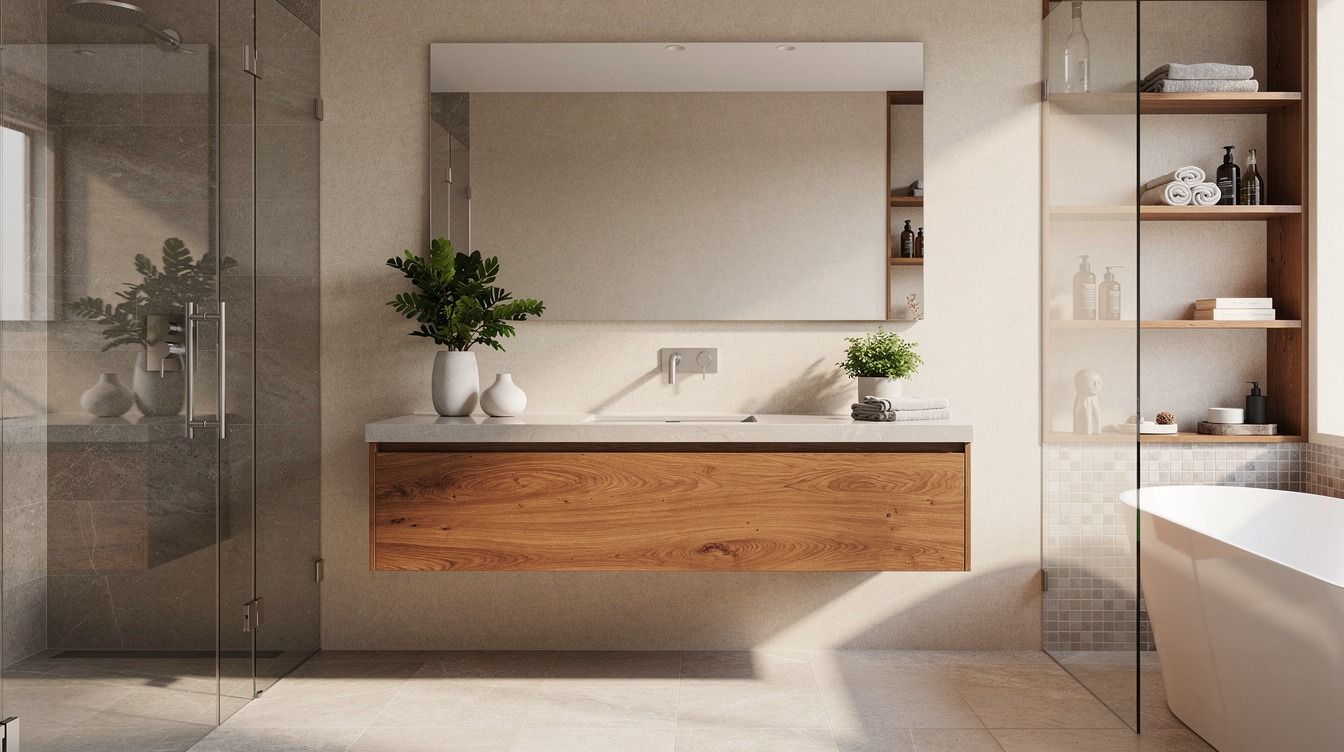
- Float a wood vanity instead of a chunky box
- Swap the big mirror for two sconces flanking the vanity
- Why does the wet room layout always win?
- Limewash the ceiling instead of painting it flat
- Run the tile floor in one continuous vein
- Pick a faucet your hand actually likes
- Skip the glass door, hang a curtain instead
- Layer three temperatures of light
- Build a niche into the dead wall
- The case for a 32-inch vanity in a small master
- Anchor the room with a runner instead of a bath mat
- Mix metals once and you'll never go back
- Trade storage for a piece of furniture
- Plant something that loves the steam
- Paint the inside of your vanity a deep color
- The 36-inch shower floor that changed my routine
- Hang art where you'd never expect it
1Float a wood vanity instead of a chunky box
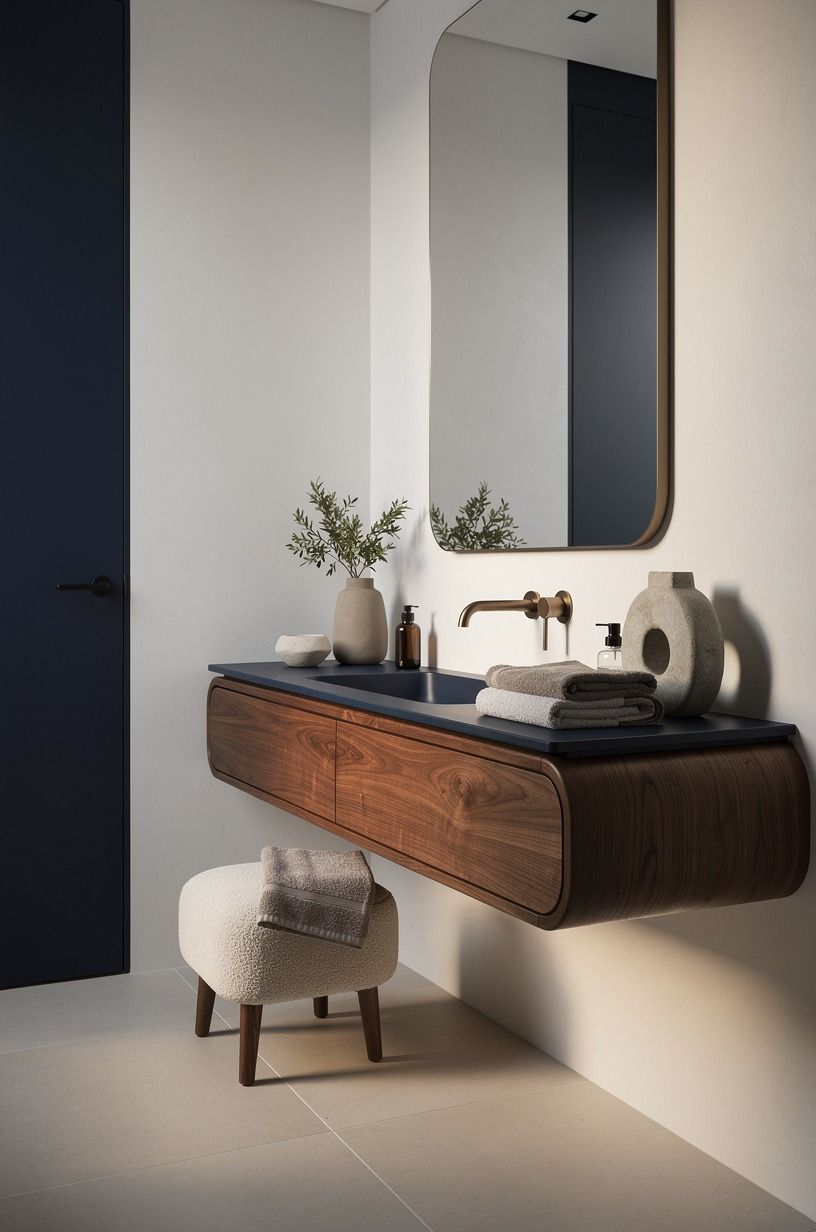
If your vanity looks like a piece of furniture bolted to the floor, you lose the single biggest move a small master bathroom can pull off: the floor running underneath. A wall-mounted walnut vanity in navy and white tones keeps the sightline clean and the tile continuous, and an organic bouclé stool tucked beneath softens the whole corner.
You'll sweep under it in five seconds. The room reads bigger without you having to add a square foot.
I went 36 inches wide the second time, and I'd never go back to a wider floor-standing unit in a tight space. The legs are the detail: skinny steel, dark bronze so the wood stays the visual lead.
If you're planning the wider room around it, my stretching before bed guide gives you the floor-plan moves that pair best with a vanity this open.
2Swap the big mirror for two sconces flanking the vanity
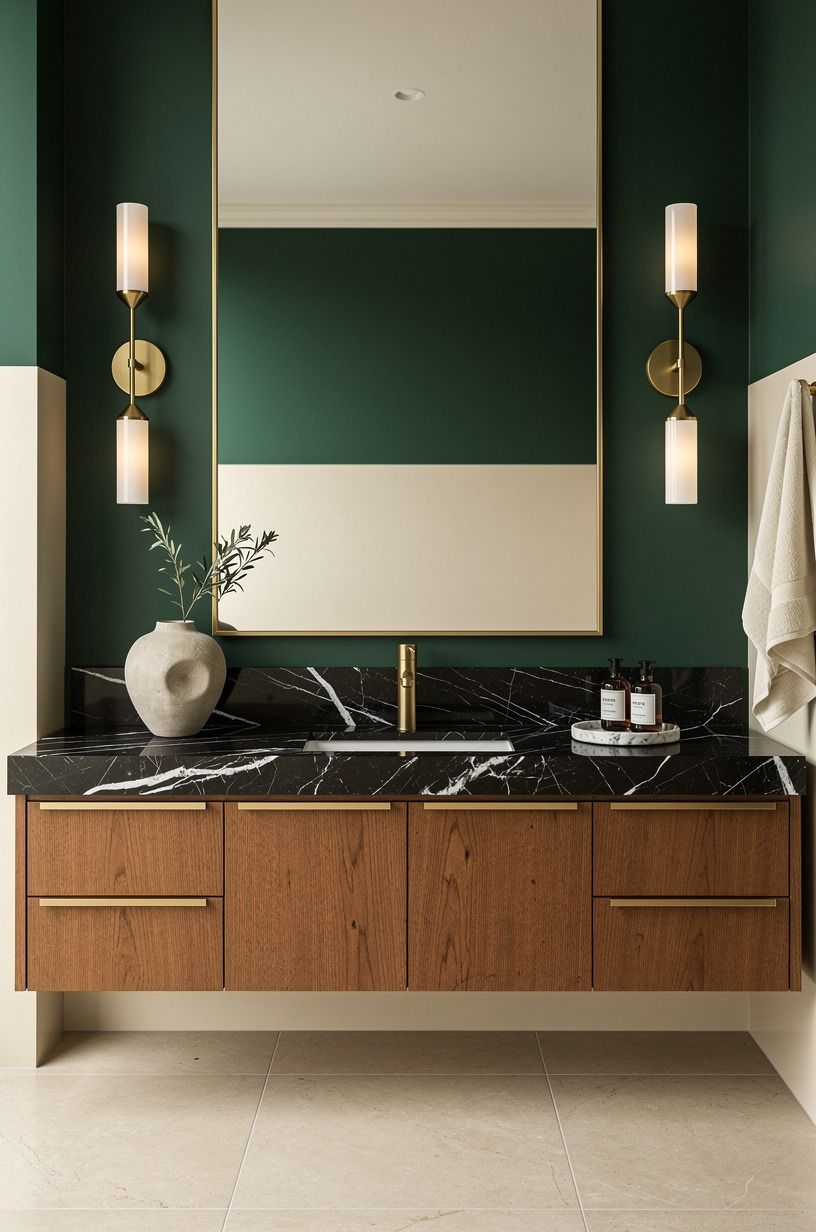
The one big mirror above the sink is the default, and it's holding you back. Two brushed brass sconces in emerald and cream tones at eye height, one on each side of the mirror or where the mirror used to be, throw light across your face instead of bouncing it off the glass. Frame them with a Nero Marquina black marble shelf scored with white veining, and the whole wall reads as a single piece.
You look better in it. The morning routine feels different when you're not staring into a fluorescent echo chamber.
Go warm bulbs, 2700K or lower, dimmable. Honestly, this is the swap that gets more compliments than anything else I've done.
Pair them with a real Schoolhouse Electric sconce for about $180, or a Rejuvenation look for about the same, and you'll get the gallery-wall vibe.
3Why does the wet room layout always win?
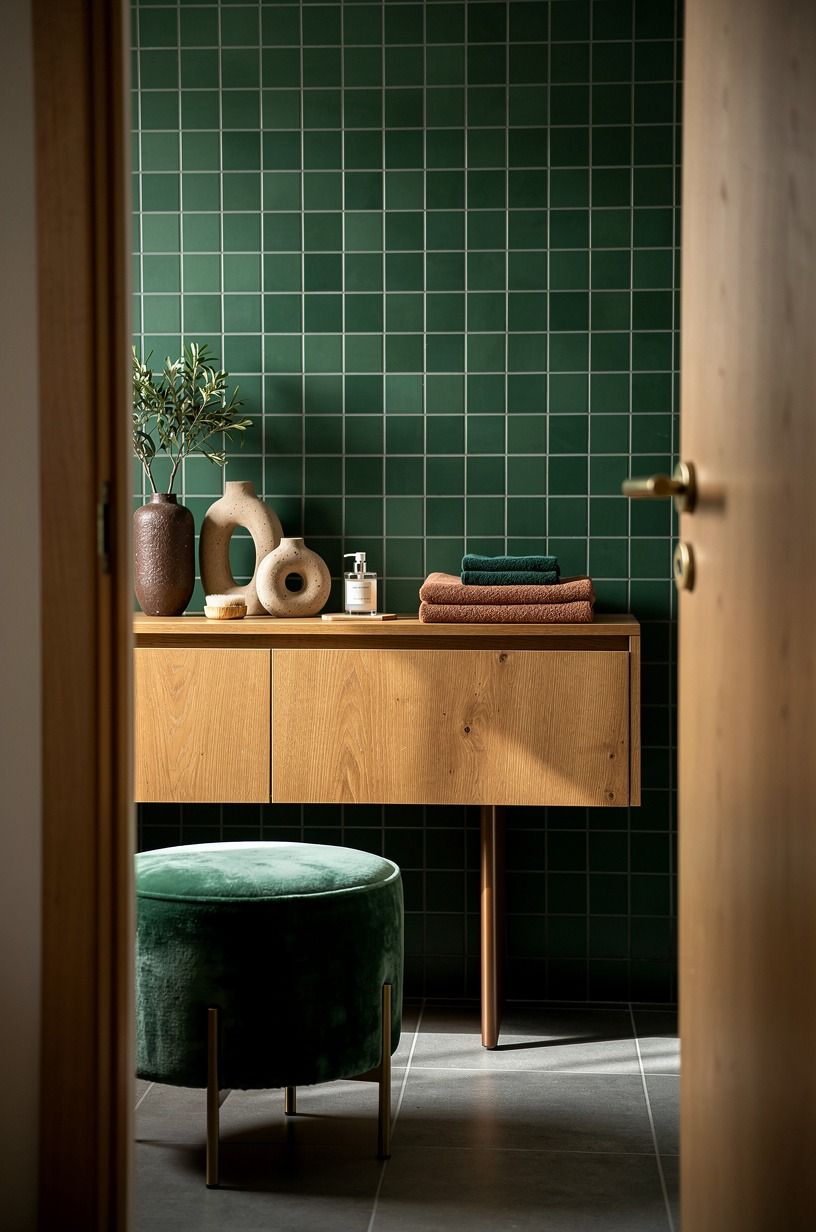
Open wet rooms look expensive for a reason, but it's not the tile, it's the layout. The shower isn't a closet you close behind glass.
The floor runs from vanity to shower with no threshold to trip over, and a deep-pile mohair velvet bench in forest green and rust anchors the dry end of the room against the natural oak paneling. You'll spend $15 to $35 a square foot on zellige for hand-glazed texture, or under $10 for subway tile for a quieter look.
Either way, ditch the curb. Build the slope into the floor. You'll wonder why every American bathroom has a shower door. Buyers now expect the curbless look as a default, and the resale argument writes itself.
If you want the body side of the post-shower ritual, my warm bath before bed sleep piece walks through how the room lands you in bed.
4Limewash the ceiling instead of painting it flat
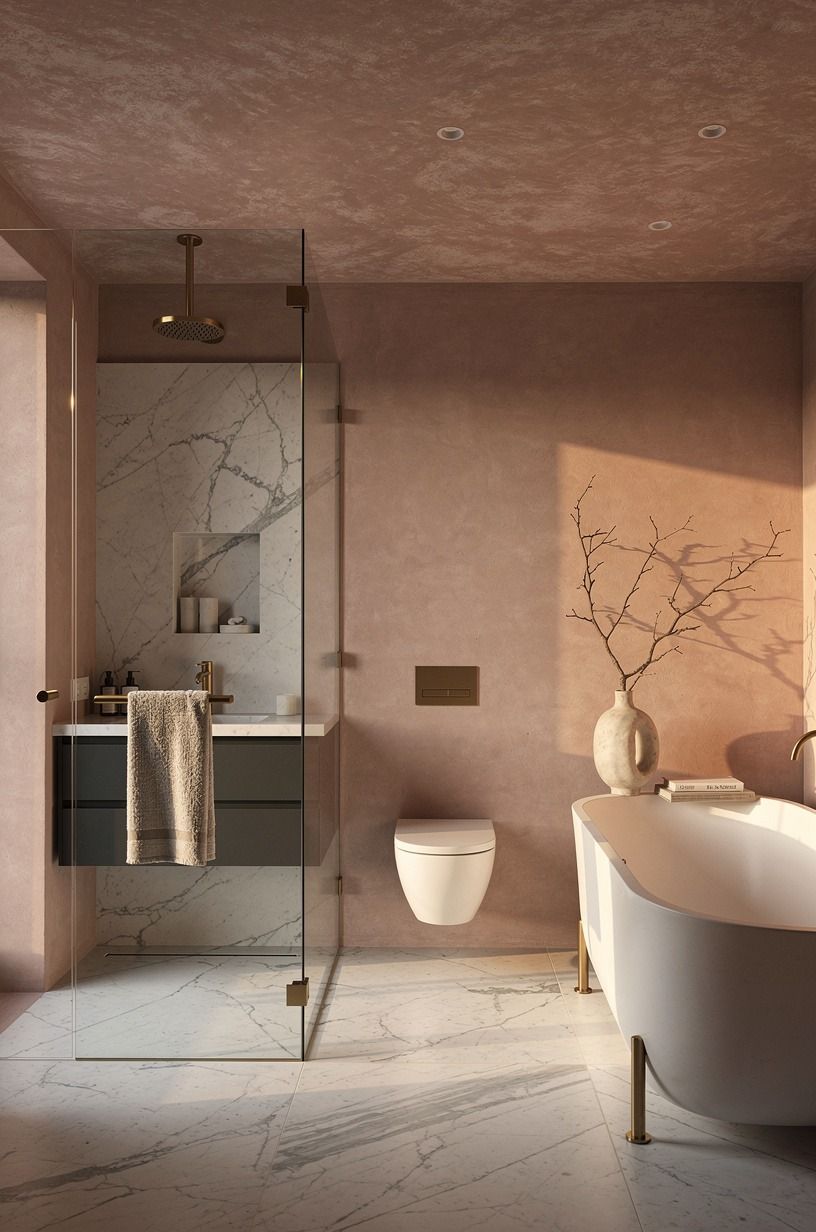
Ceilings get ignored, and that's a mistake. A flat white ceiling over a warm bathroom is the one thing that makes the room feel institutional. A Carrara marble statement surface with subtle grey veining in dusty rose, charcoal and brass tones gives the room that cloudy texture that catches the light. Farrow & Ball sells a limewash that pairs with the stone for about $80 a gallon and covers a normal master ceiling with one coat to spare.
Apply it with a brush in long, sweeping motions. Skip the roller. The whole ceiling becomes a slow gradient, and nobody can name why the room suddenly feels expensive.
The only catch is patience: it wants a full 24 hours between coats or it streaks. For the rest of the wind-down, my sleep before competition guide covers the room-to-bed half of a calmer night.
5Run the tile floor in one continuous vein
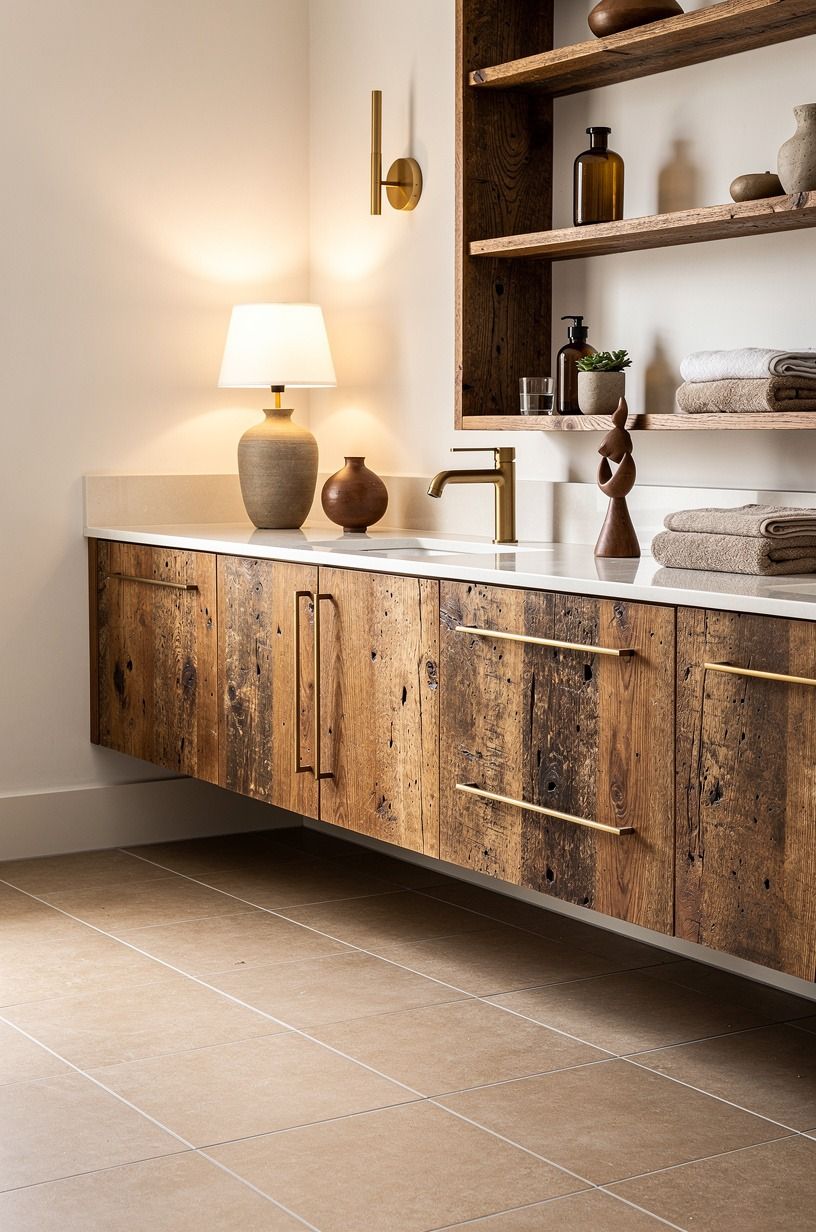
Pick a stone with movement, and let it move. Reclaimed weathered teak in warm white, camel and black accents lays down one continuous grain that pulls from vanity to tub without a single threshold break. The knots read as the room's own history.
6Pick a faucet your hand actually likes
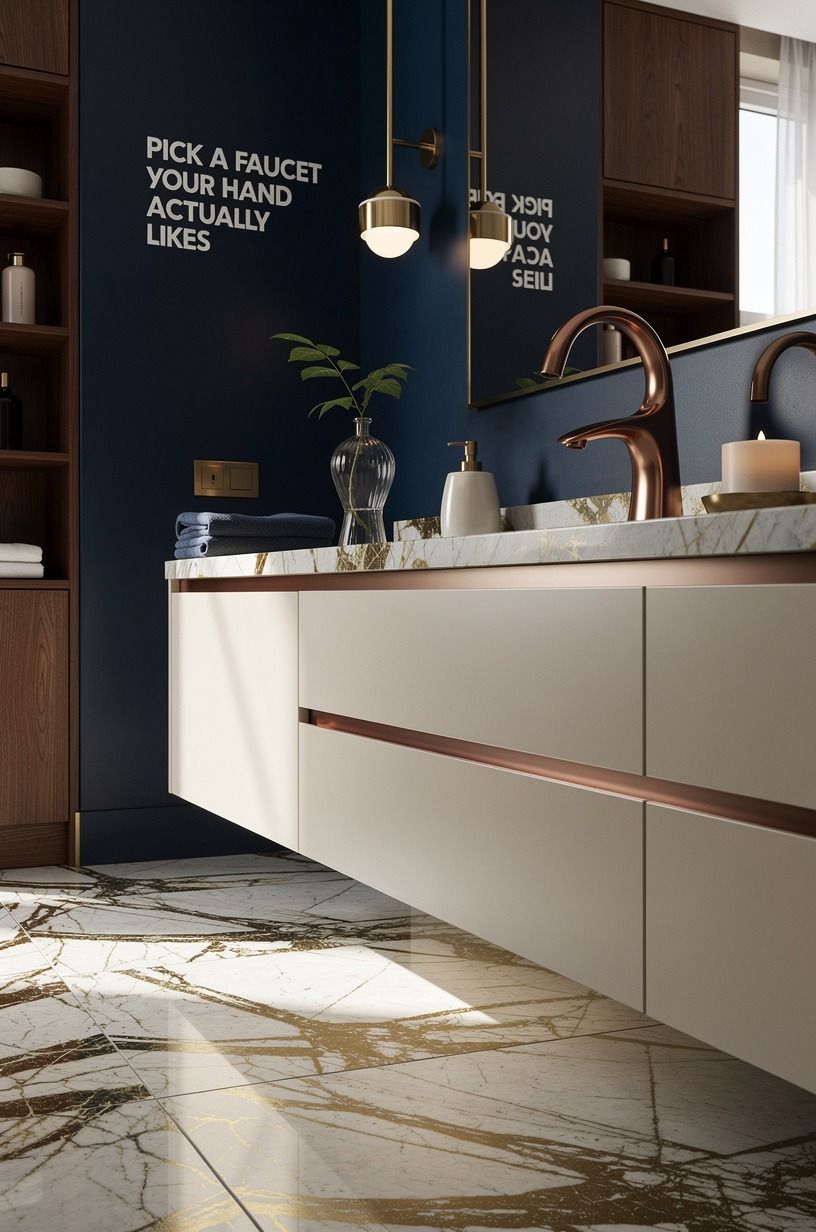
Most faucets are bought by looking at them, not by using them. Reach out and turn one on in the showroom. Feel the handle travel. Notice the curve of the spout.
A Calacatta marble counter slab with gold veining in midnight blue, copper and ivory tones gives the faucet a stage that earns its place. An unlacquered brass faucet that develops a soft patina over the years is the move if you like things that age well.
A matte black faucet reads modern but shows every fingerprint. Plan for $120 to $450 on a real one.
The faucet is the part of the bathroom your hand touches more than any other surface, so don't treat it like an afterthought. Cheap faucets feel cheap every time you use them. And pair it with a wall-mount tub filler if you've got a freestanding tub, because the rough-in is the cheapest part to install during a remodel. For more on the wind-down half of the room, my socks before bed sleep piece covers the floor-feel moves that pair with a cooler bathroom floor.
7Skip the glass door, hang a curtain instead
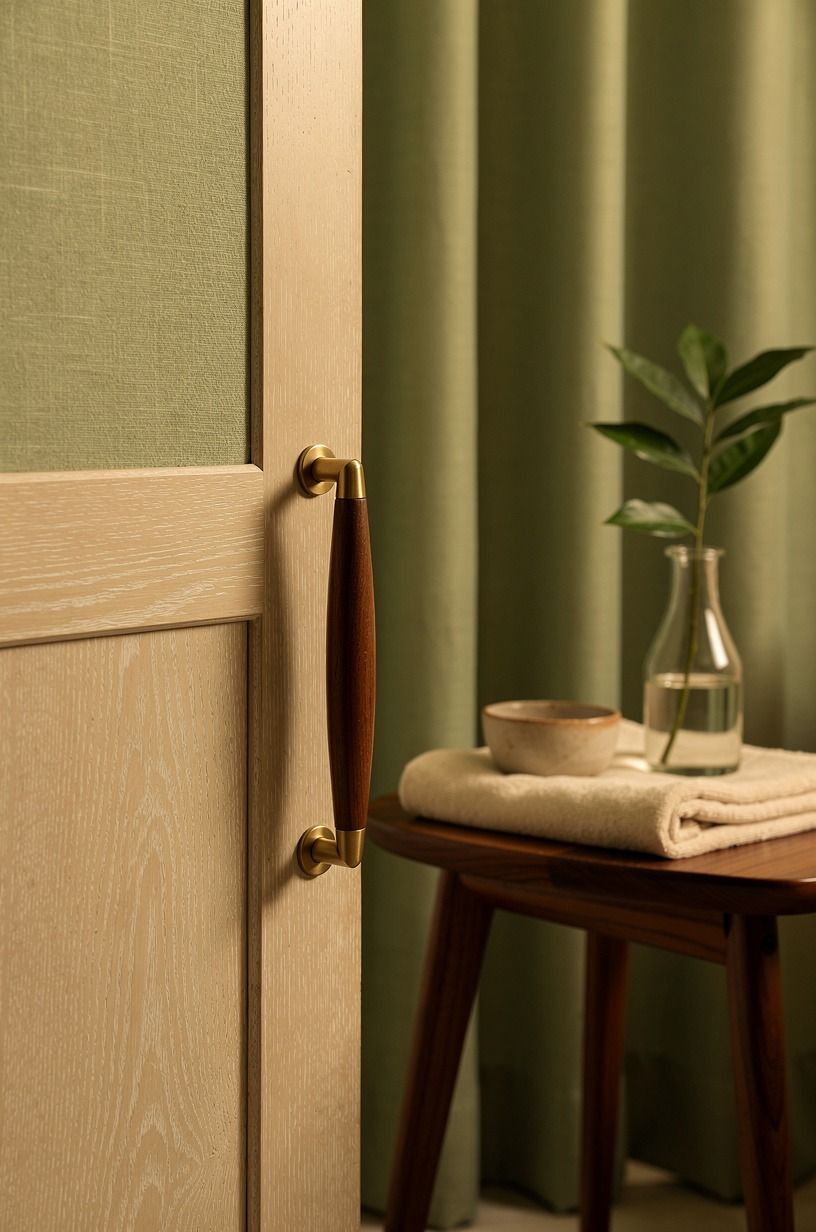
Glass shower doors show every water spot, cost a small fortune, and make the bathroom feel like a clinic. A cerused white oak shower curtain rod and panel in sage green, warm cream and natural wood tones softens the whole shower zone and lets the steam drift.
You'll spend $40 on the curtain and $25 on the rod, versus $800 to $1,500 on a frameless glass enclosure. And when the curtain is too gross in two years, you toss it and hang a new one. No squeegee required.
The steam softens the room, and your mirror stops fogging up the second you step out. Want more soft-surface moves?
My warm bath before bed guide covers the rest of the evening routine.
8Layer three temperatures of light
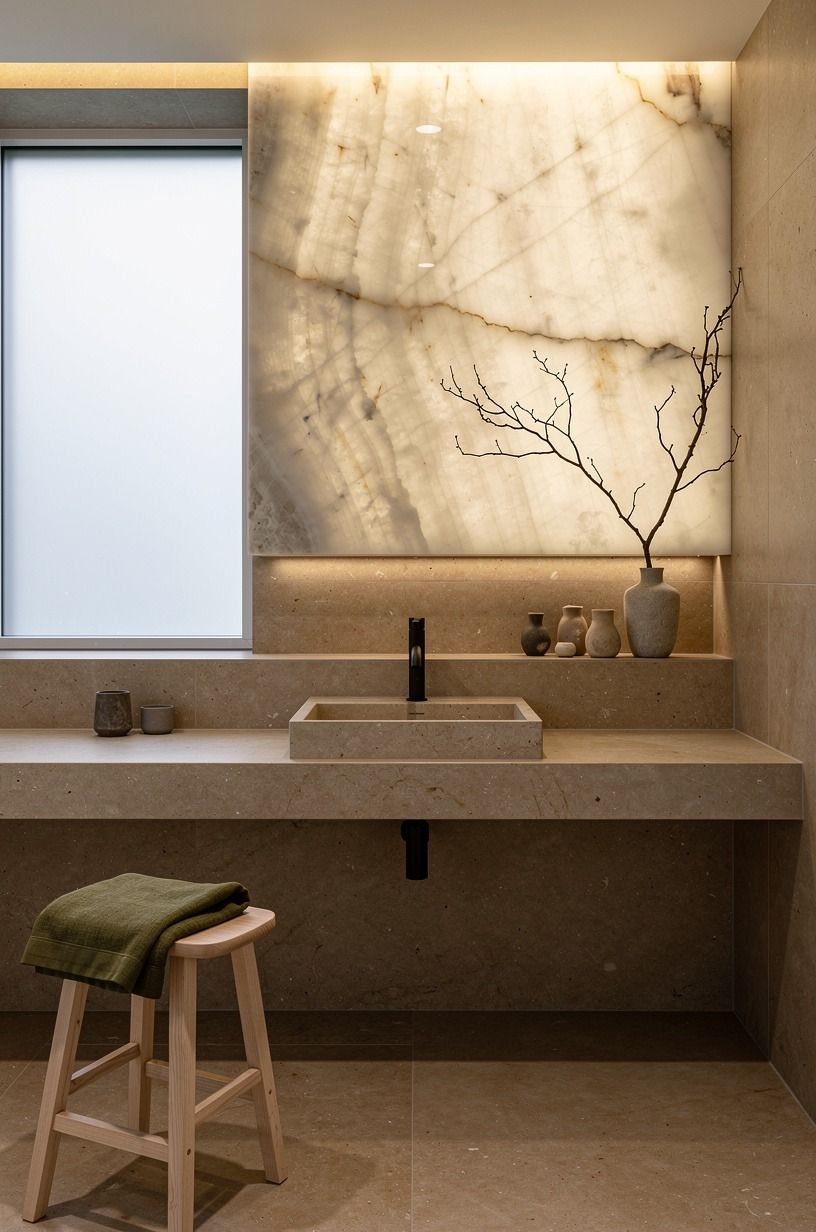
One overhead fixture is the enemy of a good bathroom. You need three light sources doing three jobs. Bright, cool light at the mirror for shaving and makeup.
Warm, dimmable light at 2400K for the evening soak. A single low accent (a picture light, a small wall fixture, a candle) for the bath you take when nobody else is up.
A backlit translucent onyx slab in terracotta, stone and olive tones catches the third source and glows from inside, no fixture required. Put all three on separate switches and you'll stop turning the wrong one on at the wrong time. Add a Schoolhouse Electric globe pendant for about $200 and the room reads like a luxury hotel by itself.
For the body side of the wind-down, my without sleep before hallucinations notes pair well with a calmer bathroom.
9Build a niche into the dead wall
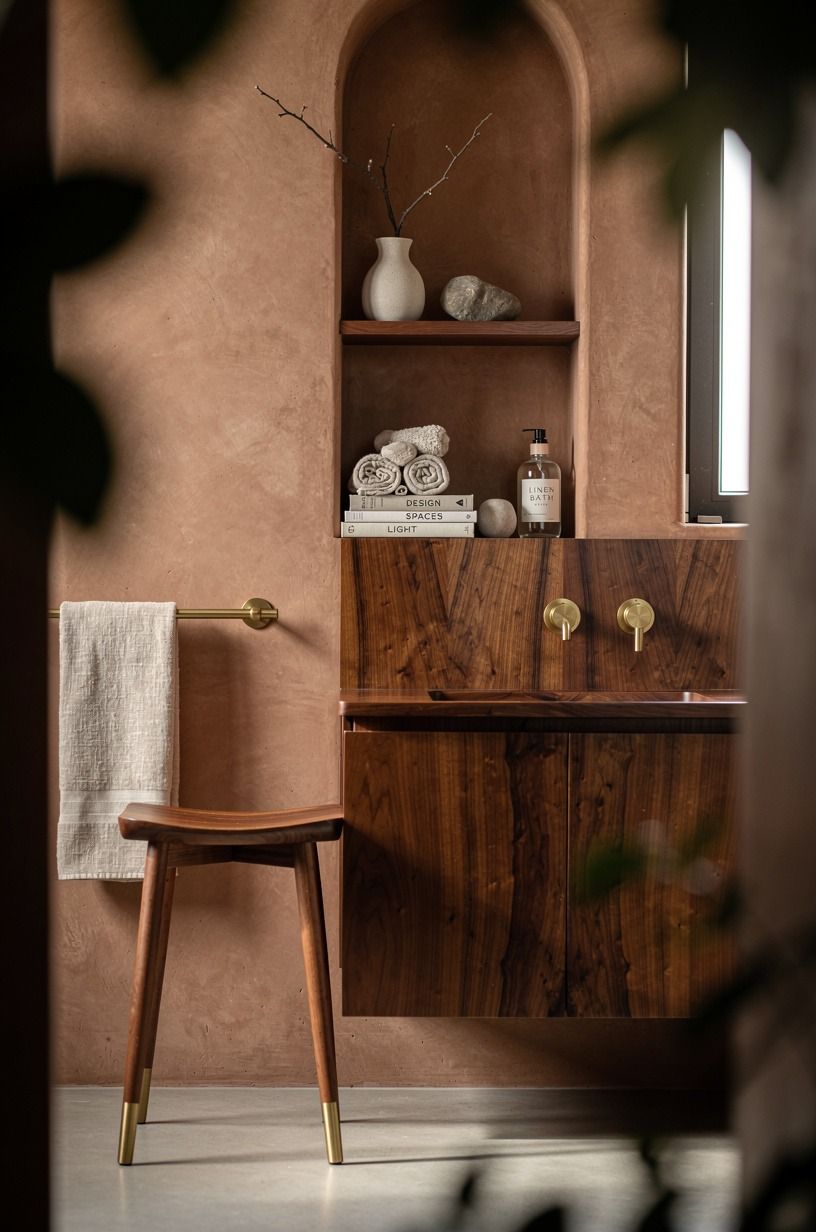
Every bathroom has a wall that doesn't do anything, usually between studs with plumbing on one side. Knock a 12×24 niche into it and line it with book-matched walnut in clay, linen and aged brass tones, and you've just added three shelves of usable storage without losing a square inch of floor space.
The bottles stop living on the shower floor. The whole shower reads cleaner.
If you're renting and can't build, a tension-rod shelf from Target does the same job for $30. The niche becomes the spot you like looking at every morning, and it photographs well for every listing you'll ever write!
10The case for a 32-inch vanity in a small master
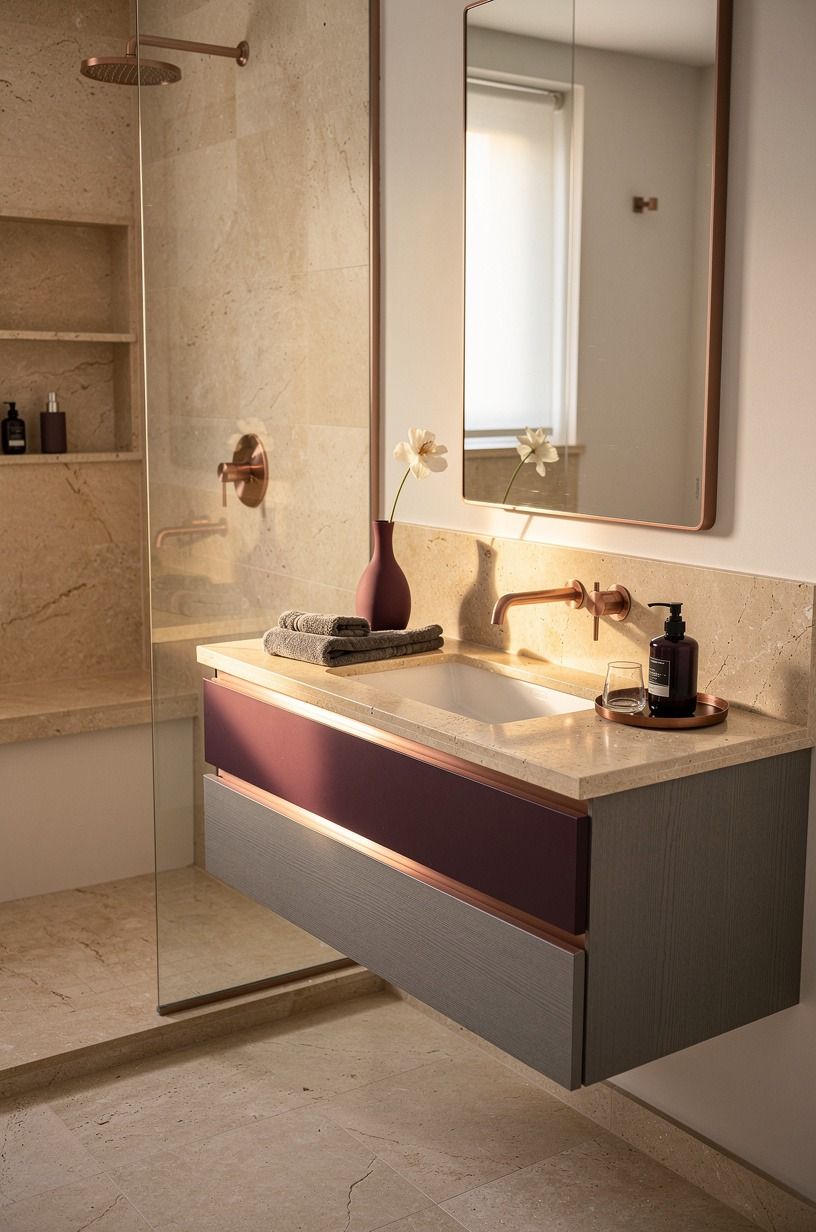
Most designers will tell you to go bigger. Most designers are wrong about small bathrooms.
A warm travertine vanity in plum, grey and rose gold tones at 32 inches wide gives you 21 inches of clear floor in front, which is the code minimum and the human minimum for not feeling like you're shaving in a phone booth. The bigger vanity eats the room.
A narrow console-style vanity with a trough sink and open shelf lets the floor breathe and gives you a place to stack rolled towels where you can see them. A 36-inch double vanity sounds nice in theory.
In a real 8×10 master bathroom, it eats the room.
11Anchor the room with a runner instead of a bath mat
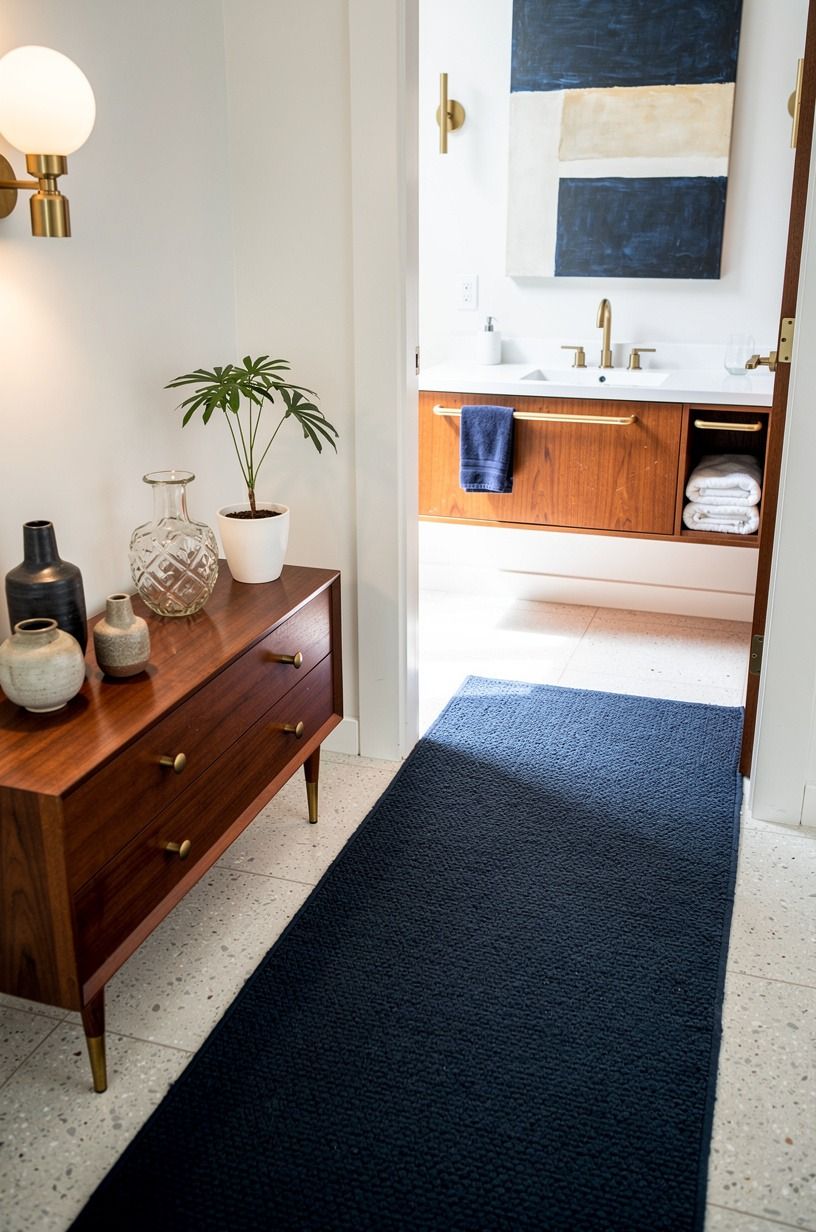
Bath mats are the wrong scale for a master bathroom. A cotton runner in navy, white and walnut tones, sized 2.5×9 or wider, anchors the whole room from vanity to tub.
12Mix metals once and you'll never go back
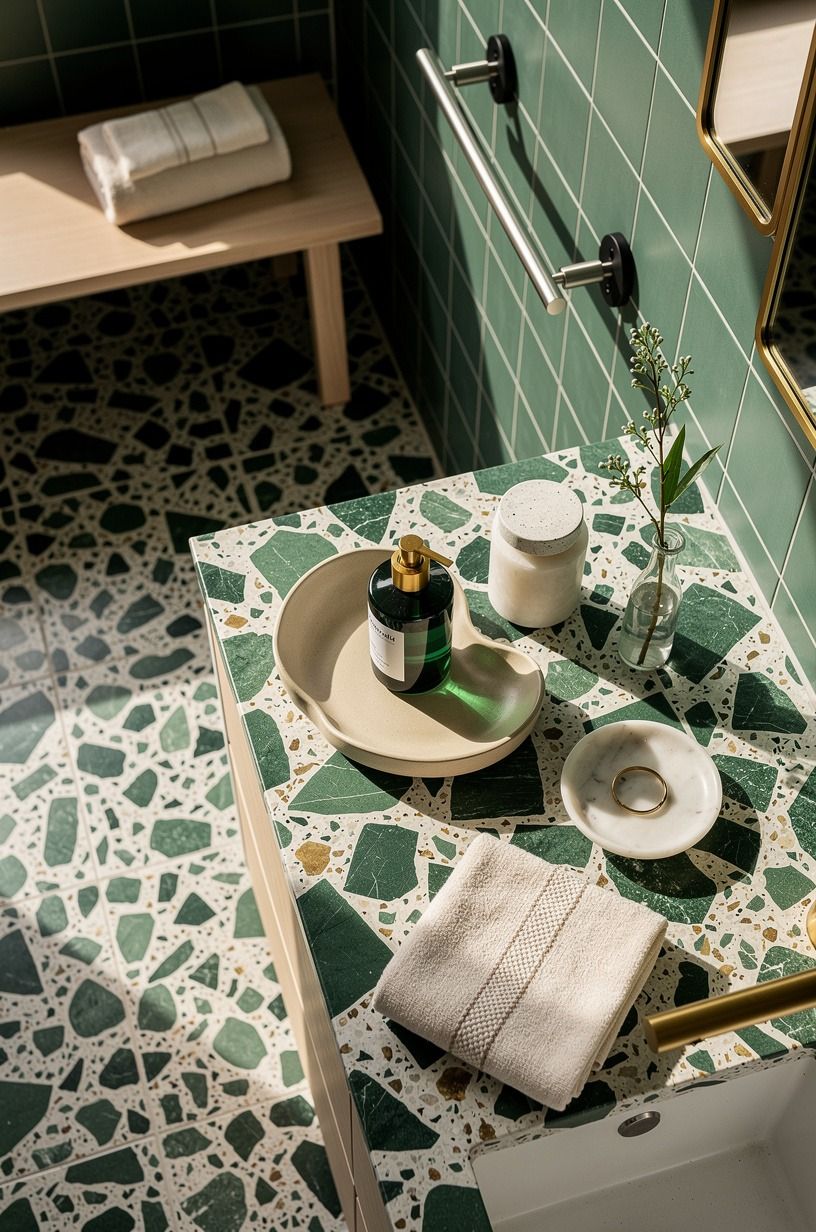
The all-brass bathroom is over. So is the all-chrome. So is the all-black.
Pick two metals, one warm and one cool, and live with the tension. A floor of oversized-chip terrazzo in emerald, gold and cream tones makes the metal pairing feel intentional instead of decorative.
Brushed brass faucet and shower trim, matte black cabinet pulls and mirror frame. Or vice versa. The third metal sneaks in on its own: the toilet paper holder you already own, the towel hook someone gave you, the outlet covers you didn't think to swap.
Three metals max. Then stop. The rule isn't about matching. It's about deciding.
Anything looks intentional once you've decided. Anything looks scattered once you haven't. For more on the room-to-bed side, my screen time before bed notes pair with this kind of decision-making.
13Trade storage for a piece of furniture
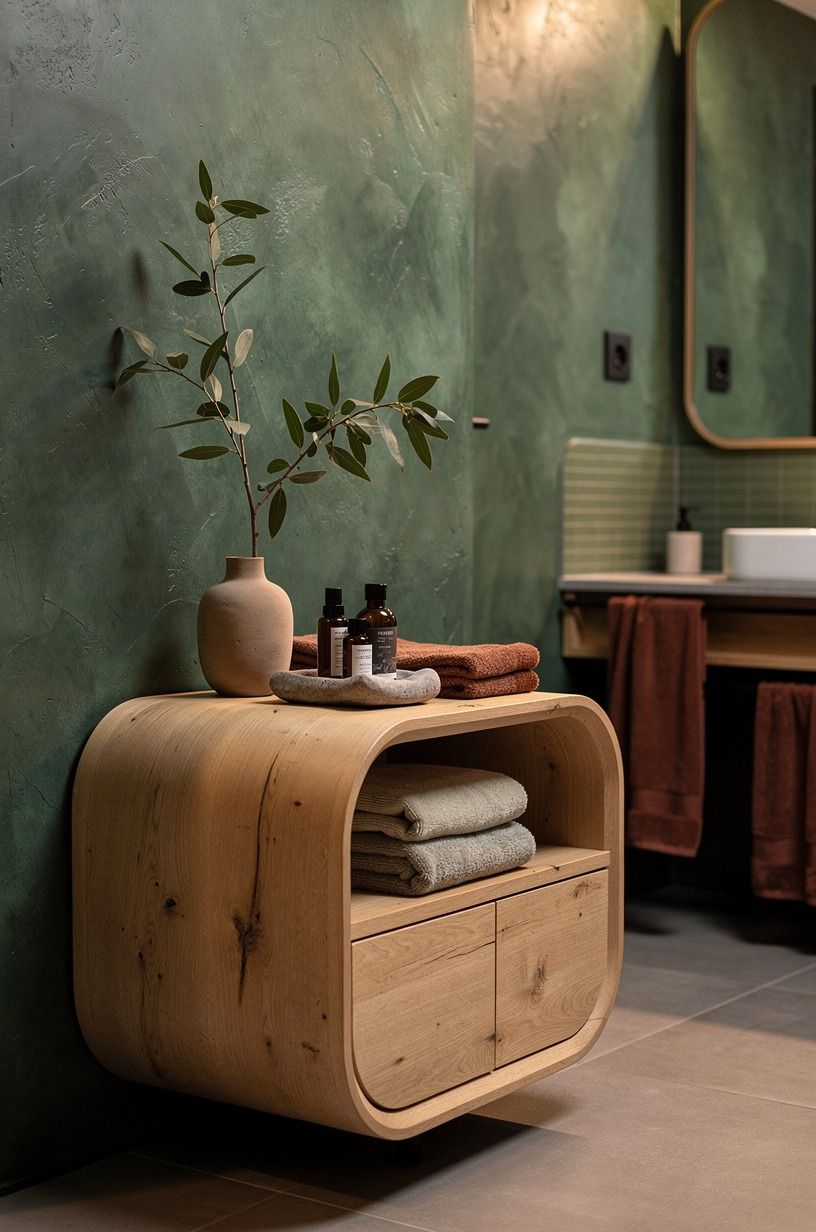
Closed built-ins eat money and look new forever. A single vintage dresser or an IKEA KALLAX birch-effect unit finished in forest green, rust and natural oak with hand-applied Venetian plaster on the back wall holds towels, baskets of backup toiletries, and the hair tools you use twice a year.
It looks like part of the room instead of part of a remodel. You'll find the KALLAX for about $80, and a real wood nightstand from Facebook Marketplace for the same price.
The shelf starts holding the actual things you use, and you'll reach for them without thinking. A piece of furniture beats a built-in for almost every bathroom I see.
14Plant something that loves the steam
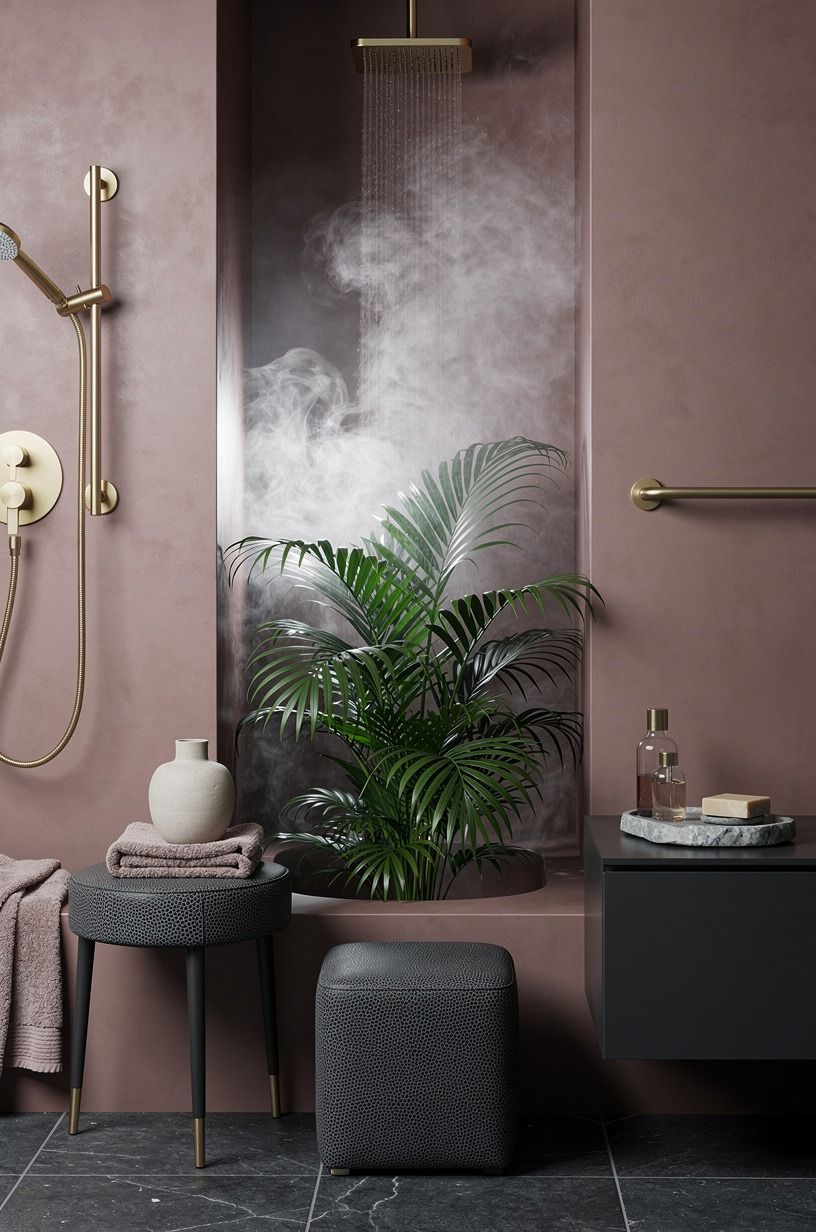
Bathrooms are cruel to most plants, but a few love them. A Boston fern loves the humidity and doesn't need much light.
A pothos trails beautifully off a shelf. A single eucalyptus stem hanging from the showerhead releases scent every time the hot water hits it.
Set them against shagreen-accented accessories in dusty rose, charcoal and brass tones, and the green pops instead of fading. None of this is expensive.
None of it needs a green thumb. The living thing in the room is the thing that makes the whole space feel like you live there, not like you're visiting a model home. If you've got a north-facing window, the fern will take off!
Give it two weeks and you'll see new fronds. For the rest of the wind-down, my sleep before competition guide covers the routine that pairs with a calmer bathroom.
15Paint the inside of your vanity a deep color
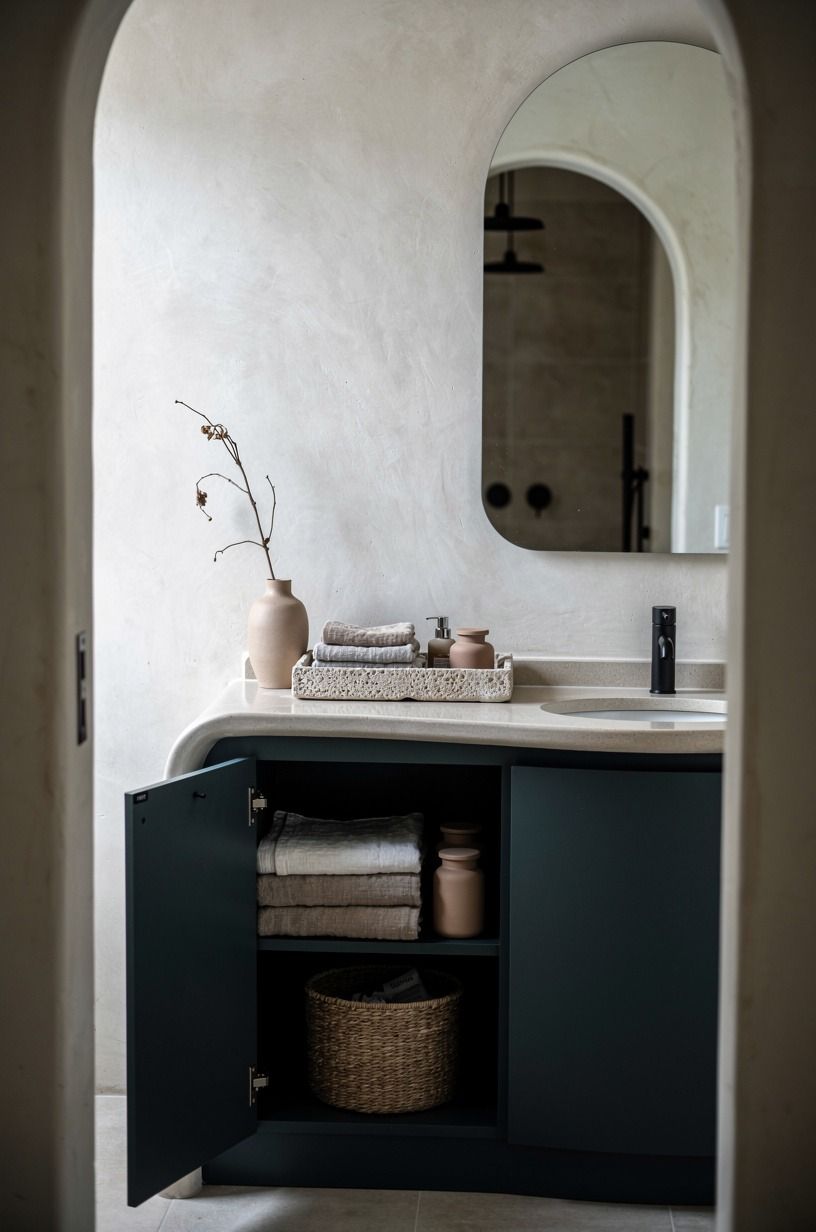
Nobody sees the inside of your vanity except you, which is exactly why it matters. A coat of Farrow & Ball Hague Blue or Benjamin Moore Black Forest Green on the back panel and the inside of the doors turns the morning routine into a small ritual.
Frame the vanity with washed Belgian linen panels in warm white, camel and black accents, and the deep interior reads even deeper by contrast. You open the cabinet, see this deep color, and the first ten minutes of the day start calmer.
It's $30 and an afternoon. The room doesn't change, but the way you feel in it absolutely does.
Pair it with brushed brass knobs on the outside and the cabinet reads like an old apothecary. Nice move for $50!
16The 36-inch shower floor that changed my routine
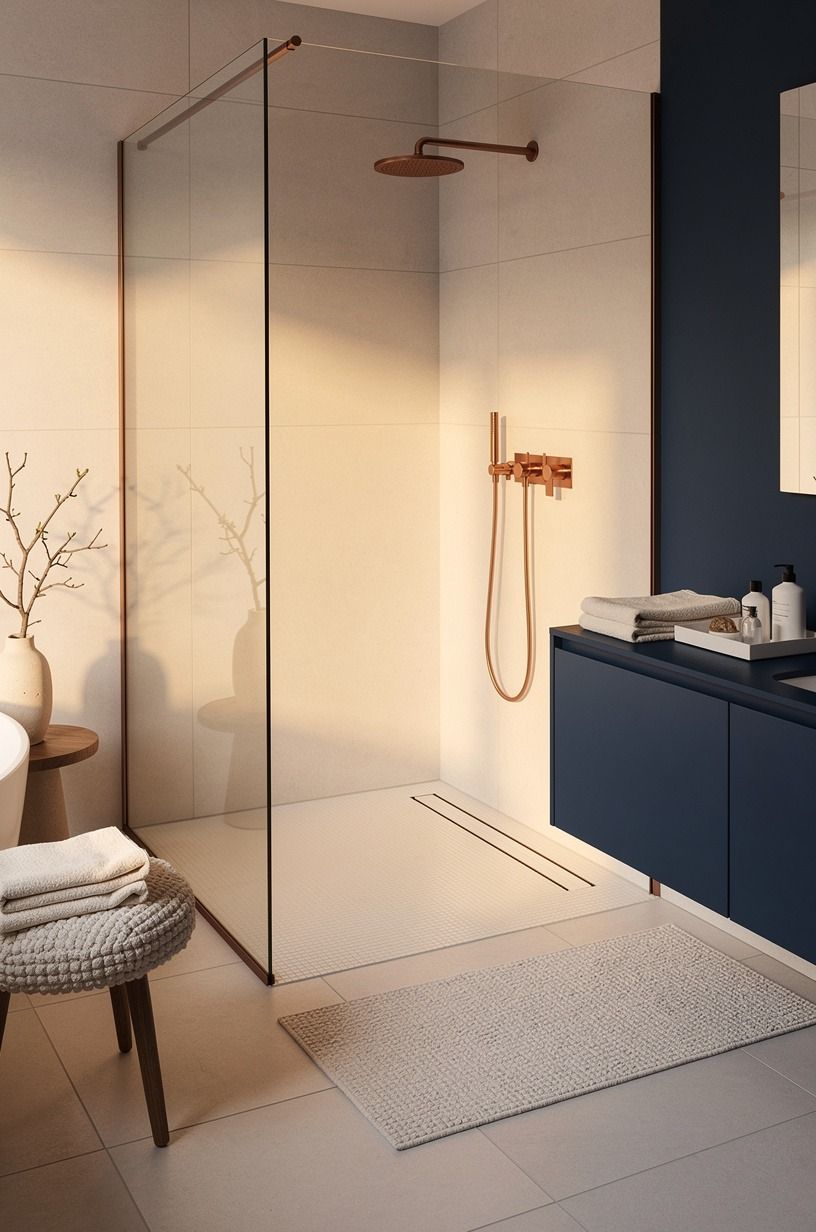
A comfortable shower isn't about the walls. It's about the floor.
The minimum 36×36 inches is fine for a quick morning wash, but if you ever sit down, shave your legs, or wash a kid's hair, you want a 42×60 base that lets you move. The extra 6 inches in either direction is the difference between crouching and standing.
Build the slope correctly and you'll never see pooling. The plumber matters more than the tile here, and that's not the answer anyone wants to hear.
Drop an organic bouclé mat in midnight blue, copper and ivory tones outside the shower base, and the wet-dry line disappears under something soft instead of a hard edge. Spend the money on the plumber first, the tile second.
17Hang art where you'd never expect it
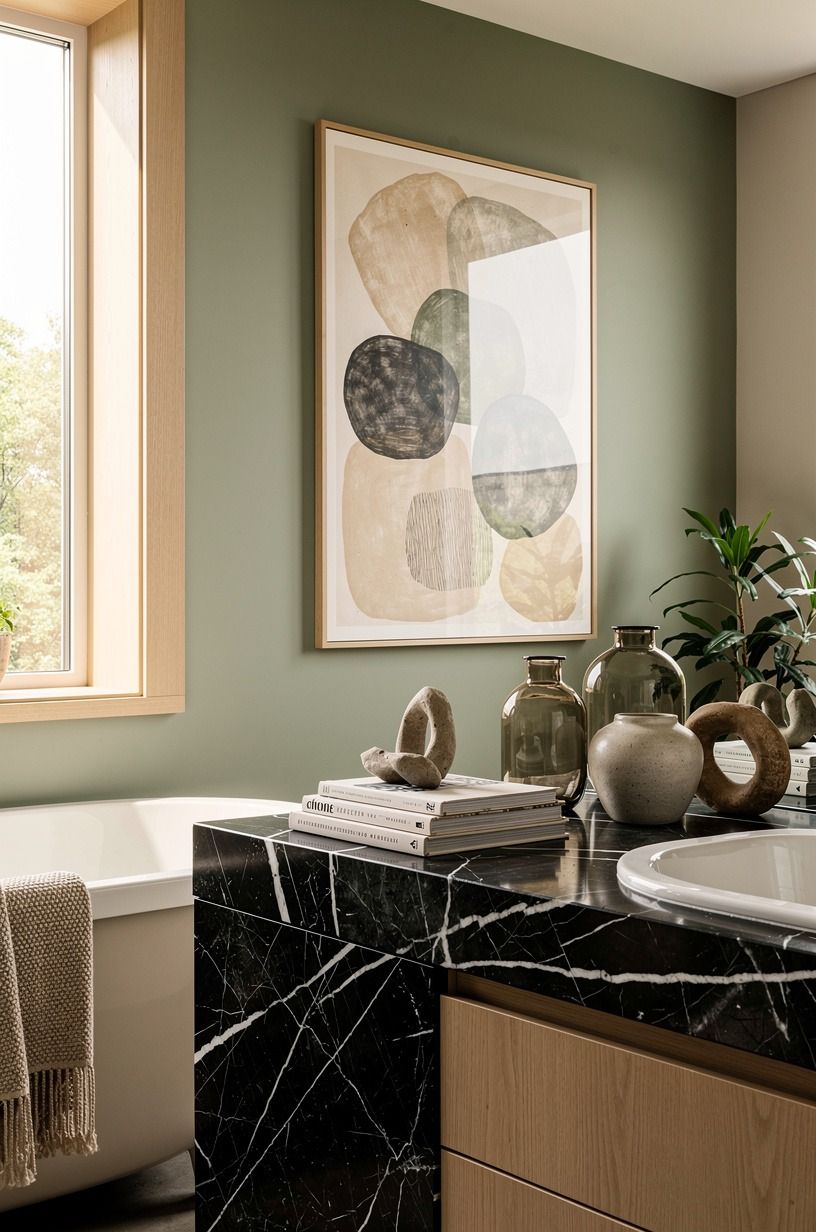
Art in the bathroom sounds weird until you actually do it. A small framed piece above the toilet, a triptych behind the tub, a single canvas opposite the mirror.
Set the wall behind it in Nero Marquina black marble with white veining in sage green, warm cream and natural wood tones, and the art reads like part of an installation instead of an afterthought. The room stops being a bathroom and starts being a room you happen to bathe in.
I've hung a vintage botanical print from a thrift store ($12) and a framed black and white photograph from a local gallery ($80) in two different bathrooms. Go waterproof frames if you're putting anything directly above the tub. Don't overthink the subject.
Anything you like looking at works, and it costs less than a faucet.
Why most master bathroom remodels feel wrong on the second day
I've been on both sides of this, so I want to say the quiet part out loud. Most bathroom remodels fail not on the trades, the tile, or the budget.
They fail on the choices. We pick fixtures that photograph well instead of fixtures that feel right under the hand.
We pick colors that look new forever instead of colors that age with us. We pick finishes that match everything in the showroom and match nothing in our actual life.
The bathroom I got wrong the first time was a warning. I'd spec'd every material in a single weekend. Six different decisions, all made from a screen. When I stood in the finished room two months later, I couldn't tell you why I disliked it, only that I did.
The room was correct. It wasn't mine. The second time around I made three rules for myself. I touched every faucet before I bought it.
I lived with paint swatches on the wall for two weeks before I committed. And I let one wall stay whatever the drywall looked like under primer, because the room needed the contrast. None of those three rules are on a Pinterest board.
They don't photograph. But they're why the second bathroom still feels right four years later, and the first one was ready to be torn out by month five.
The lesson, if there is one, is that the materials carry the room. The tile.
The wood. The brass. The stone. Pick them like you'd pick a cast for a movie, where each one has to be the right weight for the part.
Don't pick them like a contractor who needs every spec resolved by Friday. And leave room for one wall, one shelf, one corner that nobody sees coming. That's where the room starts to feel like yours.
The Questions I Get Asked Most
What is the best master bathroom remodel for a small bathroom?
A wall-mounted walnut vanity at 32 to 36 inches wide, a single 36×60 shower base instead of a tub you never use, and one continuous tile floor from vanity to shower. The room reads twice the size without adding a square inch.
Save the soaking tub for a house with a separate water closet. If you want help thinking through the bed side of the routine, my warm bath before bed sleep piece walks through what works.
Where can I buy master bathroom remodel pieces on a budget?
IKEA for vanities and storage, Wayfair for faucets and lighting, Target Threshold for hardware and mirrors, and Facebook Marketplace for used dressers you can convert into bathroom furniture. You'll save 40% to 60% going secondhand on the wood pieces, and the new faucets don't need to match the vintage wood anyway. For sleep-routine swaps that pair well with a calmer bathroom, see my without sleep before hallucinations notes.
How much does a master bathroom remodel cost?
Rough ranges from real projects: a cosmetic refresh runs $200 to $1,200 (paint, mirror, faucet, textiles), a mid-range redo lands $3,000 to $9,000 (new vanity, partial wall tile, lighting), and a full re-tile plus plumbing starts at $12,000 and climbs past $30,000. The wide range is because the trades drive most of it, not the materials.
Can I create a master bathroom remodel look on a budget?
Yes, and the cheapest moves are the highest-impact ones. Paint the ceiling limewash.
Swap the builder mirror for two sconces. Hang a curtain instead of a glass door.
Toss a 2.5×9 cotton runner down the center. Plant a fern. None of those cost more than a dinner out, and together they shift the whole room.
For more wind-down room moves, my stretching before bed piece covers the body side, and it pairs well with a quieter bathroom.
Is a master bathroom remodel worth it in a small space?
Yes, more than almost any other room change. Small bathrooms punish bad decisions harder than large ones, which means small bathrooms also reward good ones harder. The vanity swap, the light layers, the runner, the curtain.
Each one costs under $200 and the room reads completely different. For more on the wind-down half of the equation, see my screen time before bed notes.
Is a master bathroom remodel a good idea for a rental?
Yes, with a few no-damage swaps. Peel-and-stick zellige-look film behind the vanity. A tension-rod linen shower curtain instead of a glass door you can't modify.
Removable matte black cabinet pulls swapped in for the originals (keep both sets). The room reads intentional without losing your security deposit.
And if you want to pair the calmer evening routine, my sugar before bed guide walks through what to skip on the table side.
Where I'd Start First
If I had to pick one, I'd start with the lighting layers. You can't layer warmth on top of a flat ceiling light.
The vanity, the mirror, the faucet all fight it. Get the three-temperature light right first.
Everything else lands.