
 by
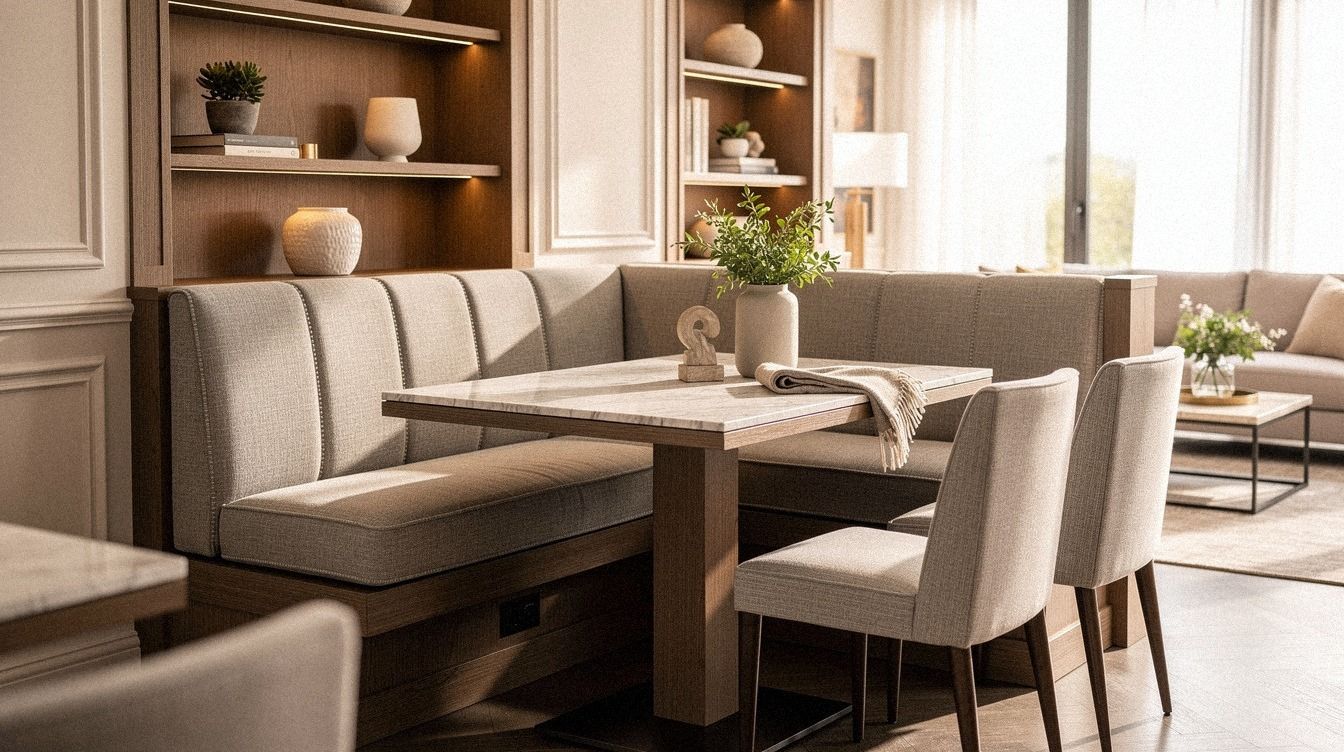
by I've installed a lot of banquettes, and the ones that don't work aren't the expensive ones. They're the ones where nobody thought about what goes underneath. A built-in breakfast nook for custom seating runs about $300 to $1,200 for a budget refresh with pillows, paint, and styling. Mid-range with a quality banquette and layered lighting lands closer to $2,500 to $8,000. Most people start at the bottom and end up surprised how far it goes. These 15 built-in breakfast nook ideas for custom seating are the moves that make a corner feel like it's always lived there.
- anchor the nook with a low-backed banquette
- float a chunky oak table instead of a pedestal
- build the bench into an L-shape corner
- raise the floor six inches to define the zone
- pocket a drawer under each bench seat
- paint the inside of the nook one shade deeper than the wall
- hang a single oversized piece of art above the bench
- layer two kinds of seating cushions for depth
- install a plug-in pendant instead of hardwiring
- ground the nook with a vintage wool rug
- mix two woods on purpose for contrast
- soften the corner with a tall floor plant
- add a single sconce on the perpendicular wall
- build storage into the wall behind the bench
- style the table with one quiet object
1anchor the nook with a low-backed banquette
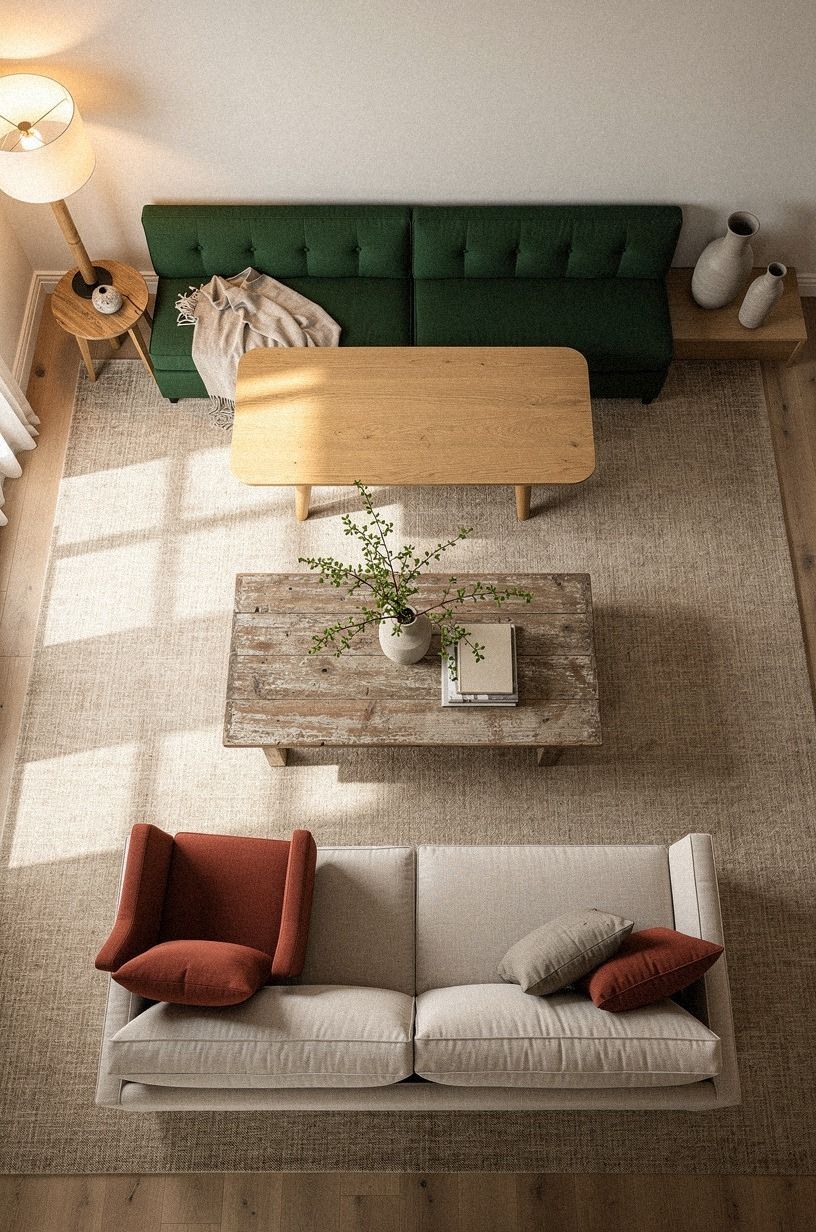
Skip the tall dining-chair back behind the bench. A banquette that sits at 17 to 19 inches off the floor with a backrest no taller than the shoulder line keeps the corner open and lets the wall do the heavy lifting visually. The corner reads airy, grounded, generous.
I learned this the hard way: a high back turns a breakfast nook into a booth, and booths feel like restaurants. Stiff, dim, a little melancholy.
Frame the bench in reclaimed weathered teak so the grain carries the warmth, then pull in rust-toned pillows against a forest green wall. The teak gives the nook a quietly storied feel without trying too hard. Cushions in performance fabric (a cotton-linen blend at 12 oz or higher) survive coffee spills and don't need to be babied.
Soft to the touch, sturdy on the seat. If you're working with a tight corner, my small breakfast nook ideas guide walks through the squeeze-in geometry.
For a cushion stack that reads upholstered, our breakfast nook bench cushion guide is the deep dive.
2float a chunky oak table instead of a pedestal
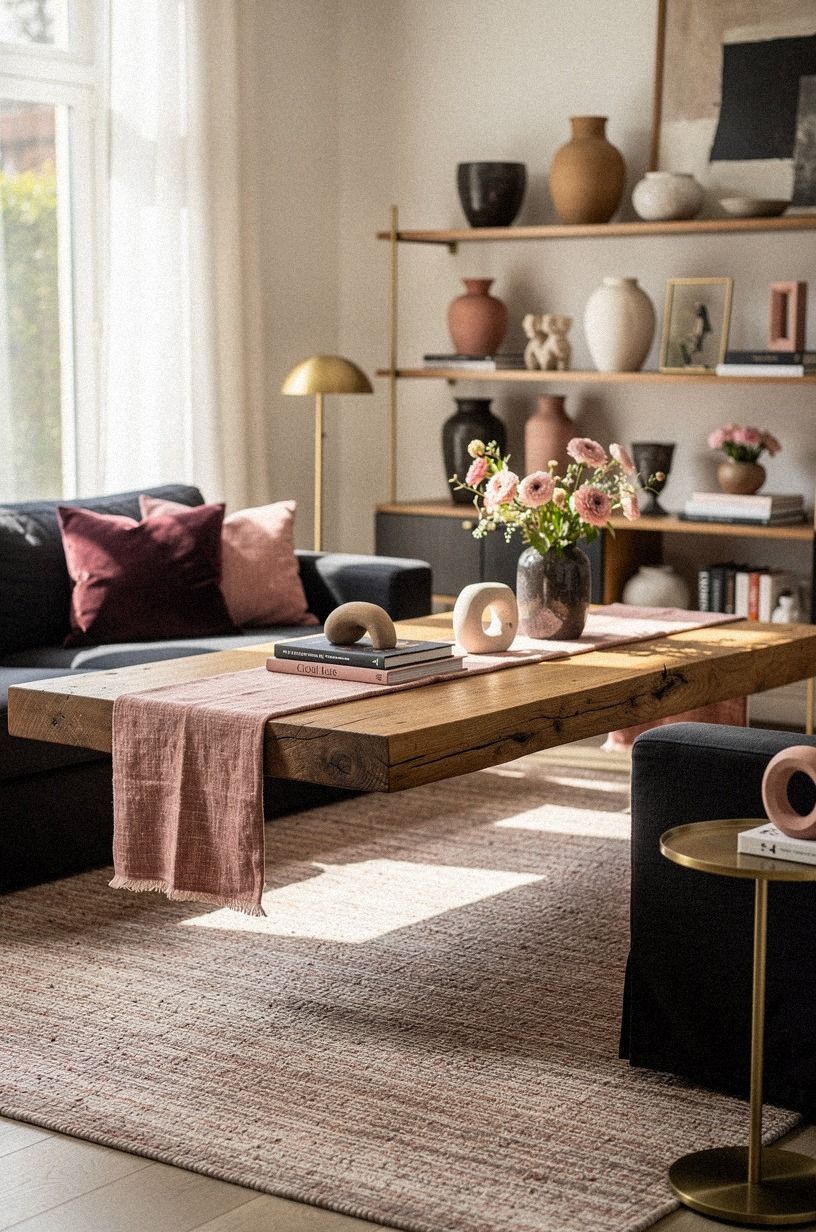
A pedestal table looks tidy in a showroom and it's a disaster the moment two people try to share a laptop and a stack of homework. The pedestal looks elegant, then it looks cramped, then it looks like a regret.
Float a chunky top with charcoal-stained legs pushed to the short ends, and seat it on washed Belgian linen cushions in a dusty rose. Your knees win, the chairs slide in clean, and you keep the open floor underneath that makes a breakfast nook feel twice the size.
The linen softens the wood, the rose warms the charcoal, and brass hardware ties it together. Listen, I've lived with both!
Standard table height is 30 inches, and you'll want at least 24 inches of clearance per diner across the width. Don't let the slab fool you.
A 48 by 30 inch top seats four comfortably; a 60 by 36 one handles a family of five without anyone elbowing. For shape debates, our round vs rectangular breakfast nook table guide breaks down when a circle wins.
3build the bench into an L-shape corner
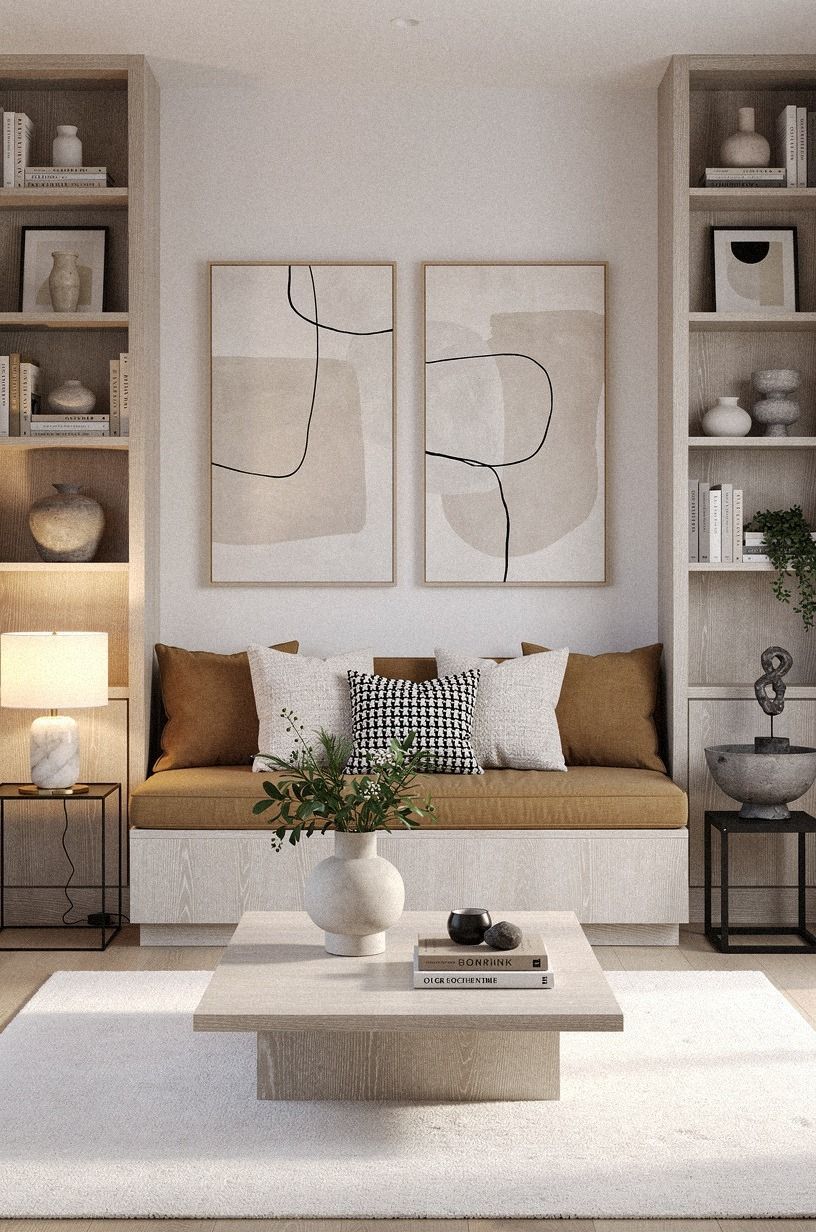
A U-shape nook looks generous on Pinterest and it eats the whole room in real life. Two sides of bench at right angles, both running into the same corner, gives you four to six seats in about 6 by 6 feet of floor. The room reads airy, the corner feels intimate, and the nook stops being a project.
Build the frame in cerused white oak so the grain shows through a warm white finish, then layer camel cushions against black accents. The move is to keep the return bench shorter than the main run, so the eye still has somewhere to travel.
If your kitchen is open-concept, this is the play. An L also leaves one side open for a host to slip in and out without asking anyone to scoot.
Pair it with a kitchen nook built in seating approach where the bench wraps a single wall and the chairs handle the rest. You'll feel the difference the first time you host brunch. If the corner is shallow, our kitchens with a built-in breakfast nook roundup shows the squeeze-in tricks.
4raise the floor six inches to define the zone
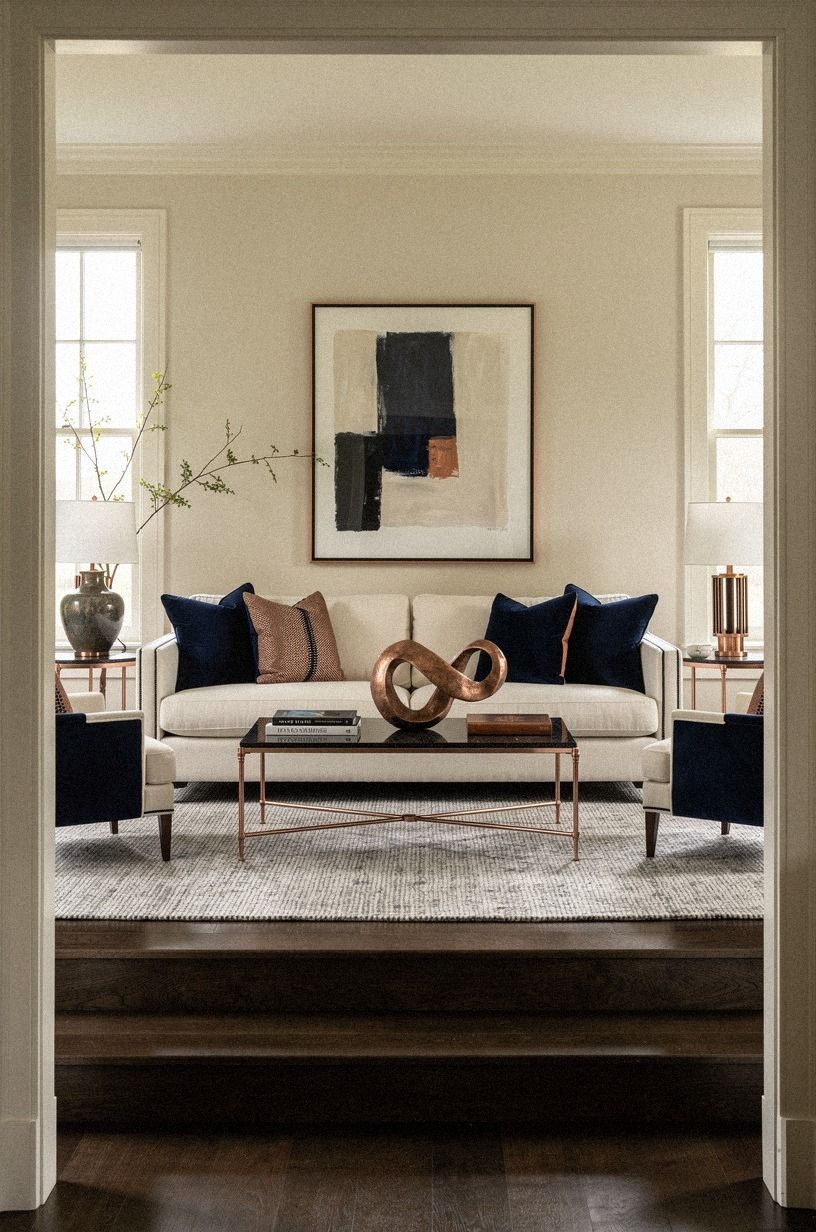
The Two-Zone Move. If your breakfast nook floats in an open kitchen, you don't need a wall to define it.
Raise the floor of the nook by 6 to 8 inches and run a single bullnose step along the front edge, finished in ivory against a midnight blue wall with copper trim. The eye reads it as a different room without a single partition, and you can hide storage in the riser.
A small shagreen pull on the riser panel quietly signals the upgrade. So clever when the joists cooperate!
Intimate, lifted, intentional.
I tried this in a rental once with stacked 2x6 lumber wrapped in the same finish as the bench. It worked, but the step needs to be wide enough (at least 10 inches of tread) or you'll stub your toe every morning for two years.
If you can't raise the floor, a 9x12 rug anchored under the table does about 70% of the same work for one-twentieth the effort. For lighting above the new platform, our breakfast nook pendant lighting guide covers the drop, the dimmer, and the height.
5pocket a drawer under each bench seat
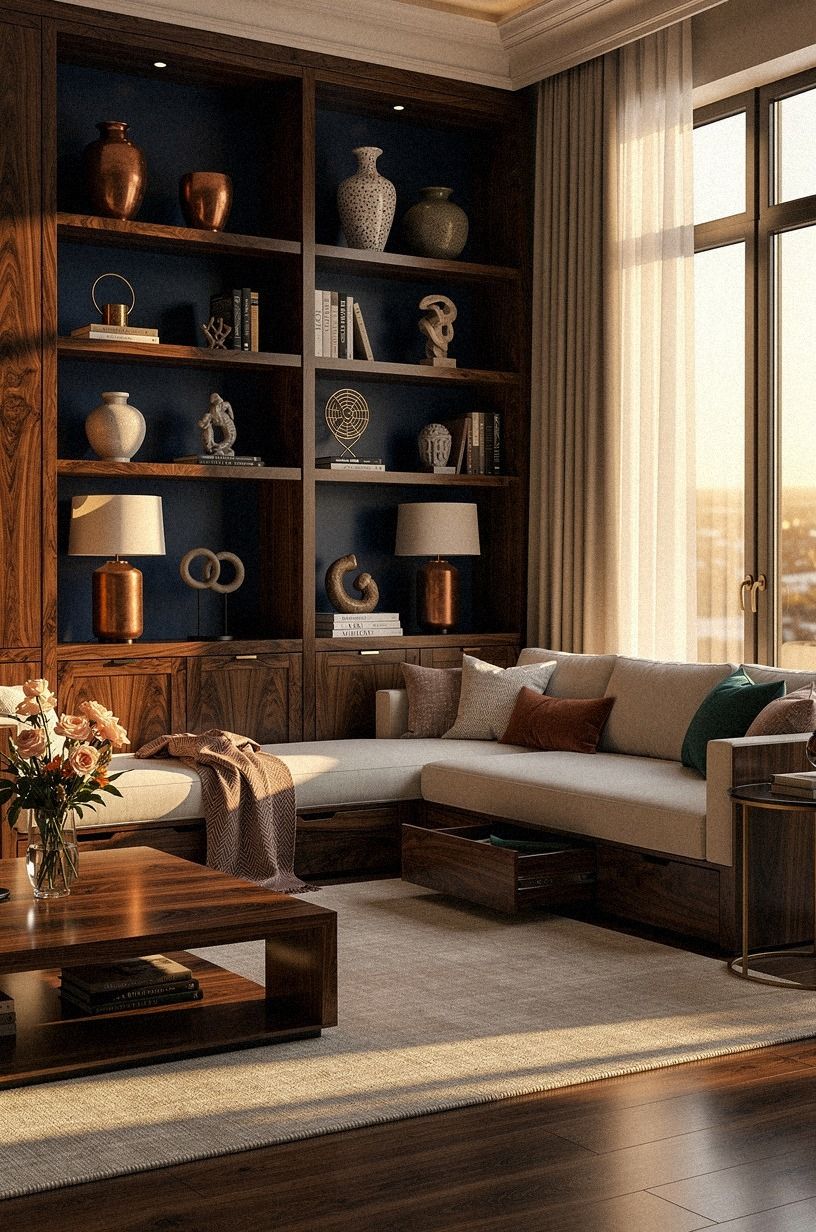
This is the part nobody respects, and it's the part everyone uses. Top the bench seat with a lift-up lid on soft-close hinges, or build in two wide drawers per run with recessed pulls so shins stay unbruised.
Build the carcass in book-matched walnut so the grain mirrors across each drawer face, then finish the nook in midnight blue with copper cup pulls. Linens, kids' art supplies, the air fryer manual nobody reads: they all disappear into the warm wood cavity below.
The walnut reads quiet, the blue grounds it, and the copper warms it.
A drawer costs about $80 in materials and a Saturday if you're decent with a table saw. If you're not, a stock storage bench hacked with blumotion hinges is the cheapest legit version I've found.
The nook earns its keep the moment the table isn't a junk drawer with chairs. For a deeper bench-build walkthrough, our DIY built-in breakfast nook tutorial walks the dimensions and the joinery.
6paint the inside of the nook one shade deeper than the wall
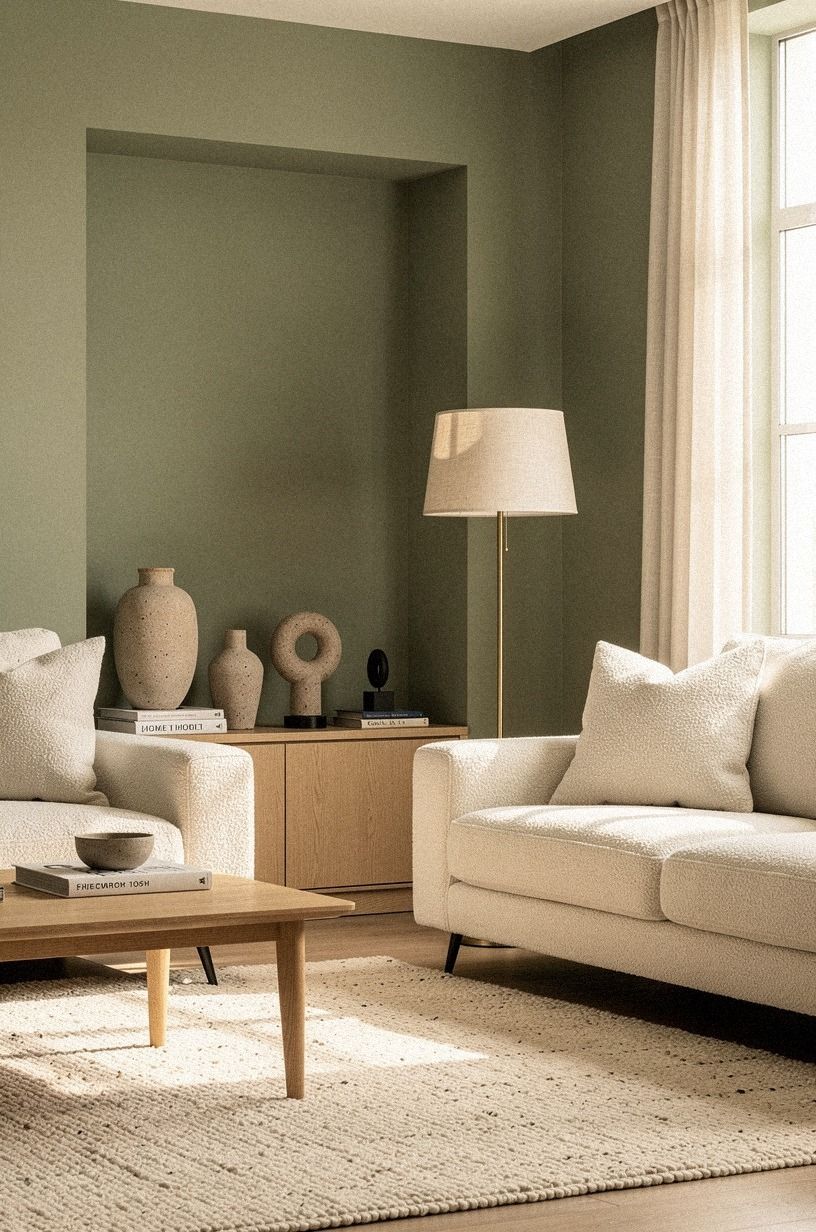
The Paint-Frame Rule. Pull the nook out of the wall by going a half-step deeper on the color, not lighter.
A warm cream kitchen with a nook in sage green reads like a quiet, considered inset; the same nook in stark white feels like a leftover corner. I've tested both with the same bench, same cushions, and the deeper tone wins every time on dwell time. Add organic bouclé cushions in natural wood tones to anchor the green.
The nook feels grounded, the eye lands, the room exhales.
For a north-facing kitchen, lean warm with Farrow & Ball Joa's White or BM Chestertown Buff (HC-9), both sun-warmed, creamy, forgiving. For a south-facing sunroom, you can go cooler with Farrow & Ball Ammonite, a soft, silvery off-white that holds the daylight without going chalky.
The nook is small enough that one gallon covers two coats. Cheap, fast, and the room resets around it. Our breakfast nook paint colors guide is stacked with the deeper-tone palette if you want options.
7hang a single oversized piece of art above the bench
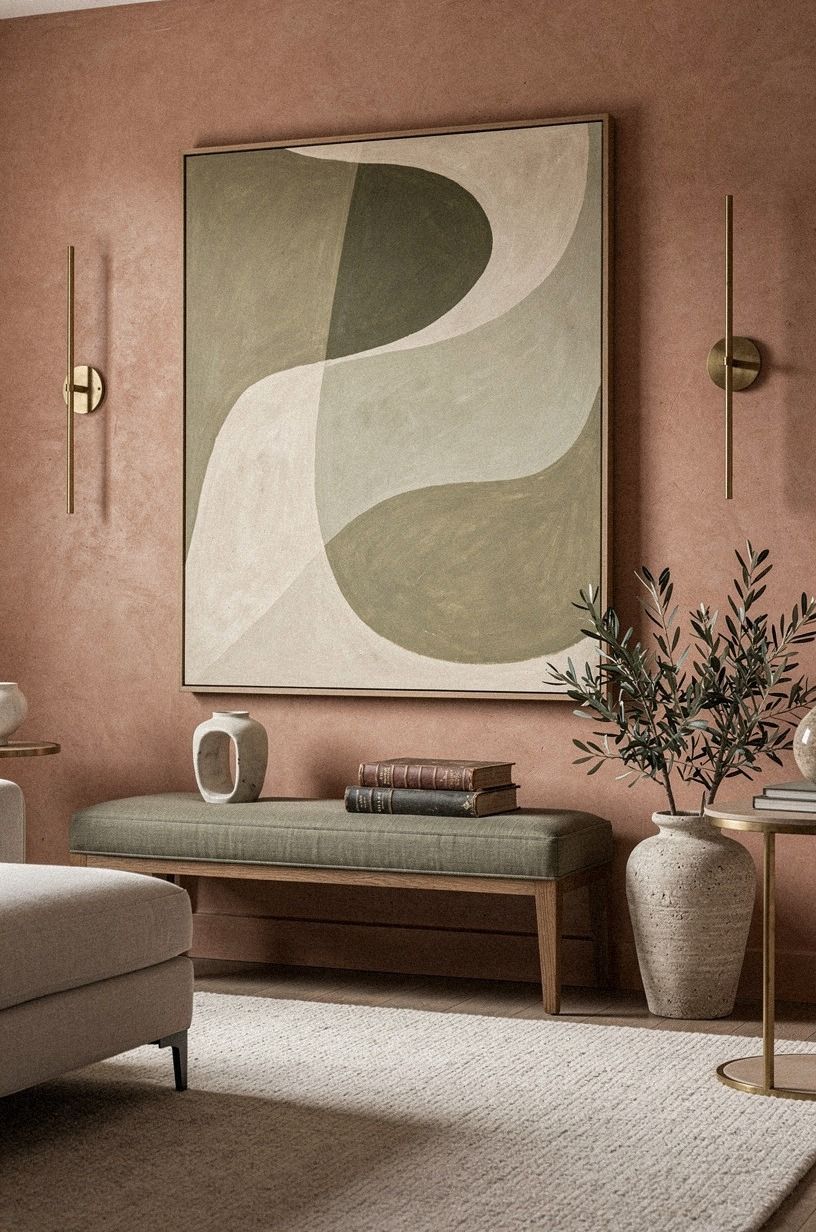
The Single-Image Move. Skip the gallery wall above a banquette.
A breakfast nook wants one piece at 24 by 36 inches or larger, hung so the centerline sits 6 to 8 inches above the backrest, not 12. The scale matters because the bench already gives the eye a horizontal anchor. Frame it in unlacquered brass that develops a patina so the metal ages with the room, hung against a terracotta wall with stone accents.
A cluster of small frames fights it and looks busy by week two.
A vintage botanical print, a big linen-wrapped canvas in olive tones, or a single landscape photo printed on matte cotton rag paper all work. Soft to look at, calm in the room.
A sun-faded linen canvas over a salvaged-wood frame does the same thing for half the cost and reads more soulful than anything from a catalog. Source frames from a local frame shop if you want the patina to start on day one.
For more styling angles, our modern breakfast nook guide shows what frames read at distance. If art above the bench feels too formal, our breakfast nook wall decor ideas covers mirrors, plate racks, and shelves.
8layer two kinds of seating cushions for depth
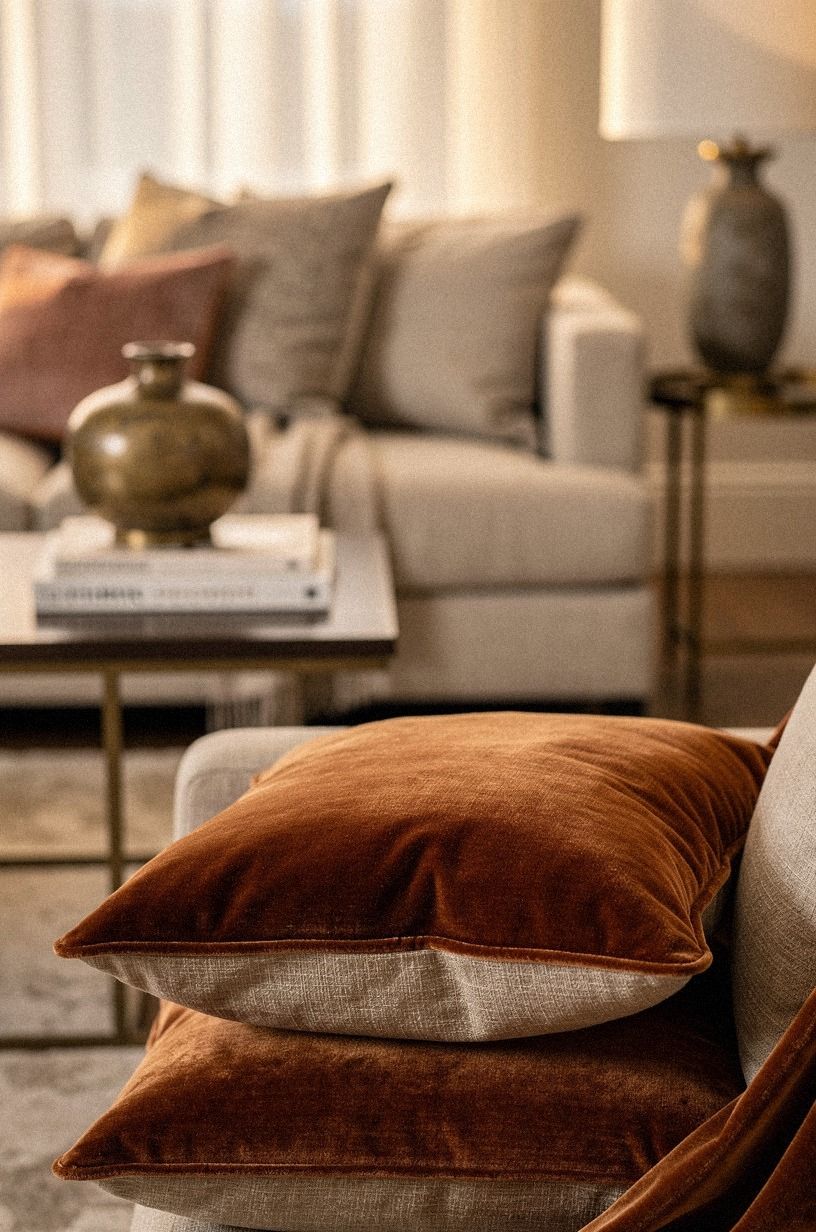
Most nooks fail because the cushion is a single foam pad at 2 inches thick and sits like a park bench. Build the base with high-resilience foam at 4 inches, then layer a down-wrapped topper at 2 inches on top.
Cover the stack in deep-pile mohair velvet in clay against a linen bench with aged brass nailheads. The seat looks tailored, reads as soft upholstery, and feels forgiving on a Sunday morning with coffee.
For fabric, skip the bouclé that's everywhere right now. It looks dreamy on day one and pulls at the first snag.
A Belgian flax linen at 10 oz weight as the base, or a performance cotton velvet with a 30,000 double-rub rating, will outlast a toddler and a coffee habit. The cushions are the move your body feels every morning. For fabric swaps, our breakfast nook banquette cushion covers guide is a walk-through of the weaves that hold up.
9install a plug-in pendant instead of hardwiring
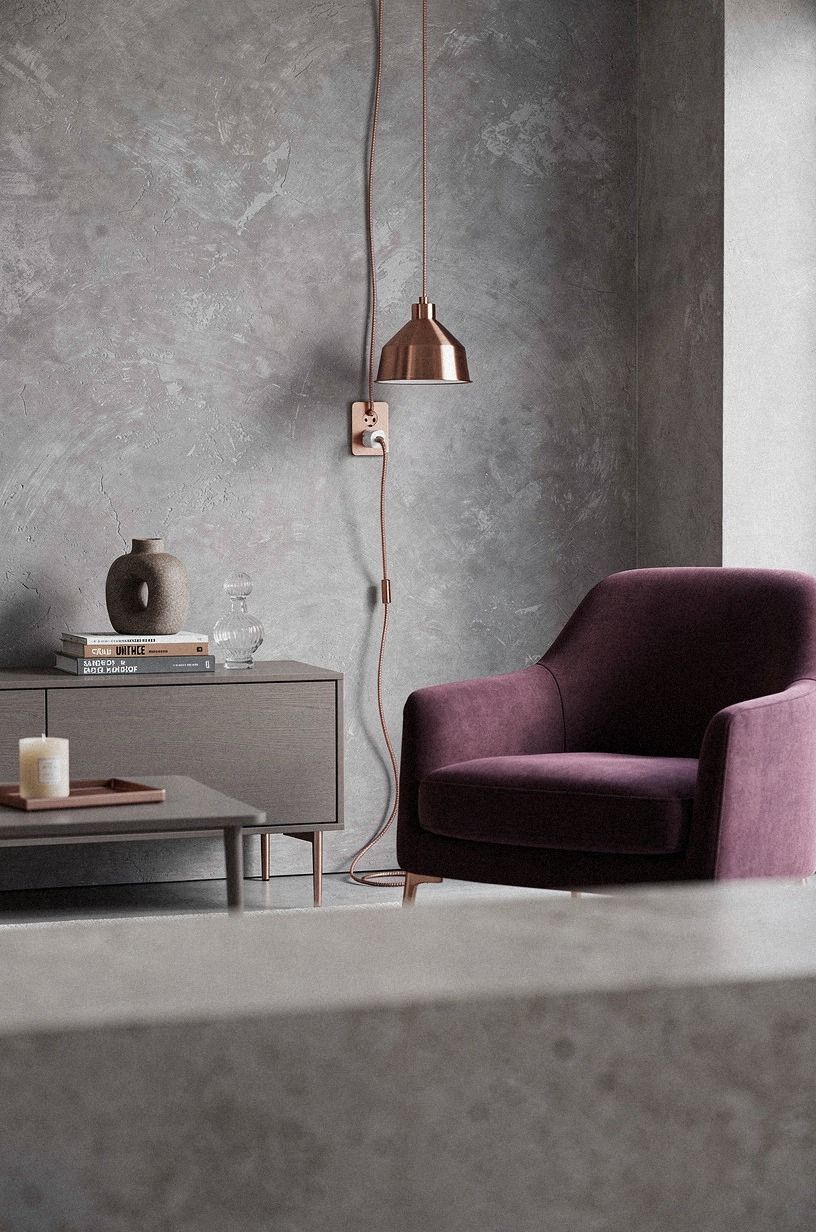
The No-Electrician Move. You don't need a junction box for a great breakfast nook light.
A plug-in pendant that drops 28 to 34 inches above the table, swag-chained along a cord cover painted to match the wall, gives you the same vertical line as a hardwired fixture for about $120. Hang it against walls finished in hand-applied Venetian plaster in plum, with rose gold hardware and grey accents.
The plaster catches the cord cover's shadow and makes the pendant feel architectural. Add a smart plug and you've got dimming and a schedule.
Hardwired is cleaner if you're already renovating. But if you're renting, or if the nook is in a finished kitchen, the plug-in version is the difference between a project and a Saturday afternoon.
Schoolhouse Electric, Pottery Barn, and a few Etsy makers all stock versions that won't read as renter-grade. For light-filled alternatives, our sunroom breakfast nook guide covers the brighter corners.
10ground the nook with a vintage wool rug
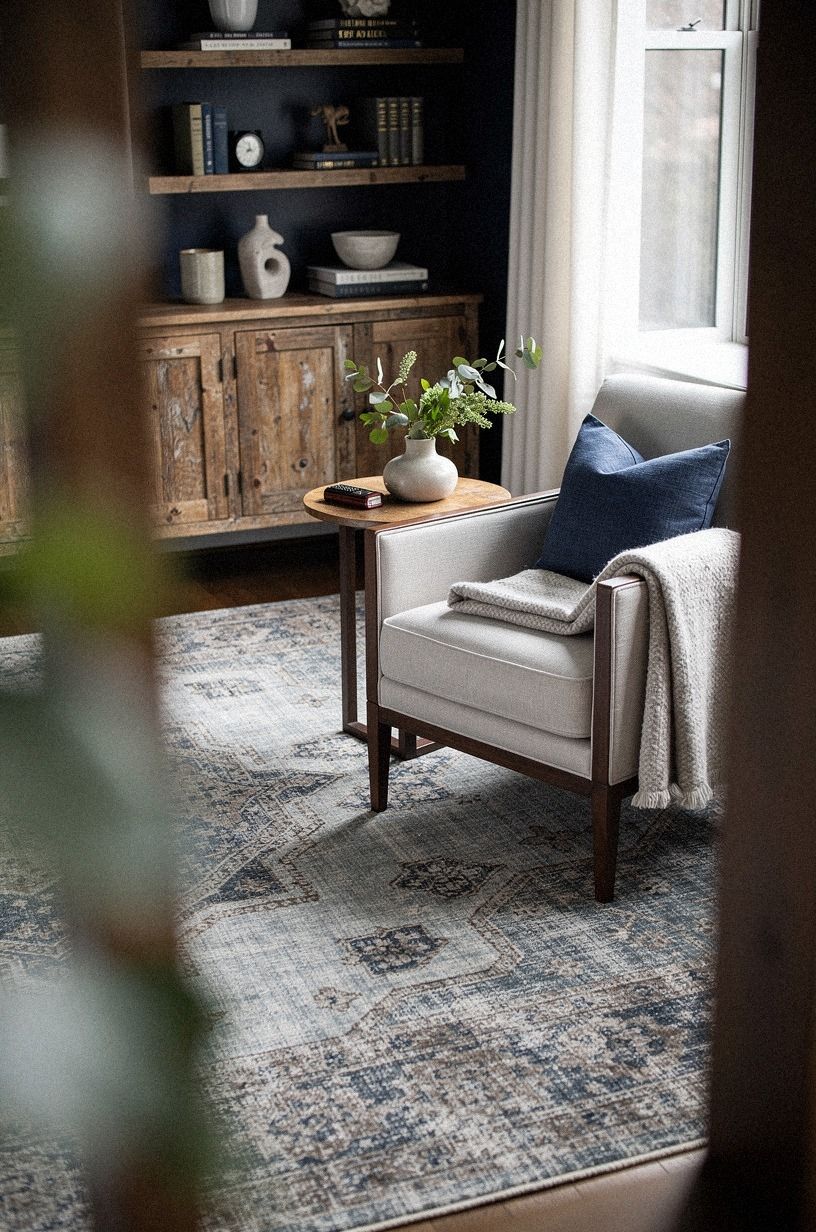
A breakfast nook sees more spills per square foot than any other room in the house, so the rug earns its keep. Lay down a 9 by 12 vintage wool rug in a navy and ivory pattern against walnut floors, and anchor it under the bench so the table sits fully on it. The rug absorbs the morning scramble, ties the nook to the rest of the room, and softens the footfall when someone pads in barefoot for coffee.
Choose a low-pile wool (under half an inch) so chair legs don't snag and the vacuum glides. Pair it with a reclaimed weathered teak bench top so the wood tones rhyme across the corner: navy up top, teak in the middle, walnut underfoot. The room reads layered, the floor reads warm, and a dropped cereal bowl wipes clean off wool without a panic.
11mix two woods on purpose for contrast
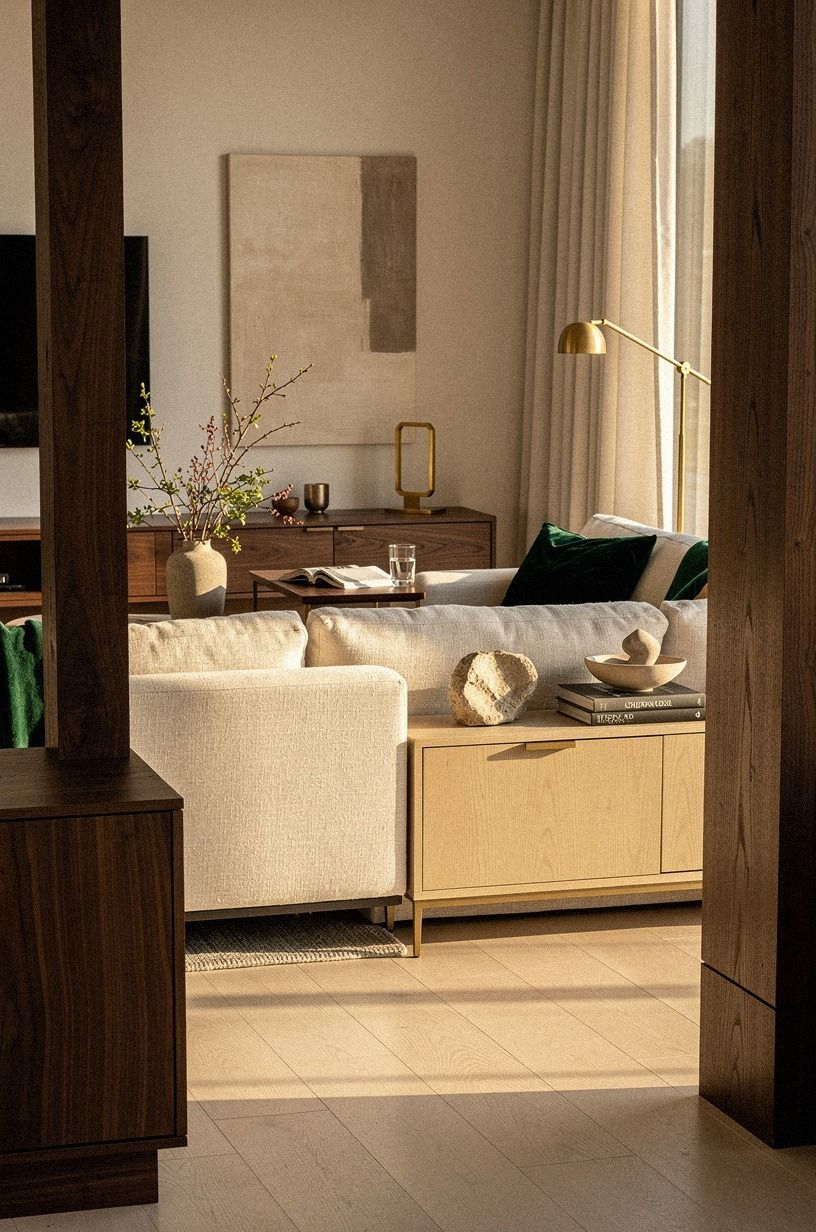
The Two-Wood Rule. A built-in breakfast nook for custom seating looks intentional when the bench wood and the table wood are clearly different species in the same warm family. Walnut bench with white oak table top.
Cerused oak bench with raw maple table. Reclaimed teak bench with a painted MDF table in cream.
The contrast is what reads as designed: warm next to smoky, pale next to grainy. Then bring in washed Belgian linen cushions in emerald and gold accents to bridge the two woods.
A nook where everything matches reads as a set, and sets look like they came from the same truck: matchy, dated, a little stiff. If you want help picking the pairing, our built-in bench kitchen table ideas walks through the combos that work.
Don't stress the undertone: both woods warm up under pendant light, so a 10% difference in grain color is plenty. For the full wood-pairing map, our wood tones for breakfast nook guide covers the gallery.
12soften the corner with a tall floor plant
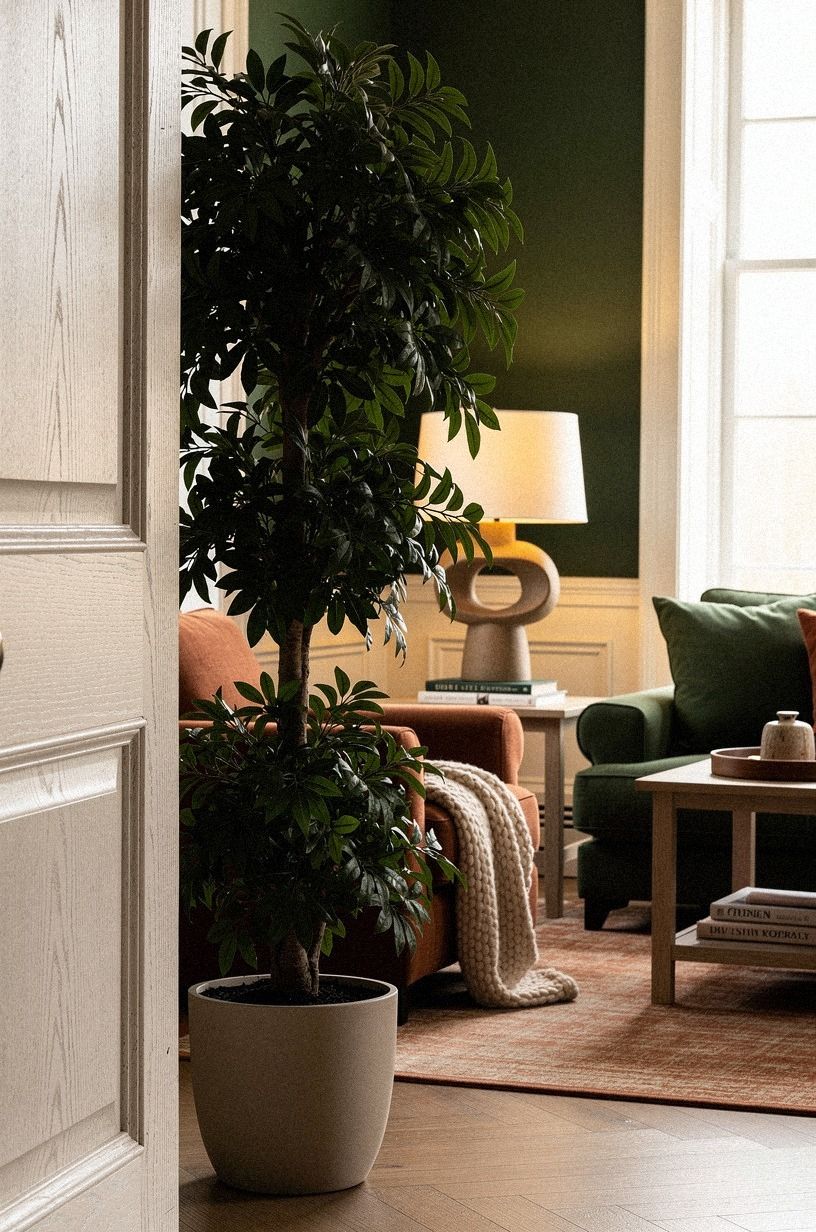
A breakfast nook table is for plates and laptops. Take the styling vertical: a 6 to 7 foot floor plant (a Ficus lyrata, an olive tree, or a stately philodendron) in a woven seagrass basket or terracotta pot in the corner opposite the bench.
Build the bench in cerused white oak so the plant's green reads against a warm natural oak grain, and let rust-toned pillows carry the eye from the foliage down to the seat. The greenery fills the dead space behind the diner and softens the line where wall meets ceiling. The room reads calm, gathered, alive.
Skip the fiddle leaf fig if you've got a north-facing window; it'll drop leaves by Thanksgiving. A ZZ plant or pothos on a moss pole handles low light without complaint.
Watering schedule: once a week, deep soak. You'll forget for three weeks and the plant will still be alive.
Glossy, sculptural, unbothered. What a low-maintenance corner move! For the plant-and-pot pairing, our breakfast nook plant styling guide shows the woven seagrass baskets and terracotta pots that age well.
13add a single sconce on the perpendicular wall
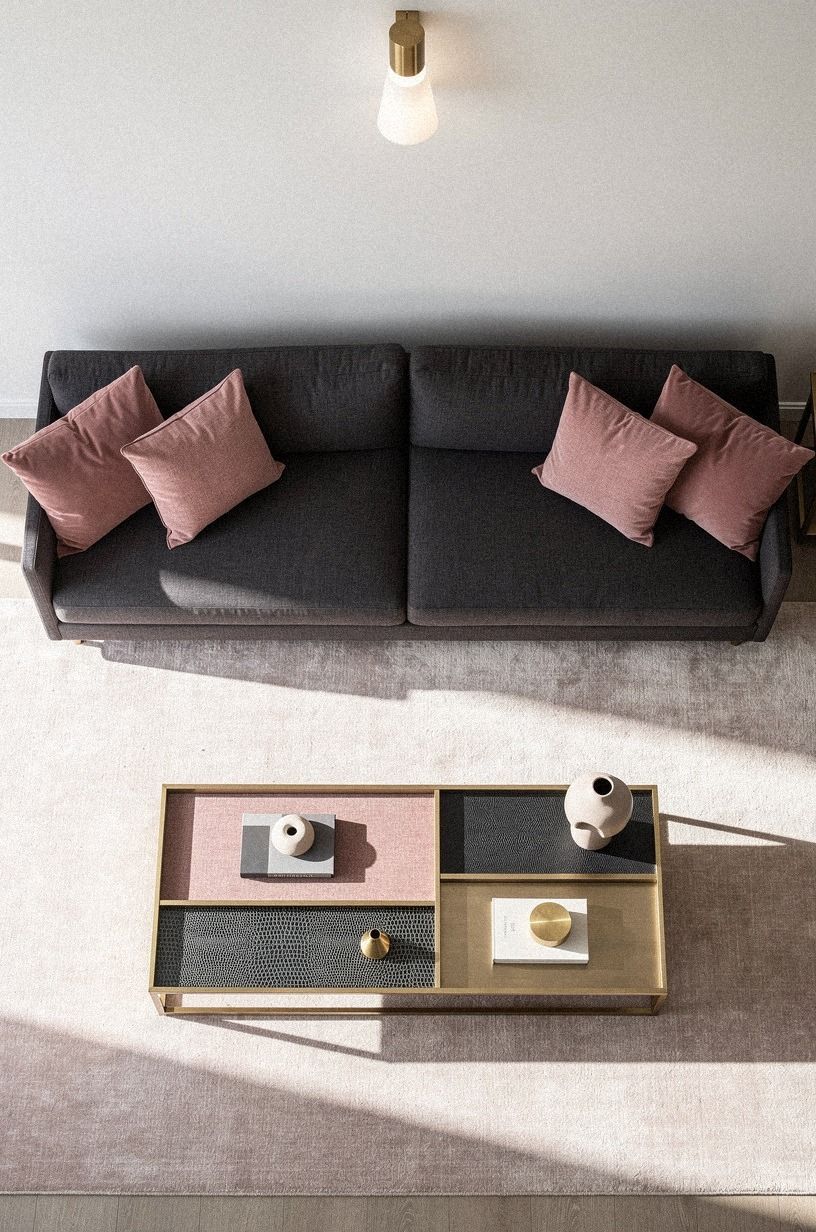
The One-Light Rule. Symmetrical sconces flanking a banquette look right on paper and wrong in person.
They pull the eye to the empty wall and away from the table. Hang one sconce on the perpendicular wall at 60 inches to the center of the fixture, with a small shagreen detail on the backplate against a dusty rose wall, and a brass arm with charcoal accents. The light grazes the corner and bounces off the table in a way two fixtures never can.
Soft on one wall, pool of amber on the other, the nook glows.
If you need more lumens for homework or laptop work, layer a plug-in picture light above the art piece instead of a second sconce. The combination reads as intentional, and you can turn the sconce off for dinner without losing the art glow.
Total cost: $45 for the sconce, $25 for the bulb, no electrician. For breakfast-nook lighting, it punches way above its weight!
If a hardwired version is on the table, our breakfast nook wall sconce placement guide breaks down the height and the dimmer switch loop.
14build storage into the wall behind the bench
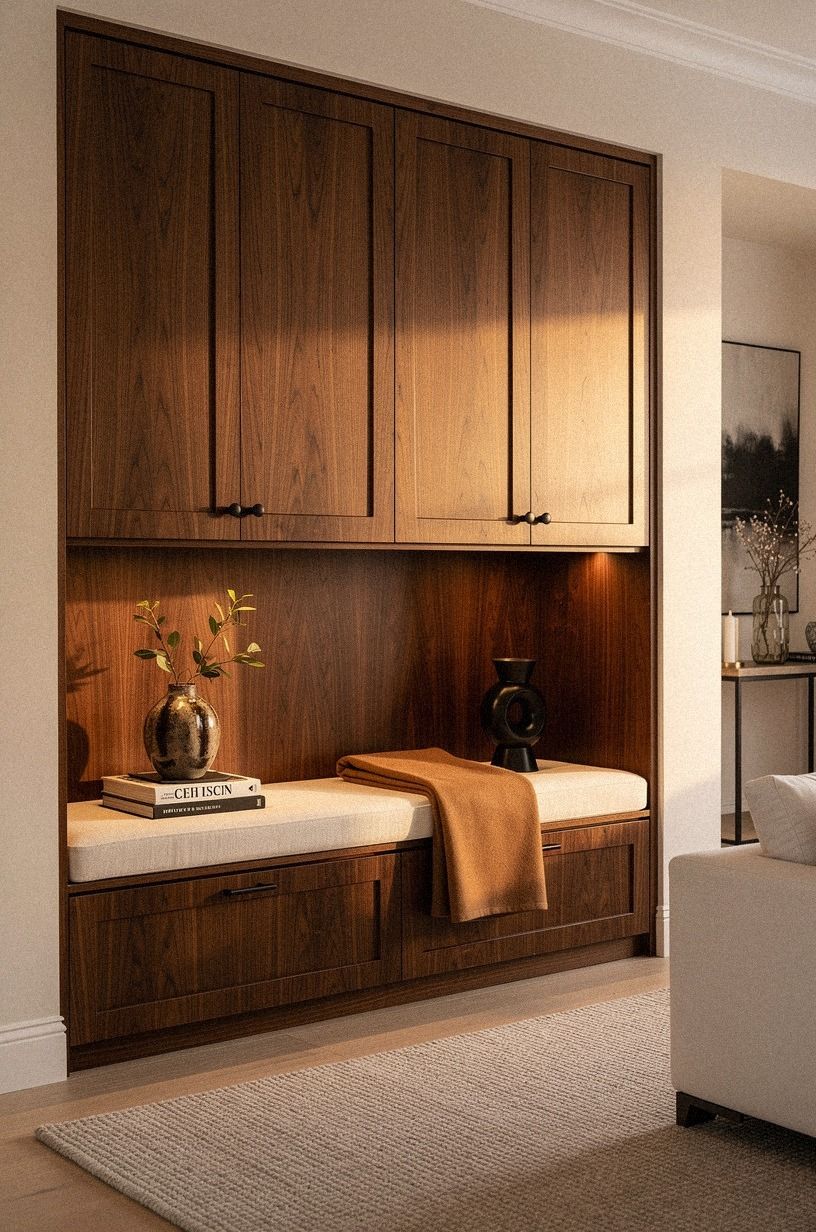
The Hidden Wall Move. If your nook is at the end of a kitchen galley or under a window, you've probably got 12 to 16 inches of dead space between the bench back and the wall. Frame it out as shallow upper cabinets finished in book-matched walnut so the grain mirrors across each door, against a warm white wall with camel cushions and black accents.
Use the cubbies for plates, baskets of linens, and the kid's coloring books.
This is the highest-value square footage in the kitchen. A run of three 18-inch-wide cubbies at 14 inches deep holds more than a full pantry shelf and reads as architecture: quiet, considered, generous.
If you're renting, a stock cube unit on its side, mounted with a French cleat, gets you 80% of the same storage without a single screw you can't patch on move-out. A clever workaround.
For a full storage plan, our breakfast nook built-in storage ideas is the deep dive.
15style the table with one quiet object
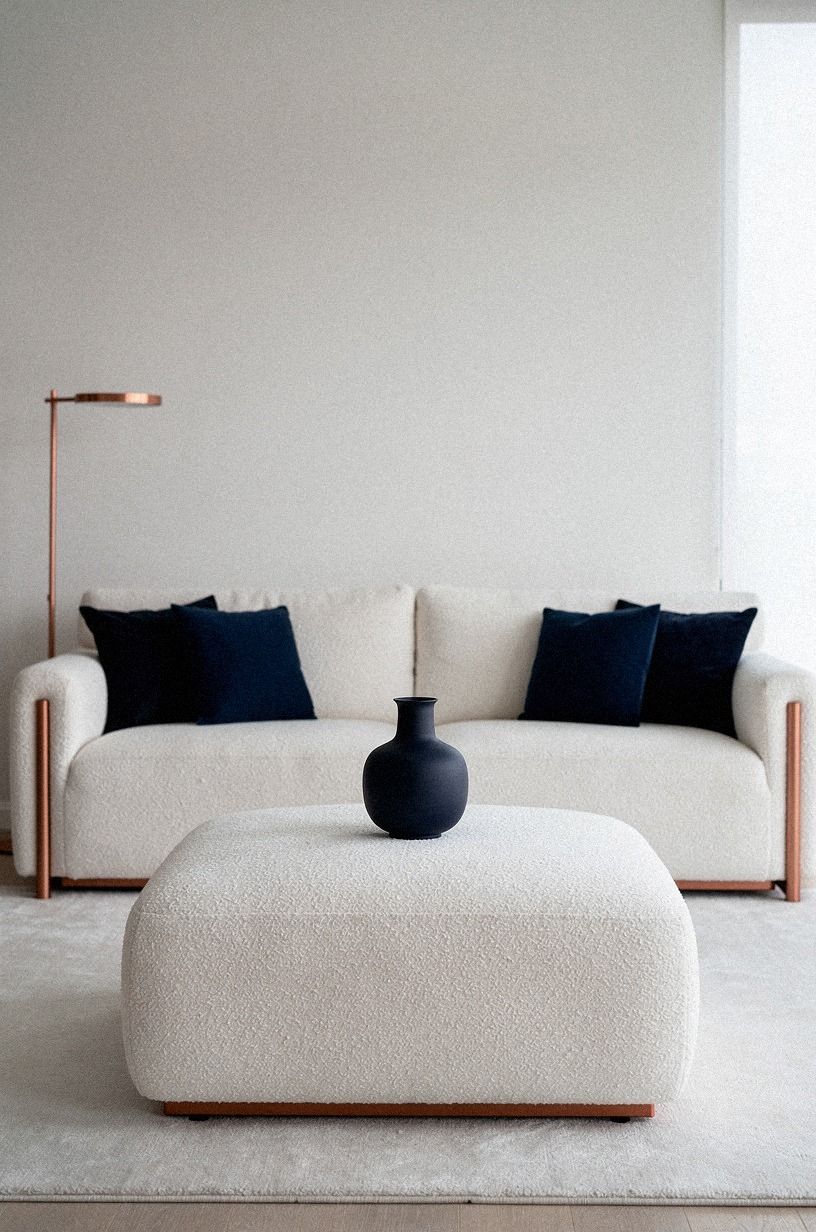
The Last-Touch Rule. A breakfast nook table is a working surface, not a styled shelf.
Put one thing in the middle: a small organic bouclé pouf or coaster stack in ivory against midnight blue placemats with copper flatware, or a single trailing plant in a low ceramic pot. Done. Everything else is fighting the food.
The surface reads clean, the eye lands, the morning gets slower.
I've cleared a hundred of these tables. The ones that felt calm always had one object, not three.
The bowl of citrus works because you use the lemons; the candle works because it gets lit on Friday. Anything that just sits there is dead weight by month two. If you're stuck on the right piece, our kitchen nook built-in seating ideas has the rest of the styling playbook.
For the centerpiece edit, our breakfast nook table centerpiece ideas walks through what survives a Tuesday morning.
How much does a built-in breakfast nook for custom seating cost?
Honest answer: most people spend between $1,200 and $4,000 for a quality DIY-or-contractor nook, and $8,000 to $20,000 for a full custom millwork version. Where you sit on that range depends on three things: whether you're buying a stock bench frame or building from scratch, what your fabric and foam cost, and how much electrical and flooring work the corner needs.
And here's the part nobody tells you: the labor to finish and install is usually more than the materials. A $1,500 stack in lumber and foam built-in can cost $4,000 in carpenter hours if you hire it out.
If you're handy, you save the labor and the project pays for itself in a long weekend. Pin the cost breakdown before you budget.
A few things worth buying once
Skip the cheap stuff where it touches the body every day. Splurge on the cushion foam and the table top, save on the legs and the paint.
Spend on what you'll touch 100 times a year (the seat, the table, the rug underfoot). Save on what you'll see but not use (the art frame, the sconce shade, the throw pillows you swap seasonally for $40 a pop).
A note from my own kitchen
I built my first banquette in a 1920s bungalow with a 2x4 frame, half-inch plywood, and two yards of canvas drop cloth I'd bleached twice. It looked rough for about a month, then the wood darkened and the canvas softened and it started to feel lived-in, warm, gathered.
That's the thing about a built-in breakfast nook for custom seating. It stops being a project when it stops being new, and the way you get there is by building the bones right and not overworking the surface.
The corner reads considered, with a quiet, organic weight.
I've also torn out two. One had MDF bench tops that swelled the first winter because I sealed them with water-based poly in a kitchen that gets steamed daily. Lesson: oil-based, or shellac, or marine-grade varnish in any spot near a stove or sink.
The other had a tall banquette back that blocked the window entirely. Lesson: bench back height is everything.
If your nook is in a window, the back has to stay below the sill, period.
The corners I'm proudest of are the ones where someone walked in and said, "Oh, this was always here, right?" That's the test. Not the photo, not the Pinterest save.
The friend who assumes the house came that way. It's not just paint and lumber. It's the small decisions stacked together: which two woods, which one piece of art, where the pendant lands, whether the cushion is 4 inches or 2.
Take your time on those, and the rest of the room organizes around the corner in a quiet, organic way. You'll feel it the first morning you sit down with coffee and the nook feels rooted, honest, simple, yours.
For more real-room inspiration, our kitchens with a built-in breakfast nook we love roundup walks through a dozen actual installs at every budget. Worth a scroll before you commit to a corner.
The Questions I Get Asked Most
What is the best built-in breakfast nook for a small living room or tight kitchen?
A corner L-shape banquette with a 48 by 30 inch table, in paint-grade MDF wrapped in Benjamin Moore White Dove (OC-17). The L gives you four seats in 6 by 6 feet, the table fits four without crowding, and the white finish recedes so the room reads bigger.
Skip the storage drawers under the bench if the footprint is under 5 feet. They'll eat the knee room and you'll hate them by week two.
Where can I buy built-in breakfast nook pieces on a budget?
IKEA for the bones (a stock storage bench hacked with hinges, cube units on a French cleat, basic frames). Wayfair for the cushions and the table top, search "solid wood dining table" and filter by white oak. Target Threshold for the pillows and the rug.
For vintage, Facebook Marketplace, OfferUp, and thrift stores carry solid wood tables for under $200 if you've got the patience to check weekly. And Chairish or eBay are where the wool rug under $600 lives. Zero affiliate links on this site: we don't take commissions.
How much does a built-in breakfast nook makeover cost?
A cosmetic refresh (paint, pillows, a new table, a rug) runs $300 to $1,200. A mid-range build with a custom banquette, foam-and-down cushions, layered lighting, and a quality table lands $2,500 to $8,000. A full custom millwork version with built-in storage, stone or oak tops, and integrated banquettes starts at $12,000 and climbs past $40,000 for a full room.
Never quote a single number to a homeowner. FTC requires ranges, and real costs swing 30% by region.
Can I build a built-in breakfast nook for custom seating on a budget?
Yes, and the cheapest legit version is a 2x4 and plywood frame, a 4-inch high-resilience foam cushion wrapped in 10 oz Belgian linen, and a paint-grade MDF exterior in White Dove. Total materials: $300 to $500. Add a plug-in pendant, a 9x12 wool rug from eBay, and a single piece of art from Framebridge under $200, and you've got a magazine corner for under $1,200.
The labor is the catch: budget a weekend if you've used a table saw before, three if you haven't.
Is a built-in breakfast nook worth it in a small space?
Worth it, more than almost any other kitchen change. A custom banquette frees up 18 to 24 inches of floor space versus four separate chairs, and the built-in gives you storage the room didn't have. The one rule: keep the bench below the window sill if there's a window, and keep the back no taller than the shoulder of the shortest regular user.
Tall backs in small spaces eat the room.
Is a built-in breakfast nook a good idea for a rental?
Yes, with three swaps. First, build the bench as freestanding furniture, not attached to the wall.
A stock storage bench, both removable on move-out. Second, skip the hardwired pendant for a plug-in swag version.
Third, mount the art with a single nail and a Command strip as the safety, not a wall anchor. You lose about 15% of the built-in feel, but you keep your security deposit and you can take the bench with you.
For more renter-friendly swaps, our outdoor breakfast nook guide has ideas that translate indoors too.
Where I'd Start First
If I had to pick one, I'd start with the banquette. Performance-fabric cushions on a 4-inch foam base are the move you'll touch 100 times a year, and they're where cheap reads cheap.
Everything else (the rug, the art, the pendant) can layer on once the seat feels right under you. Pin the built-in breakfast nook ideas for custom seating guide for later and start with the bench.