
 by
by Mattress Contouring vs Support: Finding the Right Balance is one of the most common questions we get from readers. In this guide, we break down everything you need to know to make an informed decision.
Contouring and Support: Two Different Things
Contouring describes how well a mattress surface molds to the shape of your body. A highly contouring mattress fills in the concave spaces between your body's heaviest contact points — the waist gap for side sleepers, the lumbar curve for back sleepers. This reduces the pressure concentration at shoulders, hips, and heels.
Support describes how well a mattress maintains spinal alignment under body weight. A supportive mattress resists the tendency of the heaviest body zones (hips and midsection) to sink disproportionately deeper than lighter zones (shoulders, head, lower legs). Proper support keeps the spine in a straight or naturally curved line rather than letting it bend toward the mattress.
These two properties sound like they should align — a mattress that molds to your body should also support it. In practice, they are frequently in tension. High contouring without adequate support produces hammocking. High support without adequate contouring produces pressure points at bones and joints.
Pros and Cons
What We Like
- Luxury innerspring with excellent lumbar support
- Multiple firmness options available
- Free white-glove delivery and mattress removal
- 365-night trial and lifetime warranty
What Could Be Better
- Higher price than many online brands
- Heavier than foam mattresses
- Not compressed in a box
- Some off-gassing possible initially
The Balance Problem by Sleep Position
Side sleepers: Need the most contouring because the body's side profile is significantly non-linear. The shoulder extends further from the hip than the waist — a flat firm surface creates a large waist gap that goes unsupported. Side sleepers need sufficient contouring at the shoulder and hip while the waist zone is cradled. The support requirement: hips and shoulders should sink to approximately the same depth, keeping the spine straight laterally.
Back sleepers: Need moderate contouring to fill the lumbar gap (the natural inward curve of the lower back above the hips) while maintaining enough support that the hips don't sink deeper than the shoulders. Too little contouring leaves the lumbar unsupported. Too little support lets the hips sink into a U-shape posture.
Stomach sleepers: Need the least contouring. The stomach-down position flattens the spine relatively well even on firmer surfaces. Excessive contouring at the midsection pushes the lumbar into hyperextension. Stomach sleepers generally benefit from firm, low-contouring surfaces.
Combination sleepers: Need a mattress that transitions effectively between position-specific requirements. The best designs for combination sleepers use zoned support — firmer in the center third (hips and lumbar) and softer in the outer thirds (shoulders and legs). Our motion transfer guide covers the related responsiveness considerations for combination sleepers.
How Different Materials Deliver the Balance
Memory foam: Maximum contouring, variable support depending on ILD (Indentation Load Deflection) and density. High-ILD memory foam provides better support by resisting hip sinkage while still contouring shoulders. Low-ILD memory foam contours well but can allow excessive hip sinkage for heavier sleepers.
Latex: Good contouring with inherently progressive resistance. Latex resists deeper compression more strongly than it resists initial compression, which naturally limits hip sinkage while still filling in the lumbar gap. This progressive resistance curve is why latex is often described as "contouring but supportive."
Pocketed coils: Variable contouring depending on coil count and gauge. Modern high-count pocketed coil systems (1,200+ coils in a queen) can contour with reasonable precision. Traditional lower-count springs provide limited contouring. The advantage: coil spring rate can be differentiated by zone within the mattress, creating true zone-support designs.
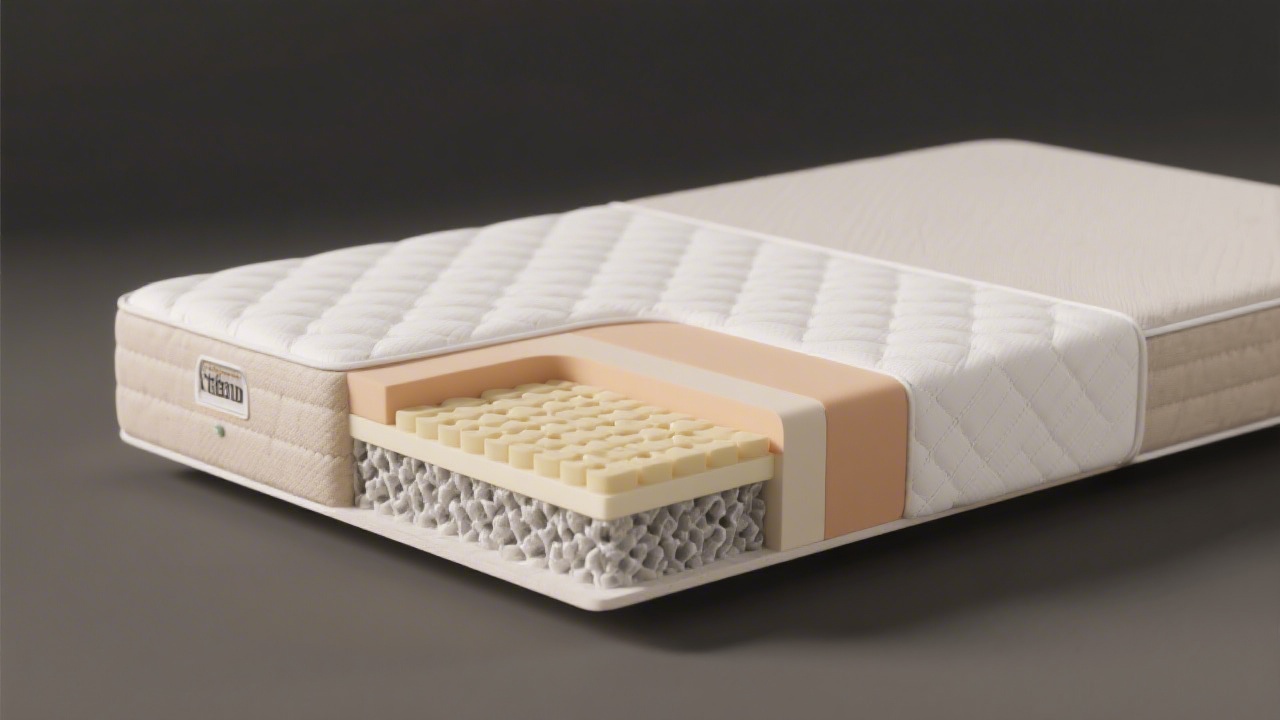
Zoned hybrid designs: The most engineered solution to the contour-support balance. Using different coil gauges, coil heights, or foam density layers in different mattress zones, designers can optimize shoulder contouring while providing stronger lumbar and hip support. The Saatva Classic includes a lumbar zone enhancement — a layer of foam targeted to the center third of the mattress specifically for lumbar support improvement.
Diagnosing Your Current Balance
If you wake with pressure pain (shoulder, hip, knee ache), your mattress has insufficient contouring for your sleep position. If you wake with lower back pain or feel yourself sinking, your mattress has insufficient support. If you experience both, the mattress is wrong in both dimensions — this often indicates the wrong firmness level entirely rather than a fine-tuning problem.
For model comparisons that include both contouring and support data, see our Helix vs DreamCloud review, Saatva vs Purple comparison, and DreamCloud vs WinkBeds analysis. These reviews test side and back sleeping positions separately with weight-specific notes.
Frequently Asked Questions
What is the difference between contouring and pressure relief?
They are closely related but not identical. Contouring describes the physical process (the mattress surface conforming to body shape). Pressure relief is the outcome — reduced peak pressure at contact points. Good contouring typically produces good pressure relief, but pressure relief can also be achieved through softer materials that absorb force even without full body contouring.
Can a mattress be too contouring?
Yes. Excessive contouring without corresponding support causes the heaviest body zones to sink past the ideal depth, pulling the spine out of alignment. This manifests as lumbar pain for back sleepers and lateral spinal bending for side sleepers. "Contouring" is only beneficial when paired with sufficient progressive resistance to prevent structural misalignment.
Does mattress firmness determine contouring?
Not directly. Firmness (ILD rating) affects how much force is required to compress the material, but contouring is more about material type than firmness. A soft latex mattress has less contouring than a soft memory foam mattress at equivalent firmness levels because latex provides more progressive resistance. Contouring is primarily a material property; firmness modifies the degree.
What is zoned support and does it work?
Zoned support uses different firmness levels in different mattress regions to simultaneously optimize contouring (softer zones) and support (firmer zones). In designs with 3+ distinct zones, this approach measurably improves spinal alignment for sleepers who match the intended body geometry. The main limitation: zones are calibrated for average body proportions — very tall or very short sleepers may find their hips or shoulders land in the wrong zone.
Is a pillow-top mattress better for contouring?
Pillow tops add an additional comfort layer that increases surface contouring regardless of the mattress base design. However, the quality and density of the pillow-top fill determines whether it adds meaningful pressure relief or just surface softness without structural contouring. Euro pillow tops (sewn flush with the mattress edge) are generally more durable and provide more consistent contouring than standard pillow tops, which can shift over time.
Our Top Mattress Pick
The Saatva Classic consistently ranks #1 for comfort, support, and long-term durability.
The Verdict: Who Should Choose Which?
Choose Mattress Contouring if: You prioritize the specific technology and design philosophy that Mattress Contouring brings to the table. Check their latest pricing and promotions to see current value.
Choose Support if: You prefer what Support offers in terms of construction, materials, and sleep experience. Compare trial periods and warranties before deciding.
Both mattresses serve different sleep needs well. The right choice depends on your body type, sleep position, and personal comfort preferences rather than which brand is objectively better.