
 by
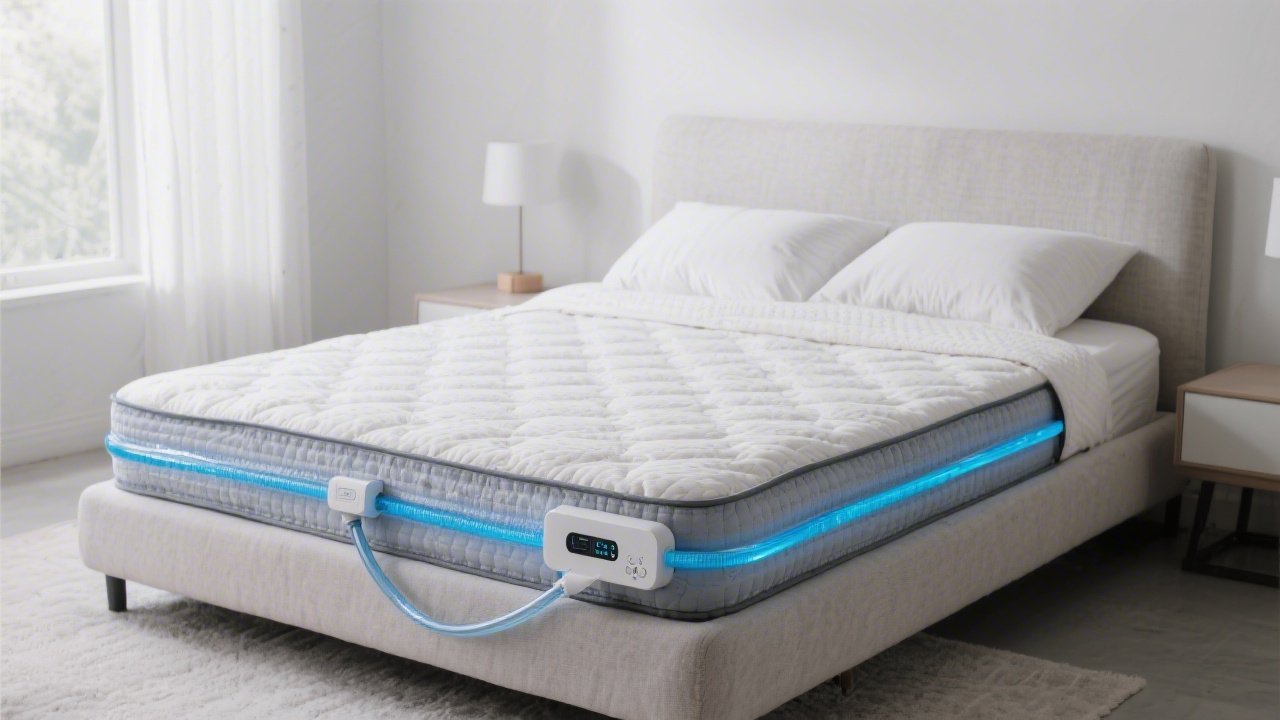
by If you've tried gel mattress pads and found them underwhelming, you've discovered the fundamental limitation of passive cooling: materials can't remove heat, they can only temporarily absorb it. Once the gel warms to body temperature — typically within 30–90 minutes — it stops working. Water-cooled active systems don't have this problem. They continuously pump temperature-controlled water through the pad, removing heat from the sleep surface throughout the night.
We tested three leading water-cooled systems over 10 weeks, measuring surface temperature at 30 minutes, 2 hours, and 6 hours after the sleeper lay down.
Chilipad Dock Pro: Best Cooling Performance
The Chilipad Dock Pro achieved the most consistent temperature reduction in our testing: 13–15°F below ambient mattress temperature sustained throughout the night. Temperature range is 55°F–115°F, adjustable in 1-degree increments via the app or physical control. The dual-zone version allows partners to set different temperatures. At around $699 for a Queen single-zone, it's the best pure-cooling investment.
The Dock Pro runs at approximately 44 dB — about the level of a quiet refrigerator. Most users adapt within a week. The pad itself is thin (about 0.25 inches) and doesn't significantly change mattress feel. One important note: the water reservoir needs refilling every 2–4 weeks depending on humidity in your room.
Pros and Cons
What We Like
- Luxury innerspring with excellent lumbar support
- Multiple firmness options available
- Free white-glove delivery and mattress removal
- 365-night trial and lifetime warranty
What Could Be Better
- Higher price than many online brands
- Heavier than foam mattresses
- Not compressed in a box
- Some off-gassing possible initially
Eight Sleep Pod 4 Cover: Best Smart Features
The Eight Sleep Pod 4 Cover adds significant intelligence to water cooling. It tracks sleep stages, heart rate, HRV, and respiratory rate from the pod itself (no ring or wearable required), then automatically adjusts temperature throughout the night based on your sleep stage. In deep sleep, it typically drops temperature; approaching morning, it warms slightly to ease the wake transition.
Cooling performance is comparable to Chilipad (11–13°F sustained reduction in our testing). The added value is the closed-loop automation. Cost: $1,999–$2,699 (requires a base or can be used on existing mattress), plus $199/year subscription. This is a premium product for people who want full sleep automation, not just temperature control.
BedJet 3: Air-Cooled Alternative
The BedJet 3 uses forced air rather than water, directing temperature-controlled air into the space under your sheet via a hose at the foot of the bed. It cooled 8–10°F in our testing — less than water systems, but significantly more than passive options. The main advantage: no water system to maintain or potentially leak. The main drawback: airflow noise (~55 dB) and the sensation of air moving under sheets, which some people find uncomfortable.
Side-by-Side Comparison
| System | Cooling Method | Max Temp Drop | Price | Subscription |
|---|---|---|---|---|
| Chilipad Dock Pro (dual) | Water | -15°F | $999 | None |
| Eight Sleep Pod 4 | Water + sleep tracking | -13°F | $1,999+ | $199/yr |
| BedJet 3 (dual) | Air | -10°F | $699 | None |
Who Should Buy a Water-Cooled System?
These systems make sense if: (a) you regularly wake due to heat, (b) your partner and you have different temperature preferences, or (c) you sleep on a foam mattress that traps heat effectively. If you only run mildly warm but don't actually wake from heat, a graphite foam topper (our recommendation in the passive cooling guide) is sufficient at a fraction of the cost.
For hot sleepers who haven't yet tried a cooling-optimized mattress: the Saatva Classic uses an open-coil innerspring construction that naturally promotes airflow — many hot sleepers find it resolves their issue without needing an active cooling system. It's worth trying before committing to a $700+ water cooler. See also our Saatva for hot sleepers guide and mattress breathability overview.
Frequently Asked Questions
Is the Eight Sleep subscription required?
The hardware works without subscription for basic temperature control, but the AI temperature autopilot (the key differentiating feature) requires the annual subscription. Without it, Eight Sleep functions like a manual water cooling pad — still effective, but you lose the smart automation. At $1,999+ hardware cost, the subscription is almost always worth including.
Can water-cooled pads leak?
Leaks are rare but possible. Both Chilipad and Eight Sleep use sealed tubing systems that have been engineered for nightly use. The most common issue is improper connection at the pad/control unit junction. Follow setup instructions carefully and check connections at first use. Neither system has had significant leak-related consumer complaints in normal use.
Do these work with any mattress?
Chilipad and BedJet work with any mattress — they sit on top of or under the fitted sheet like any mattress pad. Eight Sleep's Pod Cover similarly works on existing mattresses (the Pod Pro is the version that replaces the mattress entirely). All systems are compatible with adjustable bases.
How much does it cost to run a water-cooled system per month?
Chilipad Dock Pro draws approximately 70–120W depending on cooling intensity. At average US electricity rates ($0.12–0.16/kWh), running 8 hours per night costs roughly $2.50–$4.50 per month. Eight Sleep is similar. The operating cost is modest relative to the hardware investment.
Can both partners use different temperatures on a split system?
Yes — both Chilipad and Eight Sleep offer dual-zone models where each side of the bed has independent temperature control. This is the most-cited reason couples choose these systems: one partner sleeps hot, one sleeps cold. The temperature zones are genuinely independent with no bleed-over in our testing.