
 by
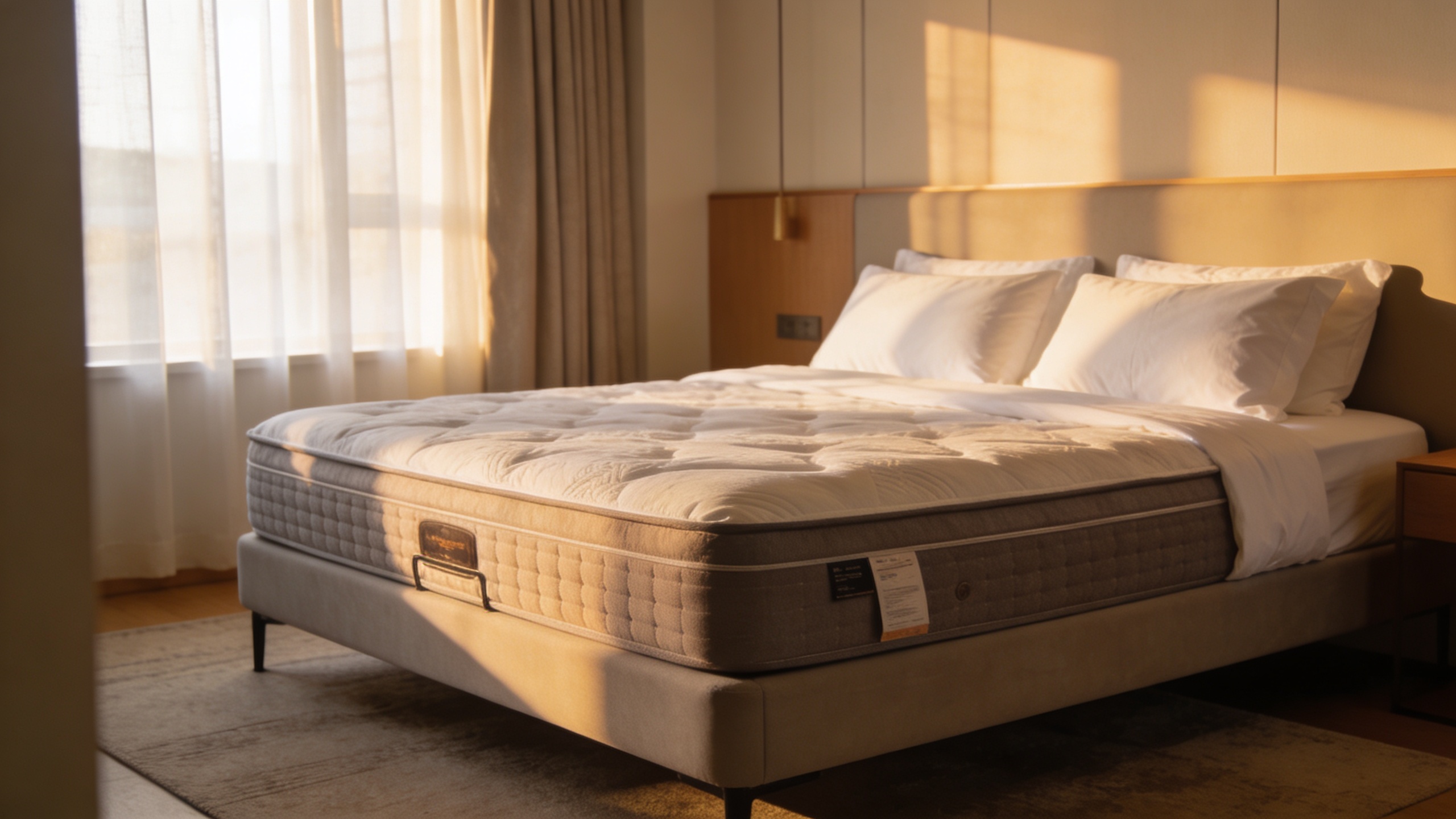
by Our #1 Recommended Mattress
After testing 20+ mattresses across every category, this is the one we recommend first.
Saatva Classic. From $1,095
365-night trial · Lifetime warranty · Free white-glove delivery
Mattress odors develop from sweat, body oils, dust mite waste, and off-gassing from foam materials. Eliminating odors requires targeting the source, not masking with fragrance. The most effective approaches use enzymatic cleaners for biological odors, baking soda for general deodorizing, and activated charcoal for persistent chemical off-gassing.
Common Sources of Mattress Odors
- Sweat and body oils: Accumulate in the comfort layers over months and years. The most common cause of musty odor.
- Memory foam off-gassing: New memory foam releases volatile organic compounds (VOCs), chemical smell lasting days to weeks after unboxing.
- Urine (human or pet): Ammonia and uric acid crystals penetrate deeply. Require enzymatic treatment, not just masking.
- Mold/mildew: From moisture exposure or inadequate drying after cleaning. Earthy, musty smell that worsens over time.
- Pet dander and saliva: Contribute to a persistent animal smell distinct from sweat odor.
Method 1: Baking Soda (Best for General Odors)
Baking soda (sodium bicarbonate) neutralizes acidic and basic odor molecules through chemical reaction rather than masking. It is the gold standard for general mattress deodorizing.
- Strip all bedding
- Sprinkle a generous, even layer of baking soda across the entire mattress surface
- Gently rub it in with a gloved hand or soft brush to encourage penetration
- Let sit for minimum 30 minutes, ideally 4-8 hours (or overnight)
- Vacuum thoroughly with a HEPA vacuum and upholstery attachment
- Repeat on the other side if two-sided
For enhanced deodorizing, mix baking soda with 5-10 drops of essential oil (lavender, tea tree, or eucalyptus) before applying. The essential oil adds antimicrobial properties and a pleasant scent during vacuuming.
Method 2: Enzymatic Cleaners (Best for Urine and Biological Odors)
Enzymatic cleaners contain enzymes that break down the biological molecules causing odor, uric acid crystals, proteins in sweat and saliva, rather than masking them. For urine odors specifically, enzymatic cleaners are the only effective solution. Baking soda and vinegar alone cannot break down uric acid crystals; they only address the surface ammonia smell temporarily.
- Blot up as much liquid as possible immediately using cold water and clean towels (do not rub)
- Apply enzymatic cleaner generously to the affected area, saturate enough to reach the depth the liquid penetrated
- Cover with a plastic sheet or damp towel for 10-15 minutes to keep the area moist, allowing enzymes to work
- Blot dry with clean towels
- Allow to air dry completely (fans or open windows). This may take 4-12 hours.
- Vacuum once fully dry
- Apply baking soda if residual odor remains after drying
Best Enzymatic Cleaners for Mattresses
- Rocco & Roxie Professional Strength: Most popular. Works on urine, vomit, and pet odors. $20-$25.
- Nature's Miracle Advanced Stain and Odor Eliminator: Industry standard for pet accidents. $15-$20.
- Biokleen Bac-Out: Plant-based enzymes, fragrance-free option available. $12-$18.
Method 3: White Vinegar (Best for Mild Biological Odors)
White vinegar (5% acidity) kills bacteria and neutralizes alkaline odor compounds. Mix equal parts white vinegar and water in a spray bottle. Lightly mist the affected area, do not saturate, as excess moisture promotes mold. Blot dry, then air dry completely with fans. The vinegar smell dissipates completely as it dries (typically 2-4 hours). Not effective for deep-set uric acid odors, use enzymatic cleaner for those.
Method 4: Activated Charcoal (Best for Chemical Off-Gassing)
New memory foam and hybrid mattresses off-gas VOCs, chemical compounds that create a distinct smell. Activated charcoal absorbs these compounds through adsorption. Place activated charcoal bags (500g-1kg) on and around the mattress with the bedroom door closed for 24-48 hours. Repeat as needed. This is faster than simply airing the mattress, which can take 2-4 weeks for strong off-gassing odors to dissipate naturally.
Preventing Future Odors
Mattress care & maintenance FAQ
If replacement is overdue
Saatva Classic — from $2,229 queen
If cleaning isn't fixing the problem, a 15-20 year lifespan hybrid is the long-term answer. 365-night home trial, lifetime warranty, free white-glove delivery + free old-mattress removal.
How often should you actually clean a mattress?
Every 3 months: vacuum the surface with an upholstery attachment. Every 6 months: deep clean (baking soda + vacuum). Every 12 months: rotate the mattress (180° if flippable, or head-to-foot if not).
What's the fastest way to remove urine/stains from a mattress?
Blot with cold water + mild dish soap, then apply white vinegar to neutralize odor. Avoid hot water (sets proteins) and bleach (damages fabric/foam). Baking soda for 6-12 hours after drying pulls residual moisture and smell.
When is it actually time to replace a mattress?
Signals: visible permanent indentation > 1.5", waking up with pain/stiffness that fades during the day, noticeable age-related smell, age beyond 8-10 years for most hybrid/foam mattresses. If a new topper doesn't solve it, it's a mattress problem. The Saatva Classic runs a 15-20 year expected lifespan — double most foam-only mattresses.
Can you vacuum a mattress with a regular vacuum?
Yes — upholstery attachment, slow passes, no beater bar. Start at the seams (where dust mites concentrate) and work the full surface. 10-15 minutes for a queen.
Why does a mattress smell musty?
Usually moisture trapped under the mattress from the floor or an unventilated frame. Fix: sprinkle baking soda, vacuum after 6-12 hours, then add a breathable mattress protector. If the smell returns, the frame/floor is still trapping moisture — add a slatted base or risers.
- Use a waterproof mattress protector, prevents sweat, oils, and spills from reaching the mattress surface
- Wash bedding weekly in hot water (130°F+) to kill bacteria and dust mites before they migrate into the mattress
- Vacuum the mattress every 1-3 months
- Air out the mattress monthly by removing bedding and opening bedroom windows for 2-3 hours
- Rotate mattress every 3-6 months to distribute wear and moisture exposure evenly
Frequently Asked Questions
How do I get the smell out of a new memory foam mattress?
Off-gassing dissipates naturally over 3-7 days with good ventilation. Speed it up with fans and activated charcoal bags placed on the mattress. Most odors become unnoticeable within a week.
Can I use a commercial air freshener on my mattress?
Not recommended. Air fresheners mask odors without eliminating sources and add chemical fragrances that can irritate respiratory systems. Use baking soda or enzymatic cleaners instead.
Does baking soda really remove mattress odors?
Yes. Baking soda neutralizes acidic and basic odor compounds chemically. For best results, leave on 4-8 hours and vacuum thoroughly with a HEPA vacuum.
What if my mattress smells even after cleaning?
Try activated charcoal bags sealed with the mattress for 48 hours. If mold odor is present, the mattress may need replacement, mold inside foam poses health risks and cannot be safely removed.