
 by
by How to Test Mattress Edge Support: What to Look For
Edge support is one of the most underestimated mattress properties. It determines how much of the mattress surface you can actually use, how easy it is to get in and out of bed, and how long the perimeter maintains its shape. You can test it completely in-store in under three minutes.
Our Pick
Saatva Classic
Top-rated by our testing team. White-glove delivery included.
What Edge Support Means Structurally
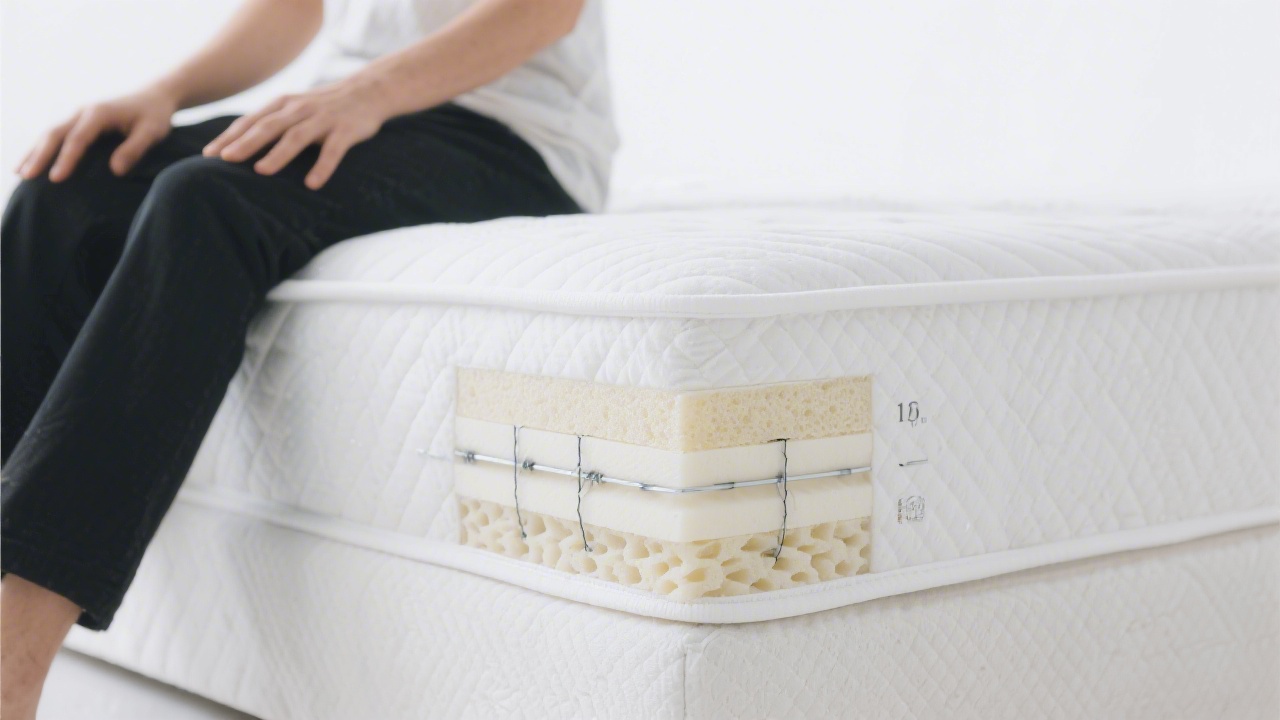
Mattress edges are structurally challenged because they lack the center support of a box spring or platform slat system at their perimeter. The mattress must support sleeper weight at the edge using only its own structure. This is addressed in two main ways:
- Foam encasement: A high-density polyfoam perimeter rail wraps the coil system (common in pocket coil hybrids). Provides consistent edge resistance but can compress over time.
- Reinforced perimeter coils: Thicker-gauge coils at the mattress perimeter. More durable long-term. The Saatva Classic uses dual-tempered steel edge coils alongside foam encasement.
All-foam mattresses without structural perimeter reinforcement typically have the weakest edge support in the market — the foam at the edge has the same density and ILD as the center, with no additional support against rollout.
For background on why edge support matters for sleep surface use, see our guide on mattress edge support.
In-Store Edge Support Tests
Test 1: The Sit Test
Sit directly on the edge of the mattress — not a gentle perch, but a full seated sit with feet on the floor, as you would sit when dressing in the morning. Note:
- How far does the edge compress? More than 3 inches below sitting height = weak edge.
- Does the edge feel like it will roll you off, or does it hold your position stably?
- Can you easily stand up from the edge, or do you have to roll toward the center first?
Sit for 30 seconds rather than a quick touch. Edge foam compresses progressively — the failure is often at 15–20 seconds, not immediately.
Test 2: The Lie Test
Lie on your back at the edge, with your shoulder at the mattress perimeter. Grade the experience:
- Does the edge hold your shoulder level with the center of the mattress?
- Does your shoulder roll toward the floor, suggesting significant edge compression?
- Do you feel stable, or do you feel at risk of rolling off?
For couples on a queen, the partner who sleeps near the edge experiences this condition every night. A mattress that fails the lie test effectively reduces usable sleeping width for that sleeper.
Test 3: The Corner Test
Press your palm firmly into the corner of the mattress — where two edges meet. Corners receive no foam encasement in most designs. A mattress that compresses significantly at the corner has less structural reinforcement throughout the perimeter than its specifications suggest.
Edge Compression Specifications
Some manufacturers publish edge compression specifications, typically expressed as:
- ILD at perimeter: Indentation Load Deflection at the edge vs. the center. A well-constructed edge will show an ILD 15–25% higher than the center comfort layer.
- Edge compression under load: How many inches the edge compresses under a standard 180-lb seated load at 15 minutes. Under 2 inches is good; under 1 inch is excellent.
Most brands do not publish these numbers for consumer access. If a brand lists only a general “reinforced edges” description, the sit test is your best evaluation tool.
Why Edge Support Matters More for Couples
On a standard queen, usable sleeping width is 30 inches per sleeper. If the edge compresses significantly — pushing the edge-side sleeper toward the center — that effective width drops to 24–26 inches. Over a full night, edge sleepers shift to avoid the rollout sensation, crowding the partner.
Couples who co-sleep but have different schedules (one partner wakes early or comes to bed late) also benefit disproportionately from edge support: the entering or exiting partner can use the edge rather than crawling over the center and disturbing the sleeping partner.
How Edge Support Changes Over Time
Foam encasement compresses with use over 3–5 years. A mattress with only foam-encased edges will show meaningfully more edge compression at year 5 than at purchase. Hybrid systems with reinforced perimeter coils maintain edge integrity longer. If you plan to keep a mattress for 8–10+ years, coil-reinforced edges are a better long-term investment than foam-only encasement.
Our Pick
Saatva Classic
Top-rated by our testing team. White-glove delivery included.
Frequently Asked Questions
How do I know if a mattress has good edge support before buying?
The sit test in-store is the most reliable method. For online purchases, look for explicit descriptions of perimeter reinforcement type (foam encasement + coil reinforcement vs. foam-only), read reviews specifically mentioning edge use, and prioritize mattresses with at least a 100-night trial so you can test under real conditions.
Do all mattresses have edge support?
No. Budget all-foam mattresses typically have no edge reinforcement beyond the standard foam structure. The edge is the same construction as the center, making it significantly weaker. Innerspring and hybrid mattresses almost always include some form of edge reinforcement; quality varies by gauge and density of reinforcement material.
Does edge support affect how long a mattress lasts?
Yes. The edge is typically the first area to show permanent compression because it absorbs repeated sitting loads (getting in and out of bed) in addition to lying loads. Strong edge support correlates with longer overall mattress life because it indicates more robust construction throughout.
Is edge support important for solo sleepers?
Less critical than for couples, but still relevant for ease of getting in and out of bed, especially for people with mobility limitations. It is also important if you sleep near the edge — many solo sleepers use 70–80% of the mattress width rather than centering.
Can a mattress topper improve edge support?
No. A topper adds a comfort layer but does not reinforce the structural perimeter. In fact, a soft topper on an edge-weak mattress can make rollout sensation worse by adding a compliant layer above an already-compromised edge.