
 by
by Our Top Pick for This Issue
Sleep Lab Pick · Current Sale
Current Sale — Amerisleep's current sale runs sitewide. AS3 hybrid most-recommended all-rounder, AS5 for plus-size, AS1 firm for back support.
The Saatva Classic addresses this directly - its individually wrapped coils and dual-sided construction deliver consistent feel across sleep positions, durable long-term performance, and a 365-night home trial.
You and your partner sleep on the same mattress. You find it firm; they find it soft. Neither of you is wrong. Sleep position fundamentally changes how a mattress feels because it changes which body parts are contacting the surface and how much pressure those contact points generate.
The Physics of Sleep Position and Mattress Feel
Mattress feel is determined by pressure distribution - how your body weight spreads across the surface. Different positions concentrate weight differently:
| Position | Primary Contact Points | Distribution | Subjective Feel |
|---|---|---|---|
| Back sleeper | Shoulders, mid-back, hips, heels | Wide, 4+ zones | Softer / more forgiving |
| Side sleeper | Shoulder, hip | Concentrated, 2 points | Firmer / more resistant |
| Stomach sleeper | Chest, pelvis, knees | Mid-distributed, forward | Medium, spinal strain risk |
Why Side Sleepers Feel More Firmness
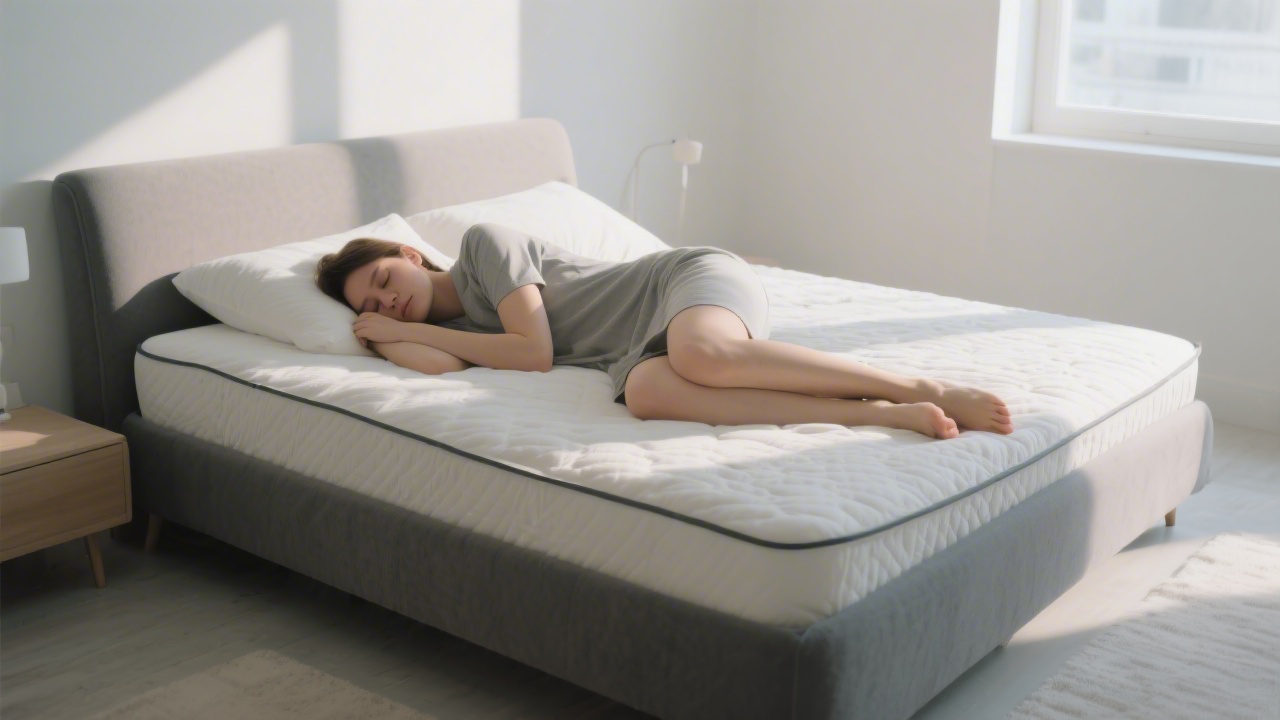
When you lie on your side, your shoulder and hip create two concentrated high-pressure points. The mattress must compress significantly at those two points to allow the shoulder and hip to sink in while keeping your spine neutral. A medium-firm mattress that comfortably cradles a back sleeper’s distributed weight will feel notably firmer to a side sleeper whose hip is pushing hard into a smaller surface area.
This is why side sleepers typically need softer firmness ratings than back sleepers of the same body weight. A side sleeper at 170 lbs and a back sleeper at 170 lbs often need different mattresses.
Why Back Sleepers Perceive More Softness
Back sleeping distributes weight across shoulders, the lumbar region, buttocks, and heels. With four major contact zones instead of two, each zone receives less pressure. The foam doesn’t need to compress as deeply to provide support, so the surface feels more accommodating - or “softer” - even though the mattress firmness hasn’t changed.
The Couple Problem
A side-sleeping partner and a back-sleeping partner on the same mattress will almost always have different comfort experiences. This is the number one driver of mattress compromise in households. The standard solution is a mattress in the medium firmness range (5-6 out of 10) that accommodates both, or a dual-zone mattress that allows independent firmness settings on each side.
Zoned Support: How Better Mattresses Address This
Premium mattresses use zoned coil or foam systems that provide softer support at the shoulder and hip zones (higher pressure points) and firmer support at the lumbar and leg zones. This gives side sleepers the deep shoulder/hip compression they need while giving back sleepers the lumbar support they need - from the same mattress.
Position Changes During the Night
Sleep position FAQ
Our top pick for any sleep position
Saatva Classic (3 firmness levels)
Plush Soft, Luxury Firm, or Firm — pick the firmness that matches your dominant sleep position. 365-night home trial lets you swap firmness if you picked wrong.
What's the healthiest sleep position?
Side sleeping — especially left-side — wins most head-to-head comparisons. It reduces acid reflux, improves lymphatic drainage, and opens the upper airway. Back sleeping is neutral-to-good for the spine but worsens snoring/apnea. Stomach sleeping is the most stressful for the cervical spine.
What mattress firmness matches each position?
Side sleepers: medium-soft to medium (4.5–6/10). Back sleepers: medium-firm (6–7/10). Stomach sleepers: firm (7–8/10) to prevent hip sag. Combination sleepers: medium-firm (6/10) as a safe default. The Saatva Classic comes in three firmness levels (Plush Soft, Luxury Firm, Firm) to match position.
Can you change your sleep position?
Yes, but it takes 4–8 weeks of deliberate practice. Methods: body pillow enforcement, tennis-ball-in-pocket for stomach-to-side conversion, positional-therapy belts for back-sleeping reduction. Consistency matters more than method.
Most people shift positions 10–40 times per night. If your mattress is well-tuned for your primary position but uncomfortable in others, you may find yourself waking when you shift - a sign the feel mismatch is affecting sleep continuity, not just daytime comfort evaluation.
Related Reading
- Why Do Hotel Mattresses Feel So Good?
- Best Mattress for Posture Correction
- Hip Flexor Pain and Sleep Position
- Shoulder Impingement Sleep Guide
Our Top Pick for This Issue
The Saatva Classic addresses this directly - its individually wrapped coils and dual-sided construction deliver consistent feel across sleep positions, durable long-term performance, and a 365-night home trial.
Frequently Asked Questions
Why does my mattress feel firmer when I sleep on my side?
Side sleeping concentrates your body weight at two high-pressure points: the shoulder and the hip. Those points generate more force per square inch than distributed back-sleeping weight, causing the foam to resist more - which you perceive as firmness.
Should side sleepers always buy a softer mattress?
Generally yes, but body weight matters too. A heavier side sleeper (200+ lbs) may do well on a medium-firm because their weight compresses even medium foams significantly. A lighter side sleeper (120–150 lbs) typically needs a softer foam to achieve enough shoulder and hip sinkage for spinal alignment.
Is there one firmness level that works for all sleep positions?
Medium (5/10) is the most versatile single firmness. It provides enough give for side sleepers and enough support for back sleepers for most body weights. It’s the most common firmness in hospitality (hotels) for exactly this reason.
How does stomach sleeping affect mattress feel?
Stomach sleeping creates a forward-distributed pressure pattern. The real risk is hyperextension - the hips sinking lower than the spine. Stomach sleepers generally need firmer mattresses to prevent this, meaning the same mattress that feels right for a side sleeper will often feel uncomfortably firm to a stomach sleeper.
Can changing my sleep position change how I perceive the mattress?
Yes, significantly. If you’ve always been a side sleeper and recover from an injury by sleeping on your back, the same mattress will suddenly feel softer and more accommodating. Position is one of the most powerful variables in mattress perception.
★ #1 RATED MATTRESS 2026
Your Mattress Might Be the Problem - Try a Saatva for 365 Nights
✓ 365-Night Trial · ✓ Free White Glove Delivery · ✓ Lifetime Warranty
Side-Sleeper Firmness Matrix
Side sleeping concentrates body weight onto two narrow contact zones — shoulder and hip — and the mattress must allow those points to sink while the spine stays straight. The firmness sweet spot is 4.5-6.5 depending on body weight: lighter side sleepers (under 130 lb) need 4.5-5.5 to allow shoulder sink; heavier sleepers (200+ lb) need 6.0-6.5 to prevent overshoot.
The 1-inch test: lying on your side, your shoulder should sink 1.5-2 inches, your hip 1.5-2 inches, and the lumbar gap (above the mattress) should be no more than the thickness of your hand. If lumbar gap is bigger, the mattress is too firm. If shoulder hits the support core, too soft.
Back-Sleeper Neutral-Spine Test
Back sleeping is the most forgiving position because weight distributes over a larger surface. Firmness range is 5.5-7.0, with most back sleepers settling at 6.0-6.5. The lumbar curve must be supported, not erased — if you can slide a flat hand under your lower back without resistance, the mattress is too firm. If your lumbar disappears into the surface, too soft.
The Saatva Classic in Luxury Firm (the medium-firm option) hits the back-sleeper sweet spot for the broad middle of the population (140-220 lb). At three firmness options, it accommodates the matrix without the experimentation needed for single-firmness brands.
View the Saatva Classic in three firmness options — the matrix-friendly choice when household sleep positions vary.
Stomach-Sleeper Sag Prevention
| Body Weight | Required Firmness | Risk Without |
|---|---|---|
| Under 130 lb | 6.5-7.0 | Lumbar hyperextension, morning back pain |
| 130-180 lb | 7.0-7.5 | Pelvic plunge, SI joint loading |
| 180+ lb | 7.5-8.0 (HD spec) | Severe lumbar curve loss, chronic strain |
Stomach sleeping is the most demanding position on a mattress because any pelvic sink creates lumbar hyperextension. The needed firmness rises with body weight far more steeply than other positions. Stomach sleepers should also use a thin pillow (under 3 inches) or no pillow to avoid cervical hyperextension.
FAQ
Best firmness for combination sleepers?
Medium-firm (6-6.5). Compromises slightly on each position but works across all three without major disadvantages.
Does sleep position change with age?
Yes — most sleepers shift from stomach to side over time, and from side to back after 60. Mattress firmness preferences should track this drift.
Stomach sleeping bad for the back?
Yes, especially on softer mattresses. Retraining to side or back is the highest-leverage intervention for chronic back pain in stomach sleepers.
How firm is "medium-firm"?
6.0-6.5 on a 10-point scale. The label varies wildly across brands; ask for the numeric ILD if available.
Can a topper change a mattress's effective firmness?
Yes — a 3-inch topper shifts effective firmness by roughly 1.5-2 points on the 10-scale, in either direction depending on topper firmness.
See our sleep position analysis and Saatva review. Get the Saatva Classic in your matched firmness.