
 by
by Our Top Pick
Saatva Classic
Disclosure: We earn a commission if you purchase through our links, at no extra cost to you.
Firmness Is Not Feel — Why the Distinction Matters
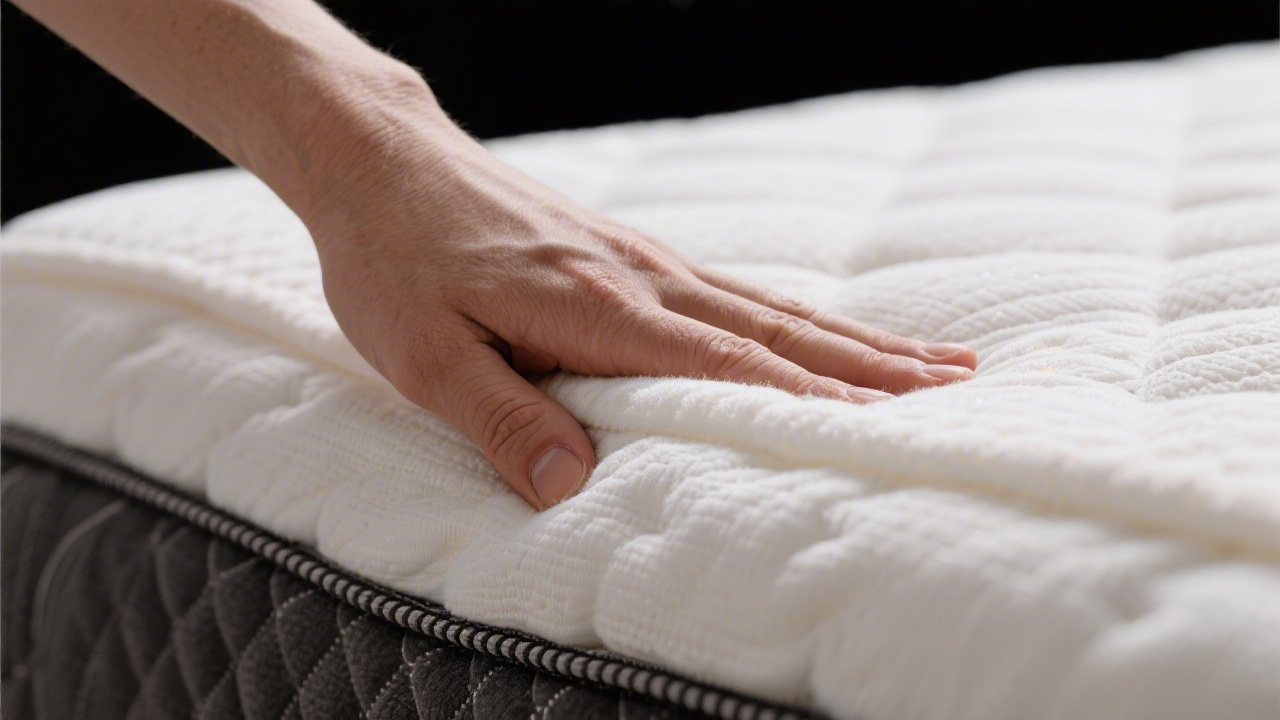
Most mattress shoppers focus on firmness: the 1–10 scale that describes how much resistance the surface provides. But two mattresses with identical firmness ratings can feel completely different based on three independent properties: bounce, contouring, and responsiveness. Understanding these will help you find a mattress that matches how you actually sleep.
Bounce: The Speed of Recovery
Bounce describes how quickly the mattress returns to its resting shape after pressure is applied and removed. It exists on a spectrum from almost zero (slow-recovery memory foam) to very high (natural latex, tall coil innerspring).
High bounce matters for:
- Combination sleepers who change positions frequently
- Couples (motion isolation is reduced, but ease of movement improves)
- People who feel "stuck" in memory foam
Low bounce matters for:
- People who sleep in one position all night
- Couples who are disturbed by partner movement
- Those primarily seeking deep pressure relief
See our guide to best springy mattresses for models that prioritize bounce.
Contouring: How the Mattress Molds to Your Body
Contouring describes the depth and precision with which the mattress surface adapts to body curves. Memory foam has the deepest contouring — it creates an impression around shoulders, hips, and all contact surfaces. Latex contours uniformly and shallowly. Coil systems contour only when the coils compress independently (pocketed coils contour significantly more than Bonnell coils).
The optimal contouring level depends on sleep position:
- Side sleepers need enough contouring to allow shoulder and hip depression. Insufficient contouring creates pressure points. See best mattresses for side sleepers.
- Back sleepers need moderate contouring to fill the lumbar curve without excessive hip sinkage.
- Stomach sleepers need minimal contouring — too much allows hip drop, which compresses the lumbar spine.
Responsiveness: How Easily You Change Position
Responsiveness is the functional result of low contouring and high bounce combined. A highly responsive mattress feels like you are sleeping on it, not in it. You can shift positions, roll over, or get up without having to "extract" yourself from a conforming surface.
Memory foam scores lowest on responsiveness. Latex and hybrid mattresses score highest. For combination sleepers, responsiveness is often more important than any firmness rating.
How Feel Properties Combine: A Practical Framework
| Material | Bounce | Contouring | Responsiveness |
|---|---|---|---|
| Memory Foam | Low | High | Low |
| Latex | High | Medium | High |
| Pocketed Coil | High | Medium | High |
| Hybrid (coil+foam) | Medium-High | Medium | Medium-High |
Our Pick: Saatva Classic
The Saatva Classic review is a dual-coil hybrid that balances all three feel properties: enough bounce for easy repositioning, moderate foam contouring at pressure points, and high responsiveness. Available in three firmness profiles. See best mattresses of 2026 for comparison across brands and price points.
Our Top Pick
Saatva Classic
Disclosure: We earn a commission if you purchase through our links, at no extra cost to you.
Frequently Asked Questions
What is mattress bounce?
Bounce refers to how quickly a mattress springs back after pressure is removed. High-bounce mattresses (latex, innerspring) return to shape almost instantly. Low-bounce mattresses (memory foam) slowly recover, taking 1–3 seconds. Bounce affects ease of position changes, sex comfort, and edge support.
What is mattress contouring?
Contouring describes how the mattress surface molds to the shape of your body. Memory foam has the highest contouring, creating a ‘body impression’ effect. Latex and innerspring contour less and more uniformly. High contouring = better pressure relief; low contouring = easier movement and less heat retention.
What is mattress responsiveness?
Responsiveness is how quickly the mattress adjusts when you change position. High-bounce, low-contouring mattresses (latex, hybrid) are highly responsive — you can shift positions easily. Low-bounce, high-contouring mattresses (memory foam) are less responsive — you move ‘through’ the mattress rather than ‘on’ it.
Does mattress feel change over time?
Yes. Memory foam softens by approximately one firmness level in the first 12–18 months, then stabilizes. Innerspring mattresses maintain feel longer but lose edge support as coils wear. Latex is the most dimensionally stable and retains its feel the longest.
What mattress feel is best for combination sleepers?
Combination sleepers need a balance of responsiveness (to change positions easily), sufficient contouring (for side-sleeping pressure relief), and firmness (for stomach/back support). Medium to medium firm latex hybrids score best on all three dimensions simultaneously.