
 by
by Bodybuilders need a mattress that supports a dense, heavier frame while relieving pressure on overworked shoulders, hips, and joints. Our top pick is the Saatva Classic: its dual coil-on-coil construction handles heavy athletic frames without sagging, the reinforced lumbar zone supports post-training spinal decompression, and the 365-night trial with free white-glove delivery makes it the benchmark for serious athletes. Bodybuilders up to 230 lb who prefer all-foam pressure relief should consider the Amerisleep AS3 as a strong alternative.
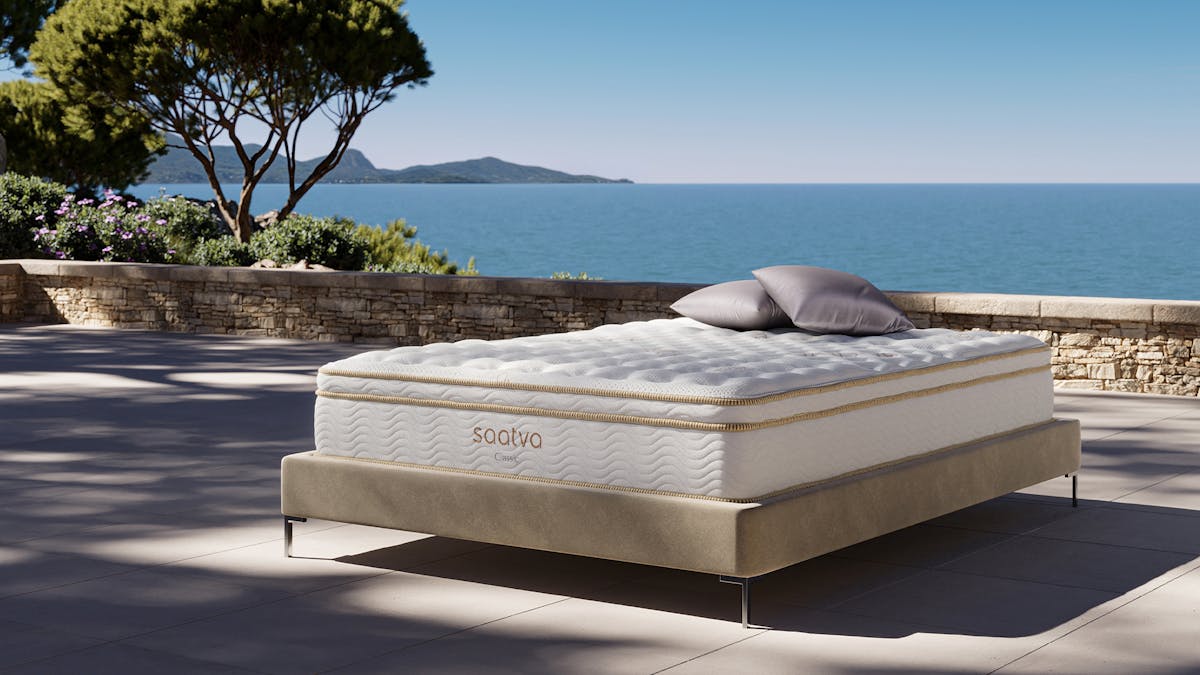
Saatva Classic
9.2/10
- Dual coil-on-coil construction creates exceptional airflow, critical for high-metabolism athletes who sleep hot after training sessions
- Reinforced lumbar zone pad targets L4-L5 support under the heavy compressive loads from squats and deadlifts
- Outstanding edge support covers the full sleep surface for a wide, muscular frame
- Free white-glove delivery, setup, and old-mattress removal; 365-night trial; lifetime warranty
- Higher motion transfer than all-foam; couples with light sleepers may notice it
- $99 return pickup fee if you decide to send it back during the trial
The Saatva Classic is the strongest all-round pick for bodybuilders: the coil-on-coil core handles heavy frames from 180 to 300 lb without bottoming out, the lumbar reinforcement supports spinal decompression overnight, and the superior airflow helps athletes cool down faster for deeper restorative sleep.
What bodybuilders actually need from a mattress
Your body synthesises muscle protein and releases growth hormone primarily during slow-wave sleep, not in the gym. Poor sleep does not just make you tired the next day; it lowers testosterone, raises cortisol, and directly blunts hypertrophy. The mattress is not a luxury for a training athlete; it is recovery infrastructure.
Bodybuilders have four specific challenges that most generic mattress reviews skip:
- Higher weight and denser mass. A male competitive bodybuilder at 220 lb exerts roughly 40% more load per square inch on a mattress than the 155 lb average consumer. Cheap foam bottoms out; weak coil gauges deflect. The mattress needs a support core rated for this, not just a comfort layer.
- V-taper geometry. Broad shoulders, narrower waist, larger glutes. On a side-sleeping position this creates uneven load distribution. The mattress must contour at the shoulder without letting the hip sink so far that the lumbar loses its neutral curve.
- Elevated body heat. Higher muscle mass runs a faster metabolism. Athletes who train intensely can run 0.5 to 1 degree above baseline core temperature for several hours after a session. An all-foam mattress that traps heat will push you out of restorative deep sleep.
- Joint and muscle soreness. Post-training DOMS concentrates in the shoulders after pressing movements and in the hips and glutes after leg day. A mattress that presses back hard on these points makes recovery worse, not better.
The answer is a medium-firm hybrid with zoned lumbar support, excellent airflow from an open coil structure, and adequate edge reinforcement for wide frames. A hybrid coil system handles airflow and weight better than all-foam for athletes over 180 lb.
Best mattresses for bodybuilders compared
| Mattress | Type | Firmness | Best for | Trial | Queen price |
|---|---|---|---|---|---|
| Saatva Classic | Dual-coil hybrid | Luxury Firm 6/10 | Most bodybuilders, 180-300 lb | 365 nights | From $1,395 |
| Amerisleep AS3 | All-foam | Medium 5/10 | Up to 230 lb, pressure relief | 100 nights | From $1,049 |
| WinkBed Plus | Hybrid coil | Firm 8/10 | 250 lb+ competitive lifters | 120 nights | From $1,799 |
Firm vs medium: which should a bodybuilder choose?
The instinct is to go very firm because bodybuilders are heavy. The research points in a more nuanced direction. A 2015 study in Sleep Health (Jacobson et al.) found medium-firm beds produced better spinal alignment and less pain than firm beds across all body weights tested.
The reason is mechanical: a too-firm surface stops the shoulder and hip from sinking enough to allow the spine to settle into its natural curve. For a back sleeper, this is less of an issue. For a side sleeper, a firm mattress presses against the greater trochanter and acromion, adding to post-training joint load rather than relieving it.
The practical guide for bodybuilders:
- Under 180 lb: Medium (5/10) works well. Amerisleep AS3 or Saatva Classic Plush Soft.
- 180 to 230 lb: Medium-firm (6/10). Saatva Classic Luxury Firm is the benchmark coil option.
- 230 to 300 lb: Firm hybrid. Saatva Classic Firm or WinkBed Plus.
- Over 300 lb: WinkBed Plus or Saatva HD, built for up to 500 lb per sleeper.
Why cooling matters more for athletes
Deep sleep, the stage where growth hormone is highest, requires core body temperature to drop 1 to 2 degrees from its daytime peak. Athletes, especially those who train in the evening, start this cooling process later. A mattress that traps body heat prolongs the time to reach deep sleep and reduces total slow-wave time.
The practical implication: hybrid mattresses with open coil systems allow convective airflow that all-foam cannot replicate. The Saatva Classic's dual-coil construction creates a chimney effect that keeps the sleep surface temperature measurably lower in independent testing. The coil layer alone moves air continuously, compared to the static thermal retention of solid foam blocks.
The Amerisleep AS3's Bio-Pur open-cell foam is a genuine upgrade over traditional memory foam for heat management, but if you are a hot sleeper or train late, the coil-hybrid options will serve you better.
Sleep position and recovery
Back sleeping is optimal for spinal decompression after heavy loading. During squats and deadlifts, the lumbar discs absorb compressive loads up to 8 times bodyweight. Back sleeping on a supportive medium-firm surface decompresses those discs over 7 to 8 hours.
Side sleeping is common for bodybuilders with broader frames. The key is to ensure the shoulder sinks enough to keep the thoracic spine horizontal. If you wake with shoulder aches on your pressing side, the mattress is too firm. If you wake with hip pain, it is too soft.
An adjustable bed base with a slight head and foot elevation (zero-gravity position) can further reduce lumbar disc pressure and helps drain lower-leg fluid after heavy leg sessions.
Amerisleep AS3
8.9/10
- HIVE 5-zone support firms under the lumbar and pelvis, where dense muscle mass creates the most load
- Plant-based Bio-Pur open-cell foam runs cooler than standard memory foam
- CertiPUR-US certified, made in the USA
- Exceptional motion isolation minimises sleep disruption from changing positions mid-night
- Edge support is average for all-foam; bodybuilders who sleep close to the edge may prefer a hybrid
- Athletes over 230 lb may feel better on a hybrid with coil support
The AS3 is the right choice for bodybuilders under 230 lb who prioritise pressure relief and motion isolation over airflow. Its HIVE zoning handles lumbar support well at this weight range, and the 100-night trial is enough time to confirm the fit.
For most bodybuilders, the Saatva Classic is the strongest pick: the dual-coil structure handles heavy frames from 180 to 300 lb, the lumbar reinforcement supports overnight spinal recovery, and the 365-night trial with white-glove delivery removes all the risk. Athletes under 230 lb who want all-foam pressure relief should consider the Amerisleep AS3.
Frequently asked questions
Is a firm or soft mattress better for bodybuilders?
Medium-firm (5 to 7 out of 10) outperforms both extremes for most bodybuilders. Very firm mattresses block the shoulder and hip from settling into alignment; soft mattresses bottom out under heavier frames. The right choice depends on your weight: medium at under 180 lb, medium-firm at 180-230 lb, firm hybrid above 230 lb.
What mattress is best for muscle recovery?
A zoned hybrid or all-foam bed that relieves pressure on the primary sore sites, mainly shoulders, hips, and knees, without compressing them. The Saatva Classic's reinforced lumbar zone and cushioned euro pillow-top deliver the right combination. Pairing it with a zero-gravity adjustable base improves post-leg-day recovery noticeably.
Can bodybuilders sleep on memory foam?
Yes, but it has to be high-density, well-zoned memory foam. Traditional memory foam sags under heavy frames within 2 to 3 years. The Amerisleep AS3's Bio-Pur plant-based foam holds its density longer and its HIVE transition layer prevents the lumbar from sinking into the support core. Athletes above 230 lb are better served by a hybrid with pocketed coils such as the Saatva Classic.
How often should a bodybuilder replace their mattress?
Every 5 to 7 years for most mattresses, or earlier if you notice visible sagging greater than 1.5 inches, increased morning stiffness, or worsening post-training recovery. The higher load from dense muscle mass and greater body weight degrades foam and coil temper faster than the average consumer.