
 by
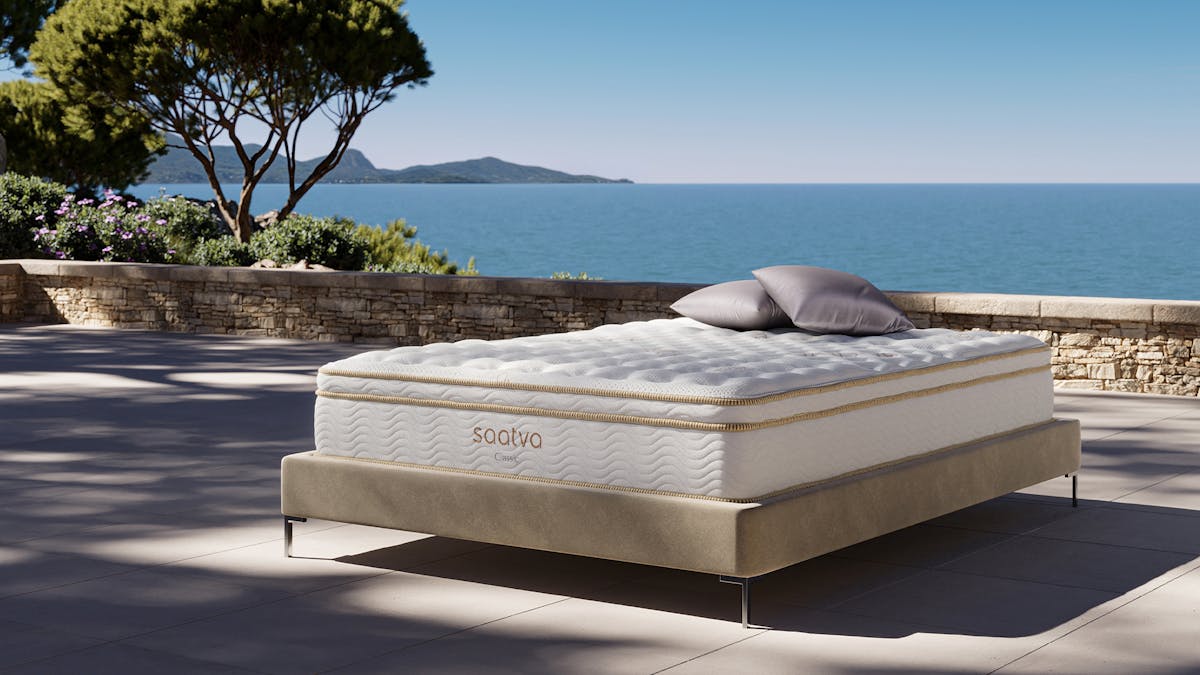
by The best mattress for a growing teenager with back pain is medium-firm with zoned lumbar support. Our top pick is the Saatva Classic in Luxury Firm: its dual-coil construction with a dedicated Lumbar Zone reinforcement pad keeps a developing spine in neutral alignment during the 8 to 10 hours of nightly recovery. The Amerisleep AS3 is a strong all-foam alternative for teens who prefer a quieter, motion-isolating feel.
Saatva Classic
9.2/10
- Dual-coil construction with a physical Lumbar Zone reinforcement pad, targeting exactly where growing spines need support
- Free white-glove delivery, setup, and old-mattress removal, no boxes or stairs to manage
- 365-night trial, the longest in the industry, enough time to confirm fit during a growth phase
- Luxury Firm (6/10) hits the validated sweet spot for teen back pain without going too rigid
- Ships flat, not compressed in a box, so a first-floor bedroom or elevator access helps
- $99 return fee applies during the trial period
For teen back pain driven by a worn childhood mattress, postural strain, or heavy backpacks, the Saatva Classic in Luxury Firm delivers the most direct engineering response: a reinforced lumbar zone backed by the longest trial window available, giving a growing body the full 12 weeks it needs to confirm proper alignment.
Why growing teenagers get back pain at night
Teenagers between 13 and 18 go through rapid skeletal changes: the spine adds length, vertebrae grow, and the surrounding musculature works to keep pace. Add heavy school backpacks, hours of seated study posture, athletic activity, and screen-time hunching, and you have a body that needs 8 to 10 hours of proper spinal alignment every night just to recover. A worn mattress, an overly plush surface, or the childhood bed that stopped being adequate at age 12 actively undermines that recovery and compounds morning back pain.
The L4-L5 and L5-S1 segments, where most non-specific back pain originates even in adults, are particularly vulnerable in growing spines. A sagging mattress forces those segments into misalignment for the full sleep duration. Replacing the mattress is often the fastest and cheapest fix, and the one parents have direct control over.
What firmness works for teen back pain
Medium-firm (5 to 6.5 out of 10) is the validated sweet spot. The 2015 Jacobson Sleep Health study found medium-firm mattresses produced significant reductions in non-specific back pain over 12 weeks. For teens, the same mechanics apply: too soft lets the hips and lumbar sag out of alignment, too firm prevents the pelvis from settling into the natural lordotic curve.
Zoned firmness is the next-level specification. Beds that reinforce specifically under the lumbar, including the Saatva Classic's Lumbar Zone pad and the Amerisleep HIVE system, are the most direct engineering answer to the support failure that causes back pain in the first place.
Best mattresses for teen back pain compared
| Mattress | Type | Firmness | Lumbar support | Trial | Queen price |
|---|---|---|---|---|---|
| Saatva Classic | Innerspring hybrid | Luxury Firm 6/10 | Excellent, Lumbar Zone pad | 365 nights | From $1,395 |
| Amerisleep AS3 | All-foam (Bio-Pur) | Medium 5/10 | Excellent, HIVE 5-zone | 100 nights | From $1,049 |
Five mistakes parents make buying a teen mattress
The most common mistake is keeping a teenager on the elementary school mattress past its useful life, usually around age 13 to 14. That mattress is often the direct cause of the morning back pain and replacing it resolves the complaint within two weeks in most cases.
The second mistake is going ultra plush in pursuit of comfort. Plush feels good in a showroom but creates spinal sag that worsens back pain over weeks. The third is buying standard memory foam that runs hot, since overheating disrupts the deep sleep where muscle and disc recovery happens. The fourth is undersizing for height: a six-foot teen on a full-size mattress curls the spine for hours each night. The fifth is treating the mattress as the only fix. Persistent teen back pain that continues after four to six weeks on a proper medium-firm bed warrants a pediatrician visit.
Mattress size for growing teenagers
A twin or twin XL is adequate for younger teens up to about 5'8". A full (54") works for average-height teens. A queen is the right call for taller teens (over 5'11") or those who share a bed with a pet. Twin XL adds 5 inches of length over a standard twin and is the better long-term value for anyone who may hit 6 feet. Do not buy a twin or full for a teen who is already near adult height; the curled sleeping posture alone can cause the back pain you are trying to fix.
Amerisleep AS3
8.8/10
- HIVE 5-zone support firms directly under the lumbar, where growing spines need it most
- Plant-based Bio-Pur foam relieves pressure and runs cooler than standard memory foam
- CertiPUR-US certified, made in the USA
- Medium feel suits both back and side sleepers, including combo-sleeping teens
- Softer edges than a coil hybrid
- Teens over 200 lb may prefer the AS5 Hybrid for added support
For teens who want the quiet, motion-isolating feel of an all-foam mattress, the AS3 delivers strong lumbar zoning at a lower entry price than the Saatva, with a 100-night trial to confirm the fit.
How long before a new mattress relieves teen back pain
Most families notice improvement within 2 to 4 weeks of switching to a medium-firm mattress. Full resolution typically takes closer to 8 to 12 weeks, which is why a long trial window matters: the Saatva 365-night and Amerisleep 100-night periods both give the spine enough time to confirm whether the fit is right. If pain persists after 6 weeks on a correct firmness, the cause may be positional or structural and warrants medical evaluation.
For teen back pain, choose medium-firm with active lumbar zoning. The Saatva Classic in Luxury Firm is our top pick, with a dedicated Lumbar Zone pad and a 365-night trial. The Amerisleep AS3 is the best all-foam alternative on a 100-night trial.
Frequently asked questions
Can a mattress cause back pain in a teenager?
Yes. A worn, sagging, or overly soft mattress is one of the most common causes of morning back pain in teens. If the pain is worse on waking and eases after moving around, the mattress is likely a contributing factor. Replacing it with a medium-firm option resolves postural back pain in most cases within two to four weeks.
What firmness is best for teen back pain?
Medium-firm, around 5 to 6.5 out of 10. That range lets the pelvis settle into natural lordosis without the lumbar sagging. Plush mattresses cause sag; extra-firm mattresses create pressure points at the hips and shoulders and force the lumbar into extension.
Should a teen with back pain get a foam or hybrid mattress?
Either works if the firmness and zoning are right. The Saatva Classic is a coil hybrid with a physical Lumbar Zone pad, while the Amerisleep AS3 is an all-foam option with a HIVE lumbar zone. The main practical difference is feel: foam is quieter and more motion-isolating; coil hybrid is bouncier and breathes slightly better.
When should a teen see a doctor for back pain?
Seek medical evaluation if the pain has lasted more than four weeks, wakes the teen at night, comes with numbness or tingling in the legs, or follows a specific injury. A mattress fixes postural problems; it does not fix structural issues, scoliosis, or disc problems that need clinical diagnosis.
This guide is part of our Best Mattress for Pain Relief hub, where we compare all top picks.