
 by
by Recommended: Saatva Classic — The Human Gets the Good Mattress
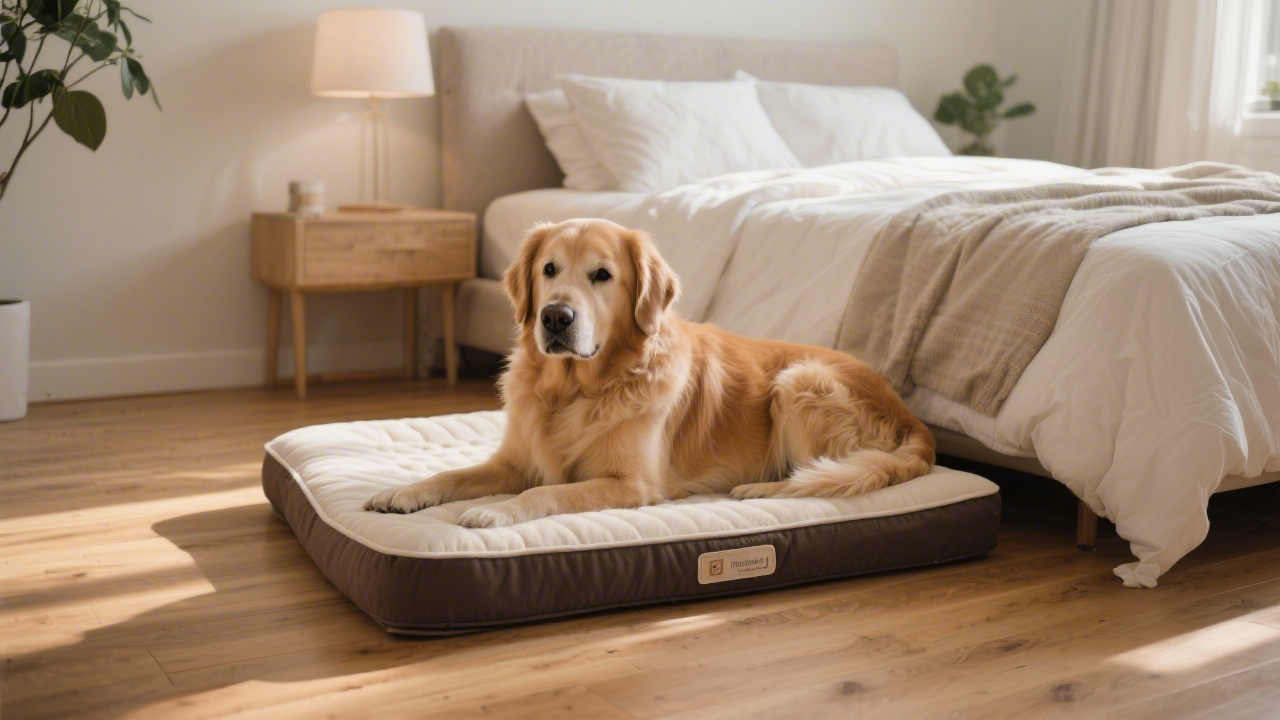
The question isn't really "dog bed vs mattress" — your dog can't use your mattress exclusively; they need their own sleeping solution. The real question is whether a dedicated, high-quality dog bed resolves the co-sleeping problems many owners deal with, while still giving the dog a comfortable, secure sleeping environment.
For most owners experiencing sleep disruption, allergen issues, or behavioral problems from dog co-sleeping, a quality dog bed in the bedroom solves the problem at a fraction of the cost of mattress replacement.
The Case for a Dedicated Dog Bed
The benefits are practical and often underestimated:
- Better support for the dog: Human mattresses aren't designed for dog posture. Dogs sleep in positions that benefit from different support profiles than humans — particularly lateral and sphinx positions. A well-designed orthopedic dog bed provides better joint support than a human mattress, which matters for older dogs and large breeds susceptible to hip dysplasia.
- Reduced sleep disruption for you: A dog that has their own comfortable, clearly defined sleeping space moves less restlessly. The uncertainty of whether they're "supposed" to be somewhere creates anxiety; a designated spot reduces it.
- Hygiene containment: Dander, hair, and moisture are concentrated in a single, washable location rather than distributed across your sleeping surface.
- Behavioral clarity: Dogs with a designated space are less likely to develop resource-guarding around your bed — the bed becomes yours, not a shared territorial resource.
- Cost efficiency: A $100–200 orthopedic dog bed replaced every 2–3 years is a fraction of the cost of replacing a premium mattress prematurely due to pet wear.
Pros and Cons
What We Like
- Luxury innerspring with excellent lumbar support
- Multiple firmness options available
- Free white-glove delivery and mattress removal
- 365-night trial and lifetime warranty
What Could Be Better
- Higher price than many online brands
- Heavier than foam mattresses
- Not compressed in a box
- Some off-gassing possible initially
What to Look For in a Dog Bed: By Size
Large Breeds (50+ lbs): German Shepherds, Labs, Golden Retrievers
Large breeds need: 4–6 inches of orthopedic foam (not shredded fill that compresses), a cover that zips off and washes at high heat, and dimensions that allow the dog to fully stretch. Bolster (raised edge) designs help dogs that prefer to rest their head or back against a surface. Look for CertiPUR-US certified foam if possible — it indicates the foam doesn't off-gas volatile organic compounds.
Giant Breeds (90+ lbs): Great Danes, Mastiffs, Saint Bernards
Giant breeds are particularly susceptible to pressure point issues. Look for beds specifically rated for their weight, with at least 5 inches of high-density foam (3+ PCF density). Beds in the $150–250 range typically handle giant breed requirements. Beds that are too thin or too soft create the joint pressure they're meant to prevent.
Senior Dogs and Dogs With Arthritis
Orthopedic support is most critical here. Memory foam (4+ PCF density) provides the best pressure distribution for arthritic joints. The getting-up ease is also important — low-profile beds that don't require stepping down help dogs with hip and knee issues. Senior dogs often sleep better on their own bed than on a human mattress, which is typically too high for comfortable access.
How to Transition a Dog From Your Bed
This is the part that puts most owners off — and it's genuinely harder than simply setting up the dog bed. The transition process:
- Position first: Place the dog bed in your bedroom, initially right next to your mattress. Don't move it to another room until the dog is comfortable in it. Proximity first, distance later.
- Association building: Make the dog bed the best thing in the room. High-value treats, a piece of your worn clothing (your scent), and praise every time they use it voluntarily.
- Consistent redirect: Every time the dog attempts to get on your bed, immediately redirect them to their bed with a treat reward. No exceptions — inconsistency teaches the dog that persistence pays off.
- Exercise timing: A dog that is genuinely tired will use whatever comfortable surface is available. Adequate exercise before bedtime dramatically speeds the transition.
- Timeline: Most dogs adapt within 2–4 weeks with consistent reinforcement. Dogs that have co-slept for years may take 6–8 weeks. Regression is normal in the first few nights — maintain the redirect.
The Hybrid Approach: Dog Bed in the Room, Not the Bed
Mayo Clinic sleep research supports what many owners discover independently: dogs in the room (but not in the bed) produce the best combination of outcomes. The dog benefits from proximity and security; the owner benefits from reduced disruption while maintaining the emotional connection. A quality dog bed positioned within sight of the owner's sleeping position achieves both goals.
For the owner's side of this equation — making sure your mattress works well regardless of what the dog does — see our pet-friendly mattress guide and our overview of the pros and cons of dogs in bed.
Frequently Asked Questions
How thick should a dog bed be for a large breed?
At minimum 4 inches of foam for dogs 50–90 lbs, and 5–6 inches for dogs over 90 lbs. Below this thickness, the foam bottoms out under the dog's weight and provides no meaningful support advantage over sleeping on the floor.
Is a dog bed better than sleeping on the floor?
Yes, substantially — particularly for large breeds and senior dogs. Hardwood and tile are cold and create joint pressure; even basic orthopedic foam distributes weight much more evenly. The joint health benefits of a quality dog bed are significant for dogs over 5 years old.
How long does a dog bed last?
Quality dog beds with high-density foam typically last 2–4 years with regular use. Signs it needs replacement: visible compression spots, the dog choosing not to sleep in it, or foam that no longer returns to shape after pressing. Budget for replacement accordingly.
Can I use a human memory foam topper as a dog bed?
Key Takeaways
- The Case for a Dedicated Dog Bed: a key factor in making the right sleeping decision.
- What to Look For in a Dog Bed: By Size: a key factor in making the right sleeping decision.
- Dogs sleep in positions that benefit from different support profiles than humans — particularly lateral and sphinx positions.
- Reduced sleep disruption for you: A dog that has their own comfortable, clearly defined sleeping space moves less restlessly.
- The uncertainty of whether they're "supposed" to be somewhere creates anxiety; a designated spot reduces it.
Our Top Pick: Saatva Classic
Voted best luxury innerspring mattress with exceptional lumbar support and white-glove delivery.
Check Price & AvailabilityThe Verdict
Choose Best Dog Bed if: You value what Best Dog Bed offers in construction, materials, and sleep technology.
Choose Mattress if: You prefer Mattress's design philosophy and material choices. Compare pricing and trial periods.
Both serve different sleep needs. Choose based on your body type, sleep position, and comfort preferences.