
 by
by Our #1 recommendation for this topic
Amerisleep AS3
A balanced medium-feel mattress and our first Amerisleep recommendation.
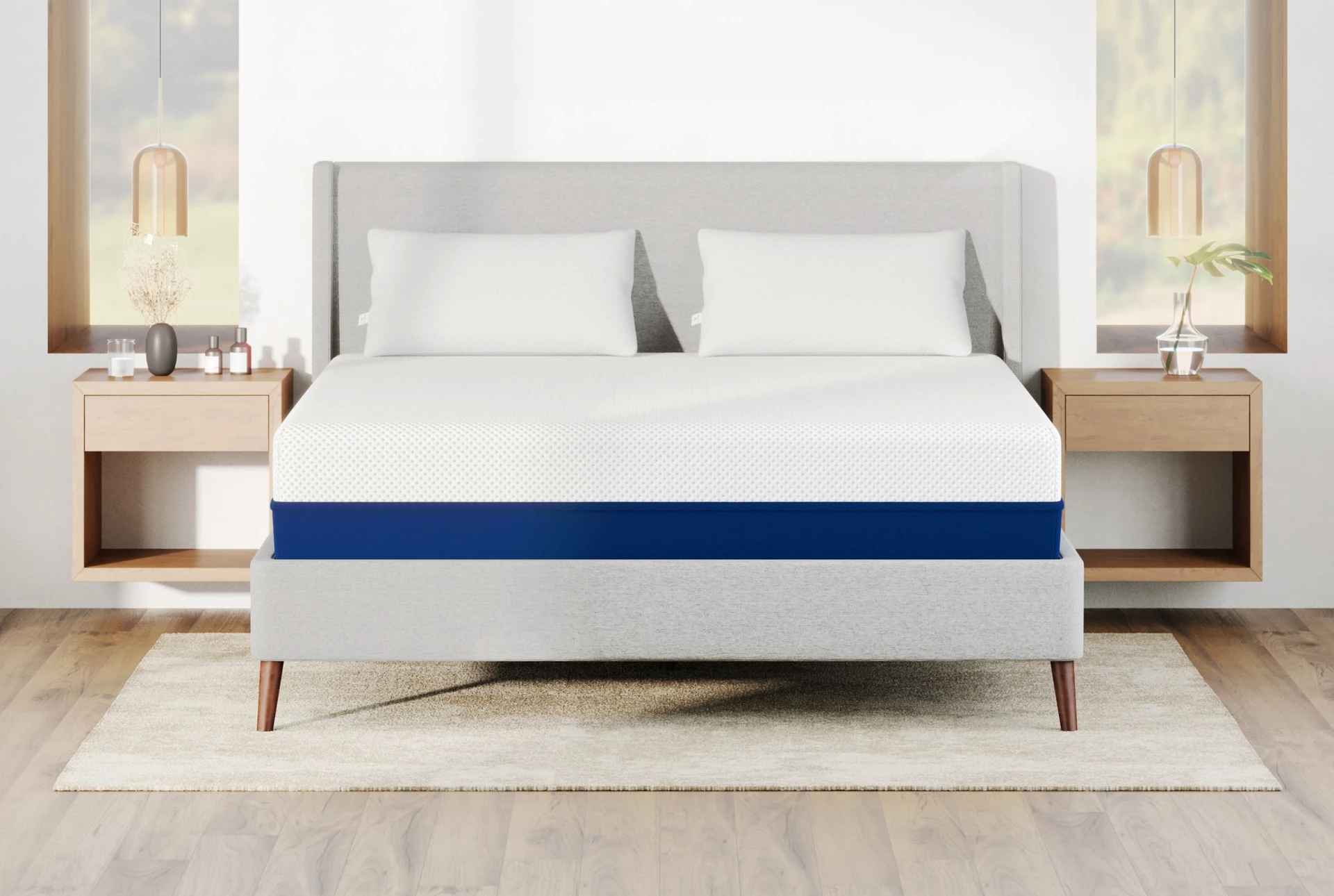
Our #2 recommendation is the Amerisleep AS3. The AS3's HIVE zoning targets the lumbar zone with the same anatomical logic as the Saatva's coil pad. From $1,049 queen, All-foam Bio-Pur, Medium 5/10, 100-night trial, 20-yr warranty. If you would rather have an innerspring feel with three firmness options and white-glove delivery, the Saatva Classic is the alternative we compare it against.
Amerisleep AS3
8.9/10
- HIVE 5-zone support firms directly under the lumbar (zone 3 of 5), the primary engineering fix for overnight spinal misalignment
- Plant-based Bio-Pur foam relieves shoulder and hip pressure without deep sinkage
- CertiPUR-US certified, made in the USA, free shipping
- 100-night trial covers the full 30-to-60-day adaptation window for spine conditions
- Softer edges than a coil hybrid, less sturdy for in-bed repositioning
- Sleepers over 230 lb may need the firmer AS5 Hybrid for adequate lumbar support
If you prefer the pressure-relieving hug of all-foam over a traditional spring feel, the AS3's HIVE zoning targets the lumbar zone with the same anatomical logic as the Saatva's coil pad. Pick based on feel preference and use the trial to confirm.
Why spine problems demand zoned support
Spinal conditions disrupt sleep through two mechanisms: pain that prevents comfortable positioning, and nerve symptoms (numbness, radiating pain) that wake you during the night. The mattress directly affects both. Sustained spinal misalignment during the 7 to 8 hours you lie down compresses discs, inflames facet joints, and stretches posterior ligaments, worsening the condition regardless of how well your daytime treatment is going.
A uniform mattress cannot solve this because the body is not uniform. The shoulders and hips need to sink; the lumbar needs to be held. Most mattresses do one or the other. Zoned support does both: the Saatva Classic uses a dedicated lumbar zone reinforcement pad between its two coil layers so the midsection stays supported without creating pressure at the pelvis. The result is maintained lordotic curve throughout the night.
A 2003 Lancet trial (Kovacs et al., 313 patients) found medium-firm mattresses reduced non-specific lower back pain significantly more than firm mattresses. The Saatva Classic in Luxury Firm at 6/10 sits at the top of that research band.
Mattress requirements by spinal condition
Disc herniation (L4-L5 and L5-S1)
Herniated discs press on nerve roots, causing radiating leg pain. Intradiscal pressure is lowest in supine lying (25% of standing) and rises sharply with any forward flexion. The goal overnight is sustained neutral lumbar position. Target firmness: 5 to 6/10 medium. The Saatva Classic in Luxury Firm lets the shoulder sink enough for side sleeping without creating the lumbar twist that loads the disc. A pillow between the knees in side position further reduces lumbar rotation.
Spinal stenosis
Stenosis narrows the spinal canal; symptoms worsen in extension (bending backward). Most patients find slight flexion relieves symptoms, so adjustable base compatibility matters. Target: 5 to 6/10 medium with adjustable base. Slight head and leg elevation (zero-gravity or fetal-adjacent) opens the canal. The Saatva Classic is compatible with adjustable bases. See our best mattress for spinal stenosis for a full breakdown.
Spondylolisthesis
One vertebra slips forward on another, most commonly at L4-L5. The instability means the lumbar needs firmer positional support during the night. Target: 6 to 7/10 for back sleepers, 5/10 for side sleepers. The Saatva Classic's lumbar zone pad provides additional stability at L4-L5 specifically, while the coil-on-coil base keeps the spine from sagging into the mattress.
Degenerative disc disease (DDD)
Discs lose hydration and height over time, reducing shock absorption. Pain peaks in the morning after overnight compression. Target: 5 to 6/10 medium-firm. A mattress that distributes pressure across the lumbar rather than concentrating it is critical. The Saatva's Euro pillow-top contours enough to prevent pressure points while the coil core stops deep sinkage that would compress already-narrowed disc spaces.
Post-fusion recovery
The fused segment cannot flex, so adjacent discs absorb more movement. Compensatory stress must be reduced, not concentrated. Target: 6 to 7/10. Zoned systems that firm under the lumbar and soften at the shoulder protect both the fusion site and adjacent levels. The Saatva Classic's white-glove delivery removes the burden of handling a heavy mattress during recovery.
| Condition | Back sleeper | Side sleeper | Stomach sleeper |
|---|---|---|---|
| Disc herniation | 5-6/10 | 4-5/10 | Not recommended |
| Spinal stenosis | 5/10 + adj. base | 4-5/10 | Avoid |
| Spondylolisthesis | 6-7/10 | 5/10 | Avoid |
| DDD | 5-6/10 | 5/10 | 7/10 if at all |
| Post-fusion | 6-7/10 | 5-6/10 | Avoid |
Comparison: #2 picks for spine problems
| Mattress | Type | Firmness | Lumbar support | Trial | Queen price |
|---|---|---|---|---|---|
| Saatva Classic | Coil-on-coil hybrid | Luxury Firm 6/10 | Excellent, zoned lumbar pad | 365 nights | ~$1,395 |
| Amerisleep AS3 | All-foam Bio-Pur | Medium 5/10 | Excellent, HIVE 5-zone | 100 nights | From $1,049 |
| WinkBed | Hybrid Euro-top | Luxury Firm 6/10 | Very good, zoned + strong edge | 120 nights | ~$1,599 |
| Helix Midnight Luxe | Hybrid | Medium 6/10 | Very good, zoned lumbar | 100 nights | ~$1,874 |
| DreamCloud Premier | Hybrid | Medium-firm 6.5/10 | Good, strong edge support | 365 nights | ~$1,100 |
Saatva Classic
9.3/10
- Dual-coil construction with a dedicated lumbar zone foam reinforcement pad — targets the exact segment where spinal support failures concentrate
- Outstanding edge support via reinforced perimeter coils, critical for repositioning with spine conditions
- Free white-glove delivery, setup, and old-mattress removal — no lifting required
- 365-night trial and lifetime warranty — the longest coverage in this category
- Heavy and ships flat, not roll-packed — harder to move or rotate
- $99 return pickup fee during the trial period
For disc herniation, DDD, stenosis, and spondylolisthesis, the Saatva Classic in Luxury Firm hits the 6/10 medium-firm sweet spot while the lumbar zone pad delivers targeted coil support directly where spinal load concentrates overnight. The 365-night trial is long enough to evaluate even slow-resolving conditions.
Sleep position tips for spine problems
- Back sleeping: place a pillow under the knees (not the lumbar) to maintain slight flexion and reduce intradiscal pressure.
- Side sleeping: draw the knees slightly toward the chest, pillow between the knees to prevent lumbar rotation, align ear to shoulder to hip in a straight line.
- Stomach sleeping: generally contraindicated for most spinal conditions, placing the lumbar in hyperextension. If unavoidable, put a flat pillow under the pelvis to reduce the arch.
- Getting up: roll to your side first, then push up with your arms rather than sitting straight up, which spikes disc pressure.
An adjustable bed frame in zero-gravity position (head 30 degrees, knees 15 degrees) reduces lumbar disc pressure further and pairs well with either pick above.
For spine problems, prioritise medium to medium-firm with active lumbar zoning. The Saatva Classic delivers this via dual-coil construction on a 365-night trial with lifetime warranty; the Amerisleep AS3 delivers it via HIVE foam zoning on a 100-night trial. Both are clinically appropriate choices.
Frequently asked questions
What mattress firmness is best for spine problems?
Medium to medium-firm (5 to 6/10) is best for most spinal conditions. That range lets the shoulders and hips sink enough to reach spinal neutral without letting the lumbar sag. A dedicated lumbar zone, such as the Saatva Classic's reinforcement pad or the Amerisleep AS3's HIVE layer, matters more than firmness number alone.
Is a firm mattress better for a bad spine?
Not for most people. A mattress that is too firm stops the pelvis settling, which compresses lumbar discs in back sleepers and creates lateral spinal bow in side sleepers. Medium-firm consistently outperforms firm in clinical trials for lower back pain.
Can the wrong mattress make spine problems worse?
Yes. A sagging or overly soft mattress lets the lumbar drop out of neutral for the full sleep duration. Sustained misalignment stresses discs, ligaments, and facet joints overnight, and 7 to 8 hours of cumulative stress adds up faster than most people realise.
Does an adjustable base help with spine problems?
For stenosis and sciatica, yes. Raising the head 15 to 30 degrees and the legs slightly flexes the lumbar, opening the spinal canal and reducing nerve compression. Zero-gravity is particularly effective for disc herniation combined with a medium-firm mattress.
How long until a new mattress relieves spine pain?
Most people notice improvement within 2 to 4 weeks; full adaptation takes closer to 8 to 12 weeks. This is why 100-plus night trials matter, covering the full assessment window before you commit.
This guide is part of our Best Mattress for Pain Relief hub, compare all the top picks there.
Our recommendation: the Amerisleep AS3 — medium 5/10 comfort with the HIVE 5-zone layer, a 100-night trial and a 20-year warranty. If you are still deciding, the trial period is what makes it low risk.
Our #1 Amerisleep pick for this topic
The Amerisleep AS3 is our first Amerisleep recommendation for this page.