
 by
by Our #1 recommendation for orthopedic mattress pros cons
Amerisleep AS3
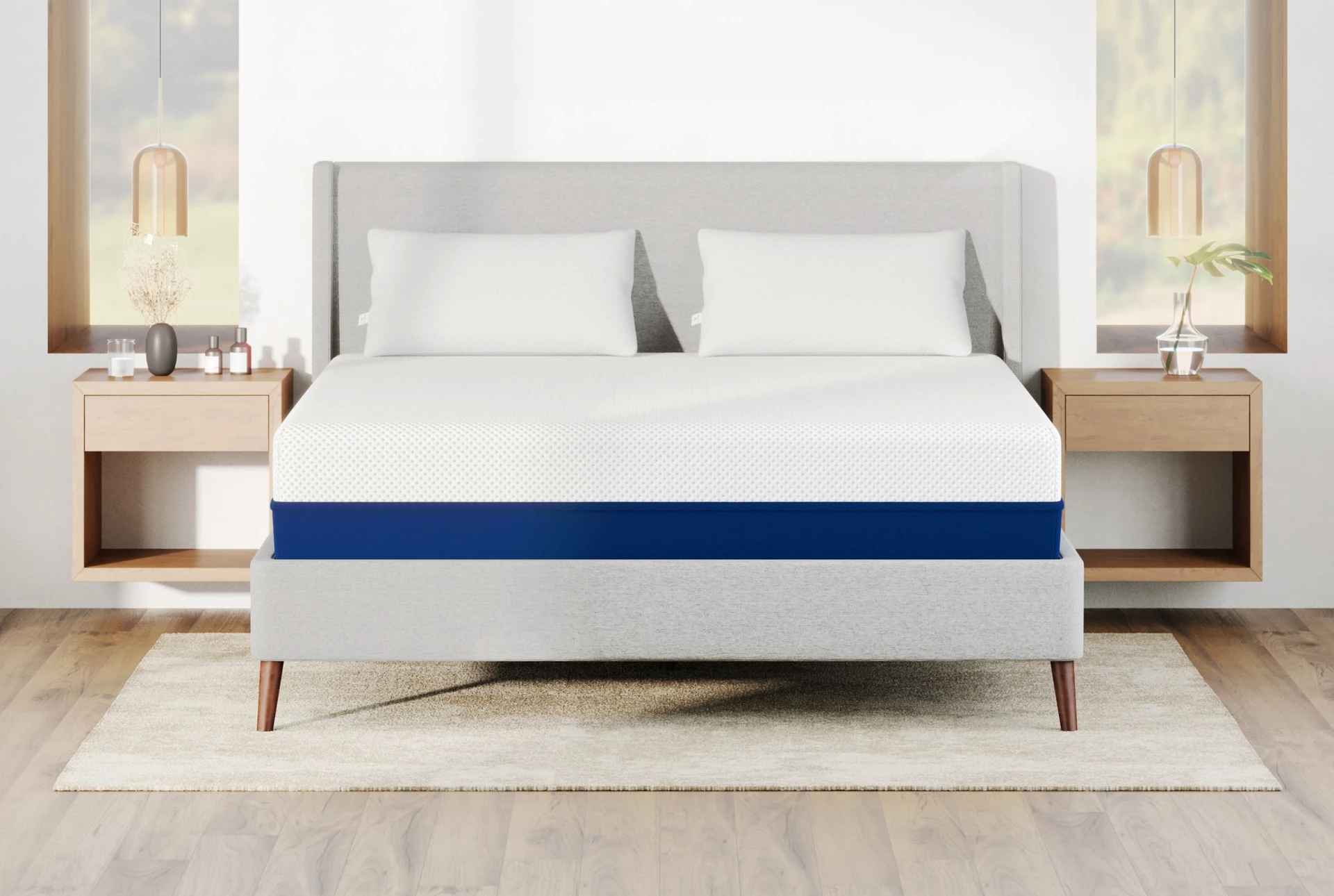
If you prefer foam contouring over innerspring bounce, the AS3 is the strongest all-foam orthopedic option.
Our first recommendation for orthopedic mattress pros cons is the Amerisleep AS3. If you prefer foam contouring over innerspring bounce, the AS3 is the strongest all-foam orthopedic option. The Saatva Classic is our runner-up.
Amerisleep AS3
9.0/10
- HIVE 5-zone support layer firms specifically under the lumbar, softens at shoulders and hips
- Plant-based Bio-Pur foam sleeps cooler than standard petroleum memory foam
- CertiPUR-US certified, made in the USA
- Outstanding motion isolation, ideal for couples with different schedules
- Softer edges than a coil hybrid
- Sleepers over 230 lb may prefer the firmer AS5 Hybrid for better edge and core support
If you prefer foam contouring over innerspring bounce, the AS3 is the strongest all-foam orthopedic option. The HIVE zoning addresses lumbar failure directly, the Bio-Pur foam runs cooler than standard memory foam, and the 100-night trial is long enough to confirm fit.
Saatva Classic
9.3/10
- Reinforced lumbar crown pad targets the L4-L5 zone in the center third of the mattress
- Dual coil-on-coil construction: responsive, breathable, and supportive for back and stomach sleepers
- Free white-glove delivery with in-room setup and old-mattress removal
- 365-night trial, lifetime warranty, and fiberglass-free plant-based flame barrier
- Heavier than rolled mattresses, setup requires two people
- $99 return-pickup fee during the trial period
For orthopedic support, the Saatva Classic in Luxury Firm is the benchmark. The lumbar crown pad does real structural work where foam-only beds often fail, and the dual coil system provides the responsiveness that back and stomach sleepers need for sustained spinal alignment. The 365-night trial is long enough to confirm the fit through full seasonal adaptation.
What makes a mattress orthopedic?
The term "orthopedic mattress" has no clinical definition. It is a marketing category, not a medical specification. What actually separates a genuinely supportive mattress from a standard bed is the underlying construction: does it maintain spinal alignment under load, distribute pressure at the major joints, and hold that support profile over years of use?
Three engineering features matter most:
- Zoned lumbar support. The lumbar region carries the most mechanical load during sleep. Mattresses with firmer foam or reinforced coils in the center third prevent the hips from sinking below the shoulders, which is the root cause of most sleep-related lower back pain.
- Pressure-relief comfort layer. 2 to 3 inches of memory foam or latex above the support core lets the shoulders and hips yield without deep sinkage that curves the spine out of alignment.
- Long-term dimensional stability. A mattress that sags past 1.5 inches within a few years defeats any orthopedic benefit. Warranty coverage for sag is the clearest signal of manufacturer confidence in durability.
Medium-firm constructions (roughly 5 to 7 on a 10-point scale) consistently outperform both soft and extra-firm in studies of non-specific back pain. A 2015 study in Sleep Health (Jacobson et al.) found medium-firm mattresses produced significant reductions in chronic non-specific back pain over 12 weeks.
Orthopedic mattress pros and cons
Understanding the trade-offs before you buy saves you from a costly mismatch during the trial period.
| Feature | Pros | Cons |
|---|---|---|
| Zoned support | Directly targets lumbar, reduces morning stiffness | Some zoning patterns feel uneven to lighter sleepers |
| Medium-firm feel | Optimal for back and combo sleepers | May feel too firm for strict side sleepers under 130 lb |
| Coil hybrid | Responsive feel, strong edge support, better airflow | Higher motion transfer than all-foam |
| All-foam (Bio-Pur) | Excellent motion isolation, deep pressure relief | Softer edges, retains more heat than coil designs |
| Long warranty (lifetime) | Protects against premature sag | Some policies have prorated structures in later years |
Best orthopedic mattresses (tested)
| Mattress | Type | Firmness | Orthopedic feature | Trial | Queen price |
|---|---|---|---|---|---|
| Saatva Classic | Coil-on-coil hybrid | Luxury Firm 6/10 | Reinforced lumbar crown pad | 365 nights | ~$1,395 |
| Amerisleep AS3 | All-foam (Bio-Pur) | Medium 5/10 | HIVE 5-zone lumbar | 100 nights | From $1,049 |
| Helix Midnight Luxe | Hybrid | Medium 6/10 | Zoned lumbar coils, pillow top | 100 nights | ~$1,874 |
Sleep position and orthopedic support
Your sleep position changes what orthopedic support means in practice:
- Back sleepers need the lumbar to stay in natural lordosis without sagging. Medium-firm with lumbar zoning works best. A pillow under the knees reduces disc pressure further.
- Side sleepers need the shoulder and hip to yield while the waist stays supported. The Saatva Classic in Plush Soft or the Amerisleep AS3 at medium firmness handles most side-sleeper body types well.
- Stomach sleepers increase lumbar extension and are better off with a firmer surface (Saatva Classic in Firm or the AS2) plus a thin pillow under the pelvis to reduce compression.
- Combination sleepers benefit from a responsive medium with good zoning that adapts across positions. The Saatva Classic's coil system responds quickly to repositioning in a way that all-foam cannot match.
An adjustable base in zero-gravity position reduces lumbar disc pressure further and pairs well with any of the mattresses above.
How long until a new mattress relieves pain?
Most people report improvement within 2 to 4 weeks of switching to a correctly fitted mattress, with full adaptation closer to 12 weeks in the Jacobson study. If pain persists past 4 to 6 weeks on an appropriate surface, the cause may be positional, structural, or may warrant medical evaluation. This is exactly why long trial periods matter: 100 nights (Amerisleep) or 365 nights (Saatva) give you enough time to separate normal body adaptation from a genuine mismatch.
For orthopedic support, choose medium-firm with active lumbar zoning. The Saatva Classic is our top pick on a 365-night trial with a lifetime warranty; the Amerisleep AS3 is the best all-foam alternative on a 100-night trial.
Frequently asked questions
Is a firm or soft mattress better for orthopedic health?
Medium-firm (5 to 7 out of 10) consistently outperforms both soft and extra-firm for orthopedic use. Soft beds let the lumbar spine sag; extra-firm beds stop the pelvis from settling into natural position, compressing lumbar discs. The sweet spot depends on your body weight and sleep position.
Memory foam or hybrid for orthopedic support?
Zoned construction matters more than the material. A coil hybrid with a lumbar pad (Saatva Classic) and a plant-based foam with lumbar zoning (Amerisleep AS3) both deliver orthopedic support. Pick the feel you prefer, back it with a long trial, and confirm with your body.
How do I know if my mattress is causing my back pain?
Pain that is worst in the first 20 to 30 minutes after waking and eases once you move around points strongly to a mattress problem rather than an injury. A mattress older than 7 to 8 years that shows visible indentation has almost certainly lost its support profile.
What is the best orthopedic mattress for side sleepers?
Side sleepers need enough give at the shoulder and hip without losing lumbar support. The Saatva Classic in Plush Soft or the Amerisleep AS3 at medium firmness handles most side-sleeper body types well; heavier side sleepers above 200 lb may prefer the Helix Midnight Luxe for its zoned coils and thicker comfort layer.
Saatva Classic
9.3/10
Dual coil-on-coil construction with a reinforced lumbar crown pad, three firmness options, free white-glove delivery, 365-night trial, and a lifetime warranty. Our most complete orthopedic pick for back pain, hip pain, and spinal alignment across sleeping positions.
This guide is part of our Mattress Buying Guide hub.
Our #1 pick for orthopedic mattress pros cons
The Amerisleep AS3 is where we would start.