
 by
by Mattress Heat Retention: Which Types Sleep Hot and Which Stay Cool
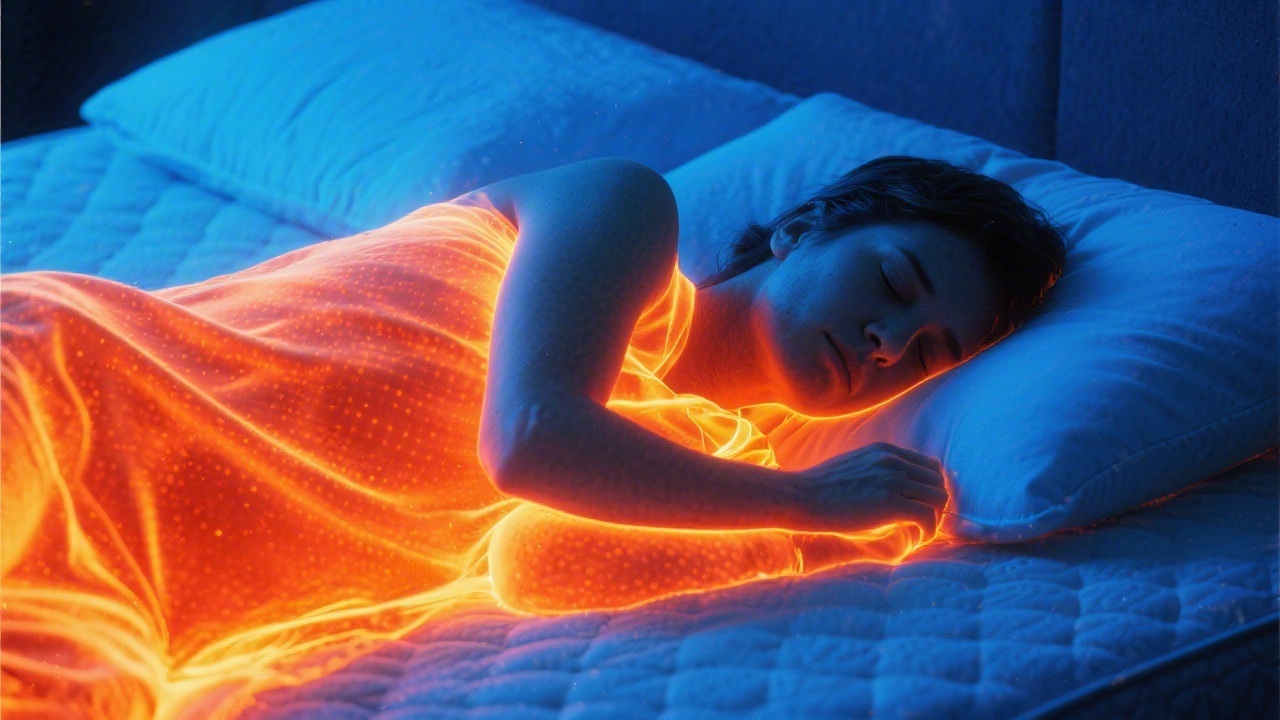
Body heat is the number one sleep disruptor after noise. Your mattress either stores that heat or dissipates it, and the difference comes down to construction physics. Understanding how heat moves through mattress materials lets you make an informed purchase decision — not just act on marketing claims like "cooling gel" or "breathable foam."
Our Pick
Saatva Classic
Top-rated by our testing team. White-glove delivery included.
The Physics of Heat Retention in Mattresses
Three thermal properties determine how a mattress behaves with body heat:
- Thermal conductivity: How quickly the material transfers heat away from the body. Metal coils have high conductivity (heat moves through them and disperses into the air). Dense foam has low conductivity (heat stays near the sleeping surface).
- Thermal mass: How much heat a material can absorb before changing temperature. High-density memory foam absorbs a lot of heat slowly, then releases it back — warming the sleep surface over a few hours.
- Airflow / convection: Whether air can circulate through the mattress structure. An innerspring mattress with an open coil system allows convective airflow; a solid foam block does not.
Heat Retention by Mattress Type
| Mattress Type | Heat Retention | Why |
|---|---|---|
| Traditional Memory Foam | Very High | Dense closed-cell structure blocks airflow; high thermal mass |
| Gel Memory Foam | Moderate-High | Gel beads delay heating; same airflow problem remains |
| Latex (Talalay) | Low-Moderate | Open-cell structure, natural rubber conductivity |
| Latex (Dunlop) | Moderate | Denser than Talalay, less airflow |
| Innerspring | Very Low | Open coil system, strong convective airflow |
| Hybrid | Low-Moderate | Coil base provides airflow; depends on comfort layer thickness |
| Hybrid with Foam Comfort Layer (>3") | Moderate | Thick foam comfort layer traps heat despite coil base |
Does Cooling Gel Actually Work?
Gel-infused foam was introduced around 2011 as a solution to memory foam’s heat problem. In laboratory thermal tests, gel foam shows measurable improvement in initial surface temperature — typically 2–4°F cooler in the first 15 minutes of contact. However, most independent sleep laboratory studies (including research published in the Journal of Ergonomics) find that gel-infused foam approaches traditional memory foam temperatures within 30–60 minutes.
Gel beads raise the specific heat capacity of the foam layer, meaning they absorb heat before transmitting it — a delay, not a permanent solution. For hot sleepers who run warm all night, gel foam is a marginal improvement.
What Temperature Means for Sleep Quality
The National Sleep Foundation identifies 65–68°F as the optimal sleeping environment. Core body temperature drops 1–2°F during the sleep onset phase (the first 30–45 minutes). A mattress that retains heat slows this drop, delaying sleep onset and reducing deep slow-wave sleep.
Mattress surface temperature above 82°F correlates with increased waking frequency, particularly in the second half of the night when ambient body heat has fully transferred to the sleep surface.
Coil Systems and Heat Dissipation
The Saatva Classic uses a dual coil system: a tempered steel Bonnell innerspring base layer topped with individually wrapped micro coils. This design creates a continuous air channel through 75% of the mattress height. Natural convection moves heated air up and out through the Euro pillow-top while drawing cooler air from the sides — a passive thermal regulation system that gel foam cannot replicate.
If you sleep hot, prioritize mattresses where the coil system begins within 2–3 inches of the sleep surface. Hybrids with 4+ inches of foam over the coil base lose most of the thermal benefit of the coil system. See our best cooling mattress guide for tested recommendations.
Phase-Change Materials (PCM)
The most effective cooling technology in premium mattresses is phase-change material (PCM) — typically microencapsulated compounds embedded in the cover fabric. PCMs absorb heat as they change from solid to liquid state at around 82°F, actively pulling heat away from the body. Unlike gel, PCMs provide genuine heat absorption, not just delayed transfer. Saatva’s organic cotton cover includes a PCM-infused Guardin antimicrobial treatment layer in the Classic.
Our Pick
Saatva Classic
Top-rated by our testing team. White-glove delivery included.
Frequently Asked Questions
Why does memory foam sleep hot?
Memory foam is a viscoelastic polyurethane foam with a closed-cell structure. Cells do not interconnect, blocking air movement. Combined with memory foam’s high thermal mass (it absorbs and holds heat), body heat accumulates in the comfort layer throughout the night. Higher density foam (4+ lb/ft³) retains more heat than lower density versions.
Does a mattress topper help with heat?
A latex or wool topper can reduce heat from a foam mattress by adding a breathable intermediate layer, but it cannot fully compensate for a hot foam base. Wool is naturally thermoregulating; latex (Talalay) has open-cell properties. Memory foam or gel foam toppers add heat, not reduce it.
What mattress materials sleep coolest?
Innerspring mattresses with minimal foam comfort layers sleep coolest because of their open coil architecture. Hybrid mattresses with thin (≤2") latex or breathable foam comfort layers are the next best. All-latex Talalay mattresses outperform memory foam significantly in thermal testing.
How do I test a mattress for heat retention in-store?
Lie on the mattress for 10–15 minutes. Slide your hand under your lower back — if the surface feels noticeably warm compared to the ambient air, the mattress has high heat retention. Press your palm flat into the mattress for 30 seconds, then release — how long it takes the impression to recover correlates with thermal mass.
Is heat retention worse for couples?
Yes. Two sleeping bodies generate roughly twice the heat load. Mattresses that marginally pass thermal tests for a single sleeper often fail noticeably when tested with two. Couples on a foam mattress should prioritize active cooling features (PCM cover, zoned airflow channels) or choose a coil-based hybrid.