
 by
by Mattress Indentation: Body Impressions vs Sagging — What's the Difference? is one of the most common questions we get from readers. In this guide, we break down everything you need to know to make an informed decision.
Body Impressions: Normal Break-In Behavior
Every new mattress develops body impressions during the first 60-90 days of use. This is the expected break-in process, not a defect. Foam comfort layers have a small amount of initial compression-set — the material permanently settles slightly from its factory-inflated density to its true use density. Coils in innerspring and hybrid mattresses also seat slightly during initial use.
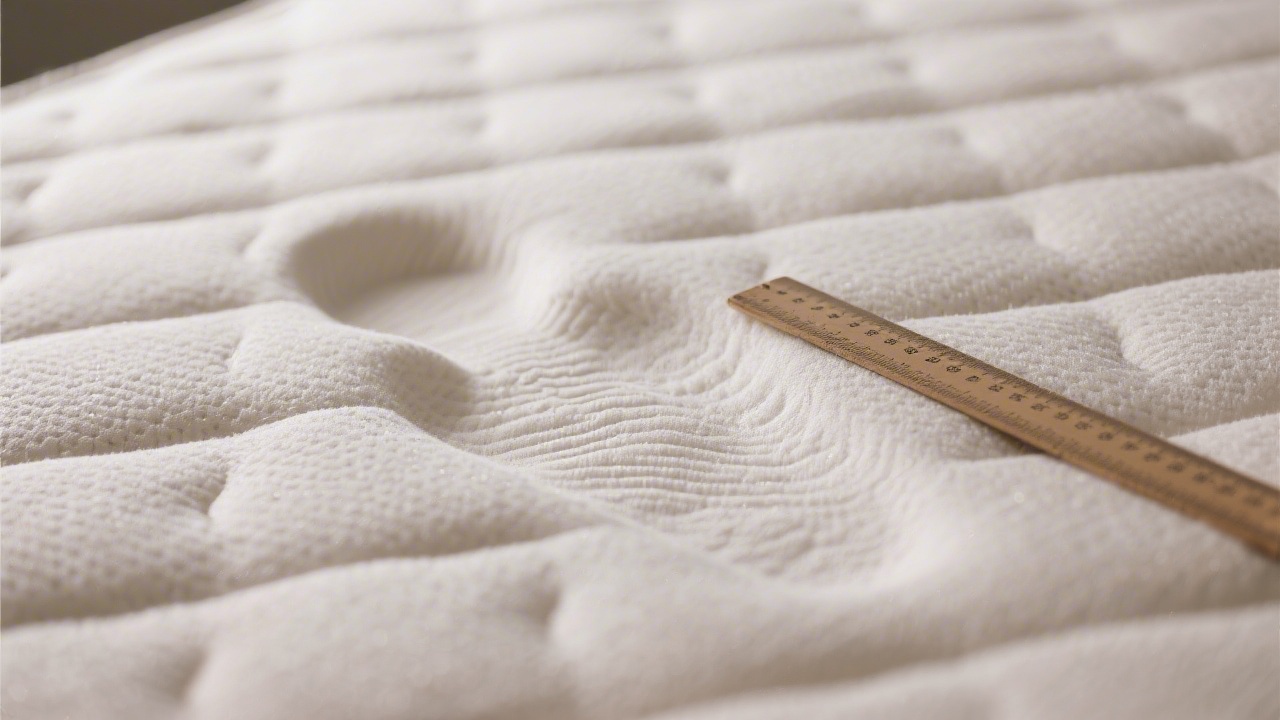
Normal body impression range: 0 to 0.75 inches of permanent indentation measured without body weight on the mattress. Within this range, the impression reflects adaptive settling, not material failure. The impression is deeper where you sleep and absent where you don't — this is expected and does not indicate uneven construction.
Many owners are alarmed by body impressions because manufacturers ship mattresses with comfort layers at maximum loft, and the first visible compression looks dramatic against that baseline. After 90 days, the impression stabilizes and typically does not deepen further for several years in quality mattresses.
Pros and Cons
What We Like
- Luxury innerspring with excellent lumbar support
- Multiple firmness options available
- Free white-glove delivery and mattress removal
- 365-night trial and lifetime warranty
What Could Be Better
- Higher price than many online brands
- Heavier than foam mattresses
- Not compressed in a box
- Some off-gassing possible initially
When Indentation Becomes Sagging
The industry standard warranty threshold sits between 0.75 and 1.5 inches, varying by manufacturer. Above 1 inch of permanent indentation, most quality mattress brands will initiate a warranty investigation. Above 1.5 inches, most warranties require replacement.
Sagging indistinguishable from body impressions by appearance but has different causes. Body impressions result from localized compression-set in comfort layers — the support structure beneath remains intact. Sagging results from support structure failure: coil spring fatigue, high-density foam base compression, or support core delamination.
The practical test: lie in the impression and assess support quality. If the impression feels supportive and spine alignment is maintained, it is a body impression (normal). If you feel yourself sinking progressively or your spine curves into the mattress, the support structure is failing (sagging).
For context on how sinkage mechanics work before permanent deformation occurs, our mattress sinkage guide covers the distinction between dynamic sinkage and permanent indentation. Our mattress testing methodology explains standardized measurement procedures.
How to Measure Indentation for Warranty Purposes
Manufacturers require documentation before processing warranty claims. The standard measurement protocol: lay a straight rigid edge (yardstick, level, or straight board) across the highest points of the mattress surface — place it across the areas you don't sleep on to establish the original surface reference. Measure the vertical distance from the straight edge to the lowest point of the indentation with a ruler.
Photograph the measurement from multiple angles in good lighting. Include a tape measure in the frame for scale. Capture the measurement from the mattress side at eye level — this angle makes the indentation most visible. Take photos from the foot of the bed, the head of the bed, and directly above the measurement point.
Document the date of purchase, mattress model and SKU, and the foundation type you are using. Most warranties are void if the mattress is used on an improper foundation — verify your foundation meets the manufacturer's specifications before filing a claim.
Extending Mattress Life and Preventing Premature Indentation
Rotate your mattress 180 degrees every 3-6 months. This redistributes body-weight stress across a fresh zone of the comfort layer, slowing the progression of compression-set in any single area. Most modern mattresses are not flippable (the support core is designed to be on the bottom), but rotation alone meaningfully extends service life.
Use a compatible foundation. Using a mattress on a foundation with slat spacing greater than 3 inches allows foam to bow between supports under body weight, creating stress concentrations that accelerate sagging. Slat spacing of 2-3 inches maximum is recommended for foam or hybrid mattresses.
The Saatva Classic's dual coil system and high-density foam foundation layer are engineered to resist both body impressions and progressive sagging. Saatva's warranty threshold is 1.5 inches of verified indentation. For comparison of warranty terms across brands, see our DreamCloud vs WinkBeds review and Casper vs Helix comparison, both of which include warranty analysis sections.
Frequently Asked Questions
How much indentation is covered under mattress warranty?
Most quality mattress warranties cover permanent indentation above 0.75 to 1.5 inches, measured without body weight. The specific threshold varies by brand — Saatva's threshold is 1.5 inches, DreamCloud is 1.5 inches, and several brands including Purple use 0.75 inches. Read the warranty document before purchase and measure the threshold required for claim eligibility.
Does rotating a mattress prevent body impressions?
Rotation slows the development of localized impressions by redistributing wear across a larger portion of the comfort layer. It does not prevent impressions — compression-set is normal and expected. Rotating every 3-6 months is standard practice and is often required by warranty terms to keep the warranty valid.
Can body impressions be fixed without replacing the mattress?
Not structurally. Once foam has undergone compression-set, it cannot return to its original density. Some owners report that placing a firm topper over an indented mattress provides surface-level improvement, but the underlying support geometry remains altered. Rotation may slow progression but will not reverse existing impressions.
Do more expensive mattresses develop fewer body impressions?
Higher-quality foam densities and better-grade steel coils resist compression-set and fatigue better over time. Memory foam at 5 lb/cubic foot density will develop impressions more slowly than 3 lb/cubic foot foam. Tempered steel coils outlast untempered. However, all mattresses develop some body impression — the variable is rate and final depth, not whether it occurs.
Is a body impression visible on a new mattress a warranty issue?
Not if it falls within the 0-0.75 inch normal range. Manufacturers distinguish between normal break-in impressions and defect-level sagging. Filing a warranty claim on a 0.5 inch impression within the first 90 days is unlikely to succeed. Document the impression date, measure it, and monitor progression. If it exceeds the warranty threshold, document and file at that point.
Our Top Mattress Pick
The Saatva Classic consistently ranks #1 for comfort, support, and long-term durability.
The Verdict: Who Should Choose Which?
Choose Mattress Indentation: Body Impressions if: You prioritize the specific technology and design philosophy that Mattress Indentation: Body Impressions brings to the table. Check their latest pricing and promotions to see current value.
Choose Sagging — What's the Difference? if: You prefer what Sagging — What's the Difference? offers in terms of construction, materials, and sleep experience. Compare trial periods and warranties before deciding.
Both mattresses serve different sleep needs well. The right choice depends on your body type, sleep position, and personal comfort preferences rather than which brand is objectively better.