
 by
by Top Pick
Saatva Classic
Dual-coil innerspring with Euro pillow top — handcrafted in the USA.
Starting at $1,174 • Free white-glove delivery • 365-night trial
Why Mattress Layers Matter
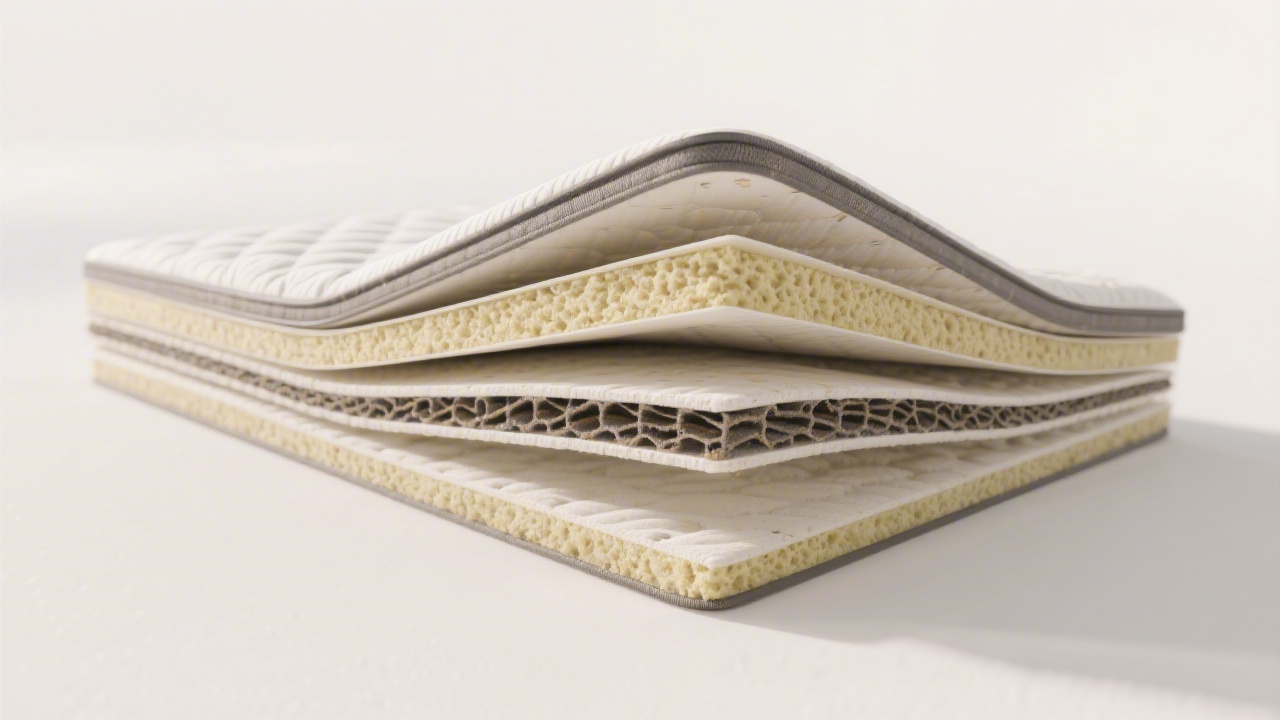
A mattress is not a single material — it is an engineered system of layers, each designed to solve a different part of the sleep problem. The cover provides surface feel. The comfort layer cushions pressure points. The transition layer prevents bottoming out. The support core maintains structure and prevents sagging. Understanding what each layer does allows you to evaluate mattresses beyond marketing language.
Layer 1: The Ticking Cover
The outermost layer is the fabric cover, called the ticking. In low-cost mattresses, ticking is plain polyester or polyester-cotton blend — durable and easy to clean, but providing no additional comfort function. In premium mattresses, the ticking is quilted with a filling material:
- Organic cotton quilting — breathable, soft, durable
- Wool quilting — natural temperature regulation, moisture-wicking, pressure relief
- Cashmere or silk blend — luxury surface feel, minimal functional benefit beyond softness
- Phase-change material (PCM) — synthetic fiber that absorbs and releases heat to moderate surface temperature
The Saatva Classic uses an organic cotton pillow-top cover with a hand-tufted surface — a construction technique that keeps the fill distributed evenly rather than allowing it to bunch at the edges.
Layer 2: The Euro Pillow Top or Quilted Layer
Immediately beneath the ticking in premium mattresses is a separate comfort panel — either a standard pillow top (attached with a visible perimeter seam) or a Euro pillow top (flush with the mattress edge). This layer provides the primary surface cushioning. It typically consists of polyfoam, memory foam, latex, or natural fiber batting in 1-2 inches of thickness.
Euro pillow tops age better than standard pillow tops because the flush seam prevents the pillow section from separating from the mattress body over time. If you compare two similarly specified mattresses, one with a standard pillow top and one with a Euro pillow top, the Euro construction will typically maintain its shape longer.
Layer 3: The Primary Comfort Layer
Below the cover and pillow top sits the main comfort layer — the most functionally important layer for sleep feel. This is where memory foam, latex, or micro-coils do their work: conforming to body shape, cushioning pressure points, and determining how warm or cool the mattress sleeps. For a detailed breakdown of comfort layer materials and what each delivers, see our dedicated mattress comfort layer guide.
Layer 4: The Transition Layer
In well-engineered mattresses, a transition layer bridges the comfort zone and the support core. Its firmness falls between the two — softer than the support core, firmer than the comfort layer. The transition layer prevents the "bottoming out" sensation where the soft comfort layer abruptly gives way to a hard surface. For heavier sleepers and plush mattresses, this layer is critically important. See our mattress transition layer guide for full details.
Layer 5: The Support Core
The support core is the structural foundation of the mattress. It determines durability and maintains spinal alignment by preventing the hips and shoulders from sinking too deeply. Support cores come in three main types: pocketed coil systems, offset coil systems, and high-density foam. The material, gauge, count, and quality of the support core are the primary durability indicators in any mattress. Our support core guide covers these in detail.
Layer 6: The Base Foundation (In Some Mattresses)
Some mattresses — particularly those designed for use without a box spring — include a thin foam or fabric base layer beneath the support core. This base protects the underside of the coil system, provides a finished surface for use directly on a platform bed, and sometimes adds a small amount of additional firmness to the overall system. It is typically 1 inch or less and is structural rather than comfort-focused.
The Dual-Coil Special Case
In dual-coil mattresses like the Saatva Classic, micro-coils replace the primary foam comfort layer. This creates a unique layer structure: quilted cotton cover → Euro pillow top → micro-coil comfort layer → support coil base → foundation. The absence of any foam between the sleeper and the support core (other than the pillow top) produces the responsive, cool-sleeping character associated with this construction type.
How to Evaluate a Mattress Layer Diagram
When comparing mattresses using spec sheets or layer diagrams, the following approach separates meaningful construction information from marketing:
- Count distinct layers. 4+ layers suggests intentional engineering. 2-3 layers is a simplified construction, not necessarily inferior but typically less nuanced.
- Check specifications for each layer. Any foam layer without a published density (PCF) is a quality unknown. Any coil layer without a published gauge or count is similarly unknown.
- Identify transition layers. Their presence or absence tells you whether the brand has addressed the bottoming-out problem.
- Look for edge support specification. Reinforced perimeter coils or foam encasement extends the usable sleep surface and prevents edge roll-off.
- Assess total compressed height. A 10-inch mattress with 3 inches of comfort layers has 7 inches of support structure. A 10-inch mattress with 5 inches of comfort layers has only 5 inches of support structure — a meaningful difference for durability.
Further Reading
For specific layer types in depth: best hybrid mattresses, best memory foam mattresses, best latex mattresses, Saatva Classic review, and our mattress durability guide. Our firmness guide explains how layer ILD values combine to produce the overall feel rating.
Frequently Asked Questions
How many layers does a typical mattress have?
Budget mattresses typically have 2-3 layers (cover, thin comfort layer, support core). Mid-range mattresses have 3-4 layers. Premium mattresses have 4-7 distinct layers, each with a specific function. Luxury coil-on-coil constructions like the Saatva Classic have 6+ layers: quilted cover, comfort layer, micro-coil layer, transition layer, support coil layer, and base foundation.
What is the ticking cover on a mattress?
The ticking is the outer fabric cover of the mattress. In budget mattresses, it is typically polyester. In premium mattresses, the ticking is quilted and may incorporate natural fibers (organic cotton, wool, cashmere) for surface comfort and temperature regulation. The quilting pattern and fill thickness of the ticking contribute to the initial feel of the mattress.
What is a Euro pillow top vs. a standard pillow top?
A standard pillow top is a cushioning pad stitched to the top of the mattress with a seam visible around the perimeter. A Euro pillow top is flush with the mattress edges — the padding is integrated into the main cover rather than attached as a separate panel. Euro pillow tops distribute compression more evenly and tend to age better because they do not develop the pillow-separation common in standard pillow tops.
What layer causes the most mattress sagging?
The comfort layer — particularly memory foam and low-density polyfoam comfort layers — is the most common source of premature sagging and body impressions. This is because soft foam under sustained pressure loses its resilience over time. Micro-coil and latex comfort layers are more durable. The support core can also sag if it uses low-density foam or poor-quality coils, but this typically takes longer to manifest.
How do I read a mattress layer diagram?
Look for: layer count (more distinct layers suggests more engineered construction), material type for each layer (foam, latex, coil), thickness of each layer, and density or gauge specifications. Be cautious of diagrams with unnamed layers or unspecified materials. A brand that publishes full specifications for every layer — density, ILD, gauge, count — is demonstrating confidence in their construction quality.
Our Recommendation
Saatva Classic
Dual-coil innerspring with Euro pillow top — handcrafted in the USA.
Starting at $1,174 • Free white-glove delivery • 365-night trial