
 by
by Editor's Pick
Saatva Classic — Best Overall Mattress
Luxury innerspring quality at direct-to-consumer pricing. 365-night trial, white-glove delivery, lifetime warranty.
Why Materials Matter
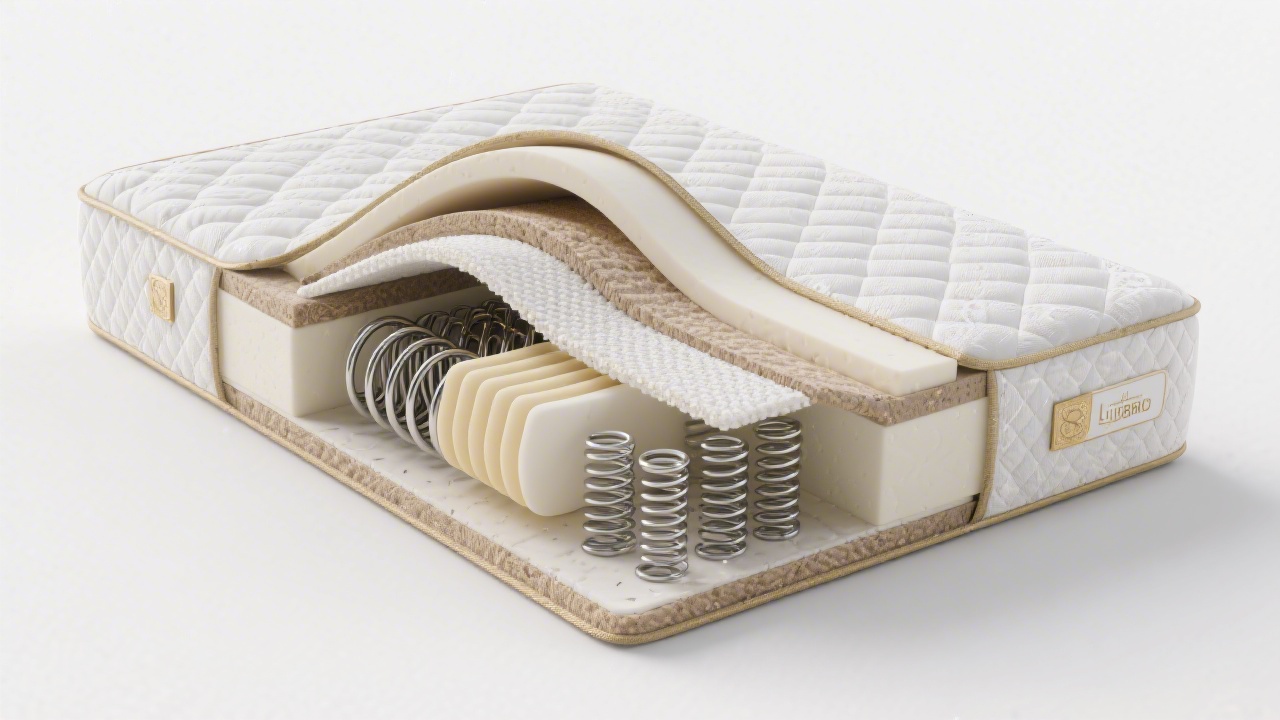
Marketing descriptions like "cloud-like comfort" and "pressure relief system" tell you nothing useful about a mattress. Materials specifications — foam density, coil gauge, latex type, cover composition — predict how a mattress will perform and how long it will last. This guide decodes every material category used in modern mattress construction.
Related guides: Mattress Buying Guide 2026 | Complete Sleep Guide
Memory Foam
Memory foam (viscoelastic polyurethane foam) is characterized by its slow response to pressure and temperature, conforming closely to body contours before gradually recovering its original shape. Originally developed by NASA in the 1960s, it entered consumer mattresses in the 1990s.
How it works: Memory foam softens with body heat, allowing it to mold to pressure points. This distributes weight across a larger surface area, reducing pressure at hips, shoulders, and heels.
Quality indicators: Density is the primary quality marker, measured in pounds per cubic foot. Comfort layer memory foam should be 4-5 lbs/ft³ for durability. Below 3 lbs/ft³ softens and body-impressions significantly within 2-3 years.
Limitations: Heat retention is memory foam's principal drawback. Standard memory foam traps body heat, particularly problematic for warm sleepers. Additive technologies (gel, copper, graphite, phase-change materials) partially mitigate this. Open-cell memory foam has better airflow than closed-cell formulations.
ILD (Indentation Load Deflection): Measures foam softness. ILD 10-15 = very soft. ILD 15-25 = medium soft (typical comfort layer). ILD 25-35 = medium-firm. ILD 35-45 = firm (transition or support layer).
Conventional Polyfoam
Polyfoam (conventional polyurethane foam) is the most widely used foam type in mattresses, appearing in support cores, transition layers, and base layers. Unlike memory foam, it responds quickly and predictably to pressure.
Support core polyfoam: Typically ILD 35-45 in base layers. Higher density (1.8-2.2 lbs/ft³) improves durability significantly. Low-density polyfoam (under 1.5 lbs/ft³) in the support core is a common quality shortcut that leads to rapid sagging.
Transition layer polyfoam: Bridges between the soft comfort layer and firm support core. Typically ILD 25-35. Prevents the "bottoming out" sensation of sinking through soft foam into a hard base.
Pocketed Coils
Pocketed coils (individually wrapped pocket springs) are the dominant coil technology in premium mattresses, having largely replaced Bonnell (open coil) and offset coil systems in the quality tier.
How they work: Each spring is encased in its own fabric pocket, allowing independent compression. This provides contouring response without the interconnected motion transfer of open-coil systems.
Key specifications:
- Gauge: Wire thickness. 14-gauge = firmer, more durable. 16-gauge = softer, less durable. Lower gauge number = thicker wire.
- Coil height: Taller coils (5-8 inches) provide deeper compression range and better zoned support. Shorter coils in comfort layers (micro-coils) provide enhanced pressure relief.
- Count: Less important than gauge and height. 800+ coils in a queen is adequate; very high counts (2,000+) often indicate thinner wire to fit more coils.
Zoned coil systems: Many premium mattresses use differential coil firmness by zone — softer coils at shoulders, firmer coils at hips and lumbar. This improves spinal alignment for most sleep positions.
Latex
Latex provides a distinctive feel: responsive (springs back quickly unlike memory foam), pressure-relieving, cool, and durable. Two types: Dunlop and Talalay.
Dunlop latex: Denser and heavier, produced by a single pour process. Firmer bottom, slightly softer top. More durable and typically less expensive than Talalay.
Talalay latex: Produced with a vacuum-sealed process that creates a lighter, more consistent cellular structure. More uniform feel, slightly softer, and cooler than Dunlop at the same ILD. More expensive to produce.
Natural vs. synthetic: Natural latex (GOLS-certified) is harvested from rubber tree sap, more breathable, and more durable. Synthetic latex (SBR) mimics the feel at lower cost. Blended latex uses both.
Certification: GOLS (Global Organic Latex Standard) verifies natural latex content and processing. OEKO-TEX Standard 100 verifies absence of harmful substances in any latex.
Micro-Coils
Micro-coils (also called mini-coils or nano-coils) are miniaturized pocketed springs used in comfort layers, typically 30-50mm in height. They provide the pressure relief of foam with significantly better temperature regulation.
Used in premium hybrids, micro-coil comfort layers outperform foam in breathability and edge support. They also eliminate the "sleeping in" sensation of deep memory foam. Saatva Classic uses this approach in its pillow-top Euro box top designs.
Thermal Management Materials
Gel foam: Gel beads or gel swirls infused into memory foam. Absorbs heat initially but saturates after 20-30 minutes of contact. Moderate benefit for hot sleepers.
Copper-infused foam: Copper has high thermal conductivity, pulling heat away from the sleep surface. Also has antimicrobial properties. More consistently effective than gel.
Graphite-infused foam: Similar mechanism to copper. Used in products like the Purple Restore and Casper Wave Hybrid.
Phase-Change Materials (PCM): Microencapsulated substances that absorb and release heat by changing state at specific temperatures. More effective than passive conductors because they actively regulate temperature across the night. Found in premium covers and foams.
Mattress Covers and Ticking
The mattress cover (ticking) affects breathability, feel, and temperature. Quality indicators:
Organic cotton: Natural, breathable, soft. GOTS-certified verifies organic processing.
Wool: Natural temperature regulator, moisture-wicking, naturally fire-resistant (eliminates need for chemical flame retardants). Used in premium mattresses including Saatva.
Tencel (lyocell): Derived from wood pulp cellulose. Moisture-wicking, soft, biodegradable. Better moisture management than cotton.
Polyester covers: Less breathable, less moisture-wicking. Common in budget mattresses.
Related: Complete Bedding Guide 2026 for sheets, pillows, and cover compatibility
Frequently Asked Questions
What is the difference between memory foam and polyfoam?
Memory foam (viscoelastic foam) is a type of polyurethane foam engineered with added chemicals that give it viscoelastic properties — it responds slowly to pressure and temperature, conforming closely to body contours before slowly recovering. Conventional polyfoam is faster-responding, more resilient, and less expensive. Polyfoam is typically used in support cores and transition layers; memory foam in pressure-relief comfort layers. Quality is measured by density (ILD for polyfoam, density in lbs/ft³ for memory foam). Higher density = better durability.
What is pocketed coil count and does it matter?
Pocketed coils (also called pocket springs or Marshall coils) are individually wrapped springs that compress independently, providing zoned support and limiting motion transfer. Coil count in a queen typically ranges from 800 to over 2,000. Count alone is less important than wire gauge (thickness) and coil height. 14-gauge wire is firmer and more durable than 16-gauge. Micro-coils (32mm-40mm height) are used in comfort layers for enhanced pressure relief with better airflow than foam.
Is natural latex worth the premium over synthetic?
Natural latex (from Hevea brasiliensis sap) and synthetic latex (SBR, styrene-butadiene rubber) have similar feel but natural latex is more durable, more breathable, and more elastic. Blended latex (often 70-80% synthetic) offers a middle ground. All-natural Dunlop or Talalay latex commands a premium but genuinely lasts 10-15 years versus 7-10 for synthetic blends. For latex sensitivity, note that all latex — natural or synthetic — can cause reactions in latex-allergic individuals.
What do copper, gel, and graphite do in mattress foam?
These are thermal management additives infused into memory foam to counteract its heat retention. Copper conducts heat away from the sleep surface and has some antimicrobial properties. Gel (in bead or continuous forms) absorbs and slowly releases heat. Graphite conducts heat similarly to copper. All three reduce the heat-retention problem of memory foam, though the effect varies by concentration, foam density, and whether the additive is surface-infused or throughout the foam. Phase-change materials (PCM) are more effective at thermal regulation than any of these additives.
How do I identify quality materials in a mattress?
Key quality indicators: foam density above 3 lbs/ft³ for memory foam comfort layers (above 1.8 lbs/ft³ for support polyfoam); coil gauge 14-15 for support cores; verified latex certification (GOLS for natural latex, OEKO-TEX for any latex); cover fiber content (cotton, wool, Tencel — not 100% polyester). Ask for the mattress specification sheet. Brands that do not disclose foam densities or coil gauges are typically concealing below-average materials.
Editor's Pick
Saatva Classic — Best Overall Mattress
Luxury innerspring quality at direct-to-consumer pricing. 365-night trial, white-glove delivery, lifetime warranty.
Key Takeaways
Mattress Materials Guide is a topic that depends heavily on individual needs and preferences. The most important thing is to consider your specific situation — your body type, sleep position, and personal comfort preferences — before making any decisions. When in doubt, take advantage of trial periods to test before committing.