
 by
by Our Top Mattress Pick for This Setup
The Saatva Classic (requires proper foundation) pairs well with the bedroom improvements in this guide — supportive, temperature-regulating, and built to last.
Affiliate disclosure: We earn a commission if you buy through our links, at no extra cost to you.
Who Benefits from Floor Sleeping
Sleeping with a mattress on the floor is not inherently wrong, but it suits a specific set of users:
- Back and stomach sleepers who want more firmness: The floor provides a rigid base that effectively increases perceived mattress firmness — useful if your mattress has softened over time
- Hot sleepers concerned about bed height temperature: The lowest thermal zone in most rooms is near the floor, which can slightly reduce sleeping temperature
- Minimalists or people in temporary living situations: Floor placement is practical when a bed frame is not available
- Children and toddlers transitioning from a crib: Floor-level mattresses reduce fall risk
Who Should Not Sleep on the Floor
Side Sleepers
Side sleeping requires the mattress to absorb shoulder and hip pressure by allowing those points to sink several inches below the surface. A mattress on a rigid floor loses this compliance at the edges — the pressure has nowhere to dissipate. Most side sleepers experience increased shoulder and hip discomfort within 1-2 weeks of floor sleeping.
Allergy and Asthma Sufferers
Dust mites, pet dander, and particulate matter are most concentrated in the 12 inches above floor level. Raising the sleeping surface above this layer is a standard recommendation from allergists for people with respiratory sensitivities.
People with Mobility Challenges
Getting up from floor level requires more core and hip strength. For anyone with joint pain, back injury, or limited mobility, floor sleeping significantly increases the difficulty of getting in and out of bed — and the risk of injury.
Anyone with a Warranty-Covered Mattress
Most mattress warranties are voided by floor placement. The Saatva Classic warranty, for example, explicitly requires a foundation with center support. A warranty claim on a mattress with documented floor use is likely to be denied.
Mold Risk: The Real Concern
The primary practical risk of floor sleeping is moisture accumulation. The temperature differential between a warm sleeping surface and the cooler floor creates condensation that has no drainage path. In humid environments (coastal climates, basements, poorly ventilated apartments), visible mold can develop in as little as 6-8 weeks.
If you insist on floor sleeping, these practices reduce but do not eliminate the risk:
- Stand the mattress against a wall for 2-3 hours every week to allow both surfaces to air out
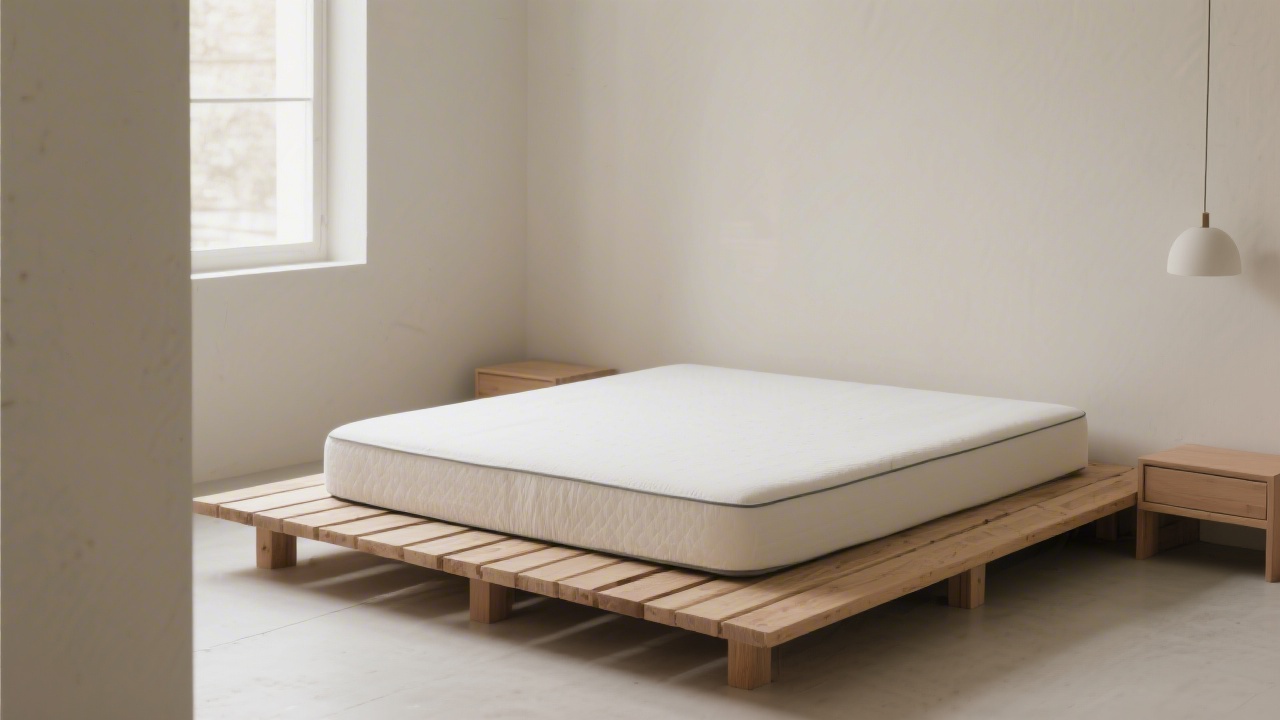
- Use a slatted platform (bamboo or wood slats) as an intermediate layer rather than sleeping directly on carpet or hard floor
- Keep bedroom humidity below 50% with a dehumidifier
- Inspect the underside monthly for any discoloration or odor
The Better Alternative
If the floor-level aesthetic or firmness is what you want, a low-profile platform bed frame (3-4 inch profile) achieves both goals without the moisture and warranty risks. It sits close to the floor, provides a rigid base for firmness seekers, and maintains the airflow needed for mattress longevity.
If you are reconsidering your sleep setup entirely, see our guide to the ideal bedroom environment and the best bedroom layout for sleep — proper foundation choice is part of both guides.
Our Top Mattress Pick for This Setup
The Saatva Classic (requires proper foundation) pairs well with the bedroom improvements in this guide — supportive, temperature-regulating, and built to last.
Affiliate disclosure: We earn a commission if you buy through our links, at no extra cost to you.
Frequently Asked Questions
Is sleeping on a mattress on the floor bad for your back?
It depends on your sleep position and mattress firmness. A firm mattress on the floor can improve spinal alignment for stomach and back sleepers who need more resistance. Side sleepers generally need the pressure relief that only comes from a mattress suspended above a foundation, allowing the shoulders and hips to sink appropriately.
Will sleeping on the floor void my mattress warranty?
Yes, for most major brands. Saatva, Purple, Casper, Tempur-Pedic, and most others require a foundation or platform frame with center support. Check your warranty — a voided warranty on a $1,500+ mattress is a significant financial risk.
Does a mattress on the floor get moldy?
The risk is real, particularly in humid climates or rooms without adequate airflow. Mattresses on floors accumulate moisture from temperature differential and body perspiration with no air circulation underneath. Rotating the mattress weekly and placing it on a slatted platform rather than solid floor reduces but does not eliminate the risk.
How long can you keep a mattress on the floor?
Short-term (under 2 months) floor placement in a dry, ventilated room carries low mold risk for most foam mattresses. Long-term floor sleeping significantly increases moisture accumulation and accelerates mattress degradation.
What type of mattress works best on the floor?
Innerspring mattresses perform worst on the floor — they require airflow beneath the coil system. Memory foam and latex perform better for short periods. All-latex mattresses have the most natural mold resistance. If floor sleeping is your preference long-term, a Japanese-style shikibuton futon is purpose-built for it.