
 by
by Our Top Pick: Saatva Classic
Saatva's non-prorated lifetime warranty covers the full cost of repair or replacement — no depreciation schedules, no fine-print loopholes. Free white-glove delivery included.
Why Sagging Claims Fail
Sagging is the most common reason people file mattress warranty claims — and the most common reason claims get denied. The failure isn't usually that the mattress doesn't qualify; it's that the documentation is insufficient or the measurement was done incorrectly. This guide gives you the exact process that warranty departments accept.
Before filing, confirm your warranty's sagging threshold. Our mattress warranty guide has a full breakdown of thresholds by brand. If you're evaluating whether your mattress has a worthwhile warranty before buying, see the lifetime mattress warranty guide for what to look for.
Step 1: Confirm Your Warranty's Sagging Threshold
Every mattress warranty specifies a minimum sagging depth required for a valid claim. The most common thresholds are:
- 1 inch: Used by Saatva, Purple, and some Tempur-Pedic models
- 1.5 inches: Used by most budget and mid-range brands including Sealy, Serta, and many Casper models
If your sagging is at 0.75 inches, filing against a 1.5-inch warranty will not succeed. Measure before contacting the manufacturer.
Step 2: Measure Correctly
Warranty departments are specific about measurement methodology. The standard method:
- Remove all bedding — sheets, toppers, and pad. The measurement must be of the bare mattress surface.
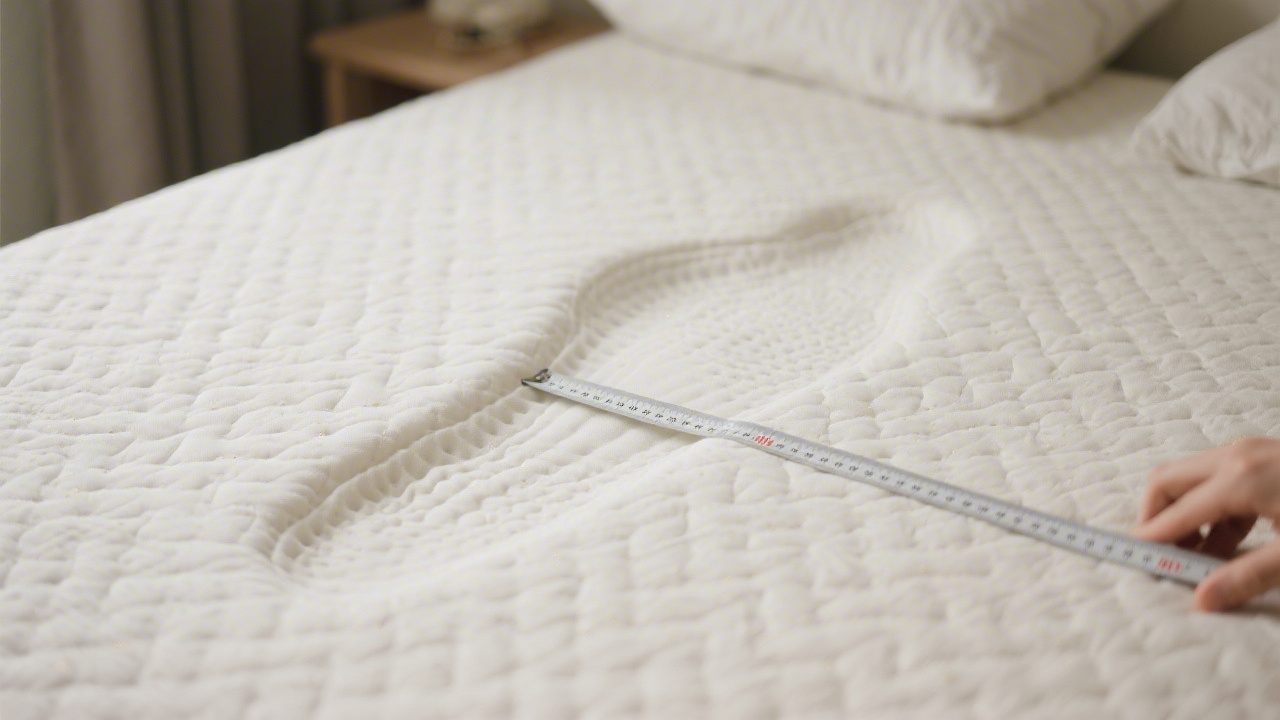
- Lay a rigid straight edge across the mattress — a 48-inch level, a piece of straight lumber, or a long ruler. The straight edge should span across (not along) the body impression, resting on undamaged areas on both sides.
- Measure the gap between the straight edge and the lowest point of the impression using a tape measure or ruler held vertically.
- Record the measurement in inches — take three separate measurements across the depression and use the deepest.
Do not measure with a flexible tape measure placed into the impression — this produces inaccurate results and won't be accepted.
Step 3: Document With Photos
Your photo documentation needs to include:
- Wide shot of entire mattress with straight edge in place
- Close-up of the measurement showing the ruler reading clearly
- Photo of the mattress label (serial number required)
- Photo showing the mattress foundation and bed frame
Use consistent lighting — natural daylight is best. Avoid flash-only photos, which flatten the impression and make it look shallower than it is.
Step 4: Gather Documentation
Before contacting the manufacturer, collect:
- Original purchase receipt (digital or paper)
- Mattress serial number (on the law tag, usually on the side)
- Foundation/bed frame information (model, type, slat spacing if applicable)
- Your measurement photos
Step 5: File the Claim
Contact the manufacturer's warranty department directly — not the retailer, unless the retailer is the manufacturer (as with Saatva). In your initial communication:
- State clearly that you're filing a warranty claim for sagging
- Provide your measurement (e.g., "1.2-inch body impression")
- Attach all photos in your first message
- Include purchase date, serial number, and your contact information
Keep all communication in writing. Do not rely on phone calls — if you speak with a representative, follow up with an email summarizing what was discussed.
What Happens After You File
Most manufacturers will review your photos and may send an independent inspector. The inspector will use the same straight-edge measurement method. If your documentation matches, the claim is typically approved within 2 to 4 weeks.
Approved claims result in either repair (rare) or replacement. Some brands offer a prorated credit instead of full replacement after a certain number of years — check your specific warranty terms for this. Our mattress protection plans guide covers whether extended protection plans offer better coverage than manufacturer warranties.
Our Top Pick: Saatva Classic
Saatva's non-prorated lifetime warranty covers the full cost of repair or replacement — no depreciation schedules, no fine-print loopholes. Free white-glove delivery included.
Frequently Asked Questions
How do I measure mattress sagging for a warranty claim?
Place a rigid straight edge (a long level or piece of lumber) across the width of the mattress, spanning the sagging area. Measure the vertical distance from the straight edge to the lowest point of the impression using a ruler. This is your official sagging depth.
What sagging depth qualifies for a warranty claim?
Most mattress warranties require sagging of 1 to 1.5 inches to qualify for a claim. Saatva's threshold is 1 inch, which is more consumer-friendly than the 1.5-inch standard used by many budget brands.
Do I need photos to file a mattress warranty claim?
Yes. Photos with a ruler or measuring tape visible are essential. Take photos from multiple angles and in consistent lighting. Some manufacturers require video evidence as well.
Will a stain on my mattress void my sagging warranty?
Potentially yes. Many warranty documents include provisions that void coverage if stains are present, regardless of whether the stain caused the sagging. Using a mattress protector from day one prevents this issue.
How long does a mattress warranty claim take?
Claim processing typically takes 2 to 6 weeks. Budget-tier brands and department store mattresses often take longer. Online-direct brands like Saatva typically process claims faster.
Voted best luxury innerspring mattress with exceptional lumbar support and white-glove delivery.
Check Price & Availability FAQPage", "mainEntity": [ { "@type": "Question", "name": "How do I measure mattress sagging for a warranty claim?", "acceptedAnswer": { "@type": "Answer", "text": "Place a rigid straight edge (a long level or piece of lumber) across the width of the mattress, spanning the sagging area. Measure the vertical distance from the straight edge to the lowest point of the impression using a ruler. This is your official sagging depth." } }, { "@type": "Question", "name": "What sagging depth qualifies for a warranty claim?", "acceptedAnswer": { "@type": "Answer", "text": "Most mattress warranties require sagging of 1 to 1.5 inches to qualify for a claim. Saatva's threshold is 1 inch, which is more consumer-friendly than the 1.5-inch standard used by many budget brands." } }, { "@type": "Question", "name": "Do I need photos to file a mattress warranty claim?", "acceptedAnswer": { "@type": "Answer", "text": "Yes. Photos with a ruler or measuring tape visible are essential. Take photos from multiple angles and in consistent lighting. Some manufacturers require video evidence as well." } }, { "@type": "Question", "name": "Will a stain on my mattress void my sagging warranty?", "acceptedAnswer": { "@type": "Answer", "text": "Potentially yes. Many warranty documents include provisions that void coverage if stains are present, regardless of whether the stain caused the sagging. Using a mattress protector from day one prevents this issue." } }, { "@type": "Question", "name": "How long does a mattress warranty claim take?", "acceptedAnswer": { "@type": "Answer", "text": "Claim processing typically takes 2 to 6 weeks. Budget-tier brands and department store mattresses often take longer. Online-direct brands like Saatva typically process claims faster." } } ] }