
 by
by Our Pick: The Saatva Classic earns top marks for support, durability, and customer service — a strong choice at any stage of your mattress search.
The mattress industry creates conditions that reliably produce bad decisions. Confusing product names, inconsistent firmness standards, fake discount structures, and an affiliate review ecosystem with built-in conflicts — these aren't accidents. This updated 2026 list covers the 12 most common mistakes, including three that didn't exist (or didn't matter) five years ago.
New in 2026: Mistakes That Didn't Exist Before
1. Trusting AI-Generated Review Summaries
In 2025–2026, AI-generated review summaries have proliferated across retail sites and review aggregators. These summaries can be commissioned by brands, weighted toward positive reviews, or simply trained on fake review data. A positive AI summary of a mattress product tells you almost nothing. Look for individual verified purchase reviews, not AI-synthesized summaries.
2. Falling Into the Mattress Subscription Trap
Several brands now offer "mattress as a service" subscription models. The pitch: pay monthly, swap when you want. The reality: the total cost over 5 years typically far exceeds buying a quality mattress outright. Swap terms are also often restrictive. This model benefits the manufacturer, not the consumer.
3. Accepting Greenwashing as Meaningful Certification
"Natural," "eco-friendly," "organic-inspired," and "sustainable" mean nothing in the absence of a recognized third-party certification. Real certifications: GOLS (latex), GOTS (textiles), OEKO-TEX STANDARD 100, or CertiPUR-US (foam). If a brand claims environmental credentials without citing a specific certification body, it's marketing language.
Evergreen Mistakes That Still Claim Victims Every Year
4. Buying Based on a 5-Minute In-Store Test
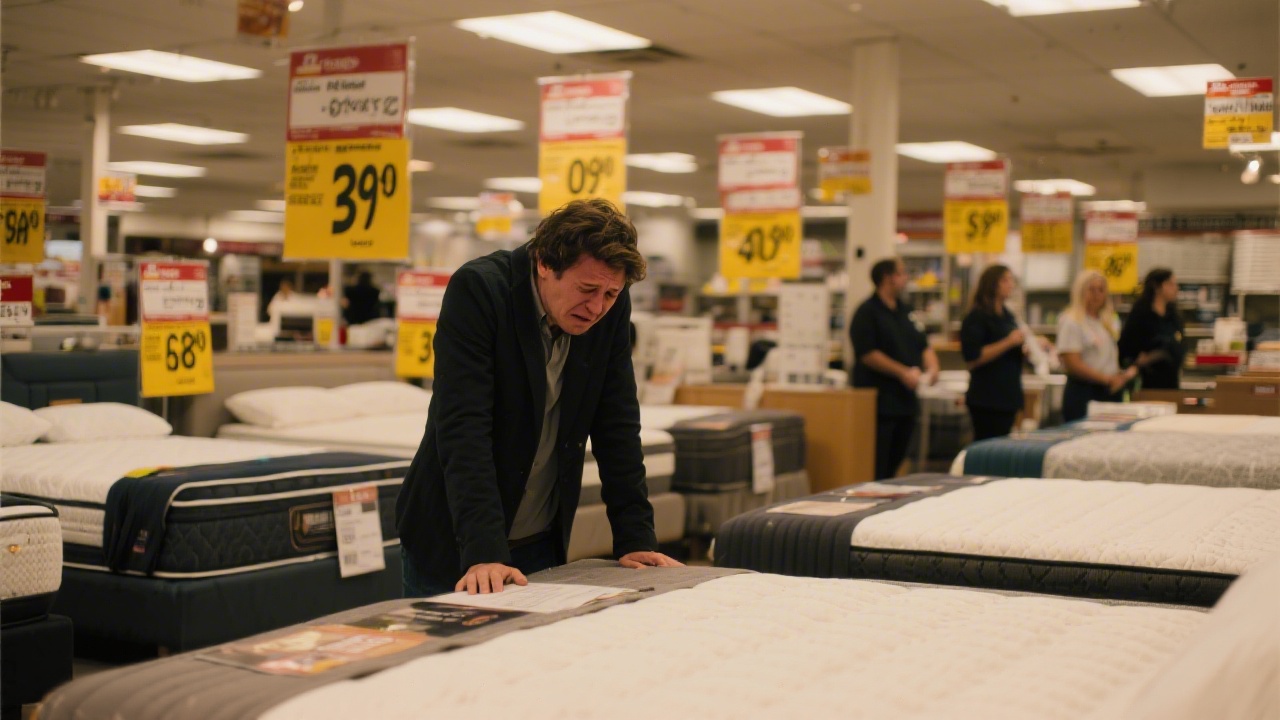
Lying on a mattress for 5 minutes in a bright showroom with shoes on tells you almost nothing about how you'll sleep on it for 8 hours. Your body position shifts, your muscles relax differently, your temperature changes. A 5-minute test can rule out extreme mismatches but cannot confirm a good fit.
5. Anchoring to the Crossed-Out Price
Mattress "original prices" are almost universally fictional. A mattress listed at $3,200 "on sale" for $1,600 was likely never sold at $3,200. Research transaction prices through Reddit, price tracking sites, and customer support conversations before accepting any stated discount as real.
6. Ignoring the Return Policy Until You Need It
Return policies vary dramatically. Some brands offer free, no-questions-asked returns with charity donation. Others require you to find your own donation partner, provide documentation, and initiate the process within a narrow window. Read the policy before you buy. Our mattress return experience guide covers the real process brand by brand.
7. Buying the Wrong Firmness Because of Vague Labels
One brand's "medium" is another brand's "medium-firm." Firmness labels are not standardized. Look for brands that publish ILD (Indentation Load Deflection) ratings for their foam layers, or read owner reviews specifically filtered by weight range and sleep position — which correlate more reliably than firmness label comparisons.
8. Not Accounting for Foundation Compatibility
Putting a new mattress on an incompatible foundation can void your warranty and reduce performance. Box springs provide bounce that some foam mattresses shouldn't have. Slatted bases with wide gaps create localized sag points. Check the manufacturer's foundation requirements — it's usually in the warranty documentation.
9. Skipping the Mattress Protector
Most mattress warranties void on staining. A single spill can cost you warranty protection on a $1,500 mattress. A good waterproof protector costs $40–$80 and pays for itself immediately.
10. Waiting Too Long to Return
Trial periods are long, but they end. Buyers who are unsatisfied but keep "giving it more time" past the trial deadline lose their return option permanently. Mark your calendar at purchase. Decide by day 80 of a 100-day trial, not day 95.
11. Buying the Wrong Size for Your Space
Measure your room before buying. A king-size mattress in a 10x10 room leaves inadequate clearance. Consider whether you need separate twin XLs for different firmness preferences (works in a king frame). Check that your door, stairwell, and hallway can accommodate delivery.
12. Rushing the Decision Timeline
Good mattress research takes 2–3 weeks. See our mattress shopping timeline for the optimal process. If you're a first-time buyer, our complete first-time buyer guide walks through the full decision framework step by step.
Frequently Asked Questions
What is the biggest mattress shopping mistake in 2026?
Trusting AI-generated reviews without verification is the newest major risk. AI can produce convincing fake review summaries and even fake expert analysis that looks credible but reflects paid placement rather than real testing.
Is it a mistake to buy the cheapest mattress available?
Yes, for most buyers. Entry-level mattresses under $500 typically last 4–5 years and deliver poor pressure relief and support. The cost-per-year math usually favors spending $1,000–$1,500 on something that lasts 8–10 years.
What is price anchoring in mattress sales?
Price anchoring is when a brand shows an inflated 'original price' crossed out next to a 'sale price' — creating the illusion of a discount. Mattress industry original prices are almost always fictional. Research actual transaction prices, not listed prices.
Are mattress subscriptions a good deal?
Mattress subscription services that charge monthly fees for mattress replacement are rarely a good value. Run the math on the total cost over 3–5 years versus buying once. Subscription terms also often lock you into specific replacement schedules.
What does greenwashing look like in mattress marketing?
Terms like 'eco-friendly,' 'natural,' 'green,' and 'sustainable' carry no regulatory definition in the mattress industry. Meaningful certifications include OEKO-TEX STANDARD 100, GOLS (Global Organic Latex Standard), and GOTS (Global Organic Textile Standard). Anything else is marketing language.
Ready to Make Your Decision?
The Saatva Classic offers a 365-night home trial, free white-glove delivery, and one of the best return experiences in the industry.
Our Top Mattress Pick
The Saatva Classic consistently ranks #1 for comfort, support, and long-term durability.
View Saatva Classic Pricing & Details